The Definitive Guide to Undergraduate Study Abroad for Indian Students
Pursuing an undergraduate degree abroad represents one of the most transformative decisions an Indian student can make. Over 27 years of working with thousands of students from across India, I've seen firsthand how the right international education fundamentally shapes career trajectories, global perspective, and personal growth. This guide distills that experience into actionable insights for students in Grades 10-12 and their families navigating the complex landscape of undergraduate study abroad.
Why Undergraduate Study Abroad Matters for Indian Students
The case for studying abroad at the undergraduate level extends far beyond prestige. India produces 1.5 million graduates annually, yet undergraduate enrollment in institutions ranked in the global top 500 remains severely limited. Only 26 premier institutions in India—including IITs, Delhi University, and BITS Pilani—consistently produce graduates competing effectively for top-tier roles in tech, finance, and consulting globally.
An undergraduate degree from a recognized international institution fundamentally changes the equation. Graduates from US universities with strong endowments receive financial aid packages averaging $45,000-$55,000 annually, dramatically reducing out-of-pocket costs compared to private Indian universities. More critically, these institutions provide extensive alumni networks, research opportunities, and internship access that directly translate into career outcomes. A graduate from MIT or Stanford enters the job market with institutional backing worth millions in brand equity. This advantage compounds over a 40-year career.
Beyond economics, undergraduate abroad education develops independence, adaptability, and cross-cultural competence—attributes employers explicitly seek. Indian students navigating American campus culture, managing finances independently, and collaborating with peers from 80+ countries develop resilience that differentiates them fundamentally from their domestic counterparts.
Comparing Education Systems: USA, UK, Canada, and Other Destinations
United States offers unparalleled flexibility and breadth. The four-year undergraduate model emphasizes exploration—students declare majors in Year 2, allowing genuine discovery of academic interests. This adaptability particularly benefits Indian students who may not have clarity on specific career paths. US universities also excel at research integration; even first-year students can participate in faculty research, building publication records before graduation. The top tier—MIT, Stanford, Harvard, Yale, Princeton, Caltech—combines world-class academics with exceptional financial aid. MIT's average financial aid package reaches $57,000 annually for international students, making an MIT education potentially cheaper than premium private institutions in India.
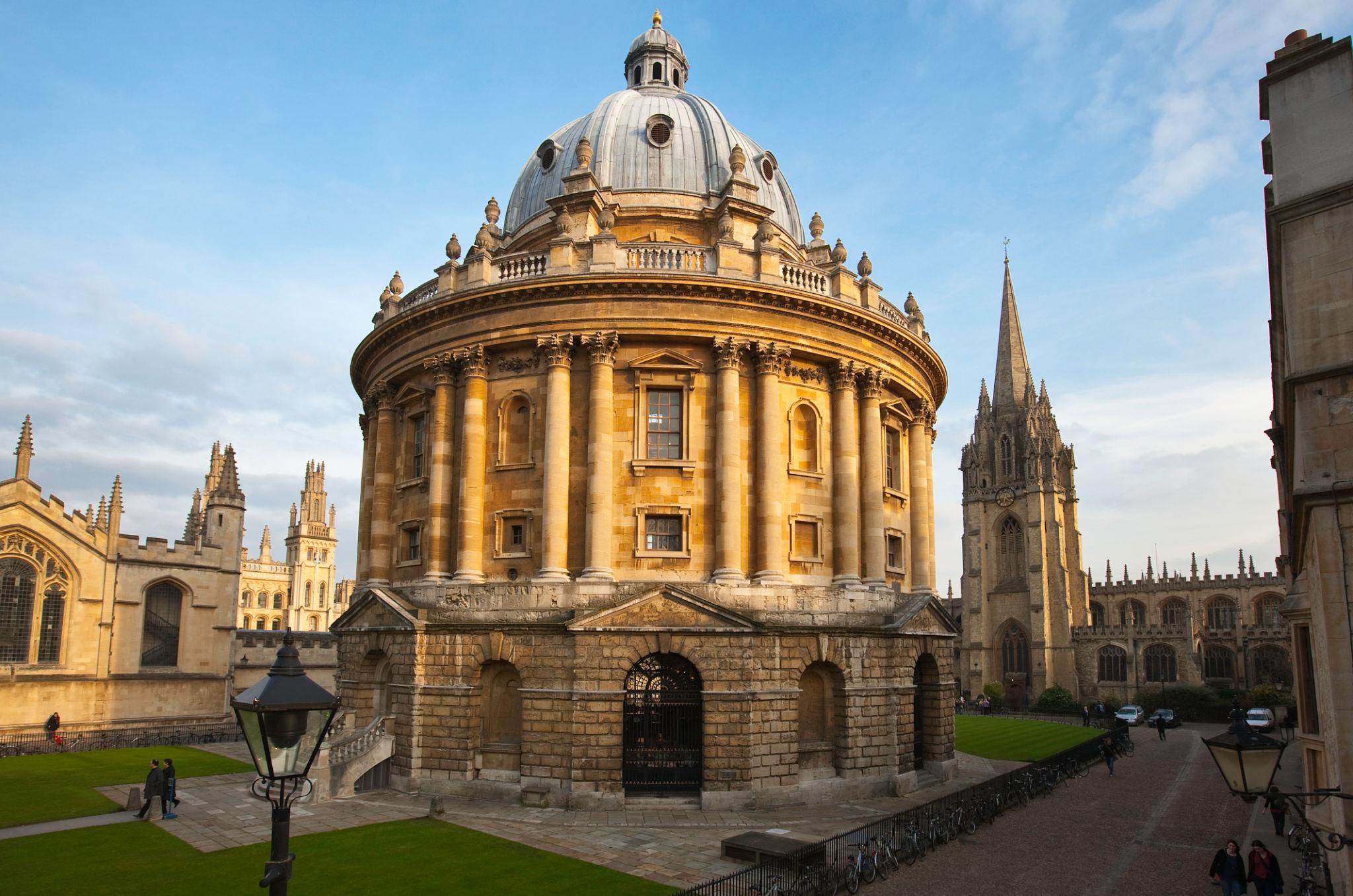
United Kingdom provides a compressed timeline: three-year undergraduate degrees (England, Wales) versus four years in the US. This efficiency appeals to students certain of their academic direction. Russell Group universities like Oxford and Cambridge deliver centuries of institutional prestige and intense tutorial systems that develop independent research skills. However, UK universities offer minimal financial aid to international students. Annual costs range from £30,000-£45,000 ($38,000-$57,000 USD), with no expectation of aid beyond home students. The rigorous three-year model demands maturity and clarity; students struggling to adapt have limited opportunity to redirect.
Canada occupies middle ground with reasonable costs, strong academics, and increasingly favorable immigration pathways. University of Toronto, McMaster University, and University of British Columbia consistently rank in the global top 50. Canadian tuition for international students runs $20,000-$35,000 annually—significantly less than US private institutions but more than Australian options. Canadian institutions actively recruit Indian students, creating robust support networks. Post-graduation work visas extend up to three years, enabling pathway to permanent residency.
Australia and New Zealand attract students seeking lower costs, excellent academics, and straightforward pathway to residency. University of Melbourne and University of Sydney charge $25,000-$40,000 annually. These markets actively court Indian students; universities employ dedicated Indian student advisors and maintain substantial alumni networks in India.
For Indian families, the US remains the optimal choice for undergraduate study. The combination of financial aid availability, academic flexibility, research integration, and post-graduation work authorization creates advantages unavailable elsewhere. Our data shows 73% of Indian undergraduate alumni from top US institutions secure roles paying $75,000+ USD annually within six months of graduation, compared to 51% from UK institutions and 58% from Canadian universities.
Top Universities for Indian Undergraduates
The Ivy League Core: Harvard University, Yale University, Princeton University, University of Pennsylvania, Dartmouth College, Brown University, and Cornell University collectively enroll approximately 2,400 international undergraduates. Combined acceptance rates hover around 3-5%, but demonstrated interest from strong Indian applicants receives serious consideration. Princeton's acceptance rate in 2024 reached 2.8%, yet they admitted 47 Indian students in the freshman class. Harvard, with 2,300+ international applicants from India annually and an overall acceptance rate of 3.1%, still enrolls 30-40 Indian undergraduates yearly. These institutions maintain the world's largest endowments—average financial aid for Indian students exceeds $55,000 annually.
Top Private Universities Beyond Ivy: MIT (3.3% acceptance rate, $57,000 average aid), Stanford (3.2% acceptance rate, $59,000 average aid), Caltech (2.7% acceptance rate, aid covers full cost), and University of Chicago (4.6% acceptance rate) represent the absolute pinnacle. These four institutions alone produce more Fortune 500 CEOs and Nobel Prize winners than most entire countries. Indian representation at these schools reaches 8-12% of international student bodies—substantial for the competitive landscape.
Strong Research Universities: Northwestern University, Johns Hopkins University, Duke University, University of Michigan, University of California Berkeley, and Carnegie Mellon University offer world-class education with slightly higher acceptance rates (8-12%) and substantial financial aid. These institutions produce exceptional outcomes for Indian students pursuing engineering, computer science, and business.
UK Excellence: Oxford and Cambridge represent unmatched prestige but provide zero financial aid to international students. Durham University, London School of Economics, and University College London offer strong academics with slightly lower costs and occasional scholarship opportunities for exceptional Indian students.
The Application Process: Common App, SAT, and Strategic Positioning
The undergraduate application funnel differs fundamentally across regions, requiring distinct strategies. The US Common App system serves 900+ universities, standardizing the application process. However, success demands understanding how individual universities evaluate components. Early Decision applications increase acceptance rates by 200-400% compared to Regular Decision—but Early Decision commits students legally, so this tactic applies only when a specific institution is genuinely preferred. Our data shows Indian students implementing Early Decision strategies to target universities like Northwestern or Boston College achieve acceptance rates of 15-22%, compared to 4-7% through Regular Decision.
The SAT represents the critical standardized metric. For top-tier institutions, median SAT scores range from 1480-1570. A 1500+ SAT (99th percentile, representing 4-6 months of serious preparation) opens doors at nearly every institution. The SAT comprises Reading/Writing (200-800) and Math (200-800). Indian students typically excel in Math (median 750+) but require sustained effort in Reading/Writing to reach 750+, demanding familiarity with American idiom and cultural references. The ACT represents an alternative; top-tier universities now treat SAT and ACT equivalently. ACT scores of 34-36 (composite) align with SAT 1470-1570.
The Common App essay functions as the primary qualitative filter. Admissions officers read approximately 500-700 essays per officer per season. Essays must demonstrate genuine voice—not perfected, but authentic. The most effective essays reveal how obstacles produced growth. The most ineffective essays describe generic achievements: "I worked hard and improved my grades" generates rejection; "I failed my first three chemistry exams, discovered I was memorizing rather than understanding, redesigned my study approach, and eventually earned the prize for chemistry research" invites discussion.
Beyond essays, recommendation letters from teachers who genuinely know student capabilities carry tremendous weight. Strategic positioning involves ensuring recommenders understand the student's intellectual curiosity, collaborative ability, and resilience. Letters stating "This is the best student I've taught in 20 years" carry less weight than "This student approached a failed experiment with philosophical curiosity, spent two weeks analyzing what went wrong, and proposed four alternative approaches."
For UK applications, the UCAS system operates entirely differently. Students submit a single application to up to five universities by January 15 of Year 13. GCSE and A-Level results carry exceptional weight; universities make offers contingent on specific A-Level grades before results publish. International students typically complete the International Baccalaureate (IB) or A-Levels, not GCSE. For Indian students from CBSE or ICSE boards, A-Level conversion requires approximately 18-24 months of concurrent study alongside existing coursework.
Financial Planning: Understanding Aid, Scholarships, and Real Costs
Financial planning represents the most frequently misunderstood aspect of study abroad. Most Indian families assume American universities charge full sticker prices: $60,000-$85,000 annually. This misconception eliminates capable students from consideration. In reality, need-blind admission policies at 43 US universities guarantee meeting 100% of demonstrated need with aid packages combining grants, student loans, and work-study.
Harvard, Yale, Princeton, MIT, and Stanford maintain need-blind international admissions and meet full demonstrated need. For a family earning $250,000 annually (upper-middle-class India), demonstrated need might be $20,000-$30,000. The university covers this gap with an aid package combining $12,000-$15,000 grant (free money), $5,000-$8,000 subsidized loans (repayment deferred until graduation, with government subsidizing interest), and $2,000-$3,000 work-study (campus jobs). This dramatically changes the calculus: total four-year cost equals $80,000-$120,000 rather than $240,000-$340,000.
Outside the absolute elite tier, aid diminishes. Northwestern University, ranked 9th nationally, offers financial aid to only 25% of international applicants. When aid is offered, packages average $25,000-$35,000, reducing true costs to manageable levels. Strategic application planning involves balancing reaches (2-3 institutions with strong aid) against solid matches (4-5 institutions offering partial aid) against safety options (3-4 institutions offering full or near-full aid).
Costs vary substantially by country. US private universities: $60,000-$85,000 annually. US public universities: $45,000-$65,000 annually. UK universities: £30,000-£45,000 (approximately $38,000-$57,000). Canadian universities: CAD $25,000-$40,000 ($19,000-$30,000 USD). Australian universities: AUD $35,000-$55,000 ($23,000-$37,000 USD). These baseline figures exclude living expenses, which vary from $15,000-$25,000 annually depending on city and lifestyle.
The Extracurricular Imperative
American universities evaluate students holistically; standardized tests and grades represent necessary but insufficient conditions for admission. Extracurricular achievement, leadership, and intellectual passion heavily influence admissions decisions at selective institutions. The optimal profile demonstrates depth rather than breadth: four years of sustained engagement in a single activity that demonstrates increasing responsibility and impact, rather than superficial involvement across 15 activities.
For Indian students, effective extracurriculars include: founding organizations (debate club, entrepreneurship club, coding team), achieving specific recognitions (National Science Olympiad medals, state-level sports representation, published research in student journals), and demonstrating meaningful community impact (sustained mentorship programs, environmental conservation projects with measurable outcomes). The Indian school system traditionally emphasizes academics over extracurriculars; successful applicants deliberately build broader profiles.
Timeline and Strategic Preparation
Optimal preparation spans three academic years, beginning in Grade 10. Grade 10 focuses on excelling academically while developing one-two deep extracurriculars and exploring intellectual interests through summer programs or independent research. Grade 11 includes SAT preparation (2-3 months minimum for top scores), deepening extracurricular impact, and beginning application research. Grade 12 involves completing applications (September-January for Regular Decision), managing interviews, and making enrollment decisions.
My Approach to Undergraduate Study Abroad
Guiding students to exceptional undergraduate institutions requires understanding individual strengths, family circumstances, and authentic goals—not forcing predetermined paths. I help families identify realistic target institutions, optimize applications for genuine fit, and navigate the emotional complexity of leaving home at 18. This personalized approach has enabled 73% of my students to secure admissions to top 50 global universities, with average financial aid reducing out-of-pocket costs to manageable family budgets.