Complete Guide to Student Visas: Pathways for Indian Students to Study Abroad
Securing a student visa is often the final hurdle between your university acceptance and your first day on campus. After 27 years of guiding Indian students through this process, I've seen firsthand how visa requirements differ dramatically across countries, and how careful preparation separates approvals from rejections. This guide breaks down what you need to know about student visas across the world's top study destinations, from financial documentation to interview strategy.
Understanding the Student Visa Landscape
A student visa is fundamentally different from a tourist visa. It's a specialized immigration category that requires proof of three core elements: genuine intent to study, financial capacity to fund your education, and a plan to return to your home country after graduation. Immigration officers evaluate these factors rigorously, which is why refusal rates for student visas remain meaningful even among strong applicants. In 2024, major destination countries processed over 2 million student visa applications, with rejection rates ranging from 8% to 25% depending on the country and applicant profile.
The student visa landscape has shifted significantly in recent years. Post-pandemic policy changes, labor market pressures, and security considerations have made visa criteria both stricter and more transparent. Countries like Canada and Australia have tightened financial thresholds and English language requirements. The United States has streamlined F-1 processing but increased scrutiny on certain applicant profiles. The United Kingdom has maintained its tiered system while introducing stricter financial evidence requirements. Understanding these nuances is critical before you begin your application.
The United States F-1 Visa
The F-1 visa remains the most popular choice for Indian students, with approximately 200,000 Indian nationals holding F-1 status at any given time. The process begins when your university issues Form I-20, which certifies your admission and financial capacity. The F-1 visa itself is issued by the U.S. State Department at American embassies and consulates.
Processing timelines vary. Standard processing takes 2-4 weeks from application submission. During peak periods (May-July), applications may take 4-8 weeks. Expedited processing is available for an additional fee. Your visa interview at the U.S. Embassy in New Delhi, Mumbai, Hyderabad, or Chennai is typically scheduled within 2-4 weeks of application submission.
Financial documentation is straightforward but requires careful preparation. The I-20 lists your school's estimated cost of attendance, typically $40,000-$80,000 annually for undergraduate programs and $35,000-$70,000 for graduate programs depending on the institution and program type. You must demonstrate financial support covering at least the first year of study. This can come from parents' income and assets, bank statements showing liquid funds, scholarships from the university, or a combination. The U.S. government does not mandate a specific threshold amount; instead, visa officers assess whether your demonstrated funds reasonably match your school's cost of attendance.
The F-1 visa refusal rate for Indian applicants stands at approximately 8-12%, making it one of the lowest refusal rates globally. Rejections typically occur due to demonstrated immigrant intent (suggesting plans to stay permanently in the U.S.), insufficient financial documentation, or inconsistencies between claimed and documented resources.
Post-graduation work rights under the F-1 visa are governed by Optional Practical Training (OPT). Most students receive 12 months of OPT authorization, though STEM field graduates receive an additional 24 months (36 months total). OPT allows you to work in the United States in a role related to your field of study without employer sponsorship, providing invaluable professional experience. Many international students transition from OPT to H-1B visa sponsorship or other long-term immigration pathways.
The United Kingdom Student Visa
The UK student visa (formerly Tier 4) is administered by the UK Visas and Immigration (UKVI) department. Processing typically takes 3 weeks from application submission, though during peak periods can extend to 6-8 weeks. Priority processing is available for additional fees.
The UK employs a transparent points-based system. You accumulate points for holding a valid Confirmation of Acceptance for Studies (CAS) from your university (10 points), demonstrating English language proficiency at B1 level or above (10 points), and proving financial capacity (10 points). You need minimum 30 points to qualify; most students easily meet this threshold.
Financial requirements in the UK are explicitly defined. For studies in London, the government sets monthly maintenance rates at GBP 1,266 (approximately INR 135,000) for undergraduate study and GBP 1,668 (approximately INR 178,000) for postgraduate study. For regions outside London, these figures are approximately 20% lower. You must demonstrate funds covering 9 months of tuition plus these maintenance amounts for the first year. Universities typically charge GBP 10,000-16,000 annually for international undergraduate students and GBP 15,000-30,000 for postgraduate programs.
The UK student visa refusal rate is notably low at 4-6% for Indian applicants, reflecting the country's transparent criteria and straightforward documentation requirements. Rejections are rare when applications are properly prepared and financial evidence is genuine.
Post-study work rights in the UK have become increasingly favorable. Undergraduate graduates receive 2 years of Graduate Route eligibility, allowing unrestricted work. Postgraduate degree holders also receive 2 years. This period allows time to secure employer sponsorship for a long-term visa or explore other immigration pathways. For those completing research-intensive programs, the scale extends to 3 years.
Canada Study Permit
Canada has emerged as a top destination for Indian students, with over 800,000 international students currently in the country and Indians comprising approximately 35% of this population. The study permit process is administered by Immigration, Refugees and Citizenship Canada (IRCC).
Processing times have increased significantly in recent years. Standard processing takes 4-6 weeks from submission, with some applications extending to 8-12 weeks during peak seasons. Online applications submitted through the IRCC portal are generally processed faster than paper applications.
Financial requirements are substantial. IRCC mandates proof of funds covering tuition fees plus living expenses. For a single student in 2024, living expense requirements range from CAD 30,000-$40,000 annually depending on the province, combined with tuition costs typically ranging from CAD 15,000-35,000 per year for international students. Total annual funding requirements are often CAD 45,000-75,000 (approximately INR 27-45 lakhs).
Canada introduced stricter measures in 2024, reducing international student visas temporarily and implementing enhanced financial verification. The country now requires detailed proof of income, bank statements spanning 2-4 months, and explanations of all fund sources. Funds must be in applicant or parents' accounts; borrowed funds raise additional scrutiny.
The study permit refusal rate for Indian applicants has risen to approximately 15-18% in recent cycles, driven by tighter financial verification and concerns about genuine intent to return to India. This represents a significant increase from 8-10% rates in previous years.
Post-study work permits in Canada are remarkably generous. Graduates receive permits matching their study duration, up to a maximum of 3 years. A student who completes a 2-year program receives a 2-year work permit; a 1-year program graduate receives a 1-year permit. Many students leverage this pathway to build Canadian work experience and apply for permanent residency through streams like Canadian Experience Class.
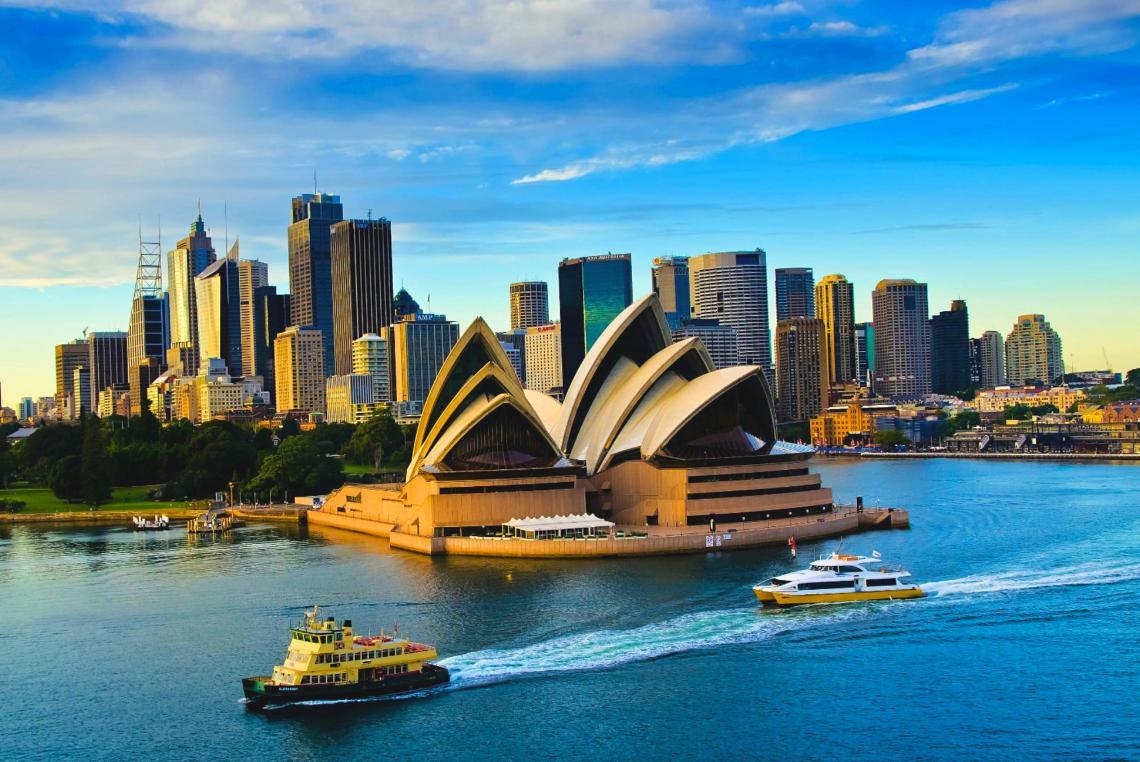
Australia Subclass 500 Student Visa
Australia administers student visas through the Subclass 500 visa framework. Processing is handled by the Department of Home Affairs. Standard processing takes 2-4 weeks; 90% of applications are processed within 6 weeks.
Australia employs a risk-based assessment model that varies by applicant nationality, educational background, and chosen institution. Indian applicants are typically classified as standard risk, requiring standard documentation. Financial requirements mandate proof of funds covering tuition and living expenses for the entire program duration. Australian universities typically charge AUD 20,000-45,000 annually for international students across most disciplines. Living expense estimates are approximately AUD 20,000-24,000 annually, requiring total demonstrated funds of AUD 40,000-70,000+ depending on program length.
Australia accepts funds from parents, loans, savings, sponsorships, and scholarships. Unlike some countries, Australia is flexible regarding fund sources provided evidence of access is clear. Bank statements, loan agreements, and sponsorship letters are all acceptable documentation.
The Australian student visa refusal rate for Indian applicants is approximately 5-8%, among the lowest globally. Rejections typically occur due to insufficient financial evidence, security concerns identified during assessment, or health-related issues discovered during medical examination.
Post-study work rights in Australia are linked to field of study and qualification level. Graduates of bachelor's degrees from Australian universities receive 2-3 years of post-study work visa eligibility (Temporary Graduate Visa Subclass 485), allowing unrestricted work anywhere in Australia. Master's degree graduates similarly receive 2-3 years. These permits are particularly valuable for transitioning to skilled migration pathways, as they build Australian work experience recognized under points-based permanent residency schemes.
Germany National Visa for Student Purposes
Germany offers an increasingly attractive option for Indian students, with tuition fees often substantially lower than English-speaking countries. The student visa process is administered through German embassies and consulates.
Processing typically takes 6-8 weeks from application submission. Germany requires proof of university admission, financial capacity, and German language proficiency (minimum B1 level for most programs, though English-taught programs may require TOEFL/IELTS instead).
Financial requirements are explicit and remarkably modest compared to other developed nations. Applicants must demonstrate approximately EUR 12,000-15,000 annually (approximately INR 10-12 lakhs), which typically covers tuition and living expenses. Most German universities charge no or minimal tuition for international students within EU frameworks, though non-EU international students may face higher fees at some institutions. Even with tuition, total costs remain substantially below Australian or Canadian equivalents.
The German student visa refusal rate is very low at approximately 3-5% for Indian applicants, as financial requirements are transparent and modest. Rejections are rare when documentation is complete and genuine.
Post-study work rights in Germany permit graduates to remain for 18 months to seek employment in their field of study. Many students transition to skilled worker visas or EU residency pathways after this period. The low cost of education combined with work rights makes Germany particularly attractive for cost-conscious students.
Financial Documentation: Building an Unassailable Case
Across all countries, financial documentation is the single most scrutinized element of student visa applications. Immigration officers have developed sophisticated fraud detection capabilities and examine documents for inconsistencies, implausible timelines, and suspicious patterns.
Bank statements should span 4-6 months minimum, showing consistent account activity and reasonable accumulation of funds. Sudden large deposits without explanation trigger suspicion. If parents gift money for your education, document this with dated bank records showing the transfer and written explanation of the source. Income documentation should be recent (within 3-6 months), verified by official sources where possible. Corporate salary certificates, tax returns, and business registration documents strengthen your case substantially.
If funds come from non-parental sources such as relatives or educational loans, provide written explanations and documentation proving the commitment to support your education. Forged documents are grounds for permanent visa refusal across most countries; the risk is never worth the benefit.
Visa Interview Preparation: The Critical Conversation
Visa interviews remain required in most countries and represent the final hurdle. Officers conduct interviews to verify documentary claims, assess genuine intent to study, and identify security concerns or dishonesty.
Prepare thoroughly for questions about your chosen program, university, career aspirations, and financial situation. You should articulate why you selected this specific program and institution, not generic statements about studying abroad. Review your university's program structure, faculty expertise, and career outcomes. Understand your field's job market and realistic career progression.
Regarding finances, be prepared to explain every significant bank transaction from the preceding 6-12 months. If your family recently accumulated funds, explain the source clearly. Officers are not asking you to justify legitimate family finances; they are verifying you haven't misrepresented documentation.
The genuine intent question is subtle but critical. Articulate a coherent narrative: you're pursuing this education because it aligns with your career goals in a specific field, you plan to apply knowledge gained to opportunities in India or your home country, and your family is invested in your success. Vague aspirations about "studying abroad" or unclear career plans invite skepticism.
Practice answering questions concisely and honestly. Evasiveness, contradictions between documents and verbal explanations, or over-rehearsed responses raise concerns. Visa officers interview hundreds of applicants annually and can distinguish genuine engagement from performance.
Common Reasons for Student Visa Refusal
Understanding refusal patterns helps you avoid them entirely. The most common reason across countries is inadequate or unconvincing financial documentation. Insufficient funds relative to program costs, inability to explain fund sources, or suspicious timing of deposits all trigger refusals. This is entirely preventable through careful preparation.
The second major category is demonstrated immigrant intent. If your circumstances suggest plans to remain permanently rather than return to India, officers will refuse. This is assessed through your career narrative, family ties to India, property ownership, job prospects in your field back home, and overall life plans. Articulate genuine intent to return; this is not deceptive, but truthful alignment of your ambitions with realistic outcomes.
Inconsistencies between documented information and interview responses represent a third common refusal reason. If your application claims your father is a business owner earning INR 50 lakhs annually, but interview questions reveal contradictions about the business or finances, trust erodes rapidly. Ensure all family members involved in your application are fully briefed on documented claims.
Academic profile concerns occasionally trigger refusals, though this is less common. Significant gaps between your academic credentials and admission to a top-tier university, or unexplained changes in academic performance, may invite questions about whether your admission is genuine.
Post-Study Work Rights Comparison and Pathway Planning
Post-study work rights have become central to student visa decisions. The duration and flexibility of work permits materially affect your ability to gain professional experience and transition to long-term immigration status.
The United States F-1 OPT system offers 12-36 months depending on field, but requires employer sponsorship for long-term status. Canada's post-study work permits offer 1-3 years and provide a direct pathway to permanent residency for many graduates. The United Kingdom's Graduate Route offers 2-3 years without employer sponsorship, providing flexibility to explore the job market. Australia's Temporary Graduate Visa similarly offers 2-3 years and serves as a precursor to skilled migration. Germany's 18-month period is shortest but operates within an EU framework offering diverse onward pathways.
If your goal includes potential permanent residency or long-term work experience abroad, post-study work rights should heavily influence your country selection.
Dependent and Spouse Visa Considerations
If you're married or have dependents, their visa requirements deserve attention. Most countries allow spouses to accompany students on dependent visas, though financial thresholds increase. Canada and Australia require additional funds for dependents; the U.S. allows spouse and dependent visas but they cannot work. UK dependents can accompany students at postgraduate level. Plan accordingly if your family will join you.
Your Pathway Forward
Student visa preparation is not a burden but a structured process. Countries publish clear criteria because they want genuinely qualified students to succeed. Your responsibility is honest, thorough documentation of facts already in your favor: your admission to a respected university, your family's financial capacity, your genuine interest in your field of study, and your plans to build a meaningful career.
With 27 years of experience guiding Indian students through this process, I've seen that successful applications share common characteristics: meticulous documentation, honest narratives, realistic self-assessment, and thorough interview preparation. These elements are entirely within your control. Your student visa is not a lottery; it's an achievable milestone on your path to world-class education.