Ireland Student Visa IRP and Immigration Rules for Indian Students

Dr. Karan Gupta is a Harvard Business School alumnus and career counsellor with 27+ years of experience and 160,000+ students guided. His insights on Visa & Immigration come from decades of hands-on experience helping students achieve their goals.
Why Ireland Has Become a Hidden Gem for Indian Students
Ireland has quietly become one of Europe's most attractive study destinations for Indian students, and the numbers reflect this: over 15,000 Indian students were studying in Ireland in 2024-2025, a dramatic increase from fewer than 5,000 just five years earlier. The appeal lies in a unique combination of factors: English-speaking environment, world-class universities (Trinity College Dublin, University College Dublin, and NUI Galway are among the world's top 300), a thriving tech sector (European headquarters of Google, Facebook, Apple, Microsoft, and LinkedIn are all in Ireland), and a generous 2-year post-study stay-back option.
Ireland is not part of the Schengen Area, so it has its own distinct visa and immigration system. This guide covers everything Indian students need to know about the Irish student visa, the IRP (Immigration Registration Permit) card, working rights, and the pathway to staying in Ireland after graduation.
Do You Need a Visa to Study in Ireland?
Yes. Indian citizens require a visa to enter Ireland. The specific type depends on your programme duration:
- Study visa (Type D): For courses lasting more than 3 months (all degree programmes). This is what most Indian students need.
- Short-stay visa (Type C): For courses lasting less than 3 months (summer schools, short courses)
Step-by-Step Application Process
Step 1: Receive Your Offer and Pay Fees
Secure admission from an Irish higher education institution. Pay the required tuition deposit or full fees as specified in your offer letter. Irish universities typically require a deposit of EUR 5,000-10,000 to confirm your place.
Free Tool
Visa & Work Rights Simulator
Compare post-study work rights across countries in seconds.
Try it free →Step 2: Gather Your Documents
For the Irish study visa (Type D), you need:
- Valid passport: Must be valid for at least 12 months after your intended arrival date
- Completed online visa application form: Available on the AVATS (Automated Visa Application Tracking System) at visas.inis.gov.ie
- Two colour passport photographs: 35mm x 45mm, white background
- Letter of acceptance from your Irish educational institution
- Evidence of tuition fees paid: Receipt showing deposit or full fees paid
- Evidence of academic ability: Transcripts, certificates, and any test scores (IELTS, TOEFL)
- Financial evidence: Demonstrating access to at least EUR 10,000 per year for living costs (in addition to tuition). Bank statements for the last 6 months, education loan letters, or scholarship evidence.
- Private medical insurance: Must cover at least EUR 25,000 and include hospital in-patient and day-case treatment
- Proof of English proficiency: IELTS 6.0-6.5 for most programmes (varies by institution)
- Gap explanation letter: If there is any gap in your education history
Step 3: Submit Your Application
Submit your application online through AVATS and then send your supporting documents to the relevant Irish embassy or VFS Global centre. For Indian applicants, the primary processing centre is the Irish Embassy in New Delhi. VFS Global centres are available in New Delhi, Mumbai, Kolkata, Pune, Bangalore, Chennai, Hyderabad, and Chandigarh.
Step 4: Pay the Visa Fee
- Single-entry visa: EUR 60 (approximately INR 5,400)
- Multiple-entry visa: EUR 100 (approximately INR 9,000)
- Additional VFS service charges apply
Note: Ireland's student visa fee is one of the lowest among major English-speaking study destinations.
Step 5: Wait for Processing
Processing time for Irish study visas from India: 4-8 weeks. During peak season (June-August), processing can take up to 8 weeks or longer. Apply at least 8-10 weeks before your intended travel date.
After Arrival: Immigration Registration (IRP)
Once you arrive in Ireland, you have three important steps:
1. Immigration Clearance at the Airport
At the port of entry, an immigration officer will stamp your passport with a landing stamp. This stamp authorises your stay for up to 90 days. You must register with immigration before this 90-day period expires.
2. Register for the IRP Card
The IRP (Immigration Registration Permit) card, formerly known as the GNIB (Garda National Immigration Bureau) card, is your official immigration registration document in Ireland. Every non-EEA national staying in Ireland for more than 90 days must register.
How to Get Your IRP Card
- In Dublin: Book an appointment through the INIS Registration Office online booking system at burghquayregistrationoffice.inis.gov.ie. Appointments can be difficult to get -- book as soon as you arrive.
- Outside Dublin: Contact your local Garda (police) station's immigration unit to arrange registration.
Documents for IRP Registration
- Valid passport
- Letter of acceptance from your institution
- Evidence of tuition fees paid
- Proof of private medical insurance
- Evidence of financial support (EUR 3,000 in an Irish bank account at the time of registration)
- IRP registration fee: EUR 300
The EUR 3,000 Requirement
At the time of IRP registration, you must show evidence of at least EUR 3,000 in an Irish bank account. This means opening an Irish bank account shortly after arrival and depositing the required funds. Banks commonly used by students include Bank of Ireland, AIB (Allied Irish Banks), and Revolut (for immediate account opening). Some traditional banks require an appointment and may take 1-2 weeks to open an account.
3. IRP Card Details
- Stamp 2: This is the immigration stamp given to students on the IRP card. It allows you to study and work part-time.
- Stamp 2A: Given to students at non-degree level courses (language schools, etc.). Work rights are more limited.
- Validity: The IRP is valid for 1 year and must be renewed annually.
- Fee for renewal: EUR 300 per renewal
Working While Studying in Ireland
Students with Stamp 2 immigration permission can work:
- During term time: Up to 20 hours per week
- During holidays: Up to 40 hours per week (June-September and 15 December-15 January)
At Ireland's minimum wage of EUR 12.70 per hour (2024), 20 hours per week generates approximately EUR 1,016 per month (INR 91,400). During holiday periods, full-time work at 40 hours per week generates approximately EUR 2,032 per month.
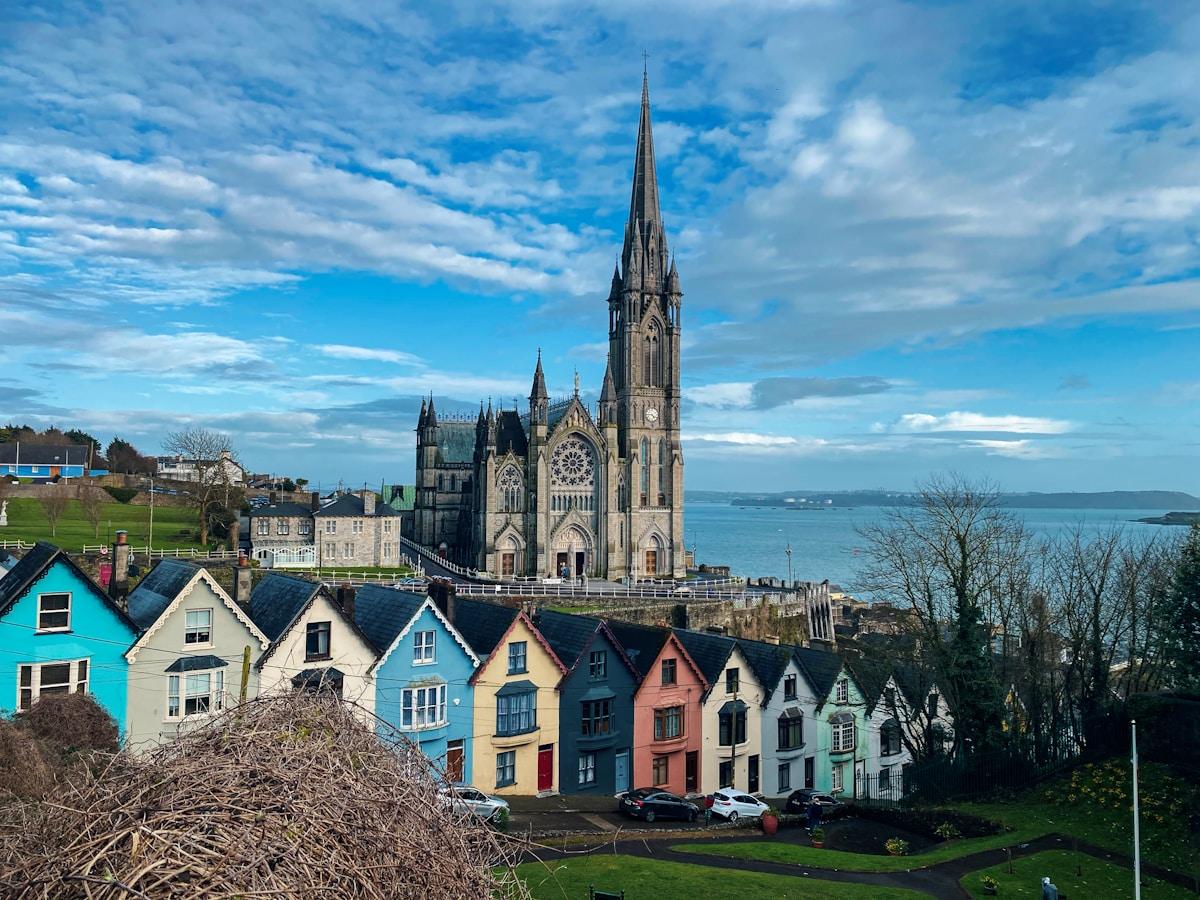
The Irish job market for students is strong, particularly in hospitality, retail, and tech support roles. Dublin, Cork, Galway, and Limerick all have robust part-time job markets.
Cost of Living and Financial Planning
Ireland's living costs, particularly in Dublin, are among the highest in Europe:
- Accommodation (Dublin): EUR 600-1,200 per month (shared accommodation or university housing)
- Accommodation (outside Dublin): EUR 400-800 per month
- Food: EUR 200-300 per month
- Transport: EUR 50-100 per month (student Leap Card available)
- Total monthly living costs: EUR 900-1,500 in Dublin, EUR 650-1,100 outside Dublin
Post-Study Stay-Back: The Third Level Graduate Programme
Ireland offers the Third Level Graduate Programme (Stamp 1G) for graduates of Irish higher education institutions:
- Honours bachelor's degree (Level 8): 1 year stay-back
- Master's degree (Level 9): 2 years stay-back
- Doctoral degree (Level 10): 2 years stay-back
How Stamp 1G Works
- You can work full-time (40 hours per week) without restrictions
- No job offer required at the time of application
- The stamp is noted on your IRP card
- During this period, you can seek employment and transition to a work permit
Pathway to Permanent Residency
Ireland does not have a formal points-based immigration system like Canada or Australia. The pathway to long-term residency is:
- Graduate and obtain Stamp 1G (1-2 years)
- Secure employment with a company that holds or obtains an employment permit for you
- Transition to a work permit (Critical Skills Employment Permit or General Employment Permit)
- After 2 years on a Critical Skills Employment Permit: eligible for Stamp 4 (unrestricted work rights, no employer tie)
- After 5 years of legal residency: eligible to apply for Irish citizenship through naturalisation
Critical Skills Employment Permit
This is the most direct route for Indian graduates. It is available for occupations on the Critical Skills Occupation List, which includes:
- IT professionals (software developers, data analysts, cybersecurity specialists)
- Engineers (mechanical, electrical, civil, chemical)
- Financial analysts and accountants
- Healthcare professionals (doctors, nurses, pharmacists)
- Scientists (biopharmaceutical, medical devices)
Minimum salary: EUR 38,000 for Critical Skills occupations (lower threshold than many comparable visas in the UK or other countries).
Irish Student Visa Fee Summary
- Study visa fee: EUR 60-100 (INR 5,400-9,000)
- VFS service charge: INR 2,000-3,000
- IRP card: EUR 300 per year (INR 27,000)
- Private medical insurance: EUR 500-1,200 per year
- Irish bank account minimum: EUR 3,000 at registration
Common Mistakes Indian Students Make with Irish Immigration
- Not booking IRP appointments early: Dublin INIS appointments are notoriously difficult to get. Book within your first week of arrival.
- Not having EUR 3,000 in an Irish bank: This catches many students off guard. Transfer funds immediately after opening your Irish bank account.
- Working more than 20 hours during term: Enforcement exists. Employers check your Stamp type, and violations can affect your visa renewal.
- Not renewing IRP on time: Your IRP expires annually. Start the renewal process 4-6 weeks before expiry.
- Not buying adequate health insurance: The minimum EUR 25,000 coverage requirement is checked at IRP registration.
Ireland offers a compelling package for Indian students: English-language education, a strong tech economy, reasonable visa costs, and a clear 2-year post-study stay-back option. The pathway from student to Critical Skills Employment Permit to citizenship is well-trodden by Indian graduates, particularly in technology and engineering fields. With careful planning and prompt immigration registration, Ireland can be an excellent launchpad for your international career.
Explore Related Resources & Tools
Free tools and expert services from Karan Gupta Consulting
TAGS
Frequently Asked Questions
How much does the Ireland student visa cost for Indian students?
What is the IRP card and how do I get one in Ireland?
Can I work while studying in Ireland?
How long can I stay in Ireland after graduation?
Can I get permanent residency in Ireland after studying?
Why Choose Karan Gupta Consulting?
- 27+ years of expertise in overseas education consulting
- 160,000+ students successfully counselled
- Personal guidance from Dr. Karan Gupta, Harvard Business School alumnus
- Licensed MBTI® and Strong® career assessment practitioner
- End-to-end support from career clarity to visa approval
SHARE THIS ARTICLE

Dr. Karan Gupta
Founder & Chief Education Consultant
Harvard Business School alumnus and India's leading career counsellor with 27+ years guiding 160,000+ students to top universities worldwide. Licensed MBTI® practitioner. Managing Director of IE University (India & South Asia).