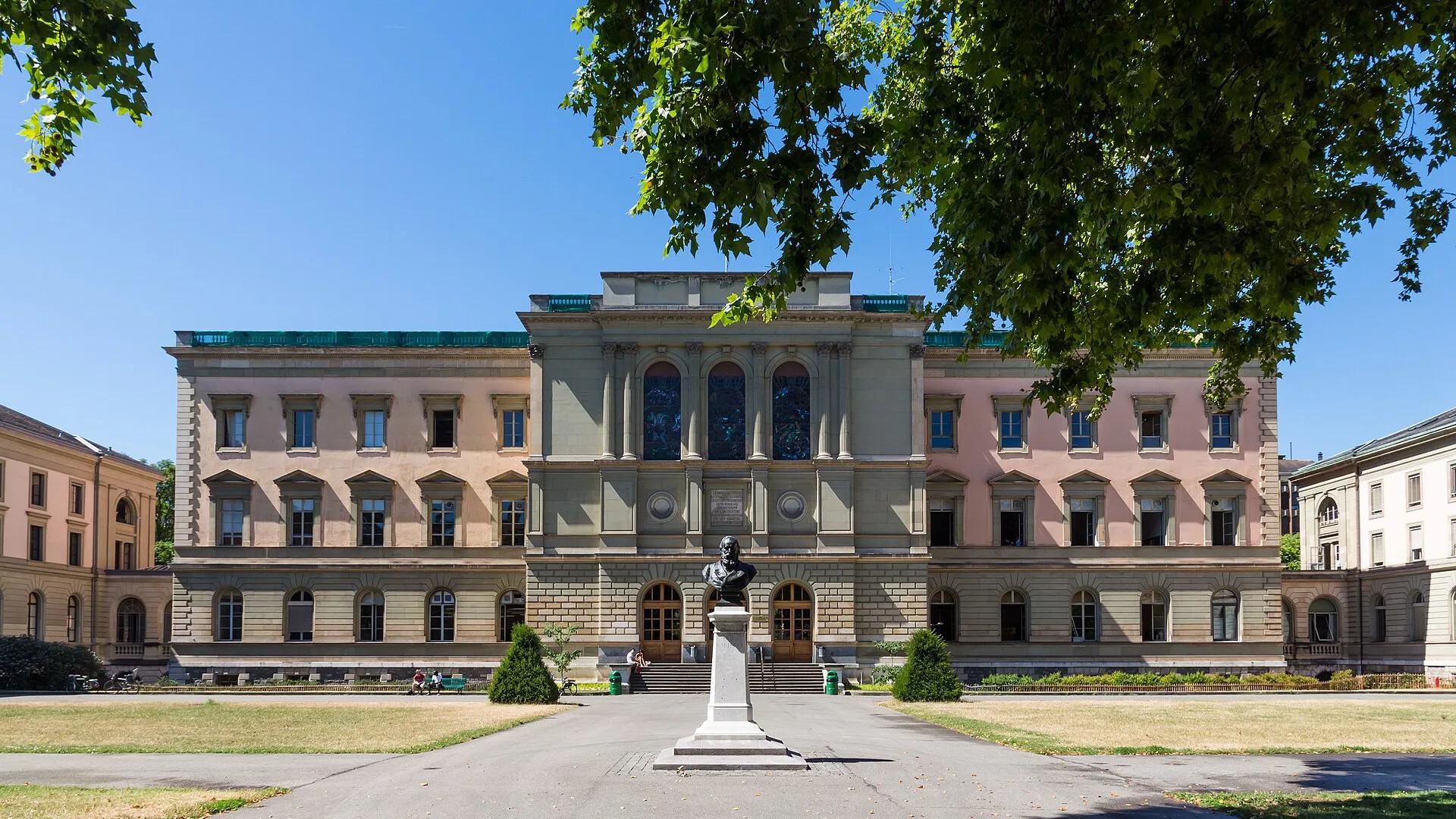
Your Guide to University of Geneva
Geneva, Switzerland
University of Geneva is uniquely positioned at the intersection of international diplomacy, policy, and research. Home to programs in international relations, public policy, finance, and physics—all with unparalleled access to UN, WHO, WTO, and global organizations.
#128
QS Global Ranking
52
Students
CHF 1,000
Tuition/yr (Swiss)
1559
Founded
UNIGE at a Glance
#128 Globally
QS Ranking
18,000
Student Population
40%
International Students
CHF 1,000-1,500/year
Tuition (Non-Swiss)
Geneva, Switzerland
Location
1559
Founded
15+ based in Geneva
UN & Global Orgs
1,600+
Faculty

Dr. Karan Gupta's Strategic View
Dr. Karan Gupta's Expert Assessment
Why UNIGE Is a Strong Choice
Unparalleled Access to International Organizations
Geneva is the de facto capital of international affairs. The UN European Headquarters, WHO, WTO, ICRC, and hundreds of NGOs operate from here. UNIGE students gain internships and mentorship directly from diplomats, policy leaders, and international professionals—something no other university can match.
Excellence in International Relations & Policy
UNIGE's Graduate Institute of International and Development Studies is one of Europe's most prestigious programs for international affairs. The university combines academic rigor with real-world application, as students conduct research that directly informs UN and NGO policy work.
Global Reputation & Alumni Network
UNIGE alumni lead governments, international organizations, NGOs, and multinational corporations worldwide. The alumni network, combined with Geneva's role as a global governance hub, opens doors to careers at the highest levels of international affairs.
University of Geneva Campus
Spread across downtown Geneva and the Champel campus, UNIGE combines historic charm with modern facilities. The main campus overlooks Lake Geneva with the Alps in the distance—one of Europe's most beautiful settings.
Graduate Institute Building
Dedicated center for international relations, diplomacy, and development studies with direct access to UN organizations.
Downtown Campuses
Main facilities in central Geneva, walking distance to UN, WHO, WTO, and international NGOs.
Research Laboratories
Physics and sciences facilities, including CERN partnership programs.
University Library
600,000+ volumes with extensive holdings in law, international affairs, and global policy.
Programs at UNIGE
MSc International Relations
Graduate Institute
Diplomacy, conflict resolution, and global governance
MSc Development Economics
Graduate Institute
Economic development and international policy
MBA International Business
Faculty of Business
Global business strategy and multinational management
MSc Public Policy
Faculty of Social Sciences
Policy analysis for governments and international organizations
MSc International Finance
Faculty of Economics
Global finance, banking, and financial regulation
MSc International Law
Faculty of Law
Human rights, international humanitarian law, treaties
MSc Human Rights
Graduate Institute
Advocacy, humanitarian affairs, and social justice
PhD Political Science
Graduate Institute
Advanced research in international politics and governance
MSc Physics
Faculty of Sciences
Particle physics with CERN connections
Executive Master Global Health Policy
Faculty of Medicine
Health policy for NGOs and international organizations
All programs emphasize real-world application through internships with UN agencies, NGOs, governments, and international corporations. Geneva's proximity to decision-making centers is leveraged extensively in coursework.
Admission Requirements
Admission to UNIGE's postgraduate programs is competitive for international applicants, particularly the Graduate Institute programs which rank among Europe's most selective. Strong academics, relevant experience, and clear career objectives are essential.
UNIGE welcomes candidates from development countries and offers scholarships through Swiss Government Excellence Scholarships and institutional funding.
Interview Preparation
What to expect and how to prepare for your UNIGE interview
Format
University of Geneva (UNIGE) does not conduct admissions interviews for most programs. Admission is document-based, with eligibility determined by prior qualifications and Swiss equivalency. Some professional master's programs, MBA, and doctoral positions may include interviews. French language proficiency is required for most programs.
Duration
15-25 minutes (where applicable)
Interviewers
Program director or faculty committee
Interview Style
Academic, Motivation-focused
What UNIGE Looks For
Sample Interview Questions
Why did you choose the University of Geneva and this specific program?
Reference Geneva's unique strengths: international law, international relations, science diplomacy, CERN proximity.
How would you describe your French language abilities and your plan to improve?
Be honest. UNIGE takes language requirements seriously — show a realistic self-assessment.
What international experience do you have, and how has it shaped your perspective?
Geneva is the most international city in Switzerland. Show cosmopolitan awareness and cross-cultural experience.
Describe an academic interest you've pursued beyond your coursework.
Show intellectual curiosity that extends beyond classroom requirements.
Where do you see yourself professionally after completing this program?
Geneva's proximity to the UN, WHO, WTO, and CERN creates unique career pathways — be aware of them.
Preparation Tips
- Most programs require strong French — invest in language preparation before applying
- Geneva's strength is its international ecosystem — show awareness of UN, NGOs, and international organizations
- For doctoral programs: identify a supervisor and discuss your project before applying
- The application process can be administratively complex — start early and be thorough
Common Mistakes
- Underestimating French language requirements — even 'English-track' programs may require French
- Not understanding Swiss degree equivalency rules — some degrees may not qualify directly
- Ignoring Geneva's high cost of living when planning your application
What Type of Student Gets In?
Genuine passion for international affairs and global problem-solving
Fluency in English; multilingualism is advantageous
Experience living or working internationally
Strong analytical and writing skills
Cultural awareness and comfort with diverse perspectives
Applicants often overestimate how much 'loving travel' qualifies them. UNIGE seeks candidates with demonstrated engagement in international work—internships, volunteer experience, or professional roles in NGOs or development.
Costs & ROI
Switzerland is expensive, but UNIGE's tuition is remarkably low compared to other Swiss universities. Living costs are the main expense. Scholarships available through Swiss Excellence Scholarships, Erasmus Mundus, and institutional awards.
| Level | Tuition | Living | Total |
|---|---|---|---|
| Master's (Non-Swiss/Non-EU) | CHF 1,000-1,500 | CHF 1,800-2,200/month | CHF 23,000-28,000/year (~$26,000-32,000) |
| Master's (EU Students) | CHF 500 | CHF 1,800-2,200/month | CHF 12,000-13,000/year |
| PhD | CHF 100-500 | CHF 1,800-2,200/month | CHF 12,000-18,000/year (often funded) |
Salary Ranges
Career & Industry
United Nations
Internships, research partnerships, and direct recruitment
World Health Organization
Health policy research and graduate recruitment
World Trade Organization
Trade policy internships and research collaboration
International Committee of the Red Cross
Humanitarian law and conflict research partnerships
World Bank
Development economics internships and employment
Swiss Foreign Ministry
Diplomat recruitment and policy research
UNIGE graduates disproportionately populate senior roles in UN agencies, diplomatic corps, and international NGOs. The location advantage is transformative for career outcomes.
Application Timeline
Research & Apply
- Research specific programs and requirements
- Prepare application materials (CV, SOP, references)
- Submit application (deadlines typically Dec-March)
Evaluation & Interview
- Application review (4-6 weeks)
- Shortlisted candidates interviewed
- Decision notification
Preparation
- Secure student visa (non-EU)
- Arrange housing in Geneva
- Open Swiss bank account if needed
- Arrange health insurance
Studies & Internships
- Begin coursework in international context
- Conduct internship at UN/NGO/organization
- Write thesis or capstone
- Graduate
Career Launch
- Apply for positions with international organizations
- Leverage UNIGE alumni network
- Consider further study or postdoc roles
UNIGE vs Peers
London School of Economics
UNIGE: Lower tuition ($32K vs $40K), Direct access to UN organizations, Smaller, more cohesive network in Geneva hub
Other: Larger global alumni network, Broader program range, Slightly higher overall ranking
Compare →Sciences Po Paris
UNIGE: More affordable, Proximity to UN organizations, Stronger in international development
Other: Larger student body, More prestige in European politics, Better for French-language studies
Compare →University of Oxford
UNIGE: More affordable tuition, More international affairs focus, Better location for UN/NGO proximity
Other: Higher overall ranking, Larger alumni network, More program breadth
Compare →UNIGE Is Right For...
- Professionals targeting careers in diplomacy or international affairs
- Development workers seeking advanced policy training
- Finance professionals interested in international banking/trade
- Researchers committed to global governance and human rights
- Career-changers moving into international development or NGOs
UNIGE Is Not Right For...
- Students seeking affordability (Geneva is one of world's most expensive cities)
- Those uninterested in international contexts
- Career paths outside international/policy sectors
- Students preferring large university campus life
- Candidates without strong English proficiency

Dr. Karan Gupta's Advice
FAQs: UNIGE for Indian Students
How much do you really need to budget to live in Geneva as a student?
Minimum CHF 1,800-2,000/month for student housing, food, and transport. Budget CHF 24,000+ annually for living costs alone. Tuition is cheap, but Geneva's cost of living is among the world's highest. Scholarships and student discounts help significantly.
Can I get an internship at the UN as a UNIGE student?
Yes, but it's competitive. UNIGE students have significant advantage—many peer students and faculty have UN connections. Most students complete at least one UN or NGO internship during their degree. These are often unpaid or modestly paid, so financial aid matters.
Is Geneva really the best place for international affairs study?
For career outcomes, yes—the location advantage is unparalleled. No other university has UN, WHO, WTO, ICRC all within walking distance. For theoretical prestige, LSE or Oxford rank higher, but for networking and practical internships in international affairs, Geneva is incomparable.
Do I need to speak French to study at UNIGE?
No—most Master's programs teach in English. However, learning French significantly improves social integration and job prospects in Switzerland. Many international students start with English-taught programs then learn French during their stay.
What's the job market like after graduation?
Excellent for international affairs careers. 85%+ of UNIGE graduate students find positions within 6 months. Most work for UN agencies, NGOs, governments, or international banks. However, competition is intense, and many positions are competitive (particularly UN roles).
Is UNIGE worth the cost of living in Switzerland?
For international affairs careers, yes. The location, networking, and internship access more than offset Geneva's high costs. For other fields, consider whether the specific program justifies the premium versus studying elsewhere.
Related Articles
IMO Olympiad Explained: The Official Pathway in India
Two exams in India are called IMO. Only one is the official pathway to India's International Mathematical Olympiad team.
5 Ways to Get Into an IIM Without CAT
CAT is not the only way into an IIM. Discover five non-CAT routes, from IPMAT and JIPMAT to IIMB's BBA and GMAT/GRE-based MBAs.
The U.S. Government Website Every College Applicant Should Know
College Scorecard is the free U.S. government tool that lets students research college costs, earnings, completion, debt and more.
Want to Study at UNIGE?
Get expert guidance from Dr. Karan Gupta: Harvard alumnus, 27+ years of global admissions experience guiding 160,000+ students worldwide.