Your Guide to University of Groningen
Groningen, Netherlands
University of Groningen combines 400+ years of academic heritage with cutting-edge research in AI, renewable energy, and behavioral sciences. Home to 4 Nobel laureates, RUG is a global research leader in fields critical to humanity's future.
#139
QS Global Ranking
38
Students
€12-18K
Tuition (Non-EU/yr)
1614
Founded
RUG at a Glance
#139 Globally
QS Ranking
36,000
Student Population
25%
International Students
€12-18K (Non-EU)
Annual Tuition
Groningen, Netherlands
Location
1614 (400+ years)
Founded
4
Nobel Laureates Associated
150+
Research Groups

Dr. Karan Gupta's Strategic View
Dr. Karan Gupta's Expert Assessment
Why RUG Is a Strong Choice
World-Leading Research in AI & Energy
Groningen is a global research hub for artificial intelligence, machine learning, and renewable energy systems. Faculty members lead European research consortia in these fields, and students directly contribute to cutting-edge projects addressing climate change and computational science.
4 Nobel Laureates & Research Legacy
Associated with 4 Nobel Prize winners, RUG has deep research traditions in physics, economics, and medicine. This heritage translates into rigorous mentorship, advanced lab facilities, and direct access to world-class researchers who have solved humanity's most complex problems.
Affordability Meets Excellence
Unlike peer universities (Cambridge, ETH, Sorbonne), Groningen maintains tuition at €12-18K for non-EU students—roughly half the cost of comparable institutions. This affordability, combined with excellent research output, makes RUG an exceptional choice for candidates prioritizing research depth over prestige brand names.
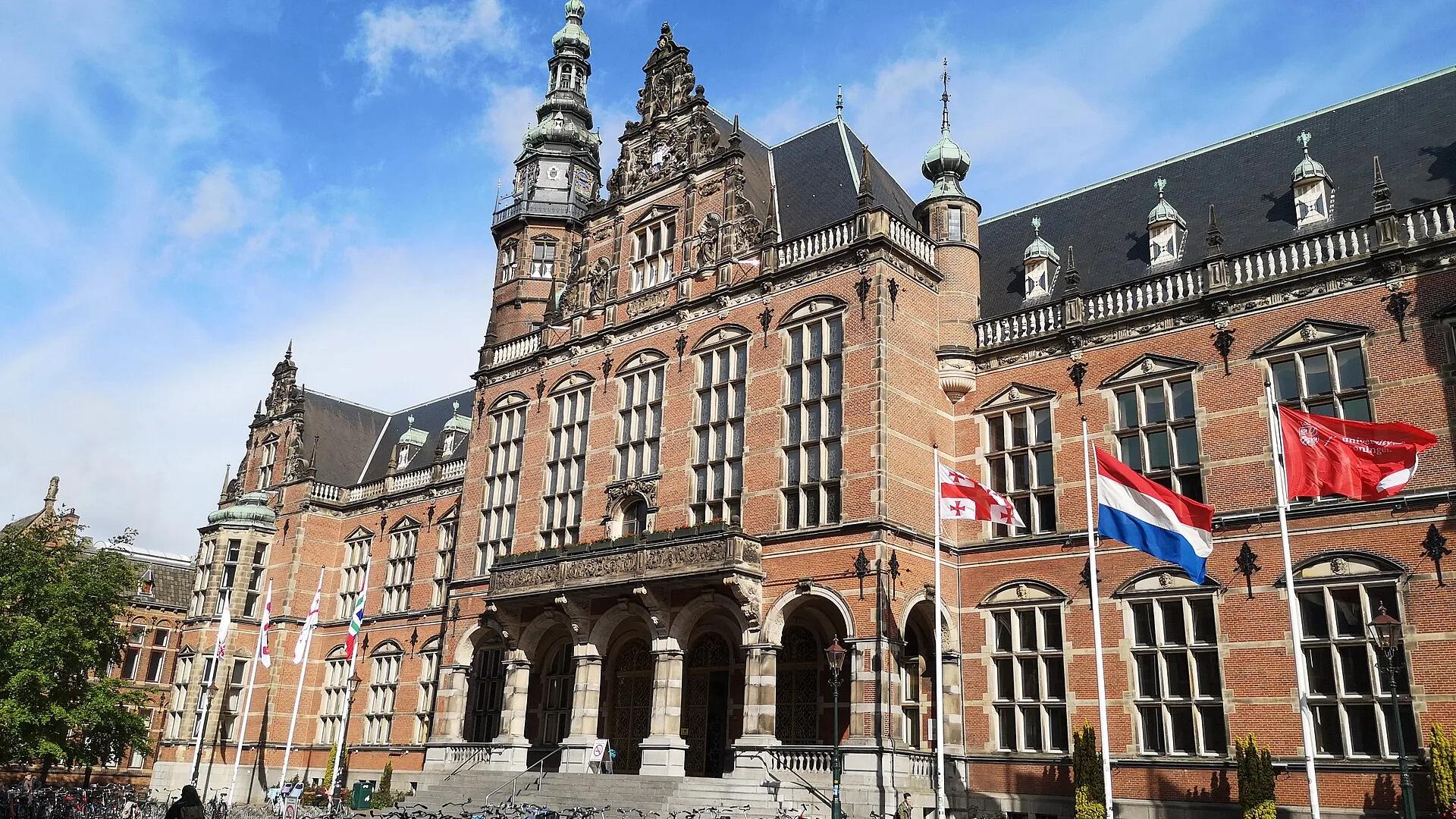
University of Groningen Campus
Groningen's main campus is integrated throughout the historic city center, with modern research facilities complementing centuries-old academic buildings. The setting combines academic tradition with innovation.
Research Laboratories
State-of-the-art AI, quantum computing, and renewable energy research facilities.
Campus Facilities
Mix of historic university buildings and modern academic centers throughout Groningen's city center.
Student Community
36,000 students in a city of 230,000 = vibrant, student-centered culture with affordable housing.
Innovation Centers
Startup incubators and tech transfer programs connecting university research to industry.
Programs at RUG
MSc Artificial Intelligence
Faculty of Science and Engineering
ML, deep learning, computational neuroscience—world-leading research
MSc Quantum Computing
Faculty of Science and Engineering
Quantum algorithms and systems design
MSc Renewable Energy Systems
Faculty of Science and Engineering
Solar, wind, and energy storage technology
MSc Physics
Faculty of Science and Engineering
Particle physics and condensed matter research
MSc Psychology
Faculty of Behavioral and Social Sciences
Behavioral economics and cognitive neuroscience
MSc Economics
Faculty of Economics and Business
Econometrics and policy analysis
MSc Data Science
Faculty of Science and Engineering
Big data analytics and machine learning applications
PhD Artificial Intelligence
Graduate Schools
Advanced research in AI with industry connections
MSc Translational Neuroscience
Faculty of Medical Sciences
Brain research bridging neuroscience and clinical application
Executive MSc Energy & Sustainability
Faculty of Science and Engineering
Energy policy for professionals transitioning to clean energy
Groningen emphasizes research-led education. Most programs include mandatory thesis research, and students work alongside faculty on active research projects. Strong connections to industry enable real-world problem solving.
Admission Requirements
Admission to Groningen's Master's and PhD programs is competitive but based on academic merit and research fit rather than brand name accumulation. Strong academics, clear research interests, and demonstrated initiative are key.
Groningen welcomes international students and offers Groningen Excellence Scholarships (€6,000-25,000/year) and additional funding through Erasmus Mundus and country-specific schemes.
Interview Preparation
What to expect and how to prepare for your RUG interview
Format
University of Groningen uses a matching procedure for most bachelor's programs — a mandatory online questionnaire and/or matching day to assess mutual fit. This is non-selective for most programs. Selective programs (e.g., International Business, Psychology with numerus fixus) have a formal selection process that may include interviews or written assessments.
Duration
Matching: 2-4 hours. Selection interview (where applicable): 15-20 minutes
Interviewers
Academic advisors and student mentors (matching). Faculty committee (selection)
Interview Style
Advisory, Self-reflective (matching). Academic (selection)
What RUG Looks For
Sample Interview Questions
What sparked your interest in this field of study?
Be specific — mention a book, event, or experience that genuinely influenced you.
How do you plan to manage studying abroad in a new country and culture?
Groningen is a small, student-focused city. Show you've thought about life there, not just academics.
What do you already know about this subject, and what gaps do you want to fill?
Demonstrating pre-existing knowledge and intellectual humility makes a strong impression.
Describe a time when you had to learn something completely new and how you approached it.
Focus on your learning process and strategies, not just the outcome.
Why Groningen specifically, rather than other Dutch universities?
Mention specific programs, research strengths, or the close-knit student community.
Preparation Tips
- For most programs, the matching is non-binding and non-selective — relax and be honest
- For numerus fixus programs, prepare thoroughly — the selection is genuinely competitive
- Groningen values community and collaboration — show you're a team player
- Research the specific faculty and their research focus areas before any interaction
Common Mistakes
- Panicking about the matching procedure — for most programs it cannot reject you
- Not completing the mandatory matching steps on time (this CAN block your enrollment)
- Applying to numerus fixus programs without understanding the selection criteria and timeline
What Type of Student Gets In?
Passion for research and solving complex problems
Strong quantitative and analytical skills
Independence and self-direction in learning
Curiosity about emerging technologies and science
Adaptability and comfort in multicultural teams
Initiative in pursuing professional development
Many candidates focus on Groningen's lower prestige ranking relative to Oxford/Cambridge and underestimate its research strength. For PhD and research-intensive programs, Groningen's actual research output and funding often exceed higher-ranked universities.
Costs & ROI
Groningen is one of Netherlands' most affordable cities for students. Scholarships available through Groningen Excellence Scholarship, Erasmus Mundus, and Dutch fellowship schemes. PhD positions typically include tuition + living stipend.
| Level | Tuition | Living | Total |
|---|---|---|---|
| Master's (Non-EU Students) | €12,000-18,000 | €1,000-1,300/month | €24,000-34,000/year |
| Master's (EU Students) | €2,000-2,500 | €1,000-1,300/month | €14,000-17,000/year |
| PhD | €2,000/year | €1,000-1,300/month (often funded) | Typically fully funded with €1,800-2,200/month stipend |
Salary Ranges
Career & Industry
Shell
Energy research partnership and graduate recruitment
Google AI Research
AI and machine learning internships and collaboration
Philips
Technology research and product development partnerships
ASML
Semiconductor and photonics research collaboration
Tesla/Renewable Energy Companies
Clean energy partnerships and recruitment
European Research Council
ERC grant funding for faculty and student research
Groningen graduates are highly sought in AI, energy, and research sectors. Tech companies (Google, Microsoft, Siemens) actively recruit here. Strong momentum in clean energy hiring.
Application Timeline
Application Preparation
- Research programs aligned with your research interests
- Prepare statement of purpose focused on research, not prestige
- Obtain academic references from professors
- Submit application by deadline (typically Dec-April)
Application Review
- Groningen reviews applications (4-8 weeks)
- Strong candidates may be invited for phone interviews
- Research fit and academic strength prioritized
Enrollment
- Secure student residence permit (non-EU)
- Apply for housing via Groningen University housing
- Arrange health insurance and bank account
Active Research & Studies
- Begin coursework and immediately start research
- Collaborate on faculty projects
- Present at research seminars and conferences
- Thesis/dissertation research
Career Launch
- Publish research findings
- Build professional network through conferences
- Apply for academic positions, industry roles, or postdocs
RUG vs Peers
University of Amsterdam
RUG: More affordable tuition, Stronger in AI and energy research, Nobel laureates in physical sciences
Other: Higher overall ranking, Larger program breadth, Better in humanities and social sciences, More prestige
Compare →Delft University of Technology
RUG: Broader research scope, Lower tuition, Stronger psychology and behavioral sciences
Other: Higher engineering specialization, Higher prestige ranking, More engineering-focused
Compare →ETH Zurich
RUG: Much more affordable, Comparable research strength in AI/energy, Better cost-to-quality ratio
Other: Higher ranking, More prestigious, Much more expensive
Compare →RUG Is Right For...
- PhD candidates committed to research careers in STEM
- Master's students in AI, energy, or physics
- Professionals seeking research-focused education over prestige branding
- Career-changers moving into tech, energy, or research
- Budget-conscious students seeking affordability + quality
RUG Is Not Right For...
- Students prioritizing university prestige over actual research output
- Those seeking urban culture (Groningen is smaller, quieter city)
- Non-research-focused Master's programs
- Students uncomfortable with strong quantitative requirements
- Career paths outside STEM and research

Dr. Karan Gupta's Advice
FAQs: RUG for Indian Students
Is Groningen as prestigious as Leiden or Amsterdam?
By overall ranking, no—Groningen is #139 vs Amsterdam #45. But for specific fields (AI, energy, physics), Groningen often conducts stronger research than higher-ranked universities. For PhD and research-focused study, the actual research fit matters more than overall ranking.
Why would I choose Groningen over a 'better ranked' university?
Groningen offers exceptional value: affordability (€12-18K vs €25K+ elsewhere), world-class research in specific fields, smaller class sizes, and strong mentorship. PhD students particularly benefit from full funding, research intensity, and access to cutting-edge labs at lower cost.
Is the job market strong for Groningen graduates?
Yes—particularly in tech, energy, and AI sectors. Tech companies (Google, Microsoft) actively recruit from Groningen's AI program. Energy sector is booming for renewables specialists. PhD graduates have strong academic career prospects.
What's student life like in Groningen?
Groningen is a student city (36,000 students in 230,000 people)—vibrant, affordable, and international. Strong student culture, affordable housing (€400-600/month), and excellent cycling infrastructure. Smaller and quieter than Amsterdam, which some love and others find limiting.
How much research do Master's students actually do?
Significant—most programs include 30-40 ECTS thesis research (6-8 months). Students work alongside faculty on active projects, present at seminars, and often co-author papers. This is more research-intensive than many US and UK universities.
Are PhD positions fully funded?
Yes, typically. Most PhD positions include full tuition + €1,800-2,200/month living stipend (4 years). Funding is highly competitive, but candidates with strong profiles generally secure full support.
Related Articles
How to Prepare for the SAT: 3 Free Tools and a 12-Week Plan
Prepare for the SAT with three free tools and a practical 12-week study plan to strengthen your skills without expensive coaching.
Is a Foreign Degree Still Worth It? What I Told Raj Shamani
Every year Indian families spend crores on a foreign degree. In two hours with Raj Shamani on Figuring Out I answered one question honestly: in 2026, is it still worth it? Here is the fifteen-minute version, with the six student profiles, the Five Removals test, the ROI formula and the funding routes most families never use.
The ₹0 List: Free Opportunities That Actually Strengthen a Student’s Profile
The best summer opportunities are not always expensive. Discover selective ₹0 programs that can demonstrate genuine student achievement.
Want to Study at RUG?
Get expert guidance from Dr. Karan Gupta: Harvard alumnus, 27+ years of global admissions experience guiding 160,000+ students worldwide.