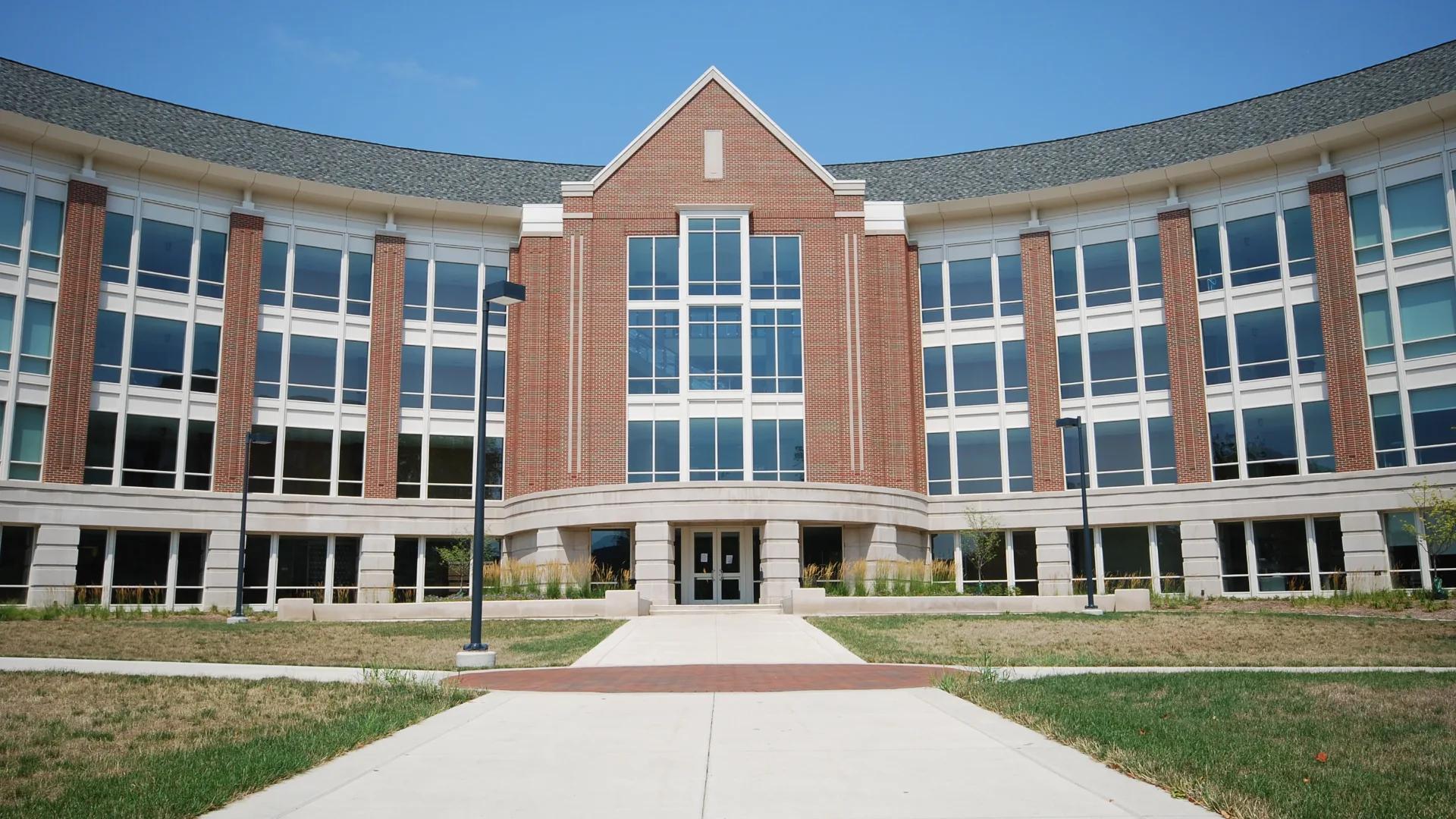
TU Delft
Delft
Delft University of Technology (TU Delft) is one of Europe’s most prestigious engineering universities and a global leader in technological innovation. Located in the Netherlands, TU Delft is internationally renowned for aerospace engineering, robotics, artificial intelligence, sustainable energy, and civil infrastructure. As the Netherlands’ top technical university, TU Delft attracts students from around the world seeking rigorous engineering education combined with cutting-edge research and industry collaboration. Its graduates play key roles in global companies across aerospace, technology, renewable energy, and infrastructure. For students interested in engineering, technology innovation, and research-driven careers, TU Delft represents one of the most powerful academic credentials in Europe.
Top 10
QS Global Rank
#1 Netherlands
Engineering University
95+
Students
95+
Students Guided
TU Delft at a Glance
Public Technical University
Type
~27,000
Students
~€15K/yr
UG Tuition
Top 10 Europe
Engineering Rank

Dr. Karan Gupta's Strategic View
TU Delft is one of Europe’s most respected engineering institutions and a global leader in technical research and innovation.
Why TU Delft Is a Strong Choice
Europe's Top Engineering University
TU Delft is the Netherlands' oldest and largest technical university, consistently ranked among Europe's top 5 for engineering. Its strengths in aerospace, civil engineering, and water management reflect the Netherlands' engineering heritage.
Tuition-Affordable Excellence
EU students pay minimal tuition, and even non-EU tuition (~EUR 18,000) is far below comparable US or UK programs. Combined with Dutch quality of life and cycling culture, Delft offers exceptional value.
Industry-Connected Education
TU Delft's partnerships with ASML, Shell, KLM, and Dutch engineering firms create an education deeply connected to real-world engineering challenges and career opportunities.
Delft Campus
TU Delft's campus in the historic city of Delft features modern research facilities alongside medieval canals, windmills, and traditional Dutch architecture.
Aerospace Leader
One of Europe's top aerospace programs with wind tunnels, flight simulation labs, and ESA partnerships.
Water Engineering
World leaders in water management and hydraulic engineering, reflecting the Netherlands' centuries of water expertise.
Dutch Cycling Culture
Delft's bike-friendly streets and medieval charm create one of Europe's most liveable university cities.
Programs at TU Delft
BSc Aerospace Engineering
Faculty of Aerospace Engineering
One of the most prestigious aerospace engineering programs in the world with strong industry ties to aviation and space technology sectors.
MSc Robotics
Faculty of Mechanical Engineering
Advanced robotics program focusing on autonomous systems, AI, and robotics design.
MSc Computer Science
Faculty of Electrical Engineering, Mathematics and Computer Science
Strong focus on AI, machine learning, cybersecurity, and distributed computing.
MSc Civil Engineering
Faculty of Civil Engineering and Geosciences
Globally recognized program in water management, sustainable infrastructure, and climate-resilient engineering.
MBA in Technology & Innovation
TU Delft School of Technology, Policy and Management
Executive-style MBA designed for technology leaders and engineers transitioning into management roles.
MSc Management of Technology
Faculty of Technology, Policy & Management
Combines technical systems with business strategy and policy innovation
MSc Engineering & Policy Analysis
Faculty of Technology, Policy & Management
Bridges engineering technical depth with public policy and regulatory frameworks
MSc Aerospace Engineering
Faculty of Aerospace Engineering
Design, control, and systems engineering with access to flight testing facilities
MSc Applied Mathematics
Faculty of Electrical Engineering, Mathematics & Computer Science
Mathematical modeling for engineering and scientific computing applications
MSc Industrial Ecology
Faculty of Technology, Policy & Management
Sustainability systems, circular economy, and environmental impact assessment
MSc Systems Engineering
Faculty of Aerospace Engineering
Complex system design, integration, and lifecycle management
TU Delft excels in aerospace, civil engineering, water management, architecture, and industrial design—programs that reflect Dutch engineering excellence and sustainability leadership.
Admission Requirements
TU Delft is highly selective, especially for engineering programs. Admissions focus on strong academic preparation in mathematics, physics, and technical disciplines.
What TU Delft looks for: Exceptional academic ability in mathematics and science, strong analytical thinking, and students capable of contributing to cutting-edge technological innovation.
Interview Preparation
What to expect and how to prepare for your TU Delft interview
Format
No admissions interview. TU Delft uses a fully document-based admissions process for all programs. Master's applicants are evaluated on academic transcripts, motivation letter, CV, and sometimes additional materials (portfolio for architecture/design). The admissions board assesses academic background compatibility, English proficiency, and motivation. Selection is competitive for popular programs.
Duration
N/A — fully document-based
Interviewers
N/A — program admissions board
Interview Style
Systematic document evaluation. TU Delft is the Netherlands' top technical university and evaluates thoroughly but without interviews.
What TU Delft Looks For
Sample Interview Questions
Why TU Delft and this specific Master's program?
Reference TU Delft's specific research strengths (water management, aerospace, sustainable energy, architecture). Be concrete about what draws you.
How does your Bachelor's degree prepare you for this program?
Map your coursework to TU Delft's prerequisites. They publish detailed requirements — show you've checked them.
Describe a significant technical project you've completed.
TU Delft values hands-on engineering. Show you can apply theory to practice.
What is your career vision after completing this Master's?
The Netherlands has a strong tech sector and TU Delft has excellent industry connections. Be specific about your pathway.
How do you approach solving complex engineering problems?
TU Delft's project-based education expects systematic thinking. Show your methodology.
Preparation Tips
- Your motivation letter is critical — TU Delft reads them carefully and uses them as a key selection factor
- Apply as early as possible — popular programs (Computer Science, Aerospace) fill quickly and have rolling admissions with early cutoffs
- TU Delft's admission requirements page for each program is detailed — follow it precisely
- For architecture: the portfolio must demonstrate both technical and conceptual thinking
- Delft is a small, charming university town between Rotterdam and The Hague — affordable and well-connected
- Dutch student visa (MVV) processing takes time — submit applications well before deadlines
- Tuition for non-EU students is significant (~15,000-20,000 EUR/year) — research scholarships early
Common Mistakes
- Missing the early application deadline for competitive programs (some fill by February for September start)
- Submitting a generic motivation letter — TU Delft uses it as a real differentiator
- Not meeting the specific math/physics/programming prerequisites listed for each program
- Underestimating non-EU tuition fees — they're substantial compared to German universities
- For architecture: not following the specific portfolio format and content requirements
What Type of Student Gets In?
Engineering students who want world-class education at affordable European costs
Candidates interested in aerospace, water management, or semiconductor technology
Those attracted to Dutch culture, cycling lifestyle, and European work-life balance
TU Delft's application process includes specific prerequisite requirements that vary by program—check carefully. Also, Dutch master's programs are typically 2 years (not 1 like in the UK), which affects planning.
Costs & ROI
Netherlands living: €900–€1,300/month. Insurance, travel, books, and personal expenses vary. Cost Calculator
| Level | Tuition | Living | Total |
|---|---|---|---|
| Undergraduate (Engineering) | ~€15,000 / year | ~€13,000 / year | ~€28,000 / year |
| Masters | ~€20,000 / year | ~€13,000 / year | ~€33,000 / year |
| MBA | ~€42,000 total program | ~€15,000 / year | ~€57,000 approx. |
Salary Ranges
Career & Industry
Semiconductors
ASML (world's only EUV lithography maker) and NXP Semiconductors maintain deep partnerships with TU Delft.
Aerospace
Airbus, KLM, and the European Space Agency recruit from TU Delft's world-class aerospace engineering program.
Water & Civil
Dutch water management firms and Royal HaskoningDHV partner with TU Delft's world-leading water engineering programs.
TU Delft graduates are highly sought in European engineering, with particularly strong placement in aerospace, semiconductors (ASML), and water management.
Application Timeline
12-18 Months Before
- Research TU Delft programs and identify faculty fit
- Take required standardized tests
- Contact potential supervisors
8-12 Months Before
- Draft statement of purpose
- Request recommendation letters
- Research funding opportunities
4-8 Months Before
- Submit applications by deadlines
- Apply for scholarships and assistantships
- Complete financial aid documentation
0-4 Months Before
- Accept offer and submit deposit
- Apply for visa
- Arrange housing
TU Delft vs Peers
ETH Zurich
TU Delft: Strong aerospace engineering programs, lower tuition, strong EU industry connections.
Other: Higher global prestige and broader research leadership in science and engineering.
Compare →Technical University of Munich
TU Delft: Stronger aerospace and civil engineering specialization.
Other: Larger university ecosystem and stronger connections with Germany’s automotive and industrial sectors.
Compare →TU Delft Is Right For...
- Students seeking top-tier engineering education in Europe
- Those targeting careers in aerospace, robotics, or AI
- Students interested in research-driven technology innovation
- Applicants comfortable with rigorous technical coursework
- Students seeking strong European engineering job opportunities
TU Delft Is Not Right For...
- Applicants uncomfortable with mathematically intensive curricula
- Students seeking primarily business-focused universities
- Students looking primarily for liberal arts programs
- Those wanting small private college environments

Dr. Karan Gupta's Advice
Dr. Karan Gupta is a Harvard Business School alumnus. Book a consultation.
- TU Delft is one of Europe’s most rigorous engineering universities. Students should be prepared for mathematically intensive coursework and a highly analytical academic environment.
- The Netherlands is a global innovation hub. Companies in aerospace, robotics, energy, and technology maintain strong partnerships with TU Delft, creating excellent internship and career opportunities.
- Engineering specialization matters. Programs such as aerospace engineering, robotics, and sustainable infrastructure offer particularly strong career outcomes.
- Think globally when planning your career. TU Delft graduates are highly employable across Europe and globally, particularly in engineering and technology-driven industries.
FAQs: TU Delft for Indian Students
What is TU Delft known for?
Is TU Delft good for Indian students?
What are the most popular programs at TU Delft?
Do TU Delft graduates have strong career prospects?
Can I work while studying at TU Delft?
Yes, international students can work up to 16 hours/week during semesters and full-time during breaks. Non-EU students must register with work permit system but processes are straightforward. Most students work 10-12 hours/week in campus jobs, tutoring, or part-time research roles earning €12-15/hour.
Is housing guaranteed for Master's students?
No, but TU Delft allocates housing through its official service for priority applicants. Most students find private accommodation through student housing organizations (SSH, KKIK, others) at €400-600/month. Competition is fierce so apply immediately after admission.
Do I need to learn Dutch?
Not required for program completion—all Master's are fully English-taught. However, learning Dutch accelerates social integration and unlocks off-campus job opportunities. Many students take evening courses; Dutch is relatively accessible for English speakers (1-2 semester courses make basic conversation achievable).
What percentage of TU Delft graduates stay in the Netherlands post-graduation?
Approximately 55-60% of international Master's graduates secure employment in the Netherlands within 6 months. Others move to Germany (15%), UK (10%), or home countries (15-20%). Netherlands offers 2-year post-study work permit enabling career-building before returning home.
Are scholarships available for Master's students?
Limited merit-based scholarships exist (Delft Fellowship, Erasmus Mundus programs for EU residents) covering 10-15% of tuition. Most funding comes from home government scholarships. Financial aid offices can connect candidates with external fellowships but university-provided funding is competitive.
How rigorous are the programs compared to my home country?
TU Delft programs assume strong technical prerequisites and move rapidly. Graduates from top US/Indian/Chinese engineering schools typically find coursework manageable; those from less competitive backgrounds may struggle with pace. Time management and proactive help-seeking are essential.
Related Articles
IMO Olympiad Explained: The Official Pathway in India
Two exams in India are called IMO. Only one is the official pathway to India's International Mathematical Olympiad team.
5 Ways to Get Into an IIM Without CAT
CAT is not the only way into an IIM. Discover five non-CAT routes, from IPMAT and JIPMAT to IIMB's BBA and GMAT/GRE-based MBAs.
The U.S. Government Website Every College Applicant Should Know
College Scorecard is the free U.S. government tool that lets students research college costs, earnings, completion, debt and more.
Explore More
Want to Study at TU Delft?
Get expert guidance from Dr. Karan Gupta: Harvard alumnus, 27+ years of global admissions experience guiding 160,000+ students worldwide.