Your Guide to Fudan University
Shanghai, China
Fudan University is Shanghai's most prestigious institution, known for world-class programs in business, economics, international relations, and social sciences. QS ranked #39 globally with the #1 School of Management in Asia.
#39
QS Global Ranking
35
Students
¥40-80K
Tuition (International/yr)
1905
Founded
Fudan at a Glance
#39 Globally
QS Ranking
35,000
Student Population
15%
International Students
¥40-80K (~$5,500-11K)
Annual Tuition
Shanghai, China
Location
1905
Founded
#1
Management School Rank (Asia)
Top-tier in Asia
MBA Programs

Dr. Karan Gupta's Strategic View
Dr. Karan Gupta's Expert Assessment
Why Fudan Is a Strong Choice
#1 Business School in Asia with Financial Hub Location
Fudan's School of Management ranks first in Asia, and Shanghai is China's financial center—home to the Shanghai Stock Exchange, banking headquarters, and thousands of multinational corporations. This combination creates unmatched business network access. Your internships, projects, and career opportunities connect directly to Asia's largest financial ecosystem.
Excellence in International Relations & Social Sciences
Unlike Tsinghua's tech focus, Fudan excels in international affairs, diplomacy, and public policy. For professionals targeting careers in international development, government, or global policy, Fudan offers rigorous academics combined with China expertise—a rare and valuable combination.
Shanghai Advantage: Easier International Access & Lower Political Risk
Shanghai is more internationally connected than Beijing, with easier visa processing, larger expatriate communities, and stronger international business culture. The city maintains more liberal policies than other Chinese major cities, offering international students and professionals a more open environment. This positioning benefits both study experience and career launching.
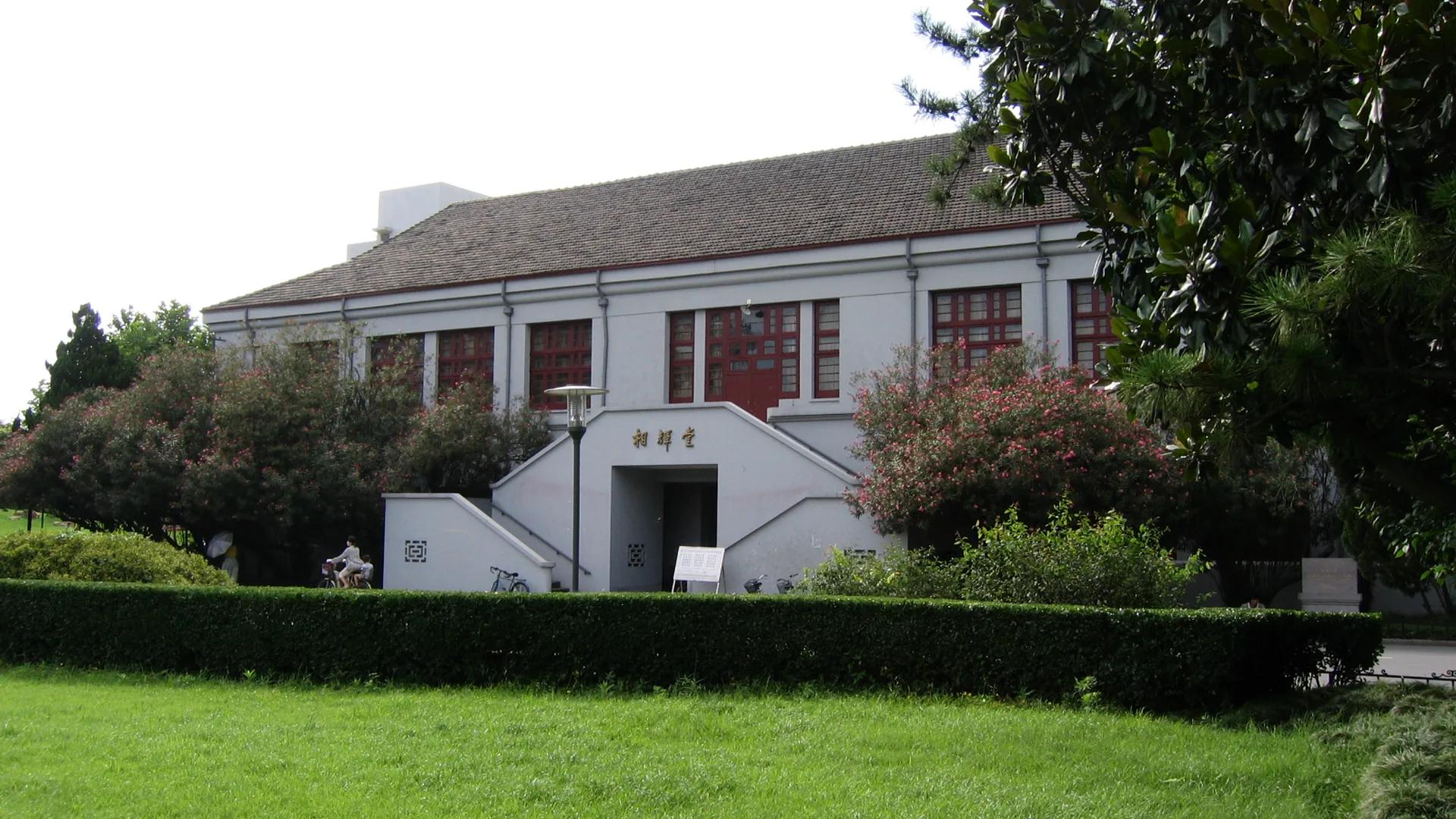
Fudan University Campus
Fudan operates multiple campuses across Shanghai, with the main Handan campus in central Shanghai and additional facilities in Pudong (financial district). Campuses blend historic architecture with modern facilities.
School of Management
World-class business school facilities with executive classroom, case study labs, and financial trading centers.
International Relations Institute
Specialized research center for diplomacy, international affairs, and cross-border policy.
Finance & Economics Center
Research and teaching facilities connected to Shanghai financial markets and banking sector.
University Libraries
5 million volumes with extensive collections in business, social sciences, and international affairs.
Programs at Fudan
MBA
School of Management
Top-tier Asian MBA with strong finance and international business focus
Master's in Finance
School of Management
Quantitative finance, derivatives, and banking expertise
Master's in International Business
School of Management
Cross-border trade, multinationals, emerging market strategy
Master's in International Relations
Institute of International Relations
Diplomacy, geopolitics, and cross-border policy
Master's in Public Administration
School of Government
Policy analysis and government leadership development
Master's in Economics
School of Economics
Econometrics, development economics, policy research
Master's in Journalism
School of Journalism
Media, communication, and international journalism
Master's in Chinese Language
School of Chinese
Advanced Mandarin with business and professional focus
Master's in Medicine/Public Health
School of Medicine
Healthcare policy and public health management
PhD Economics
Graduate Schools
Advanced research in China-focused economic studies
All programs emphasize connection to Shanghai's business and policy ecosystem. Internships with multinational corporations, Chinese firms, government agencies, and international organizations are standard. Case-study and project-based learning are central.
Admission Requirements
Fudan's Master's and MBA programs are highly competitive for international applicants, with admission based on academic credentials, professional experience (for MBA), and demonstrated interest in China or Asia.
Fudan offers Chinese Government Scholarships and Fudan institutional funding for international students. MBA scholarships are merit-based but competitive. For those pursuing Chinese language, additional government funding available.
Interview Preparation
What to expect and how to prepare for your Fudan interview
Format
Interviews are required for select programs, particularly scholarship applicants, English-taught MBA/master's programs, and some competitive undergraduate tracks for international students. Format is typically a one-on-one or panel video interview conducted in English.
Duration
20-30 minutes
Interviewers
Faculty members, Program directors, Scholarship committee members
Interview Style
Academic and motivational — focused on intellectual curiosity and China knowledge
What Fudan Looks For
Sample Interview Questions
Why do you want to study at Fudan University, and why China?
Show specific knowledge of Fudan's programs and demonstrate genuine interest in understanding China, not just using it as a stepping stone.
What is your understanding of China's role in the global economy today?
Be thoughtful and nuanced — avoid cliches. Reference specific sectors like technology, trade, or green energy where China leads.
Describe your academic or research interests and how they connect to what Fudan offers.
Name specific departments, labs, or faculty members at Fudan whose work aligns with your interests.
How will you handle the cultural and language differences of studying in Shanghai?
Show practical awareness — mention any Mandarin study plans, cultural preparation, or previous experience in Asia.
What do you plan to do after completing your degree at Fudan?
Fudan and CSC scholarship panels want to see how you'll use your education to build bridges between China and your home country.
Preparation Tips
- Learn basic Mandarin greetings even for English-taught programs — it shows respect and commitment
- Research Fudan's specific strengths: economics, journalism, international relations, and life sciences
- For CSC scholarship interviews, emphasize how you'll promote cultural exchange after graduating
- Be prepared to discuss current China-related topics in your field with nuance and respect
Common Mistakes
- Showing zero knowledge of or interest in Chinese culture beyond surface-level observations
- Being vague about why Fudan specifically, rather than any other Chinese university
- Not preparing for questions about how you'll adapt to life in China
What Type of Student Gets In?
Professional maturity and business acumen (particularly for MBA)
Genuine interest in China's economy and markets
Cross-cultural communication skills and adaptability
Strategic thinking and business problem-solving
Leadership potential and professional ambition
Financial acumen (for finance/business programs)
International MBA applicants sometimes treat Fudan as a 'backup' to US/European schools. This is a mistake—Fudan's MBA is highly respected in Asia and globally among those familiar with the school. However, brand recognition outside business circles is lower than Harvard or Insead. Choose Fudan for genuine Asia-China strategy, not prestige brand.
Costs & ROI
Shanghai is more expensive than Beijing, but tuition is reasonable compared to Western business schools. Fudan scholarships available for merit-based and need-based support. Chinese Government Scholarships cover tuition + living allowance.
| Level | Tuition | Living | Total |
|---|---|---|---|
| Master's (International Students) | ¥40,000-80,000 | ¥7,000-9,000/month | ¥124,000-188,000/year (~$17,000-26,000) |
| MBA (International) | ¥150,000-200,000 | ¥7,000-9,000/month | ¥234,000-308,000/2 years (~$33,000-43,000/year) |
| PhD | Waived | ¥3,500-4,500/month (funded) | Fully funded with living stipend |
Salary Ranges
Career & Industry
Goldman Sachs
Investment banking and finance internships and recruitment
McKinsey & Company
Consulting internships and graduate hiring from MBA program
Bank of China
Banking and finance internship partnerships
Alibaba Group
Business and finance roles for MBA graduates
HSBC
Banking and international finance partnerships
World Bank Shanghai Office
Development finance and policy research partnerships
Fudan MBA graduates achieve strong outcomes in finance and consulting, with salaries competitive to top Asian programs. Strong placement in Shanghai's banking and corporate sectors. International graduates successfully transition to multinational and global roles.
Application Timeline
Application Preparation
- Select program aligned with career goals (MBA vs. Master's)
- Prepare comprehensive application with strong essays
- For MBA: Take GMAT/GRE if applying to top-tier programs
- For all: Gather references and articulate China strategy
- Submit application (deadlines: Feb-May typical)
Application Review & Interviews
- Fudan reviews applications (4-8 weeks)
- MBA candidates invited for interviews (phone/video)
- MBA interviews focus on business vision and China knowledge
Preparation & Arrival
- Secure Chinese student visa (X visa)
- Arrange housing on-campus or in Shanghai
- Begin Chinese language study if needed
Studies & Professional Development
- Begin classes and internship search
- Pursue internships with multinational or Chinese firms
- Build network with classmates and Shanghai business community
- Complete thesis or capstone projects
Career Launch
- Leverage Fudan alumni network in Shanghai and globally
- Apply for finance, consulting, or business roles
- Consider entrepreneurship or postgraduate study
Fudan vs Peers
Tsinghua University
Fudan: Stronger in business and finance, Better international relations programs, Shanghai location (more international), Top MBA in Asia
Other: Stronger in engineering and technology, Higher overall global ranking (#20 vs #39), Larger founder ecosystem access, Better for AI and deep tech
Compare →National University of Singapore
Fudan: Stronger business programs, Direct China market access, More affordable than NUS MBA, Better for international relations
Other: NUS has higher overall ranking, Singapore location is safer/more stable, Easier for Western candidates, NUS has stronger tech programs
Compare →INSEAD (France/Singapore)
Fudan: Much more affordable, Direct China market knowledge, Stronger international relations academics
Other: INSEAD higher prestige globally, INSEAD stronger career network, INSEAD better for startup venture capital access, INSEAD more established alumni network
Compare →Fudan Is Right For...
- MBA candidates targeting finance, consulting, or multinational roles in Asia
- Professionals seeking China market expertise and international business focus
- Career-changers moving into finance, business, or international development
- Those interested in Chinese politics, policy, or international relations
- Finance and economics professionals seeking advanced technical training
Fudan Is Not Right For...
- Technical candidates seeking engineering or pure science study
- Those uncomfortable with China's political environment
- Career paths outside business, finance, or policy
- Students seeking fully English-medium instruction (coursework in Chinese)
- Those without interest in China or Asian markets

Dr. Karan Gupta's Advice
FAQs: Fudan for Indian Students
How does Fudan's MBA rank compared to Western programs?
Globally, Fudan MBA is tier-2 (below Harvard, Stanford, INSEAD). In Asia and among those targeting Asia careers, Fudan ranks top-tier. For finance and international business in Asia specifically, Fudan's reputation equals or exceeds many Western programs. Geographic career target matters heavily.
Can I do the entire MBA in English?
Partially. Core MBA classes teach in English, but some electives may require Chinese. Most international MBA students speak English as primary language, though Chinese language study is recommended for greater Shanghai integration and career opportunity.
What's the job market for Fudan MBA graduates?
Strong in Shanghai and Asia. Consulting (McKinsey, BCG), investment banking (Goldman Sachs, UBS), and multinational corporations actively recruit. Salaries in Shanghai are competitive but lower than US (¥500K-800K/$70K-115K entry roles). Career outcome heavily depends on whether you target China/Asia or Western markets.
Is Shanghai better than Beijing for study?
For international students, many prefer Shanghai: more international culture, larger expatriate community, stronger international business ecosystem, and easier access to global networks. Beijing is more political; Shanghai more commercial. For business/finance, Shanghai is preferred.
Are there language requirements for non-Chinese programs?
Most MBA and many Master's programs teach in English. However, some coursework may be Chinese, and daily life requires Mandarin. Coming with HSK 3-4 level (intermediate) Chinese or committing to intensive study is highly recommended.
How easy is it to build a professional network as international student?
Quite easy. Shanghai has large international business community, and Fudan intentionally builds diverse cohorts with international and Chinese students. Professional networking is strong, particularly in finance and business. Leverage alumni network aggressively post-graduation.
Related Articles
How to Prepare for the SAT: 3 Free Tools and a 12-Week Plan
Prepare for the SAT with three free tools and a practical 12-week study plan to strengthen your skills without expensive coaching.
Is a Foreign Degree Still Worth It? What I Told Raj Shamani
Every year Indian families spend crores on a foreign degree. In two hours with Raj Shamani on Figuring Out I answered one question honestly: in 2026, is it still worth it? Here is the fifteen-minute version, with the six student profiles, the Five Removals test, the ROI formula and the funding routes most families never use.
The ₹0 List: Free Opportunities That Actually Strengthen a Student’s Profile
The best summer opportunities are not always expensive. Discover selective ₹0 programs that can demonstrate genuine student achievement.
Want to Study at Fudan?
Get expert guidance from Dr. Karan Gupta: Harvard alumnus, 27+ years of global admissions experience guiding 160,000+ students worldwide.