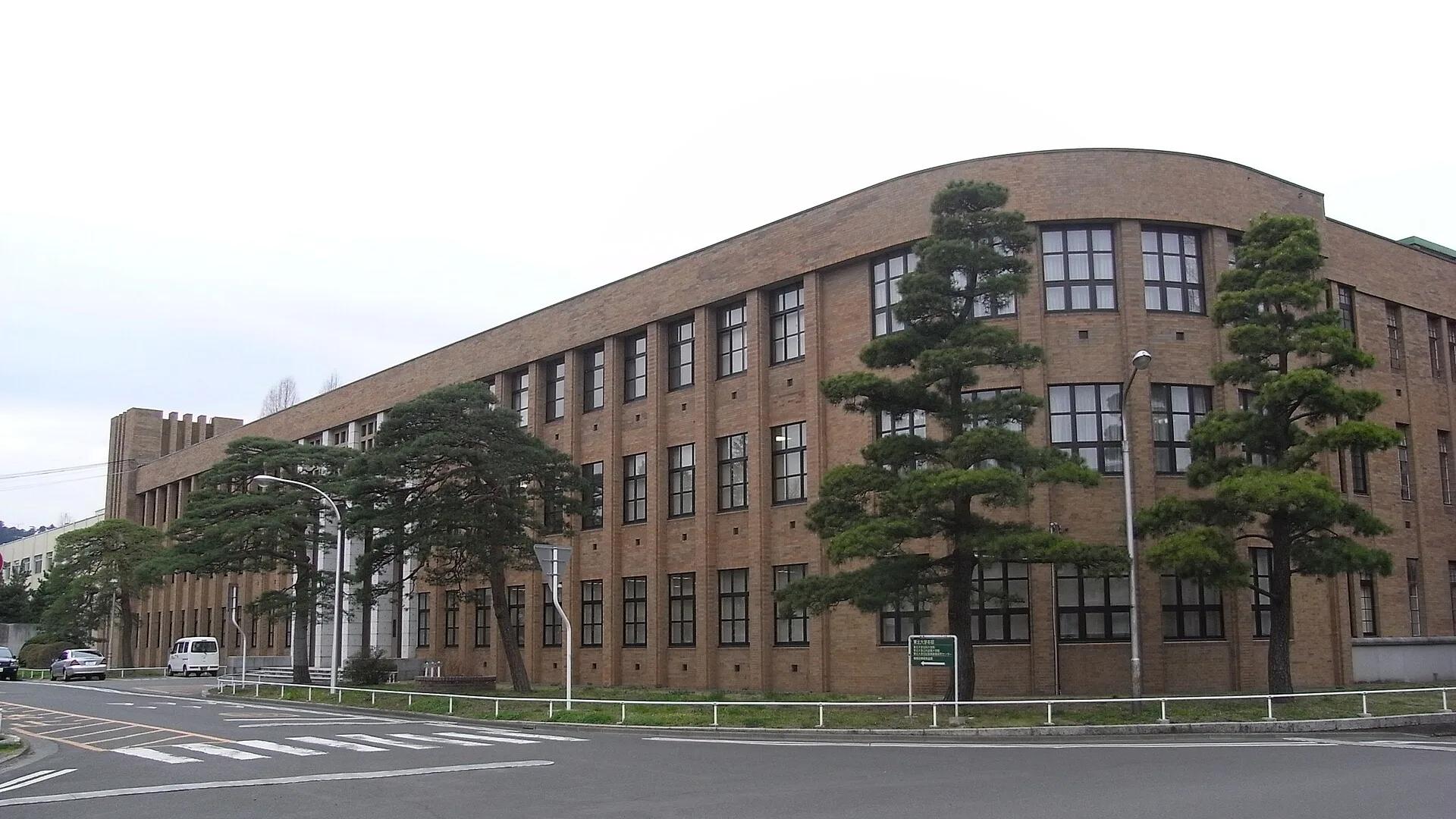
Tohoku University
Sendai, Japan
Tohoku University has been ranked Japan's #1 university by Times Higher Education's Japan ranking for five consecutive years, sits at #102 in the QS World Rankings 2027, and pioneered admitting international and women students in Japan over a century ago. Its materials science is world-famous, its robotics and engineering are elite, and its English-taught Future Global Leadership degrees mean you can study here without Japanese. The price is the astonishing part: national-university tuition of ¥535,800 per year — roughly ₹3 lakh — with MEXT and JASSO scholarships on top.
#102
QS World Ranking 2027
#1
Japan (THE, 5 yrs running)
1907
Founded
¥535,800
Tuition/Year (~₹3L)
Tohoku at a Glance
¥535,800
Tuition/Year (~₹3 lakh)
#102
QS World Ranking 2027
MEXT
Full-Ride Scholarships
English
FGL Degree Programmes

Dr. Karan Gupta's Strategic View
Why Tohoku Is a Strong Choice
Japan's Quiet Number One
Times Higher Education's Japan University Rankings — which weigh education quality and outcomes, not just research volume — have placed Tohoku #1 in the country for five consecutive years, ahead of the University of Tokyo and Kyoto. Globally, QS ranks it #102 (2027).
The university's history explains its character: founded in 1907 with an 'Open Doors' philosophy, it was the first in Japan to admit women and international students, and it built its reputation on research-first education — students join laboratories and produce real research, not just coursework.
Its crown jewel is materials science: the Institute for Materials Research has shaped a century of metallurgy, magnetics and semiconductor materials, and remains one of the most cited institutes in the field worldwide.
The Arithmetic Nobody Believes
Japan's national universities charge a single standardised tuition: ¥535,800 per year — about ₹3 lakh — identical for international and domestic students, at every level from bachelor's to PhD. A complete Tohoku degree costs less in tuition than a single year at most Western universities, and less than many Indian private colleges.
Scholarships stack on top: MEXT (Japan's government scholarship) covers full tuition, a monthly stipend of roughly ¥117,000-145,000 and airfare; JASSO and university awards support many others. A large share of international graduate students study effectively free.
Sendai completes the equation — a clean, green city of a million where students live well on ¥100,000-140,000 per month, far below Tokyo costs.
Careers: Japan Wants Engineers — On Its Terms
Japan faces a deep engineering shortage and has opened doors accordingly: international graduates receive a job-hunting visa of up to one year, employer sponsorship for engineers is routine, and the Highly Skilled Professional points system fast-tracks residency for research graduates.
The condition is language. Japanese corporate hiring still runs substantially in Japanese, and the graduates who convert Tohoku's brand into Toyota, Sony, Denso or semiconductor careers are those who used the university's free language programmes seriously. Reach JLPT N2 and Japan's job market opens wide; skip it and options narrow to a smaller English-speaking segment.
The alternative path is equally strong: Tohoku's research training places PhD students into laboratories and universities worldwide — for academia-bound students, it is a global springboard at Japanese prices.
Campus & Student Life
Multiple campuses across Sendai — the 'City of Trees' — with the main Kawauchi and Aobayama campuses on forested hills above the city; a subway line connects campus to downtown in minutes.
Aobayama hill campuses
Forested research campuses with their own subway stations
University dormitories
Affordable international housing — apply at admission
Sendai
A liveable city of a million; Tokyo is 90 minutes by shinkansen
Programs at Tohoku
Materials Science & Engineering (English-taught graduate tracks)
Tohoku's Institute for Materials Research is one of the most cited materials science centres on Earth — this is the university's global calling card. Graduate students work in laboratories that industry (from semiconductors to batteries) watches closely, and the research-first culture makes it a premier PhD springboard.
Mechanical / Aerospace Engineering & Robotics
Tohoku's robotics groups are internationally known — including disaster-response robotics developed after the 2011 earthquake — and its engineering graduate school offers English-taught international courses across mechanical, aerospace and civil fields.
Future Global Leadership (FGL) undergraduate degrees in English
Fully English-taught bachelor's programmes — Advanced Molecular Chemistry, Applied Marine Biology, and International Mechanical and Aerospace Engineering — designed for international students. No Japanese required for admission; the university teaches you Japanese alongside.
Physics / Chemistry / Life Sciences graduate programmes
A research university in the classic sense: Tohoku's science graduate schools offer English-taught international courses with laboratory placement from day one and strong scholarship coverage for research students.
Data Science / AI (graduate)
Growing English-taught options in data science and AI ride on Tohoku's computational research strength and Japan's national push for AI talent.
Two admission tracks matter for Indian students: English-taught FGL undergraduate degrees (apply directly with school records, EJU/SAT-style credentials and interviews) and English-taught graduate international courses (professor-contact culture: identify a laboratory and supervisor early). Main intakes are April and October.
Admission Requirements
Tohoku is selective but transparent, and unusually welcoming by Japanese standards — it was Japan's first university to admit international students. Graduate admission runs through the laboratory system: contact prospective supervisors with a focused research statement before applying. Undergraduate FGL admission is document-plus-interview based.
The MEXT scholarship — Japan's government full ride (tuition + monthly stipend + airfare) — and JASSO support make Tohoku potentially cheaper than studying in India. Embassy-recommendation MEXT applications run through the Embassy of Japan in India roughly a year ahead: plan the scholarship calendar first, not last.
Graduate Programs (English-taught tracks)
- Materials Science (IMR-linked)
- International Mechanical & Aerospace Engineering
- Robotics
- Physics / Chemistry international courses
- Data Science
- Environmental Studies
What Type of Student Gets In?
Academically rigorous, especially in maths and sciences
Independent and comfortable with cultural adaptation
Research-curious — excited by laboratories, not just lectures
Long-horizon planner (language + scholarship calendars reward it)
Indian families evaluate Japan like the US and ask 'what is the OPT equivalent?' Japan's answer is different: a 1-year job-hunting visa, employer sponsorship that is genuinely available for engineers — but a hiring culture that runs on Japanese. Students who treat the free Japanese classes as optional lose most of the career value; students who reach conversational level walk into one of the world's most engineer-hungry markets.
Costs & ROI
Japan's national universities charge one standardised tuition — ¥535,800/year regardless of programme or nationality — making Tohoku's total cost lower than most Indian private engineering colleges. MEXT covers everything plus a stipend; JASSO and university scholarships are widely held. Part-time work up to 28 hours/week is permitted.
| Level | Tuition |
|---|---|
| Tuition (all levels — national university rate) | JPY 535,800/year (~₹3 lakh) |
| One-time admission fee | JPY 282,000 (first year only) |
| Living Costs (Sendai) | JPY 100,000 - 140,000/month |
Salary Ranges
Career & Industry
Institute for Materials Research (IMR)
Founded in 1916 and among the world's most cited materials institutes — steel, magnets, semiconductors and battery materials research with a century of industry collaboration behind it.
Japan's manufacturing giants
Toyota, Denso, MHI, Sony and Japan's semiconductor revival recruit heavily from Tohoku's engineering laboratories; the professor-recommendation channel remains a real hiring route in Japan.
Application Timeline
15-18 Months Before
- Choose track: FGL undergraduate vs graduate international course
- Graduate: shortlist laboratories and read professors' papers
- Map the MEXT embassy-recommendation calendar (opens ~April in India)
10-14 Months Before
- Take TOEFL/IELTS
- Graduate: email prospective supervisors with a tight research statement
- Prepare documents; apply for MEXT if pursuing it
8-12 Months Before
- Submit university application for April or October intake
- University-recommendation MEXT runs with admission for many international courses
4-7 Months Before
- Receive results; complete Certificate of Eligibility (CoE) process — the university sponsors it
- Apply for the student visa in India with the CoE (straightforward)
1-3 Months Before
- Arrange university dormitory (affordable; apply early)
- Budget: Sendai living runs ¥100,000-140,000/month all-in
Arrival
- Orientation + free Japanese classes — take them seriously for career options
- Register residence card; open bank account
- Join a lab or circle — that is where Japanese university life happens
Tohoku vs Peers
Tohoku vs University of Tokyo
Tohoku: THE Japan #1 (education-focused ranking), stronger materials science, calmer and cheaper city, more accessible admission
Other: UTokyo's bigger global brand and QS rank, Tokyo's job market and international scene
Compare →Tohoku vs IIT (staying in India)
Tohoku: World top-105 research environment, Japanese industry pipeline, MEXT can make it cheaper than IIT, global PhD springboard
Other: IIT brand within India, no language layer, home-market placement machinery
Tohoku Is Right For...
- Serious STEM students — materials, robotics, mechanical, physics
- Families seeking elite education without debt (MEXT/JASSO potential)
- Future PhD candidates wanting research-lab immersion from day one
- Students genuinely willing to learn Japanese alongside their degree
- Those drawn to Japan's engineering industry
Tohoku Is Not Right For...
- Students unwilling to invest in Japanese language (careers cap quickly)
- Business/commerce-focused applicants — this is a research-STEM story
- Those who need a big international metro scene (Sendai is calm)
- Students wanting Western-style post-study work entitlements without a job search

Dr. Karan Gupta's Advice
FAQs: Tohoku for Indian Students
Can I study at Tohoku University without knowing Japanese?
Yes — the Future Global Leadership (FGL) undergraduate degrees and many graduate international courses are fully English-taught, and admission requires no Japanese. The university provides free Japanese classes alongside. For careers in Japan afterwards, learning Japanese seriously (target JLPT N2) is what unlocks the full job market.
What does Tohoku University really cost?
Tuition is the standardised national-university rate: ¥535,800 per year (~₹3 lakh) plus a one-time ¥282,000 admission fee. Sendai living costs run ¥100,000-140,000/month. MEXT scholarships cover tuition, stipend and airfare entirely; JASSO and university awards support many more students. Total cost is routinely below Indian private engineering colleges.
How do I get the MEXT scholarship for Tohoku?
Two routes: embassy recommendation (apply through the Embassy of Japan in India, typically opening around April for the following year — competitive, exam plus interview) or university recommendation (tied to your Tohoku application for many international courses). Plan the MEXT calendar before the university calendar; it runs earlier.
Can I work in Japan after graduating from Tohoku?
Yes — graduates can take a job-hunting ('designated activities') visa for up to a year, and engineering hiring in Japan is strong, with straightforward employer sponsorship and a points-based fast track to permanent residency for skilled graduates. The practical key is Japanese proficiency; with it, Tohoku's brand carries real weight in Japan's industrial hiring.
Related Articles
Common Data Set: What Harvard and Top U.S. Colleges Really Consider
The Common Data Set reveals what U.S. colleges say matters in admissions—and what they say does not.
Your College Scholarship Isn’t Always Final: How to Ask for More
A three-paragraph scholarship appeal email can sometimes unlock more college aid. Learn when to negotiate, what to say, and when an appeal can backfire.
Publish Real Research Before Class 12: What Actually Counts
A practical guide to credible high school research journals, peer review, publication timelines and a six-month plan for students before Class 12.
Want to Study at Tohoku?
Get expert guidance from Dr. Karan Gupta: Harvard alumnus, 27+ years of global admissions experience guiding 160,000+ students worldwide.