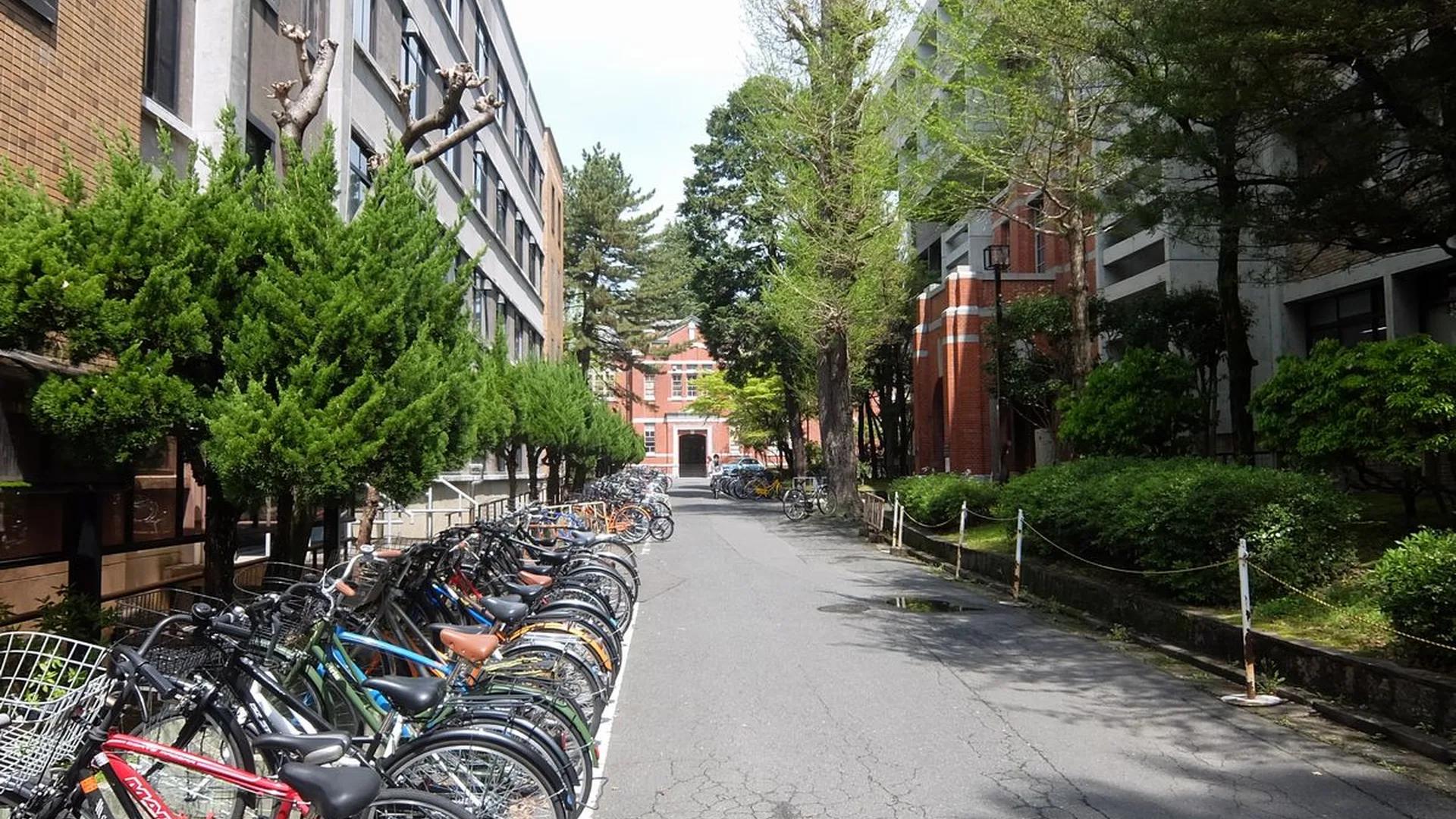
Kyoto University
Kyoto, Japan
Kyoto University is Japan's most celebrated research institution and has produced more Nobel Prize winners than any other Asian university. Known for its culture of academic freedom and independent thinking, Kyoto is the intellectual counterweight to Tokyo's establishment. Its science, engineering, and medicine programmes rank among the global elite, attracting researchers who value depth over convention.
#46
QS World Ranking
1897
Founded
22,000+
Students
11
Nobel Prizes
Kyoto at a Glance
#46
QS World Ranking
11
Nobel Prizes
JPY 535K
Annual Tuition
1897
Founded

Dr. Karan Gupta's Strategic View
Why Kyoto Is a Strong Choice
The Nobel Prize Factory
Kyoto University has produced 11 Nobel Prize winners — more than any other university in Asia and more than many elite Western institutions. These are not honorary affiliations; these are researchers who did their groundbreaking work at Kyoto. Shinya Yamanaka's Nobel-winning stem cell research was conducted in Kyoto labs. Akira Yoshino's lithium-ion battery work that powers every smartphone in the world traces back to Kyoto.
This concentration of Nobel-level research is not accidental. Kyoto's founding principle — academic freedom — creates an environment where researchers are given the space and time to pursue fundamental questions without pressure to produce immediate commercial results. This philosophy is embedded in the university's DNA and attracts a specific kind of mind.
For Indian students considering research careers, this matters enormously. You will be working in an environment where the expectation is not to publish quickly and move on, but to understand deeply and produce work that lasts. If your ambition is to be a researcher who changes a field, Kyoto's culture will nurture that ambition in ways that few other universities can match.
Unbeatable Value for World-Class Research
Japanese national university tuition is set by the government at JPY 535,800 per year — approximately INR 3 lakh. This is the same whether you are Japanese or international, undergraduate or PhD. There are no international student surcharges, no premium for popular programmes, no hidden fees. Add the one-time enrollment fee of JPY 282,000 and your total cost for a 2-year master's is under INR 8 lakh in tuition.
The MEXT (Ministry of Education) scholarship is Japan's flagship programme for international students and is highly attainable for strong Indian applicants. It covers full tuition, a monthly stipend of JPY 144,000 (~INR 80,000), round-trip airfare, and no service bond. Many Kyoto professors actively help their prospective students secure MEXT funding.
Living in Kyoto costs JPY 80,000-120,000 per month — roughly INR 45,000-65,000 including rent, food, and transport. University dormitories are available at JPY 10,000-30,000 per month. Compare this to USD 60,000+ per year at a US research university, and the value proposition becomes almost absurd. You are getting Nobel Prize-adjacent research training for less than most Indian private university fees.
Kyoto — The City That Shapes the Mind
Kyoto is Japan's cultural capital — 17 UNESCO World Heritage Sites, 2,000 temples and shrines, and a 1,200-year history as the imperial seat. But it is also a serious innovation hub. Nintendo, Kyocera, Omron, Shimadzu, and dozens of deep-tech startups call Kyoto home. The city has the highest density of PhD holders per capita in Japan.
The combination of ancient culture and cutting-edge technology creates a unique atmosphere. You can spend your morning in a 500-year-old Zen garden and your afternoon in a semiconductor research lab. This duality shapes how Kyoto researchers think — there is a patience and depth to Kyoto's academic culture that reflects the city itself.
For Indian students, Kyoto offers practical advantages too. It is compact and bicycle-friendly — most students cycle to campus. The food scene is extraordinary and accommodating of vegetarian diets (Buddhist temple cuisine, tofu restaurants, and a growing international food scene). The international community is smaller and more tight-knit than Tokyo's, which means deeper friendships and stronger support networks.
Campus & Student Life
Kyoto University's main campus in the Yoshida area is nestled in the northeast of Kyoto city, walking distance from iconic temples and the Kamo River. The campus blends traditional Japanese architecture with modern research facilities across several clusters.
Admission Requirements
Kyoto University values research potential above all else. Admission to graduate programmes typically requires connecting with a potential supervisor before applying. The university is less test-score-focused than many peers — what matters most is your research proposal, academic references, and fit with a lab.
At Kyoto, the single most important thing is finding the right supervisor. Email professors directly with your research interests before applying. A professor who wants you in their lab is worth more than a perfect GPA.
Master's Programs
- MSc Informatics (Intelligence Science and Technology)
- MSc Engineering (multiple specialisations)
- MSc Economics
- MSc Energy Science
- MSc Agriculture (Food Science and Biotechnology)
Graduate School of Management
- MBA (Japanese-taught, 2 years)
- International Project Management course
Interview Preparation
What to expect and how to prepare for your Kyoto interview
Format
Research-focused interview with potential supervisor and lab members
Duration
30-60 minutes
Interviewers
Potential thesis advisor and 1-2 faculty members
Interview Style
Deep academic discussion — they want to test your understanding of your proposed research area, not your personality
What Kyoto Looks For
Sample Interview Questions
Preparation Tips
- Read at least 3-5 recent papers from your target lab before the interview
- Prepare a concise explanation of how your research fits the lab's agenda
- Show intellectual curiosity — Kyoto rewards independent thinkers
- If applying to MEXT scholarship, prepare for additional embassy interviews
Common Mistakes
- Applying without first contacting a potential supervisor
- Presenting a vague or overly broad research proposal
- Not knowing the specific lab's recent publications
What Type of Student Gets In?
Intellectually independent and self-directed
Patient — Japanese academic culture rewards long-term dedication
Curious about Japanese language and culture beyond surface level
Research-oriented with a specific area of deep interest
Comfortable with ambiguity — Kyoto gives freedom but less hand-holding
Values substance over prestige signalling
The biggest mistake is applying to Kyoto without first contacting a potential supervisor. In the Japanese system, professor buy-in is everything. A brilliant application sent cold to the admissions office will lose to a mediocre one backed by a professor who wants you in their lab. Do the outreach first.
Costs & ROI
Japanese national university tuition is standardised and remarkably affordable. The MEXT scholarship covers full tuition plus JPY 144,000/month stipend. Even without MEXT, Kyoto is one of the most affordable world-class research universities. Kyoto city is significantly cheaper than Tokyo — expect to spend 30-40% less on rent and daily expenses.
| Level | Tuition |
|---|---|
| Master's (all programmes) | JPY 535,800/year (~USD 3,600) |
| Enrollment Fee (one-time) | JPY 282,000 (~USD 1,900) |
| Living Costs | JPY 80,000 - 120,000/month (~USD 550-800) |
Salary Ranges
Career & Industry
Nintendo
Nintendo's global headquarters is in Kyoto, just 15 minutes from campus. The company collaborates with Kyoto University on game AI, human-computer interaction, and hardware engineering research. Many Kyoto engineering graduates join Nintendo's famously secretive R&D teams.
Kyocera
The ceramics and electronics giant was founded by a Kyoto-area entrepreneur and maintains deep ties with the university. Kyocera funds materials science research and recruits heavily from Kyoto's engineering programmes for its semiconductor and solar energy divisions.
Shimadzu Corporation
This 140-year-old precision instruments company is headquartered in Kyoto and partners with the university on analytical chemistry and life sciences research. A Shimadzu employee based at Kyoto won the 2002 Nobel Prize in Chemistry.
Kyoto graduates are highly respected in Japan's research and corporate sectors. While Tokyo University dominates government and banking, Kyoto alumni are over-represented in technology innovation, scientific research, and creative industries. The university has the highest density of startup founders among Japanese national universities.
Application Timeline
12-18 Months Before
- Identify target labs and professors at Kyoto
- Begin reading their publications and formulating research questions
- Start Japanese language study — even basics help enormously
9-12 Months Before
- Email potential supervisors with research proposal summary
- Apply for MEXT scholarship if eligible (April deadline for embassy recommendation)
- Take TOEFL/IELTS and prepare research proposal
6-9 Months Before
- Submit formal application to target programme
- Complete entrance examination if required
- Prepare for interview with potential supervisor
3-6 Months Before
- Receive admission and scholarship decisions
- Begin Japanese student visa (CoE) application
- Arrange housing — Kyoto University International House or private accommodation
1-3 Months Before
- Accept offer and complete enrollment procedures
- Arrange housing in Kyoto (university dorms or apartments near campus)
- Open Japanese bank account upon arrival
Arrival
- Attend orientation and register at city hall for residence card
- Join lab and begin research activities
- Enroll in free Japanese language courses offered by the university
Kyoto vs Peers
Kyoto vs University of Tokyo
Kyoto: More Nobel Prizes, stronger culture of academic freedom, more affordable city, better for independent thinkers, stronger in fundamental science
Other: Higher global ranking, stronger corporate recruitment network, Tokyo location with more industry access, broader programme range
Kyoto vs Osaka University
Kyoto: Higher prestige and global ranking, more Nobel Prizes, stronger research culture, Kyoto city cultural richness
Other: Slightly more practical/applied orientation, Osaka city is more affordable, stronger in clinical medicine, more industry-connected
Kyoto vs ETH Zurich
Kyoto: Dramatically lower tuition and living costs, MEXT scholarship availability, unique Japanese research culture, stronger in certain life sciences
Other: Higher global ranking, English-friendly environment, Swiss salary premium, stronger European industry connections
Kyoto Is Right For...
- Research-oriented students with clear academic interests
- Those who thrive in independent, unstructured academic environments
- Students willing to learn Japanese and commit to 2+ years in Japan
- Applicants seeking world-class STEM research at minimal cost
- Those who prefer depth of knowledge over breadth of networking
Kyoto Is Not Right For...
- Students seeking a quick 1-year professional master's degree
- Those who want an English-only academic and social environment
- Applicants focused on business networking and corporate recruitment events
- Students who need a big-city, high-energy campus atmosphere

Dr. Karan Gupta's Advice
FAQs: Kyoto for Indian Students
Is Kyoto University good for Indian students?
Kyoto is excellent for Indian students who are research-oriented and willing to invest in Japanese language learning. The tuition is incredibly affordable (under INR 3 lakh/year), the MEXT scholarship can cover everything, and the research quality is world-class. Kyoto city is safe, affordable, and culturally rich. The main requirement is genuine commitment to research and willingness to spend 2+ years in Japan.
Can I study at Kyoto University in English?
Yes — several graduate programmes offer English-taught tracks, particularly in engineering, informatics, and international studies. However, daily campus life and social interactions are predominantly in Japanese. Kyoto offers free Japanese language courses to all international students. Learning Japanese significantly improves both your academic experience and career prospects in Japan.
How does Kyoto compare to the University of Tokyo?
Both are Japan's top two universities, but the cultures are very different. Tokyo (Todai) is establishment — it produces bureaucrats, bankers, and corporate leaders. Kyoto produces researchers, innovators, and Nobel laureates. Todai values conformity and hierarchy; Kyoto values independence and original thinking. For research careers, Kyoto is arguably stronger. For corporate careers in Japan, Todai's network is broader.
What is the MEXT scholarship and how do I get it?
MEXT is the Japanese government scholarship for international students. It covers full tuition, JPY 144,000/month stipend, and round-trip airfare. There are two routes: embassy recommendation (apply at the Japanese embassy in India, April deadline) and university recommendation (apply through Kyoto directly). Both are competitive but very attainable for strong Indian applicants. Having a professor at Kyoto who supports your application significantly improves your chances.
Related Articles
Wall Street Internships: What Matters More Than Your College Name
A Wall Street job isn't guaranteed by an Ivy League degree. Here's how students from any college can compete for elite finance internships.
Common Data Set: What Harvard and Top U.S. Colleges Really Consider
The Common Data Set reveals what U.S. colleges say matters in admissions—and what they say does not.
Your College Scholarship Isn’t Always Final: How to Ask for More
A three-paragraph scholarship appeal email can sometimes unlock more college aid. Learn when to negotiate, what to say, and when an appeal can backfire.
Related Guides & Resources
Want to Study at Kyoto?
Get expert guidance from Dr. Karan Gupta: Harvard alumnus, 27+ years of global admissions experience guiding 160,000+ students worldwide.