Your Guide to University of Tokyo
Tokyo
University of Tokyo is a leading global institution.
QS #28
World Ranking
~24%
Acceptance Rate
28,000+
Students
11
Nobel Laureates
UTokyo at a Glance
QS #28
World Ranking
#1 in Japan
National Rank
28,000+
Total Students
4,500+
International Students
¥536K/yr
Tuition (~$3,600)
95%+
Employment Rate
11
Nobel Laureates
1877
Founded

Dr. Karan Gupta's Strategic View
Dr. Karan Gupta's Expert Assessment
Why UTokyo Is a Strong Choice
Japan's Undisputed Academic Leader
The University of Tokyo (UTokyo) stands alone at the pinnacle of Japanese higher education. As Japan's oldest and most prestigious university, it has produced more prime ministers, CEOs, and Nobel laureates than any other Japanese institution. A UTokyo degree commands immediate respect across all industries in Japan and throughout Asia.
For international students, UTokyo represents unmatched access to Japan's $5 trillion economy — the world's third largest. The university's research output rivals MIT, Stanford, and Oxford, particularly in engineering, robotics, materials science, and life sciences. Its alumni network spans every major Japanese corporation and government ministry.
World-Class Education at Unbelievable Value
Perhaps UTokyo's most remarkable feature is its cost: approximately ¥535,800 per year (~$3,600) for all students, regardless of nationality. This is set by the Japanese government for all national universities. Combined with numerous scholarship programs like MEXT (which covers tuition plus living expenses), UTokyo becomes an extraordinary proposition for students seeking world-class education without crushing debt.
Japan's government heavily subsidizes national universities because it views education as a public good. Combined with numerous scholarship programs like MEXT (which covers tuition plus living expenses), UTokyo becomes an extraordinary proposition for students seeking world-class education without crushing debt.
Innovation Capital: Robotics, AI & Deep Tech
UTokyo sits at the heart of Japan's innovation ecosystem. The university is a global leader in robotics, artificial intelligence, quantum computing, and advanced materials — fields where Japan remains at the cutting edge. The Hongo campus alone hosts over 400 startups and spin-offs, and the university's technology transfer office is one of Asia's most active.
Students benefit from partnerships with Toyota, Sony, Hitachi, SoftBank, and other Japanese technology giants. The university's research labs are among the best-funded in Asia, and graduate students have direct access to facilities that rival those at MIT or Caltech.
Tokyo
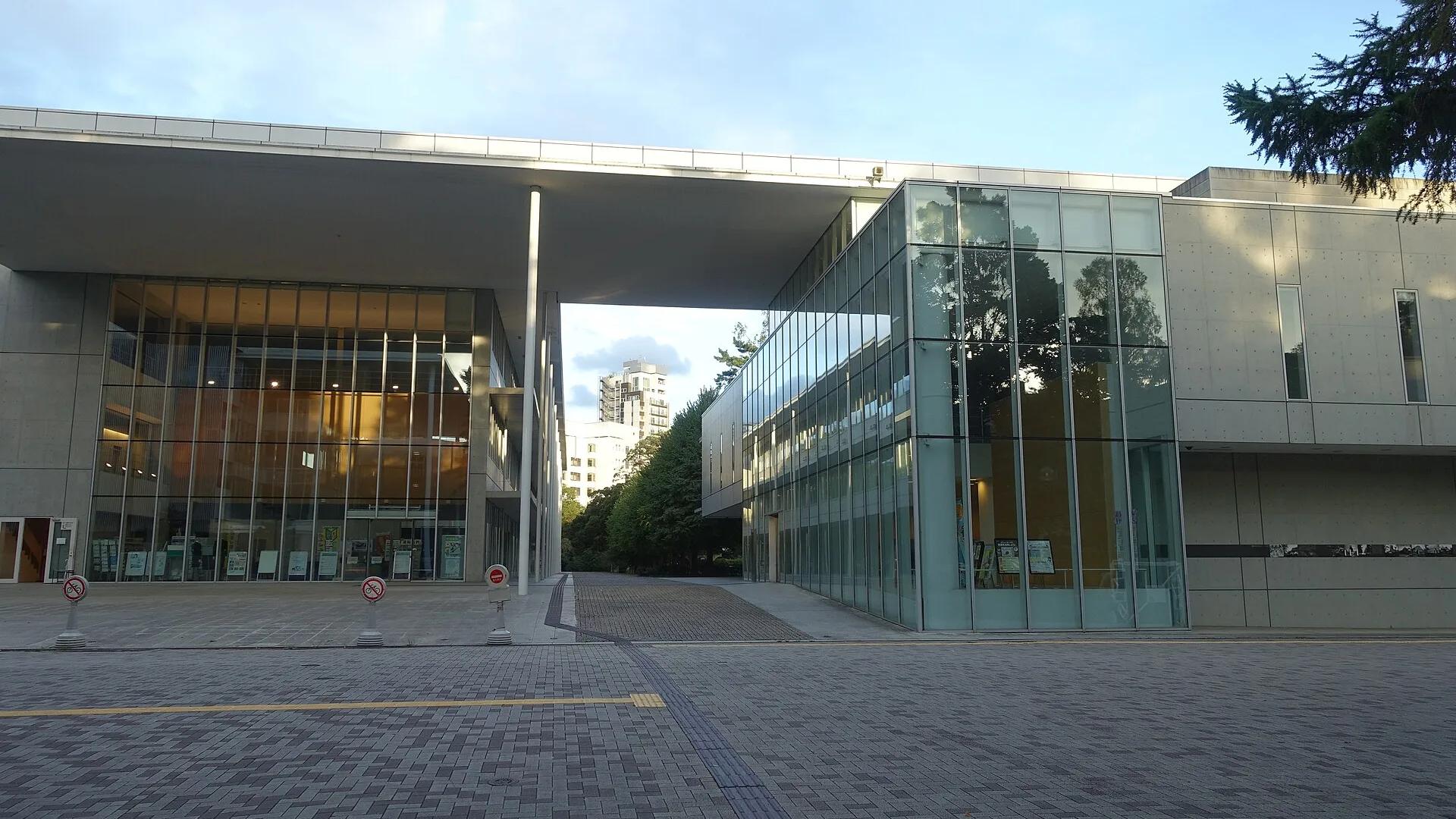
University of Tokyo campus overview.
Programs at UTokyo
MBA
Graduate School of Economics
Japanese business strategy, corporate governance
MSc Technology Management
Graduate School of Engineering
Innovation management, tech commercialization
MSc Public Policy (GraSPP)
Graduate School of Public Policy
International policy, Japanese governance model
MSc Computer Science
Graduate School of Information Science
AI, robotics, human-computer interaction
MSc Mechanical Engineering
Graduate School of Engineering
Robotics, precision engineering, manufacturing
MSc Civil Engineering
Graduate School of Engineering
Infrastructure, earthquake engineering, urban planning
MSc Information Science
Graduate School of Information Science
Data science, cybersecurity, computational biology
MSc Environmental Studies
Graduate School of Frontier Sciences
Sustainability, environmental policy, climate science
MSc Economics
Graduate School of Economics
Japanese economy, development economics, trade policy
Detailed programs coming soon.
Admission Requirements
Admission overview coming soon.
Apply with clear strategic vision.
Interview Preparation
What to expect and how to prepare for your UTokyo interview
Format
Interviews are conducted for select programs, particularly English-taught programs like PEAK (Programs in English at Komaba), GSGC, and some graduate schools. Research students typically have an interview with their prospective supervisor. Format is usually video-based for international applicants.
Duration
20-30 minutes
Interviewers
Faculty members, Program committee, Prospective research supervisors
Interview Style
Formal and academic — emphasis on research capability and intellectual depth
What UTokyo Looks For
Sample Interview Questions
Why have you chosen the University of Tokyo, and what specifically interests you about this program?
UTokyo is Japan's most prestigious university — reference specific departments, research groups, or the unique aspects of programs like PEAK.
Please explain your research interests and how they align with our faculty's work.
Identify specific professors whose work connects to yours. Japanese academia values showing you've done thorough preparation.
How do you plan to handle the academic and cultural adjustment of studying in Japan?
Mention any Japanese language study, cultural knowledge, or previous experience in Japan. Show practical awareness of daily life in Tokyo.
What is your understanding of the current state of research in your field, and where do you see gaps?
Demonstrate you can think critically about your field — identify specific gaps your research could address.
What are your career plans after completing your degree at UTokyo?
Be specific — whether you plan to pursue academia, industry, or return home, show how UTokyo uniquely prepares you.
Preparation Tips
- Japanese interview culture values politeness and preparation — arrive early (if in-person), dress formally, and be respectful
- For research programs, read your prospective supervisor's recent papers and reference them specifically
- Learning basic Japanese shows commitment, even for English-taught programs
- Be concise and structured in your answers — Japanese academic culture values clarity over verbosity
Common Mistakes
- Being unfamiliar with your prospective supervisor's research — this is considered disrespectful in Japanese academia
- Showing no interest in or knowledge of Japanese culture beyond anime and manga
- Being too casual in tone — Japanese interview etiquette is more formal than Western norms
What Type of Student Gets In?
Motivated professionals
Common mistakes will be highlighted.
Costs & ROI
Cost details coming soon.
| Level | Tuition | Living | Total |
|---|---|---|---|
| Master's Programs | ¥535,800/year (~$3,600) | ¥1.2-1.8M/year (~$8,000-12,000) | ~$11,600-15,600/year |
| MBA Program | ¥535,800/year (~$3,600) | ¥1.5-2.0M/year (~$10,000-13,500) | ~$13,600-17,100/year |
| Professional Programs | ¥535,800/year (~$3,600) | ¥1.2-1.8M/year (~$8,000-12,000) | ~$11,600-15,600/year |
Salary Ranges
Career & Industry
Top firms
Industry partnerships
Strong graduate outcomes.
Application Timeline
Research & Preparation (12-18 months before)
- Research UTokyo programs and potential advisors
- Begin MEXT scholarship application if applicable
- Study for GRE/TOEFL or JLPT
- Contact potential supervisors for research programs
Application (6-9 months before)
- Submit online application
- Provide transcripts and test scores
- Submit research proposal (for research programs)
- Complete scholarship applications
Admission & Preparation (3-6 months before)
- Accept offer and confirm enrollment
- Apply for student visa (Certificate of Eligibility)
- Arrange housing through UTokyo housing office
- Begin Japanese language preparation
First Semester at UTokyo
- Complete orientation at Hongo campus
- Begin coursework and lab assignments
- Join student organizations
- Explore Tokyo and build your network
Career Launch
- Engage with Career Support Center
- Attend company information sessions (setsumei-kai)
- Participate in Japan's unique job hunting season (shukatsu)
- Leverage Todai alumni network for placement
UTokyo vs Peers
Kyoto University
UTokyo: Higher QS ranking, stronger Tokyo job market access, more industry partnerships
Other: Stronger in pure sciences, more relaxed academic culture, lower living costs
Keio University
UTokyo: Higher global ranking, better research facilities, lower tuition (national vs private)
Other: Stronger business alumni network in private sector, more practical MBA focus
NUS Singapore
UTokyo: Lower tuition, stronger in deep tech/robotics, Japan market access
Other: Higher global ranking, more English-friendly environment, ASEAN hub location
UTokyo Is Right For...
- Students passionate about Japanese technology, culture, and business practices
- Researchers seeking world-class lab facilities at minimal cost
- Those interested in robotics, AI, and advanced engineering fields
- Students who want elite education without massive student debt
- Professionals planning careers with Japanese multinationals
- Scholars interested in East Asian policy, economics, or development
UTokyo Is Not Right For...
- Students who cannot handle Japanese bureaucratic processes and academic formality
- Those expecting a Western-style MBA with heavy networking/case study focus
- Students who need English-only environments (some programs require Japanese)
- Those seeking quick career pivots — UTokyo emphasizes research depth
- Students who prefer small class sizes and intensive faculty mentoring

Dr. Karan Gupta's Advice
FAQs: UTokyo for Indian Students
Is the University of Tokyo really that affordable?
Yes. Annual tuition is approximately ¥535,800 (~$3,600) for all students regardless of nationality. This is set by the Japanese government for all national universities. Additionally, the MEXT scholarship program covers full tuition plus a monthly stipend of ¥144,000 (~$960) for living expenses, making UTokyo essentially free for scholarship recipients.
Do I need to speak Japanese to study at UTokyo?
It depends on the program. Several graduate programs are taught entirely in English, including programs at GraSPP (public policy), some engineering programs, and the PEAK undergraduate program. However, many traditional departments conduct courses in Japanese. For daily life in Tokyo, basic Japanese is helpful but not essential as the university provides extensive support for international students.
How does UTokyo compare to other Japanese universities for career prospects?
UTokyo graduates have the strongest career prospects in Japan. The university's brand is unmatched for recruitment into top Japanese companies, government ministries, and research institutions. 'Todai' (as UTokyo is known locally) graduates dominate leadership positions across Japanese industry and government. The employment rate for graduates exceeds 95%.
What is campus life like at UTokyo?
UTokyo has multiple campuses, with Hongo (main campus) in central Tokyo being the most iconic. Campus life includes over 600 student clubs and organizations. The academic culture is rigorous and research-focused, with students spending significant time in labs and seminars. Tokyo itself offers an unparalleled urban experience with excellent public transportation, food, and cultural activities.
Can I work in Japan after graduating from UTokyo?
Yes. Japan offers a designated activities visa allowing international graduates up to one year to find employment. UTokyo graduates have an exceptionally high success rate in securing positions. The university's Career Support Center actively connects international students with employers seeking global talent. Japanese language ability (JLPT N2+) significantly improves prospects.
What are the MEXT scholarship opportunities?
The MEXT (Ministry of Education) scholarship is Japan's most generous government scholarship for international students. It covers full tuition, a monthly stipend (¥144,000-145,000), and round-trip airfare. UTokyo students can apply through either the Embassy Recommendation route or the University Recommendation route. Approximately 15-20% of international students at UTokyo receive MEXT funding.
Related Articles
IMO Olympiad Explained: The Official Pathway in India
Two exams in India are called IMO. Only one is the official pathway to India's International Mathematical Olympiad team.
5 Ways to Get Into an IIM Without CAT
CAT is not the only way into an IIM. Discover five non-CAT routes, from IPMAT and JIPMAT to IIMB's BBA and GMAT/GRE-based MBAs.
The U.S. Government Website Every College Applicant Should Know
College Scorecard is the free U.S. government tool that lets students research college costs, earnings, completion, debt and more.
Want to Study at UTokyo?
Get expert guidance from Dr. Karan Gupta: Harvard alumnus, 27+ years of global admissions experience guiding 160,000+ students worldwide.