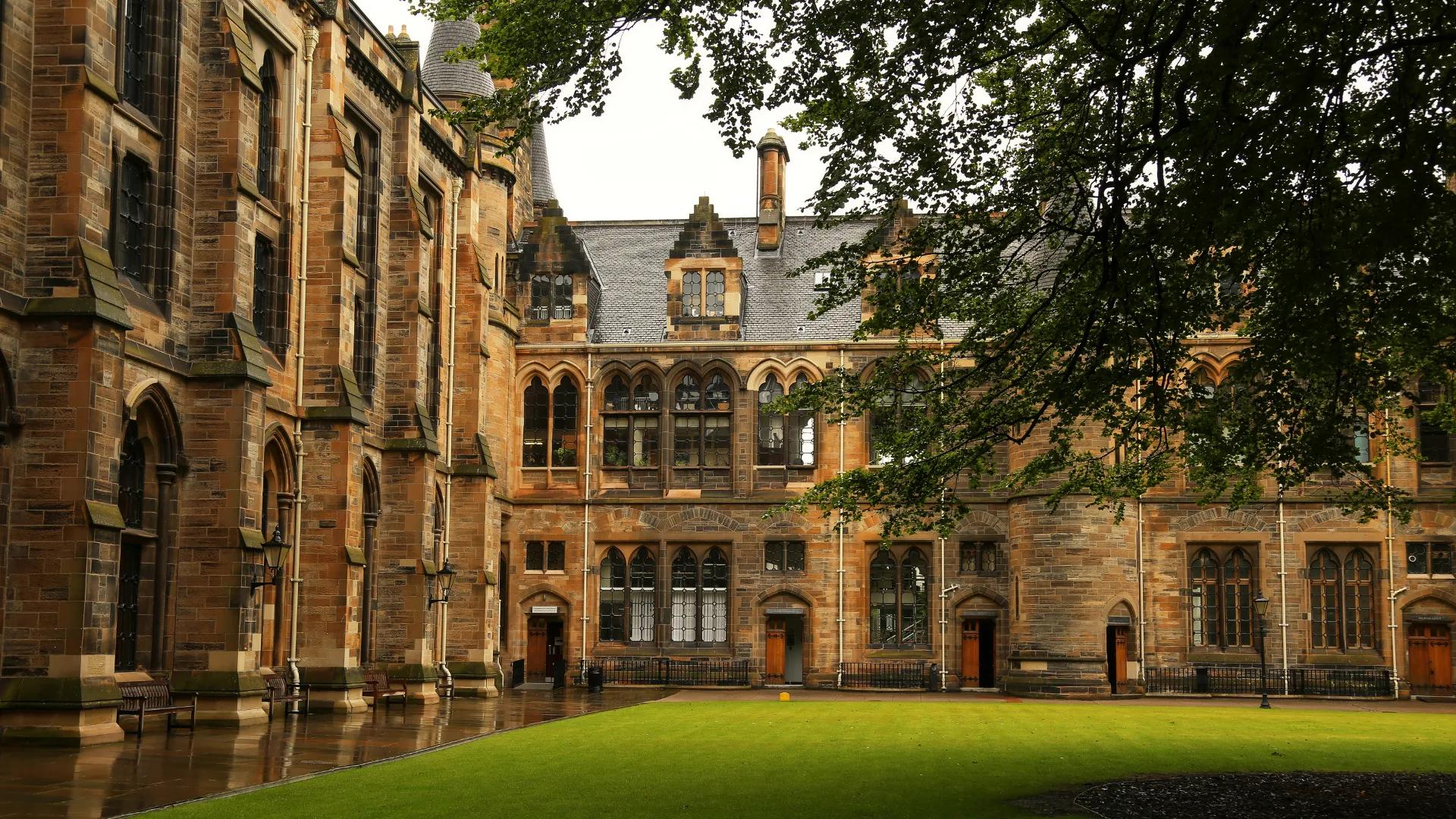
Your Guide to University of Zurich
Zurich, Switzerland
The University of Zurich (UZH) is Switzerland's largest and oldest university, ranking in the global top 100. With 12 Nobel laureates among faculty and alumni, UZH combines cutting-edge research with practical financial expertise in the world's banking capital.
91
QS World Ranking
0
Total Students
1833
Founded
12
Nobel Laureates
UZH at a Glance
CHF 1,500-2,000/year
Tuition
CHF 2,000-2,500/month
Living Costs
200+
Research Centers
80+
Master's Programs
30%
International Students
Finance, Economics, Medicine
Top Sectors

Dr. Karan Gupta's Strategic View
Dr. Karan Gupta's Expert Assessment
Why UZH Is a Strong Choice
Switzerland's Premier University in Global Top 100
UZH ranks 91st globally and 9th in Europe. The university boasts 12 Nobel laureates among faculty and alumni, with particular strength in physics, medicine, and economics. Research productivity across all disciplines far exceeds peers in continental Europe. Faculty regularly publish in Science, Nature, and top-tier domain journals.
Direct Access to Global Finance & Banking Capital
Zurich remains Europe's financial capital: UBS, Credit Suisse, Julius Baer, Vontobel, and hundreds of asset management firms headquartered or operate major centers here. UZH students secure internships and placements directly with these institutions. The salary premium for finance roles in Zurich (30-50% higher than London or Amsterdam) more than compensates for elevated cost of living.
World-Class Research & PhD Pipeline
UZH excels in quantitative finance, behavioral economics, and complexity science. Students conducting thesis work collaborate directly with faculty conducting cutting-edge research. This orientation benefits those pursuing PhDs or complex technical roles (quantitative research, pricing models, risk algorithms) over general management.
Zurich: Europe's Financial Capital
UZH's main campus is integrated into Zurich's city center, combining academic facilities with direct proximity to banking headquarters, trading floors, and financial institutions. The location provides unmatched networking access to global finance practitioners.
Modern Research Facilities
State-of-the-art laboratories, computational centers, and research institutes supporting world-leading scientific innovation across disciplines.
Zurich's Financial Ecosystem
Located in the world's third-largest financial center, with UBS, Credit Suisse, Julius Baer, and 500+ banking/fintech firms headquartered or operating major offices.
International Community
30% of students from 120+ countries create a genuinely global academic environment. Strong networks with Indian professionals in Swiss finance sector.
Networking & Career Access
Direct relationships with Switzerland's largest employers; career fairs, industry panels, and mentorship programs connect students with leading firms.
Programs at UZH
Master's in Finance
Faculty of Economics
Quantitative finance, asset pricing, risk management—top European program
Master's in Economics
Faculty of Economics
Behavioral economics, macroeconomics, international trade
Master's in Banking & Finance
Faculty of Economics
Banking regulation, wealth management, financial institutions
Master's in Actuarial Science
Faculty of Sciences
Insurance mathematics, risk modeling, pension systems
Master's in Computational Science
Faculty of Sciences
Complexity science, numerical modeling, scientific computing
Master's in Molecular Medicine
Faculty of Medicine
Genomics, precision medicine, translational research
Master's in Neuroscience
Faculty of Medicine
Brain imaging, cognitive science, neural mechanisms
Master's in Biomedical Sciences
Faculty of Sciences
Cell biology, immunology, disease mechanisms
Master's in Biostatistics
Faculty of Medicine
Statistical methods, epidemiology, clinical trials
Master's in Management & Economics
Faculty of Economics
Business strategy, organizational economics, innovation
Most master's programs are 4 semesters (120 ECTS). Tuition CHF 1,500-2,000/year exceptionally low by Swiss standards (most Swiss universities charge similar rates). TOEFL 100+ or IELTS 7.0+ required. Programs emphasize research; most conclude with substantial thesis.
Admission Requirements
University of Zurich welcomes exceptional students committed to rigorous academic inquiry. Our selective admissions process emphasizes academic excellence and research potential.
Deadlines December 15 (spring intake) or April 15 (fall intake). International applications require longer processing; apply early. Non-EU students should plan visa/residence permit application 2-3 months before intake.
Interview Preparation
What to expect and how to prepare for your UZH interview
Format
University of Zurich (UZH) does not conduct admissions interviews for most programs. Bachelor's admission for Swiss Maturité holders is guaranteed. International students may need to pass an entrance exam or meet specific prerequisite requirements. Master's programs evaluate applications on documents. Some doctoral programs and selective master's tracks may include an academic interview.
Duration
15-25 minutes (where applicable)
Interviewers
Faculty members from the relevant department
Interview Style
Academic, Formal, Research-oriented
What UZH Looks For
Sample Interview Questions
What draws you to your chosen field and how has your interest developed?
Show intellectual trajectory — how your interests evolved through coursework, reading, or experience.
Why UZH specifically, and what do you know about the department?
UZH has world-class departments in economics, law, neuroscience, and more. Be specific.
Describe your most significant academic achievement or project.
Focus on rigor and depth. Swiss academia values thoroughness and precision.
How do you approach a complex research question with limited initial information?
Show methodological thinking and comfort with ambiguity.
What are your academic goals for the next three to five years?
Be realistic and specific. Connect your goals to what UZH can offer.
Preparation Tips
- Most admissions at UZH are document-based — invest in strong transcripts and motivation letter
- If an entrance exam is required, prepare thoroughly — they are rigorous
- Swiss academic culture values precision, punctuality, and thoroughness
- Know the difference between UZH (comprehensive) and ETH (technical) and why you chose UZH
Common Mistakes
- Confusing UZH with ETH Zurich — they are separate institutions with different strengths
- Not verifying Swiss equivalency requirements for your prior degree
- Underestimating administrative timelines — Swiss universities have strict application deadlines
What Type of Student Gets In?
Academic excellence: Demonstrated superior performance in quantitative disciplines
Research orientation: Genuine interest in advancing knowledge; comfort with thesis-based learning
Intellectual independence: Ability to identify research questions and pursue solutions autonomously
Quantitative strength: Strong foundation in mathematics or statistics (especially for finance/economics/sciences)
Global perspective: Comfort in truly international environment; English fluency essential
Professional ambition: Clear career trajectory in research, finance, or specialized technical roles
Overestimating social prestige value of UZH degree for general MBA/management pathway. UZH is not a lifestyle brand or general management credential. It excels in research, quantitative finance, medicine, and sciences. Applicants should pursue UZH for genuine interest in rigorous research or specific technical specializations (finance, actuarial science, computational methods), not because it is Swiss or ranking 91 globally. Those seeking MBA-style general management training should consider Erasmus, IE, or INSEAD instead.
Costs & ROI
UZH tuition (CHF 1,500-2,000/year) is exceptionally low by Swiss standards and far cheaper than UK, US, or Canadian universities. However, Zurich's cost of living is among Europe's highest: accommodation CHF 800-1,200/month, food CHF 400-500, transport CHF 100, social/miscellaneous CHF 400-500. Total living cost: CHF 2,000-2,500/month (~$24,000-30,000/year). Scholarships limited but available: Excellence Scholarship (full tuition + CHF 1,000/month stipend, highly competitive), Faculty scholarships (partial tuition). Part-time work limited; maximum 15 hours/week during semester.
| Level | Tuition | Living | Total |
|---|---|---|---|
| Master's (4 semesters) | CHF 3,000-4,000 | CHF 24,000-30,000 | CHF 27,000-34,000 (~$30,000-38,000) |
| Master's (with limited scholarship) | CHF 0-2,000 | CHF 24,000-30,000 | CHF 24,000-32,000 (~$27,000-36,000) |
| Master's (highest tier) | CHF 4,000-5,000 | CHF 28,000-35,000 | CHF 32,000-40,000 (~$36,000-45,000) |
Salary Ranges
Career & Industry
UBS
World's largest wealth manager headquartered in Zurich, offering internships, training programs, and graduate recruitment across wealth management, investment banking, and asset management divisions.
Credit Suisse
Major investment bank with major offices in Zurich, recruiting heavily for investment banking, trading, and risk management roles for UZH graduates.
Swiss National Bank (SNB)
Switzerland's central bank offering internships and graduate positions in monetary policy, financial stability, and economic research.
Julius Baer
Leading private bank based in Zurich, partnering on wealth management training, internships, and graduate recruitment.
IBM Zurich Research Laboratory
Major research center conducting cutting-edge work in computational science, AI, and complex systems, offering internships and research positions.
Google Zurich
Tech company with major engineering center, offering internships and positions for computational science and engineering graduates.
UZH graduates achieve exceptional placement in finance and banking, with 70%+ of finance master's graduates securing positions within 3 months. Zurich's banking sector offers premium compensation (30-50% higher than London) partially offset by tax advantages and lower cost relative to salary growth potential. Strong PhD placement for those pursuing academic paths. Non-EU work visa sponsorship challenging but possible for exceptional candidates in high-demand roles (quantitative research, structured finance).
Application Timeline
Application Preparation
- Review specific program requirements and faculty research
- Prepare research statement and motivation letter
- Obtain academic recommendations
- Compile transcripts and documentation
Application Submission
- Apply online by deadline (December 15 or April 15)
- Submit all supporting documents
- Pay application fee (CHF 50)
- Confirm receipt of application
Evaluation Process
- UZH reviews applications (4-6 weeks)
- Faculty assessment of research fit and academic credentials
- Interview (some programs; video or in-person)
- Admission decisions communicated
Visa & Relocation
- Acceptance letter and enrollment confirmation issued
- Obtain Swiss residence permit (non-EU applicants apply via UZH)
- Arrange accommodation in Zurich
- Complete arrival registration
Program Commencement
- Orientation week with faculty and peer groups
- Course selection and thesis planning
- Access to UZH resources and network
- Begin internship/work-study arrangements
UZH vs Peers
University of Amsterdam
UZH: Higher ranking (91 vs 50), premium financial center location, stronger in finance, higher salary outcomes post-graduation
Other: Lower cost of living, higher QS ranking, more affordable tuition (nearly free vs CHF 2K)
Compare →LSE (London School of Economics)
UZH: Lower tuition, better value, same finance prestige, Swiss banking location advantage
Other: Consistently top 50 globally, larger alumni network, English-speaking financial center
Compare →ETH Zurich
UZH: Located in same city, slightly lower cost, better for engineering/tech, excellent research
Other: Higher QS ranking (16 vs 91), premium tech/engineering reputation, different sector focus
Compare →UZH Is Right For...
- Professionals targeting investment banking, wealth management, or quantitative finance roles
- Those committed to finance specialization with clear career pathway in Swiss/global banking
- Students willing to invest in premium education for premium financial sector outcomes
- Applicants with strong quantitative foundation seeking rigorous research-based programs
- Those interested in PhD programs or academic/research careers in finance, economics, or sciences
- High achievers seeking genuine peer-quality and world-class faculty interaction
UZH Is Not Right For...
- Budget-conscious students (living costs CHF 24,000-30,000/year extreme; better alternatives in Spain, Netherlands, Germany)
- Those seeking general MBA management training (UZH emphasizes research over business school model)
- Applicants without strong quantitative background for finance/economics/sciences programs
- Career-switchers seeking fast credential acquisition (UZH emphasizes thesis-based 4-semester programs)
- Non-EU professionals unable to secure post-graduation work sponsorship (Swiss visa challenges)

Dr. Karan Gupta's Advice
FAQs: UZH for Indian Students
What is the cost of living in Zurich?
Zurich is one of Europe's most expensive cities: CHF 800-1,200/month accommodation, CHF 400-500 food, CHF 100 transport, CHF 400-500 social/misc = CHF 2,000-2,500/month total (approximately $24,000-30,000/year). This is 2-3x higher than Barcelona, Amsterdam, or Berlin. However, finance sector salaries are proportionally higher (30-50% premium vs London).
Is tuition really only CHF 1,500-2,000/year?
Yes, UZH tuition is exceptionally low (CHF 1,500-2,000/year) by international standards and even by Swiss university standards. The true cost is living expenses, not tuition. This is one of Switzerland's most accessible universities financially.
Can non-EU students work after graduation?
Work permit sponsorship is challenging. Switzerland prioritizes EU/EFTA citizens. However, exceptional candidates in high-demand roles (quantitative finance, research) may receive sponsorship. Contact UZH international office for specific program sponsorship rates. Many graduates transition to EU-based roles or return home.
Are scholarships available for international students?
Limited but available: Excellence Scholarship (full tuition + CHF 1,000/month stipend, highly competitive), Faculty scholarships (partial tuition, merit-based). Application competitive; demonstrate exceptional academic credentials and research potential. India-specific scholarships through partner organizations may be available.
Is UZH worth the high cost of living?
For finance/banking careers: Yes. The 30-50% salary premium in Zurich (vs London/Amsterdam) and premium education more than compensate for elevated living costs. Network access to UBS, Credit Suisse, Julius Baer creates unmatched placement advantage. For other fields: Consider alternatives. Amsterdam, Barcelona, or Berlin offer comparable research quality at 40-60% lower total cost.
What is the research quality at UZH?
Exceptional. UZH has 12 Nobel laureates, ranks in global top 100, and leads research in economics, medicine, physics, and computational science. Faculty conduct world-leading research regularly published in Science, Nature, and top journals. Strong thesis and research apprenticeship opportunities for graduate students.
Related Articles
How to Prepare for the SAT: 3 Free Tools and a 12-Week Plan
Prepare for the SAT with three free tools and a practical 12-week study plan to strengthen your skills without expensive coaching.
Is a Foreign Degree Still Worth It? What I Told Raj Shamani
Every year Indian families spend crores on a foreign degree. In two hours with Raj Shamani on Figuring Out I answered one question honestly: in 2026, is it still worth it? Here is the fifteen-minute version, with the six student profiles, the Five Removals test, the ROI formula and the funding routes most families never use.
The ₹0 List: Free Opportunities That Actually Strengthen a Student’s Profile
The best summer opportunities are not always expensive. Discover selective ₹0 programs that can demonstrate genuine student achievement.
Related Guides & Resources
Want to Study at UZH?
Get expert guidance from Dr. Karan Gupta: Harvard alumnus, 27+ years of global admissions experience guiding 160,000+ students worldwide.