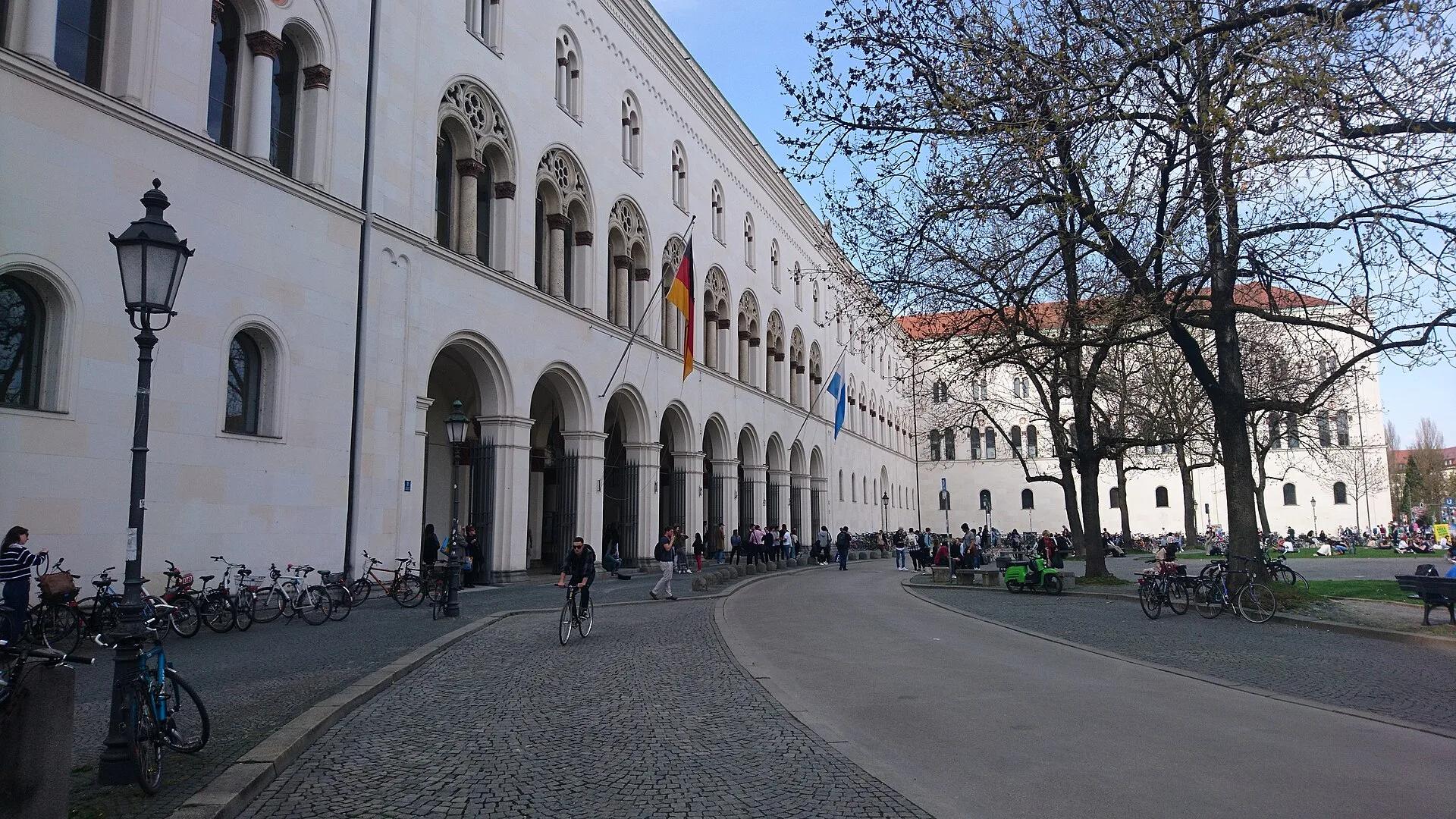
Your Guide to LMU Munich
Munich, Germany
Ludwig Maximilian University (LMU) Munich ranks as Germany's best comprehensive university and Europe's top 60. Home to world-leading research across sciences, medicine, humanities, and economics. Located in Munich—Germany's most vibrant city—with exceptional quality of life and cost-effectiveness.
54
QS World Ranking
Public Research
University Type
1472
Founded
200+
Master's Programs
LMU at a Glance
€250/semester
Tuition
€800-1,000/month
Living Costs
80+
Research Centers
200+
Master's Programs
20%
International Students
Life Sciences, Medicine, Physics
Top Specializations

Dr. Karan Gupta's Strategic View
Dr. Karan Gupta's Expert Assessment
Why LMU Is a Strong Choice
Germany's Top Comprehensive University & Excellence Strategy Winner
LMU is consistently ranked #1 in Germany by most metrics and #54 globally. Designated Excellence University by Germany's Excellence Strategy—a competitive national program recognizing elite research institutions. Faculty includes Max Planck society members and Leibniz fellows. The university's research breadth spans sciences, medicine, humanities, law, and economics—a rare combination of research excellence across domains.
Exceptional Value: Tuition €250/Semester + Livable City
LMU charges €250/semester tuition (€1,000 for full 4-semester master's)—among the lowest worldwide for a top-tier university. Munich's cost of living (€800-1,000/month) is lower than Northern European cities. Total investment for 2-year master's: €14,000-19,000. For comparison: London (£80K+), Zurich (CHF 30K+), Amsterdam (€25K+). LMU delivers equivalent research quality at 40-60% lower cost.
Munich: Germany's Most Livable City & Tech Hub
Munich ranks consistently as Europe's most livable city: excellent public transportation, extensive parks and cultural facilities, thriving food/beer culture, close proximity to Alps and Central European destinations. Increasingly becoming a tech hub (Google, BMW, Siemens, startups) creating professional networks. Strong Indian professional community provides social integration and career networking. Post-graduation, Munich and surrounding Bavaria region offers abundant employment in tech, automotive, pharmaceuticals, and academia.
Munich: Germany's Cultural & Economic Hub
LMU's main campus is integrated throughout Munich, with research institutes, teaching facilities, and libraries distributed across the city. The decentralized campus model provides immersion in Munich's vibrant academic and professional ecosystem.
World-Class Research Infrastructure
Advanced laboratories, computational centers, medical research facilities, and particle physics institutes supporting cutting-edge research.
Munich's Economic Strength
Located in Bavaria's economic capital with headquarters of BMW, Siemens, Munich Re, and growing tech sector. Strong employment opportunities across sectors.
International Community & Integration
20% international students create multicultural environment. Established Indian professional networks facilitate integration and career development.
Cultural Excellence & Lifestyle
Rich cultural heritage with world-class museums, opera houses, beer gardens, and proximity to Alps. Consistently rated Europe's most livable city.
Programs at LMU
Master's in Physics
Faculty of Physics
Particle physics, condensed matter, quantum mechanics—connected to Max Planck institutes
Master's in Chemistry
Faculty of Chemistry
Organic chemistry, biochemistry, materials science
Master's in Biology
Faculty of Biology
Molecular biology, cell biology, genetics
Master's in Pharmaceutical Sciences
Faculty of Medicine
Drug development, pharmacology, pharmaceutical technology
Master's in Medicine (English Track)
Faculty of Medicine
Clinical medicine, medical research, specialization training
Master's in Business Administration
Faculty of Economics
General management, finance, strategy—lighter MBA than RSM/INSEAD
Master's in Economics
Faculty of Economics
Microeconomics, behavioral economics, applied econometrics
Master's in Mathematics
Faculty of Mathematics
Pure mathematics, applied mathematics, computational methods
Master's in Psychology
Faculty of Psychology
Cognitive psychology, social psychology, neuroscience
Master's in Philosophy (Analytical Philosophy)
Faculty of Philosophy
Logic, epistemology, philosophy of science—leading European program
Most master's programs are 4 semesters (120 ECTS). German-taught and English-taught programs available; check specific program language. Entrance requirements: bachelor's degree with related field, GPA 2.5-3.0 (German system). TOEFL 100+ or IELTS 7.0+ for English-taught programs.
Admission Requirements
LMU welcomes international scholars and professionals seeking world-class education at exceptional value. Our selective admissions process emphasizes academic excellence and research potential.
Deadlines typically December 15 (summer intake) or April 15 (winter intake). International applicants should apply by November for winter intake to allow visa processing time. Admission decisions made within 4-6 weeks.
Interview Preparation
What to expect and how to prepare for your LMU interview
Format
Interviews are not standard for most programs at German public universities — admission is primarily grades and document-based. For select programs (MBA, competitive master's, medical, honors), a brief academic interview or motivation discussion may be required. LMU Munich, a University of Excellence, may interview for select graduate programs, medical school, and its elite honors programs.
Duration
15-30 minutes (when applicable)
Interviewers
Faculty panel or program director
Interview Style
Academic — combining rigorous scholarship with intellectual breadth
What LMU Looks For
Sample Interview Questions
What draws you to LMU Munich over other German universities?
LMU is Germany's premier comprehensive university. Reference specific faculties, clusters of excellence, or research centers.
Describe an academic question that kept you thinking long after the course ended.
Show genuine intellectual passion. LMU values curiosity-driven scholars.
How would you contribute to the academic community at LMU?
Mention specific seminars, graduate schools (like the Graduate School of Systemic Neurosciences), or research groups.
What is the most important methodological challenge in your field?
Demonstrate awareness of debates in your discipline. LMU faculty value methodological sophistication.
Where do you see yourself five years after completing this program?
Balance academic and professional ambitions. Munich's research and industry ecosystem offers diverse paths.
Preparation Tips
- LMU is consistently ranked Germany's #1 or #2 university — demonstrate awareness of its prestige
- Munich's research landscape includes Max Planck, Fraunhofer, and Helmholtz institutes — know which are relevant
- The university's location in Munich offers unique quality of life and career opportunities
- If applying to medical school, prepare thoroughly for the TMS and any subsequent interview
Common Mistakes
- Treating LMU and TUM as interchangeable (LMU is comprehensive, TUM is technical)
- Not researching LMU's specific clusters of excellence and how they relate to your field
- Being vague about research interests at the graduate level
What Type of Student Gets In?
Academic excellence: Strong undergraduate performance in relevant discipline
Research interest: Genuine curiosity about specialized field; comfort with research-based learning
Language adaptability: Willingness to learn German (improves career prospects); strong English for international programs
Intellectual independence: Ability to pursue independent study and thesis research
Global perspective: Comfortable in international environment; openness to German culture
Professional ambition: Clear career trajectory in research, industry, or specialized technical roles
Underestimating Germany's strong economy and employment market. Many students view LMU as 'budget option' rather than elite institution. LMU is genuinely in top 60 globally and #1 in Germany. The exceptional value comes from German education philosophy (prioritizing public funding over tuition) not reduced quality. Students should approach LMU for genuine research interest and career goals, not just budget consciousness.
Costs & ROI
LMU tuition is among Europe's lowest: €250/semester (€1,000 for 2-year master's). Munich living cost: €600-800 accommodation, €150-200 food, €50 transport, €300-400 social = €1,100-1,450/month (€13,000-17,500/year). Combined total: €14,000-18,500 for complete 2-year master's. Scholarships: DAAD (full tuition + €880/month stipend, competitive), LMU Excellent Programme (partial tuition), Bavarian State Scholarships. Part-time work: 120 full days or 240 half days per year permitted for international students.
| Level | Tuition | Living | Total |
|---|---|---|---|
| Master's (4 semesters) | €1,000 | €12,000-16,000 | €13,000-17,000 |
| Master's (with part-time work) | €1,000 | €8,000-10,000 | €9,000-11,000 |
| Master's (medical/specialized) | €2,000-3,000 | €12,000-16,000 | €14,000-19,000 |
Salary Ranges
Career & Industry
BMW
Major automotive manufacturer headquartered in Munich, offering internships and graduate recruitment across engineering, research, and technology divisions.
Siemens
Global technology company with major presence in Munich, recruiting LMU graduates for engineering, research, and business roles.
Max Planck Society
Germany's elite research organization with multiple institutes in Munich, offering research positions and PhD pipelines for LMU graduates.
Munich Re
Leading reinsurance company based in Munich, partnering on internships and graduate recruitment in actuarial science and risk management.
Roche (Munich Site)
Pharmaceutical company with major research center in Munich, offering internships and positions in pharmaceutical research and development.
Google Munich Engineering Hub
Major tech employer with engineering center in Munich, recruiting computer science and mathematics graduates for software development and research roles.
LMU graduates achieve strong employment outcomes: 80%+ employment within 6 months of graduation. Munich's economy is strong with diverse sectors creating employment. German visa sponsorship for non-EU graduates is accessible for skilled roles. Many graduates continue to PhD programs in Germany or EU. Munich's Indian professional community facilitates networking and career development.
Application Timeline
Program Research & Application Preparation
- Identify program fit within 200+ master's offerings
- Review language requirements (German vs English)
- Prepare motivation letter and academic materials
- Obtain professor recommendations
Application Submission
- Apply online by deadline (December 15 or April 15)
- Pay application fee (€50-100)
- Submit all supporting documents
- Confirm application receipt
Evaluation & Interview
- LMU reviews applications (4-6 weeks)
- Faculty assessment of academic fit and research potential
- Interview (selected programs; video or in-person)
- Admission decision communicated
Visa & Relocation
- Acceptance letter and enrollment confirmation issued
- Apply for German student residence permit (non-EU)
- Arrange accommodation in Munich
- Register for orientation and courses
Studies & Career Development
- Orientation week and course registration
- Begin coursework and research projects
- Network with Munich's research and business community
- Pursue internships and thesis research
LMU vs Peers
University of Amsterdam
LMU: Lower tuition (€1K vs €1.5K), better cost of living (Munich cheaper than Amsterdam), stronger in physics/chemistry, excellent research quality
Other: Higher QS ranking (20 vs 54), English-taught programs more abundant, tech ecosystem stronger
Compare →University of Barcelona
LMU: Lower tuition, comparable cost of living, stronger in life sciences, better value for engineering programs
Other: Stronger in veterinary sciences, better for media/communication studies, warmer climate
Compare →ETH Zurich
LMU: Lower cost of living than Zurich, comparable research quality, more affordable tuition, broader program portfolio
Other: Higher global ranking (16 vs 54), stronger engineering reputation, higher salary outcomes
Compare →LMU Is Right For...
- Researchers and academics pursuing PhDs or research-intensive careers in sciences, medicine, or philosophy
- International students prioritizing exceptional value (low tuition + reasonable living costs)
- Professionals interested in German economy and strong employment market
- Those committed to learning German or already fluent; willingness to integrate into German academic culture
- Applicants valuing research excellence and world-class facilities over lifestyle branding
- Candidates seeking comprehensive university with breadth of programs (200+) across disciplines
LMU Is Not Right For...
- Those requiring primarily English-taught programs (many programs are German-language; language requirement significant)
- Applicants seeking MBA-style general management training (LMU emphasizes research over business school model)
- Career-switchers or those without strong background in relevant discipline
- Those prioritizing fastest degree completion (4-semester master's with thesis emphasis)
- Non-EU workers unable/unwilling to pursue German visa sponsorship post-graduation

Dr. Karan Gupta's Advice
FAQs: LMU for Indian Students
Do I need to speak German?
No. Many master's programs (especially sciences, medicine, business, economics) offer English-taught tracks. However, learning German significantly improves integration, social life, and post-graduation employment. Most professional and social integration occurs in German. Pre-arrival German courses (A1-B1) recommended and often subsidized.
Is the tuition really €250/semester?
Yes. LMU charges €250/semester (€1,000 for 4-semester master's)—among the world's lowest for a top-tier university. This is part of Germany's education philosophy: publicly funded universities with minimal student tuition. No hidden fees or additional charges.
What is the cost of living in Munich?
Munich is one of Germany's most expensive cities: €600-800/month accommodation, €150-200 food, €50 transport, €300-400 social = €1,100-1,450/month (€13,000-17,500/year). This is lower than Zurich, London, or Northern European cities while offering equivalent quality of life and higher quality of living experiences.
Can non-EU students work after graduation?
Yes. Germany actively encourages skilled non-EU graduates to stay. Upon graduation, non-EU students can obtain a 18-month job search visa. Upon securing employment, transition to work visa is straightforward. Munich's strong economy and diverse sectors (automotive, tech, pharma, banking) provide abundant opportunities.
Are there scholarships for Indian students?
Yes. DAAD scholarships (full tuition + €880/month stipend, competitive, India-eligible), LMU Excellence Programme (partial tuition + stipend), Bavarian State Scholarships. Scholarship competition is high; demonstrate strong academic credentials and research motivation. Apply early.
Is Munich a good city to live in?
Consistently rated Europe's most livable city. Excellent public transportation, extensive parks, rich cultural heritage, proximity to Alps, strong beer/food culture, friendly locals. Growing tech sector and startup scene create professional opportunities. Well-established Indian professional community facilitates integration. Quality of life is exceptional relative to cost.
Related Articles
How to Prepare for the SAT: 3 Free Tools and a 12-Week Plan
Prepare for the SAT with three free tools and a practical 12-week study plan to strengthen your skills without expensive coaching.
Is a Foreign Degree Still Worth It? What I Told Raj Shamani
Every year Indian families spend crores on a foreign degree. In two hours with Raj Shamani on Figuring Out I answered one question honestly: in 2026, is it still worth it? Here is the fifteen-minute version, with the six student profiles, the Five Removals test, the ROI formula and the funding routes most families never use.
The ₹0 List: Free Opportunities That Actually Strengthen a Student’s Profile
The best summer opportunities are not always expensive. Discover selective ₹0 programs that can demonstrate genuine student achievement.
Related Guides & Resources
Want to Study at LMU?
Get expert guidance from Dr. Karan Gupta: Harvard alumnus, 27+ years of global admissions experience guiding 160,000+ students worldwide.