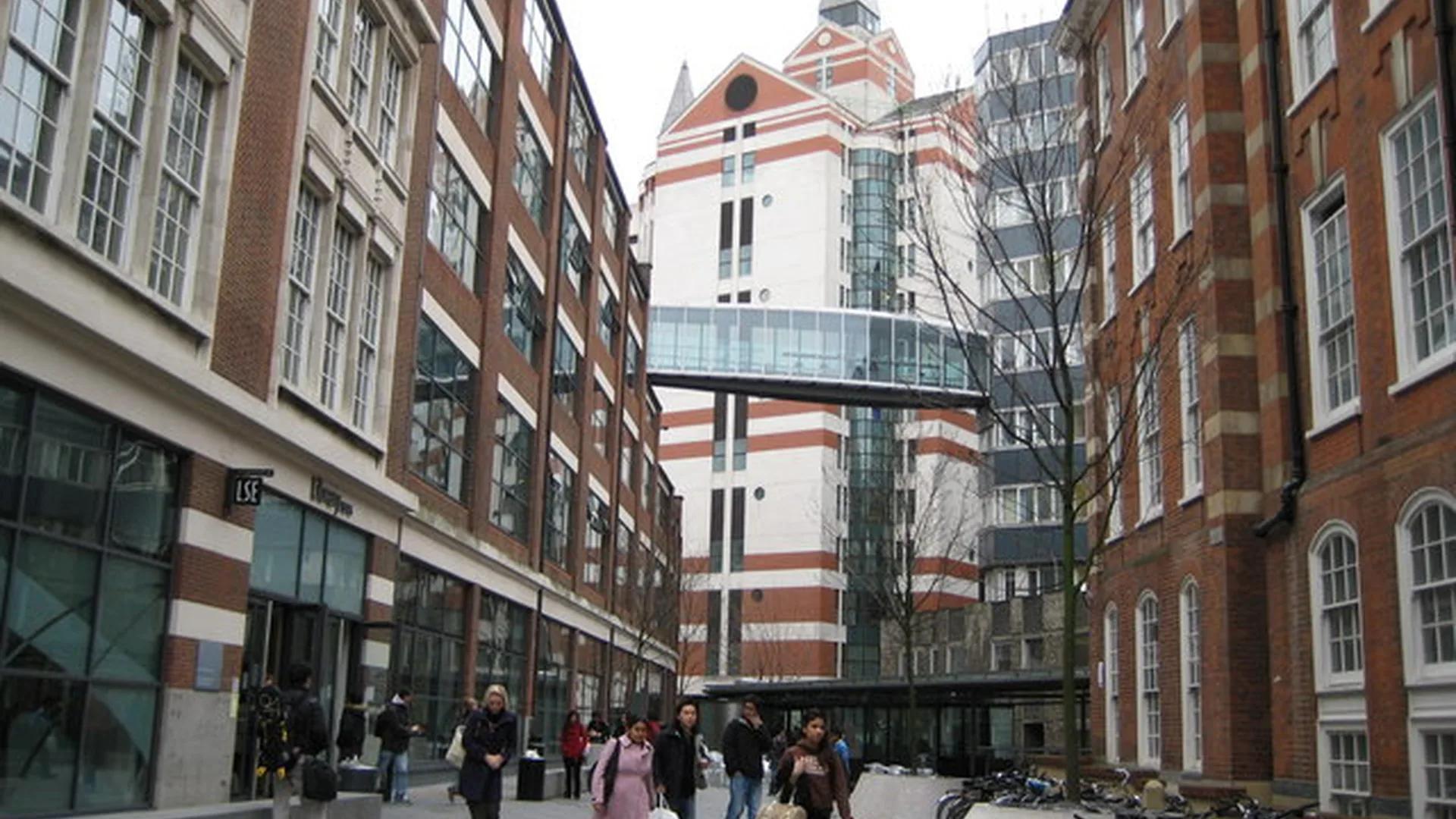
LSE
Central London, England
The London School of Economics and Political Science (LSE) is one of the world's most academically selective universities and among the strongest global institutions for social sciences. LSE graduates move into investment banking, consulting, government leadership, and global corporations.
Top 5
Social Sciences (Global)
3 Years
UG Degree
London
Central Campus
150+
Students Guided
Tuition & Costs
- Undergraduate: £27,000–£37,000/year
- Master's: £33,000–£55,000 total (1-year)
- No MBA offered
- London living: £1,500–£2,100/month
- Study in UK | Cost Calculator
What Makes LSE Different
- Specialist social sciences institution
- Extremely academic teaching style
- Heavy reading, writing & analytical work
- Theory + real-world policy relevance
- Compact, urban, professional campus
Career Power
- Goldman Sachs, JPMorgan, Morgan Stanley
- McKinsey, BCG, Bain
- World Bank, IMF, UN
- Global corporates & think tanks
- 2-year Graduate Route work visa

Dr. Karan Gupta's Strategic View
Why LSE Is a Strong Choice
One of the Strongest Global Reputations in Social Sciences
LSE is consistently ranked as one of the world's top universities for Economics, Finance, Management, International Relations, and Law. It's not just another top London university — it's a specialist institution with laser focus on analytical and social science disciplines.
Extremely Strong Recruitment Pipelines
LSE graduates are heavily recruited into investment banking, consulting, and policy. The school's central London location puts students within walking distance of the financial district, major law firms, and global corporate headquarters.
Intense Academic Environment
LSE is not for students seeking a relaxed campus experience. It's a rigorous, theory-heavy institution focused on analytical thinking and research. Students who thrive here are intellectually curious, comfortable with heavy reading loads, and motivated by ideas.
Global Brand Recognition
LSE's name opens doors worldwide. Whether you're targeting careers in London, New York, Singapore, or Mumbai, the LSE brand carries exceptional weight — particularly in finance, consulting, and policy. More about studying in the UK.
Holborn, Central London
LSE's compact campus is in Holborn, central London, between the City of London financial district, Westminster (Parliament), and the West End. The campus is urban and integrated into the city — there are no sprawling green lawns, but you're steps from the Thames, Covent Garden, and the UK's centres of power.
Centre Building
LSE's modern architectural centrepiece with rooftop terraces overlooking London
British Library of Political and Economic Science
The largest social science library in the world
Central London Location
Between the City of London, Westminster, and Fleet Street — at the heart of UK power
Student Residences
Guaranteed first-year halls in central London locations
200+ Societies
LSE Students' Union runs one of the most active society scenes in UK universities
Programs at LSE
Undergraduate Programs (3 Years)
BSc degrees in Economics, Finance, Management, Mathematics, Government, International Relations, Social Policy, Sociology, Law, Philosophy, and more. Known for rigorous quantitative training and London-based internship access. All programmes are research-led by world-class faculty.
Master's Programs (1 Year)
MSc in Finance, Economics, Data Science, Management, Accounting, Public Policy, International Development, Media, and 100+ other specialisations. Intensive one-year format with strong employer recruitment pipeline. Many programmes ranked #1 or top-5 globally.
MBA Note
LSE does not run a traditional MBA program. Students seeking a UK MBA typically consider London Business School, Oxford Saïd, or Cambridge Judge. LSE focuses on specialized management and finance master's degrees.
LSE specializes exclusively in social sciences across 25+ departments. There are no natural science or engineering programs. Undergraduate degrees are typically 3 years. Popular programs include BSc Economics, BSc Government, LLB Law, and BSc International Relations. LSE also offers a renowned 1-year MSc program.
Admission Requirements
LSE's acceptance rate is approximately 8-10% overall, with Economics and Finance among the most competitive (under 6%). Admissions are based almost entirely on academic qualifications and personal statement. LSE does not interview for most undergraduate programs. A-level offers typically require A*AA.
LSE values academic depth and evidence of independent reading in your personal statement. Unlike Oxbridge, there are no interviews for most programs. Your predicted grades and personal statement must do all the talking. Reference specific academic books, journals, or concepts that have shaped your thinking.
Master's Requirements
- Strong bachelor's degree from recognized university
- Academic-focused SOP
- References, CV for some programs
- GRE/GMAT usually optional but high scores strengthen Finance/Economics applications
Interview Preparation
What to expect and how to prepare for your LSE interview
Format
One-on-one with admissions committee member or trained alumnus
Duration
20-40 minutes
Interviewers
Admissions committee member, faculty, or trained alumni
Interview Style
Behavioural and conversational
What LSE Looks For
Sample Interview Questions
Tell me about yourself.
2-minute career narrative.
Why MBA and why LSE?
Specific programmes, London.
Career goals?
MBA bridge.
Leadership experience?
Impact.
Challenging situation?
Resilience.
Community contribution?
Clubs.
Preparation Tips
- Research LSE's unique strengths
- Prepare 6-8 STAR stories
- Show genuine interest in LSE
- Be concise
- Prepare questions
Common Mistakes
- Not researching LSE's specific programmes
- Generic motivation
- Weak career goals
- Not preparing STAR examples
- Not showing community interest

Dr. Karan Gupta's Interview Advice
Dr. Karan's Take: Standard MBA best practices.
What Type of Student Gets In?
Intellectually engaged with current affairs, economics, or political events
Strong academic reader who goes beyond textbooks into journals and academic debate
Analytically minded with strong essay writing and argumentation skills
Globally oriented with interest in international perspectives
Self-motivated and comfortable in a large urban university setting
Career-driven with clear professional aspirations in social science fields
Many applicants write personal statements about wanting to 'help people' or 'change the world' without demonstrating serious academic engagement. LSE wants evidence that you've read and thought deeply about your subject. Name specific books, theories, or economists that have influenced your thinking — vague statements won't cut it.
Costs & ROI
International undergraduate fees are approximately £24,264-£28,752 per year. LSE offers need-based financial aid through the LSE Financial Support Office. The LSE Graduate Support Scheme and various scholarships help international postgraduates. London living costs are high — budget £15,000-£18,000/year.
| Level | Tuition |
|---|---|
| Undergraduate | £27,000–£37,000/year |
| Master's | £33,000–£55,000 total (1-year) |
| London living | £1,500–£2,100/month |
Salary Ranges
Career & Industry
Goldman Sachs
One of LSE's top recruiters, especially from Economics and Finance programs.
Deloitte
Major recruiter across accounting, consulting, and advisory from LSE.
Bank of England
Recruits economists and policy analysts from LSE's world-class economics department.
UK Government (Civil Service)
LSE produces more senior UK civil servants and politicians than any university except Oxbridge.
United Nations
LSE's international relations programs have strong UN recruitment connections.
LSE's London location significantly boosts internship and networking access. The UK Graduate Route gives 2 years of post-study work authorization.
Application Timeline
18-24 Months Before
- Research LSE's specific program options and entry requirements
- Begin developing strong grades in relevant subjects
- Start reading widely in economics, politics, or your target social science
12-18 Months Before
- Target A*AA predicted grades minimum
- Begin preparing LNAT if applying for Law
- Read academic journals and textbooks beyond your school syllabus
6-12 Months Before
- Write a UCAS personal statement focused on academic reading and intellectual engagement
- Request a strong academic reference from your school
- Register for LNAT or other required tests
Application Deadline
- UCAS deadline: January 31 (October 15 for Law only if also applying to Oxbridge)
- LSE reviews applications from January onwards
- Offers made on a rolling basis from January to May
After Offer
- Meet conditional grade requirements in summer exams
- Submit firm/insurance choices by June
- Results in August confirm your place
Pre-Departure
- Apply for UK Student Visa with CAS from LSE
- Apply for halls of residence early (London housing is competitive)
- Attend LSE Welcome Week in late September
LSE vs Peers
Imperial College London
LSE: Stronger in economics and social sciences, Better for policy and government careers, Central London location, Unmatched alumni in global finance
Other: Stronger STEM programs, Higher engineering salaries, More industry research funding, Better for technical careers
Compare →LSE Is Right For...
- Students passionate about economics, politics, law, or international relations
- Those targeting careers in London's financial services or policy sectors
- Students who want a truly international student body (70%+ international)
- Future economists, diplomats, journalists, or policymakers
- Those who thrive in an urban environment and want to live in central London
LSE Is Not Right For...
- Students interested in STEM, engineering, or natural sciences (LSE doesn't offer these)
- Those who want a traditional campus with green spaces and sports facilities
- Students who prefer a close-knit residential community (LSE is commuter-friendly)
- Those on a tight budget (London living costs are very high)
- Students seeking a well-rounded education across different disciplines
Our Students at LSE

Dr. Karan Gupta's Advice
Students often misunderstand LSE. They assume “it's just another top London university.” In reality:
LSE suits students who are academically strong, intellectually curious, comfortable with rigorous theory-heavy learning, and targeting finance, consulting, or policy careers.
It is not ideal for students seeking a relaxed campus experience or broad subject flexibility.
Dr. Karan Gupta is a Harvard Business School alumnus with 27+ years guiding 160,000+ students. Book a consultation.
- LSE is extremely academic — the teaching style is rigorous, theory-heavy, and research-driven
- Competition is intense — particularly for Economics, Finance, and International Relations
- Outcomes are excellent for the right student — if you're targeting finance, consulting, or policy careers
FAQs: LSE for Indian Students
Is LSE harder to get into than many Russell Group universities?
Are undergraduate degrees at LSE 3 years?
Does LSE offer STEM or engineering degrees?
Is London expensive for international students?
Do students get post-study work rights in the UK?
Related Articles
IMO Olympiad Explained: The Official Pathway in India
Two exams in India are called IMO. Only one is the official pathway to India's International Mathematical Olympiad team.
5 Ways to Get Into an IIM Without CAT
CAT is not the only way into an IIM. Discover five non-CAT routes, from IPMAT and JIPMAT to IIMB's BBA and GMAT/GRE-based MBAs.
The U.S. Government Website Every College Applicant Should Know
College Scorecard is the free U.S. government tool that lets students research college costs, earnings, completion, debt and more.
Explore More
Want to Study at LSE?
Get expert guidance from Dr. Karan Gupta: Harvard alumnus, 27+ years of global admissions experience guiding 160,000+ students worldwide.