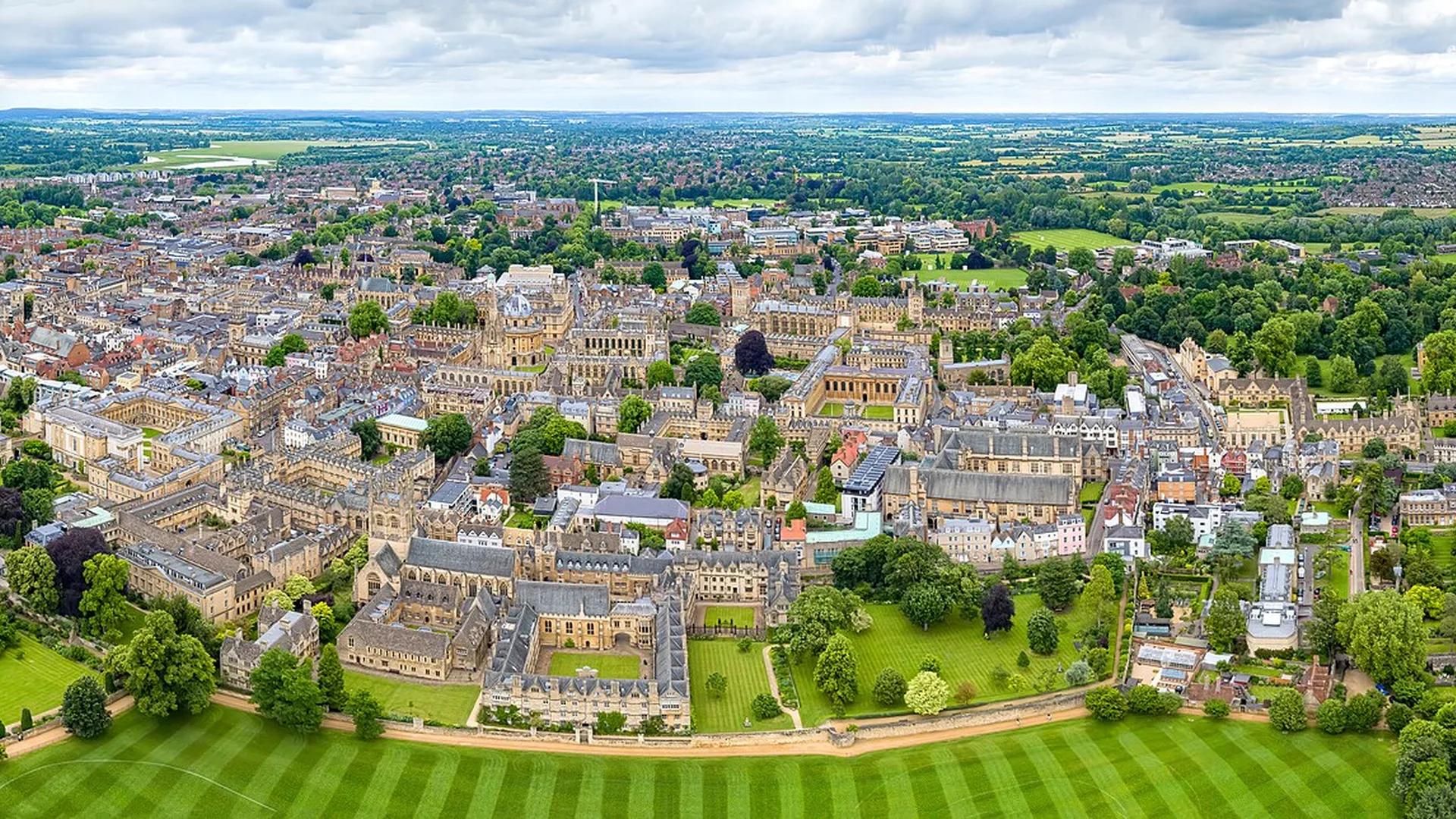
University of Oxford
Oxford, England
Oxford is not a “brand application.” It is an academic selection process where course fit, evidence of intellectual ability, and performance under pressure matter. Built around intense subject depth, small-group tutorial teaching, and a unique college system — Oxford rewards students who think deeply, not just score highly.
Top 3
QS World Ranking
30+
Colleges
1096
Founded
180+
Students Guided
Tuition & Costs
- Undergraduate: £37,380-£62,820/year (course-dependent)
- Master's: £30,000-£50,000/year
- MBA: ~£70,000+ total (Said, 1-year)
- Living costs: £1,405-£2,105/month
- Total annual budget: £55,000-£88,000/year
- Study in UK | Cost Calculator
Scholarships & Funding
- Clarendon Fund — Oxford's flagship scholarship
- Rhodes Scholarship (for postgraduates)
- College-specific awards vary by college
- MBA: Said Business School scholarships
- Explore all scholarships

Dr. Karan Gupta's Strategic View
Why University of Oxford Is a Strong Choice
The Tutorial System
Oxford teaching is built around tutorials: regular small-group sessions (often 1-3 students) where you discuss your work in depth with a tutor, alongside lectures and labs. This is high-feedback, high-intensity academic training. You can't hide in a tutorial — you must defend your arguments, think on your feet, and engage critically. This is what makes an Oxford education fundamentally different from anywhere else.
The College System
Oxford has 30+ colleges. Your department runs your course; your college provides community, accommodation (especially for undergraduates), tutorials, dining, and social life. Colleges don't specialize in one subject the way most people assume — each college has students across many disciplines. Think of colleges as your home base within the larger university.
Term Structure
Oxford runs three terms per year. Main teaching happens in 8-week “Full Terms” — shorter and more intense than most universities. Vacations are expected to be used for independent reading, research, and essay preparation. The pace is relentless by design.
Oxford's College System
Oxford doesn't have a single campus — instead, its 39 colleges and 6 permanent private halls are spread across the historic city of Oxford. Each college is a self-governing community with its own buildings, dining hall, library, chapel, and gardens. Students live, eat, and socialize within their college while attending university-wide lectures and labs.
39 Colleges
Each with centuries of history, unique architecture, and distinct character
Bodleian Library
One of Europe's oldest libraries with over 13 million items
Research Facilities
World-class labs including the Jenner Institute and Mathematical Institute
College Accommodation
Most colleges guarantee accommodation for the full duration of your course
Historic City
A walkable city with museums, theatres, and student life woven into medieval streets
Programs at University of Oxford
Undergraduate (BA/BSc)
Best for students who want deep subject study from day one and are comfortable being evaluated academically through admissions tests, written work, and interviews.
Masters / Graduate
Best for advanced specialisation, research training, or a credible career pivot through a globally respected qualification. Admissions are program-driven and heavily based on fit and readiness.
MBA (Oxford Said)
A one-year MBA with a strong global cohort and Oxford network access. For candidates with real work experience, leadership progression, and clear post-MBA goals.
Oxford offers over 50 undergraduate courses and 300+ graduate programs across its 4 academic divisions: Humanities, Social Sciences, Mathematical Physical and Life Sciences, and Medical Sciences. Unlike US universities, students apply directly to their chosen course and specialize from day one.
Admission Requirements
Oxford's overall acceptance rate is approximately 15-17% for undergraduates, though this varies dramatically by course — PPE, Medicine, and Computer Science are among the most competitive. International students face additional hurdles as places are limited. Admissions involve academic tests, written work, and rigorous interviews at the college level.
Oxford interviews are central to the admissions process. They test how you think, not what you know. Prepare by practicing thinking aloud about unfamiliar problems in your subject area. The interviewers want to see intellectual curiosity and the ability to respond to new ideas on the spot.
Interview Preparation
What to expect and how to prepare for your University of Oxford interview
Format
One-on-one faculty or admissions staff interview
Duration
30-60 minutes
Interviewers
Faculty member, senior admissions staff, or industry adviser
Interview Style
Conversational, application-grounded, in-depth exploration
What University of Oxford Looks For
Sample Interview Questions
Walk me through your resume and highlight the key inflection points in your career. What triggered each move?
Don't recite your CV chronologically. Instead, identify 3-4 key career moves and explain the 'why' behind each. What did you learn at each stage? How did each role prepare you for the next? Oxford is assessing the coherence of your thinking, not just the facts of your career.
Why do you want an MBA, and why now, specifically?
This is critical. Avoid generic answers like 'leadership development' or 'career acceleration.' Instead, identify a specific inflection point: a goal you can't reach without an MBA, a skill gap you need to close, or a career transition that requires new knowledge. Be honest about the timing. What's changed in your thinking or circumstances recently? Why not next year?
Why Oxford specifically, and what do you hope to gain from the MBA that you wouldn't gain elsewhere?
Reference specific resources: a club you'll join, faculty whose work resonates with you, the tutorial system, the college structure, or specific programs you've researched. Then flip it: 'I'll bring [specific skill or perspective] to the community.' Show you've thought about what Oxford uniquely offers, not just its brand.
Tell me about a time you failed significantly. What did you learn, and how has it shaped you?
This is crucial. Pick a real failure (not a humble-brag like 'I failed to exceed expectations'). Walk through what went wrong, what you were responsible for, what you learned, and how you've changed your approach. Vulnerability signals maturity. Candidates who claim never to have failed sound arrogant.
Describe a time you had to work with someone very different from you. What made it challenging, and how did you navigate it?
Oxford is a global, intellectually diverse community. They want evidence that you thrive when perspectives differ. Pick a real example—different cultural background, working style, or viewpoint. Focus on how you listened, adapted, and found common ground. This is emotional intelligence in action.
What's a recent business, social, or geopolitical issue that's captured your attention? Why does it matter to you?
This reveals whether you're genuinely engaged with the world or just focused on your career. Have a 2-3 minute answer ready: what's happening, why it matters, what you're watching for. Reference something you've actually been reading or thinking about, not something you just researched for the interview.
How do you see yourself growing as a leader over the next five years, and how will the Oxford MBA contribute to that growth?
Be ambitious but credible. If you're an IC engineer, don't claim you'll be a CEO in 5 years. But you might say: 'I want to move from IC to team lead, then into product strategy—with deeper expertise in business model innovation and stakeholder management. Oxford's case method and peer network will accelerate that.' Connect your growth trajectory to specific Oxford resources.
Tell me about a time you had to advocate for an idea you believed in, even when facing resistance.
This tests courage and conviction. Pick a story where you stood by an idea despite pushback. Focus on how you made your case, how you listened to objections, and how you influenced the eventual decision. This reveals whether you can lead through ideas, not just authority.
If Oxford rejected you today, what would you do?
A curveball designed to test maturity and clarity of thinking. Don't say 'I'd reapply immediately' or 'I'd be devastated.' Instead: 'I'd reflect on what Oxford was looking for that I didn't demonstrate, and whether I'm truly ready for an MBA now. I'd pursue another excellent program [name one] or accelerate my impact in my current role while reconsidering options next year.' This shows self-awareness and realistic thinking.
What are you reading or learning about right now, outside of work?
Oxford wants to know if you're genuinely curious. Have a real answer: a book, a podcast, an online course, a research paper. Talk about why it interests you. This reveals whether you're intellectually alive, not just career-focused.
Tell me about a time you received critical feedback that stung or surprised you. How did you respond?
Choose a moment when feedback was genuinely hard to hear. Explain what the feedback was, why it was difficult, how you processed it, and what you changed. The best answers show vulnerability and concrete behavioral change, not defensiveness. Oxford values people who can learn and adapt.
What questions do you have for me about Oxford or my experience in the MBA?
Always ask questions. They reveal what you care about. Avoid logistical FAQs. Instead: 'What surprised you most about the MBA experience?' or 'How has the tutorial system changed your thinking?' or 'What's the most valuable thing you've gained from the community?' These show you're thinking about your own development, not just the credential.
Preparation Tips
- Be genuinely curious about your interviewer; ask them about their Oxford experience
- Prepare stories that reveal how you think, not just what you've accomplished
- If asked about failure, choose a real failure—not a humble-brag—and discuss what you learned
- Reference specific Oxford resources: faculty, clubs, programs, the tutorial system
- Practice thinking out loud; pausing to reflect is better than rushing to answer
- Show you've done more than surface-level research on Oxford
- Be authentic about your uncertainties and areas where you want to grow
- Listen actively to follow-up questions; they often reveal what the interviewer cares about
- Connect your goals to Oxford's strengths and community, not just the MBA credential
- Remember that Oxford values intellectual engagement; show that you think beyond your job
Common Mistakes
- Over-rehearsed answers that sound scripted and lose authenticity
- Generic 'why MBA' responses focused on salary or title growth
- Failing to research Oxford specifically; answers could apply to any business school
- Talking too much; not leaving space for genuine dialogue
- Defensive responses when asked about failures or limitations
- Exaggerating accomplishments or taking credit for team wins
- Not asking thoughtful questions at the end of the interview
- Appearing uninterested in the scholarship or tutorial system
- Focusing on Oxford's brand prestige rather than intellectual community
- Showing lack of genuine engagement with the interviewer's expertise

Dr. Karan Gupta's Interview Advice
Expert Advice from Dr. Karan Gupta
The Oxford interview is fundamentally about intellectual authenticity. You're being assessed by scholars and professionals who value clarity of thinking and genuine curiosity over polish. Oxford's smaller cohort size (compared to INSEAD or LBS) means your interviewer is assessing whether you'll enrich the community. They want to know: Can you articulate your thinking clearly? Can you engage authentically with ideas? Can you contribute to discussions that matter?
Many of my KGC students make the mistake of trying to impress Oxford with achievement alone. But Oxford has plenty of high-achievers; what differentiates you is your capacity for genuine scholarship and community contribution. The best interview I've witnessed involved a candidate who paused, said "That's a question I've been wrestling with," and then discussed his real uncertainty. The interviewer nodded and said, "That's exactly the kind of thinking we need here." That's the energy Oxford responds to.
One final insight: Oxford's tutorial system is built on one-on-one intellectual conversation. Your interview is the closest thing to a tutorial you'll experience. When you show up ready to think out loud, to engage with challenging ideas, and to be genuinely present in the conversation—not just delivering prepared answers—that's when admissions officers recognize whether you'll thrive. You're not trying to persuade them that you're accomplished. You're showing them that you're intellectually alive and ready to learn.
That authenticity, combined with clarity of purpose, is what separates Oxford admits from strong applicants who are rejected. Be genuine. Be thoughtful. And remember: Oxford wants to say yes to you. They just need to see evidence that you're ready for what they offer.
What Type of Student Gets In?
Intellectually curious and passionate about their subject
Strong independent learner who reads widely beyond the syllabus
Comfortable with rigorous academic debate and tutorial discussions
Self-motivated with excellent time management skills
Articulate and able to defend arguments under questioning
Genuinely excited by ideas, not just grades or career outcomes
Many international applicants underestimate Oxford's admissions tests and interviews. Unlike US universities, Oxford cares almost entirely about academic potential in your chosen subject — extracurriculars, sports, and leadership roles carry very little weight. Focus your preparation on demonstrating deep intellectual engagement with your subject.
Costs & ROI
Oxford's undergraduate fees for international students are significantly lower than comparable US universities. Most courses are 3 years (vs 4 in the US), further reducing total cost. Graduate scholarships including Rhodes, Clarendon, and Weidenfeld-Hoffmann cover full fees and living costs for exceptional candidates.
| Level | Tuition |
|---|---|
| Undergraduate | £37,380-£62,820/year (course-dependent) |
| Master's | £30,000-£50,000/year |
| MBA | ~£70,000+ total (Said, 1-year) |
| Living costs | £1,405-£2,105/month |
| Total annual budget | £55,000-£88,000/year |
Salary Ranges
Career & Industry
McKinsey & Company
One of the top recruiters of Oxford graduates across PPE, Economics, and MBA programs.
Goldman Sachs
Major recruiter for Oxford graduates in finance, mathematics, and economics.
UK Civil Service
Oxford has historically produced more UK Prime Ministers and senior civil servants than any other university.
Oxford University Press
The world's largest university press, employing Oxford academics and graduates.
AstraZeneca
Major pharmaceutical employer connected to Oxford's world-leading medical research (including the Oxford-AstraZeneca COVID vaccine).
Oxford graduates are among the most sought-after in the UK and globally. The Oxford brand carries exceptional weight in law, finance, consulting, academia, government, and media. The Careers Service supports students from first year through alumni career transitions. Oxford's MBA program at Said Business School has particularly strong placement in consulting and finance.
Application Timeline
18-24 Months Before
- Research Oxford's courses and college options thoroughly
- Begin preparing for admissions tests (MAT, TSA, PAT, LNAT, etc.)
- Start building a strong academic profile with supercurricular activities
12-18 Months Before
- Achieve top predicted grades (A*A*A or equivalent for most courses)
- Prepare for subject-specific admissions tests
- Read widely beyond the syllabus in your chosen subject
6-12 Months Before
- Write UCAS personal statement focused on academic passion
- Request academic reference from your school
- Register for required admissions tests (deadlines vary by test)
Application Deadline
- UCAS deadline for Oxford: October 15 (earlier than most UK universities)
- Submit admissions test (usually in November)
- Submit written work if required by your course
Interview & Decision
- Interviews held in December (in Oxford or via video for international students)
- Offers released in January
- Offers are conditional on final exam results
Pre-Departure
- Apply for UK Student Visa (Tier 4) with CAS from Oxford
- Confirm college accommodation allocation
- Attend Freshers' Week in early October (Oxford term starts October)
University of Oxford vs Peers
University of Cambridge
University of Oxford: Stronger in humanities and social sciences, Larger city with more cultural and social life, More college options (39 vs 31)
Other: Slightly stronger in natural sciences and engineering, More compact city ideal for cycling, Higher research funding per capita
Compare →Harvard University
University of Oxford: 3-year degrees reduce total cost significantly, Tutorial system offers unmatched personalized teaching, Deep specialization in your subject from day one
Other: Need-blind admissions for international students, Broader range of professional schools, Located in innovation ecosystem with MIT
Compare →Imperial College London
University of Oxford: Broader range of subjects beyond STEM, Stronger in humanities law and social sciences, College system provides tight-knit community
Other: Central London location for industry access, More focused STEM curriculum, Stronger industry partnerships in engineering
Compare →London School of Economics
University of Oxford: Broader range of subjects including sciences and humanities, Stronger global brand recognition, Tutorial system for personalized learning
Other: Central London location for finance and policy careers, More focused social science curriculum, Higher concentration of international students
Compare →University of Oxford Is Right For...
- Students who are deeply passionate about a specific academic subject
- Those who thrive with independent study and one-on-one academic mentoring
- Students seeking a shorter 3-year undergraduate degree to save time and money
- Future academics, lawyers, policymakers, and leaders in the humanities
- Those who want a historic European university experience with global prestige
University of Oxford Is Not Right For...
- Students who want a broad liberal arts education before choosing a major
- Those seeking a large campus with American-style college athletics and Greek life
- Students who prefer warm weather (Oxford weather is famously grey and rainy)
- Those who want easy access to Silicon Valley or US tech industry recruiting
- Students who prefer a highly structured curriculum with continuous assessment
Our Students at University of Oxford
Neha Krishnan
University of Oxford
“Oxford was a dream that felt impossible until KGC made it systematic. The interview preparation was extraordinary — Dr. Gupta understood exactly how Oxford evaluates thinking.”
Kabir Malhotra
University of Oxford
“The college system was confusing until KGC explained it clearly. Their guidance on course selection and written work made my application stand out.”
Anaya Singh
University of Oxford
“Getting into Oxford for my Masters felt like an uphill battle. KGC's approach to the SOP and reference strategy was methodical and effective.”
Aanya Kapoor
University of Oxford
“Oxford Said MBA was my target and KGC delivered. The essay coaching and interview prep were perfectly tailored to Oxford's style.”
Dheerin Motwani
University of Oxford
“The KGC team is well researched and have an excellent data bank. The best service they provide (which is also most beneficial) is the short listing of universities. I think this aspect helped me the most. We as students generally lack the complete data about universities. The Karan Gupta Consulting team has the hidden info about a lot of universities which is needed in the application process.”
Habib Baluwala
University of Oxford
“The KGC has been helpful in the organization of my financial papers and the visa application process. I would recommend KGC to my friends.”
Melroy Miranda
University of Oxford
“Very happy with the services and promptness. I also have a lot of gratitude for Karan for helping me for my scholarship. Also the staff has been really informative. Thanks once again.”
Watch: Study Abroad Insights

Dr. Karan Gupta's Advice
Oxford rewards academic seriousness. Most rejections happen for predictable reasons:
Dr. Karan Gupta is a Harvard Business School alumnus with 27+ years of experience. 180+ students guided to Oxford. Book a consultation.
- Applying to a course without real evidence of subject fit. Oxford evaluates you for a specific course, not as a “general applicant.” If you can't demonstrate deep engagement with your chosen subject, you won't get past the first filter.
- Treating Oxford like a general “top university application.” The UCAS personal statement must be 95% about the subject, not about you as a person. This is the opposite of US essays.
- Weak written work strategy. If your course requires written work, it must demonstrate genuine analytical thinking, not polished prose.
- Under-preparing for the interview. Oxford interviews test how you think under pressure. Practising with tutors who understand Oxford's academic interview style is essential.
FAQs: University of Oxford for Indian Students
Is Oxford only for perfect scores?
Do all Oxford undergraduate courses require an admissions test?
Do Oxford Masters programs require GRE?
What English test scores does Oxford want?
Is GMAT required for Oxford MBA?
How expensive is Oxford for overseas undergraduates?
Related Articles
The ₹0 List: Free Opportunities That Actually Strengthen a Student’s Profile
The best summer opportunities are not always expensive. Discover selective ₹0 programs that can demonstrate genuine student achievement.
Demonstrated Interest in US College Admissions: What Students Need to Know
Demonstrated interest can strengthen US college applications, but only when students know which universities value it and engage genuinely.
IMO Olympiad Explained: The Official Pathway in India
Two exams in India are called IMO. Only one is the official pathway to India's International Mathematical Olympiad team.
Explore More
Want to Study at University of Oxford?
Get expert guidance from Dr. Karan Gupta: Harvard alumnus, 27+ years of global admissions experience guiding 160,000+ students worldwide.