The 4-Section Resume Layout Top Universities Actually Want

Dr. Karan Gupta is a Harvard Business School alumnus and career counsellor with 27+ years of experience and 160,000+ students guided. His insights on Undergraduate come from decades of hands-on experience helping students achieve their goals.
Most students think a strong resume is about grades, certificates, or fancy internships.
It is not.
Free Tool
University Predictor
Find out which universities you can realistically get into.
Try it free →Admissions officers at top universities spend less than 10 seconds scanning your resume. In those few seconds, they are trying to answer one question:
“Is this student interesting, credible, and aligned with what they want to study?”
And most resumes fail immediately.
Not because the student is weak.
Because the resume is badly structured.
Too many students submit:
- Three-page resumes nobody reads
- Random lists of extracurriculars
- Generic phrases like “hardworking” or “team player”
- Colourful templates that look more like wedding invitations than academic profiles
A great resume is not decorative.
It is strategic.
The right resume layout makes your profile look sharper, more focused, and more accomplished — even before anyone reads the details.
And the best part?
The highest-performing student resumes usually follow the same formula:
Four sections. One page. Zero fluff.
This is the exact resume layout that consistently works for competitive university admissions, summer schools, research programmes, scholarships, and internships.
Why Resume Layout Matters More Than Students Realise
Your resume is not just a document.
It is positioning.
Admissions officers use it to understand quickly:
- Who you are
- What you care about
- Whether your activities match your intended major
- Whether you create impact or simply participate
A poorly structured resume creates confusion.
A clean resume creates authority.
According to eye-tracking studies by TheLadders, recruiters spend roughly 6–8 seconds on an initial resume scan. Universities are no different. They skim first, then decide whether you are worth reading deeper.
That means your resume layout must be:
- Fast to scan
- Easy to understand
- Specific
- Focused on impact
Not aesthetics.
The Ideal Resume Layout for Students
The strongest student resumes follow one simple structure:
Section 1: Name, Contact Information, and Positioning Statement
Section 2: Education
Section 3: Experience and Impact
Section 4: Skills and Languages
That is it.
No:
- Photos
- Colour borders
- Progress bars
- Paragraph essays
- Objective statements from 2007
Keep it clean. Keep it intelligent.
Section 1: Name, Contact, and Positioning Statement
This section is your headline.
It should immediately tell the reader:
- Who you are
- What are you interested in
- What direction is your profile moving toward
What to Include
- Full name
- Email address
- Phone number
- LinkedIn or portfolio (if relevant)
- One-line positioning statement
What NOT to Write
Avoid generic lines like:
- “Hardworking student”
- “Passionate learner”
- “Motivated individual”
These phrases say nothing.
Instead, write something specific and memorable.
Strong Positioning Statement Examples
- “Education technology researcher building literacy tools for underserved communities in rural Rajasthan.”
- “Aspiring economist analysing financial inclusion trends among small businesses in Mumbai.”
- “Computer science student developing AI tools for accessible healthcare diagnostics.”
Notice the difference?
These statements communicate:
- Direction
- Identity
- Intellectual focus
That instantly makes you more credible.
Section 2: Education
Most students underuse this section.
Education is not just your school name and grades.
It is evidence of academic depth.
What to Include
Basic Information
- School name
- Curriculum or board
- Graduation year
- Predicted grades or GPA
If You Are an IB Student
Include:
- Extended Essay topic
- Higher Level subjects
If You Are an AP Student
Include:
- AP subjects
- Scores
If Relevant, Add:
- Academic honours
- Research papers
- Thesis topics
- Relevant coursework
Example
Education
Delhi Public School, RK Puram
CBSE Curriculum | Predicted: 96% | Class of 2027
Relevant Coursework:
- Mathematics
- Economics
- Political Science
Research Focus:
- Urban microfinance access among low-income communities in Delhi
This instantly feels stronger than simply writing:
“CBSE student with 96%.”
Section 3: Experience — Where 90% of Students Fail
This is the most important section of your resume.
And most students destroy it.
Why?
Because they list participation instead of impact.
Admissions officers do not care that you “attended” five clubs.
They care whether you:
- Led something
- Built something
- Solved something
- Created measurable results
Stop Listing Activities. Start Showing Impact.
Weak resume line:
- Member of the debate club
Strong resume line:
- Led 4-school debate league, trained 22 junior speakers, won nationals 2024
One sounds passive.
The other sounds like leadership.
The Formula for Strong Experience Lines
Use this structure:
Action Verb + Specific Work + Measurable Outcome
Examples:
- Built financial literacy workshops reaching 300+ students across rural Maharashtra
- Developed an AI chatbot prototype, reducing response time for school counselling queries by 40%
- Published research paper analysing climate migration trends in South Asia
- Organised a STEM mentorship programme connecting 50 girls with engineering professionals
Every bullet should answer:
“What changed because you were involved?”
What Counts as Experience for Students?
A lot more than you think.
You can include:
- Research projects
- Olympiads
- Startups
- NGOs
- School leadership
- Internships
- Personal projects
- Competitions
- Podcasts
- Blogs
- Community initiatives
- Freelance work
What matters is not prestige.
What matters is evidence of initiative and impact.
Section 4: Skills and Languages
This section should support your intended major.
Not random software you touched once.
If You Are Applying for Computer Science
Include:
- Python
- Java
- SQL
- TensorFlow
- GitHub
If You Are Applying for Economics
Include:
- Excel modelling
- Stata
- R
- Data visualisation
- Research methodology
If You Are Applying for Design
Include:
- Figma
- Adobe Illustrator
- UI/UX prototyping
What NOT to Include
Avoid:
- Microsoft Word
- PowerPoint
- Internet browsing
- Teamwork
- Communication skills
These are assumed.
Only include skills that strengthen your academic narrative.
The One-Page Rule
Your student resume should be one page long.
Not two.
Not three.
One.
Why?
Because clarity signals maturity.
A one-page resume forces you to:
- Prioritise
- Edit intelligently
- Focus on relevance
The best resumes are not longer.
They are sharper.
Resume Design Rules That Actually Matter
A clean layout always beats an overdesigned one.
Use:
- Black text
- Simple fonts like Arial, Calibri, or Helvetica
- Consistent spacing
- Clear section headings
- Bullet points
Avoid:
- Photos
- Icons everywhere
- Colour blocks
- Multiple columns
- Decorative graphics
Admissions resumes are not graphic design competitions.
They are professional documents.
The 6-Second Resume Test
Before sending your resume, ask yourself:
Can someone understand:
- Your academic direction
- Your strongest achievements
- Your intended field
- Your leadership
- Your impact
…within 6 seconds?
If not, simplify it.
Example of a Strong Student Resume Layout
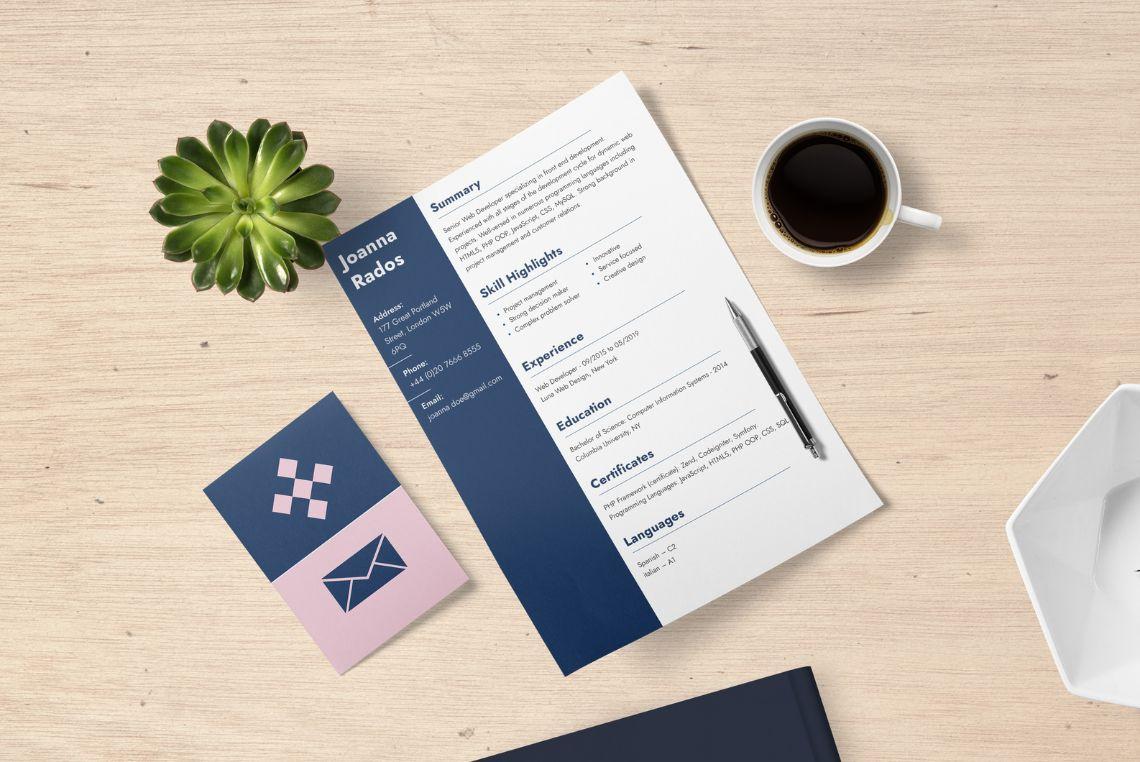
Below is a prefilled example showing exactly how a strong one-page student resume should look.
Aarav Mehta
Mumbai, India
aarav.mehta@email.com | +91 98XXXXXXX
LinkedIn: linkedin.com/in/aaravmehta
Aspiring education technology researcher building AI-powered literacy tools for underserved students across rural India.
Education
Jamnabai Narsee School, Mumbai
IB Diploma Programme | Predicted Score: 42/45 | Class of 2027
Higher Level Subjects:
- Mathematics AA
- Economics
- Computer Science
Extended Essay:
- “The Impact of AI-Based Adaptive Learning on Literacy Outcomes in Rural Maharashtra”
Academic Honours:
- Top 5% Academic Excellence Award
- International Economics Olympiad Finalist
Experience & Leadership
Founder — LiteracyBridge Initiative
- Built a mobile reading programme serving 450+ students across 3 villages in Maharashtra
- Recruited and trained 28 student volunteers
- Partnered with local NGOs to distribute multilingual learning kits
Research Intern — Educational Data Lab
- Analysed literacy assessment data from 1,200 students using Python and Excel
- Presented findings on adaptive learning outcomes to senior researchers
President — School Debate Society
- Led a 40-member debate team across national competitions
- Trained junior speakers; the team won the National Debate Championship 2025
Independent Project — AI Learning Assistant
- Developed a chatbot prototype helping students practise English comprehension
- Reduced average response time for teacher support queries by 35%
Skills & Languages
Technical Skills
- Python
- SQL
- Excel Modelling
- Data Visualisation
- Canva
- GitHub
Languages
- English (Fluent)
- Hindi (Native)
- Marathi (Conversational)
Common Resume Mistakes That Hurt Applications
1. Writing Generic Descriptions
Specificity creates credibility.
2. Including Everything
Your resume is not your life story.
3. Using Weak Verbs
Avoid:
- Participated
- Helped
- Assisted
Use:
- Led
- Built
- Analysed
- Designed
- Published
4. Overdesigning the Resume
Simple wins.
5. Ignoring Alignment With Intended Major
Your activities should connect logically to your academic direction.
Why Strong Resume Layouts Improve Admissions Outcomes
Top universities are not just evaluating intelligence.
They are evaluating clarity.
A strong resume tells a coherent story:
- What you care about
- What you have done
- Why are you prepared for your intended field
The layout helps that story become obvious instantly.
That is why two students with similar grades can get completely different outcomes.
One looks focused.
The other looks random.
Final Thoughts
A powerful resume is not about looking impressive.
It is about making your profile easy to trust.
The best student resumes are:
- Clean
- Specific
- Focused
- Impact-driven
- Easy to scan
Remember the formula:
Four sections. One page. Clear impact.
That alone puts you ahead of most applicants.
And if your resume currently feels weak, the solution is usually not “more activities.”
It is a better positioning.
Your resume is often the first impression your application makes. Build it strategically, and it can completely change how universities see your profile. Strong admissions are rarely accidental — they are engineered through positioning, clarity, and execution.
Explore Related Resources & Tools
Free tools and expert services from Karan Gupta Consulting
Frequently Asked Questions
What is the best resume layout for students applying to universities?
Should student resumes be one page?
What should students include in the experience section of a resume?
Do universities care about resume design?
What skills should students put on a resume?
Why Choose Karan Gupta Consulting?
- 27+ years of expertise in overseas education consulting
- 160,000+ students successfully counselled
- Personal guidance from Dr. Karan Gupta, Harvard Business School alumnus
- Licensed MBTI® and Strong® career assessment practitioner
- End-to-end support from career clarity to visa approval
SHARE THIS ARTICLE

Dr. Karan Gupta
Founder & Chief Education Consultant
Harvard Business School alumnus and India's leading career counsellor with 27+ years guiding 160,000+ students to top universities worldwide. Licensed MBTI® practitioner. Managing Director of IE University (India & South Asia).