The Recommendation Letter Cheat Sheet Every Student Needs

Dr. Karan Gupta is a Harvard Business School alumnus and career counsellor with 27+ years of experience and 160,000+ students guided. His insights on Undergraduate come from decades of hands-on experience helping students achieve their goals.
For most university applications, students obsess over grades, SAT scores, essays, and extracurriculars.
Then they treat recommendation letters like an afterthought.
Free Tool
University Predictor
Find out which universities you can realistically get into.
Try it free →That is a mistake.
At top universities, recommendation letters are not just formalities. They are one of the few parts of the application written by someone else — someone who has observed you in a classroom, under pressure, around peers, and over time.
And admissions officers know immediately when a recommendation is generic.
Especially in countries like India, where teachers often write recommendations for foreign universities without formal training on how these letters are evaluated.
The result?
Thousands of applications include lines like:
“She is hardworking and sincere.”
“He is disciplined and obedient.”
“She is excellent in academics.”
None of these statements is harmful. But none of them is memorable either.
The problem is not that teachers are incapable of writing strong letters. Indian teachers are brilliant. The problem is that they are overloaded, under-guided, and often writing for 200+ students.
If you want a recommendation letter that actually strengthens your application, your job is not just to ask for one.
Your job is to help your teacher write one.
That is where the one-page recommendation letter cheat sheet becomes powerful.
Why Recommendation Letters Matter More Than Students Think
Universities already have your grades.
They already have your scores.
They already have your activities list.
Recommendation letters answer a different question:
“What kind of student are you when nobody is performing for the application?”
A strong recommendation reveals:
- Intellectual curiosity
- Classroom engagement
- Initiative
- Resilience
- Leadership
- Growth over time
- Character under challenge
At highly selective universities, multiple applicants may have similar academic profiles. Recommendation letters often become the differentiator.
According to the Common App, recommendation letters are considered important or very important by many selective colleges during admissions review.
That means weak letters do not just “add less value.” They can actively weaken your profile.
The Biggest Problem With Recommendation Letters
Most teachers write generic letters because students give them generic information.
Students usually say things like:
- “Can you please write my recommendation?”
- “The deadline is next week.”
- “I need it for college applications.”
That gives the teacher nothing useful.
Remember:
Your teacher may genuinely like you — but still struggle to write a compelling recommendation because they cannot instantly recall specific moments.
Admissions officers are not looking for praise.
They are looking for evidence.
And evidence comes from stories, details, examples, and context.
That is exactly why the one-page cheat sheet works.
What Is a Recommendation Letter Cheat Sheet?
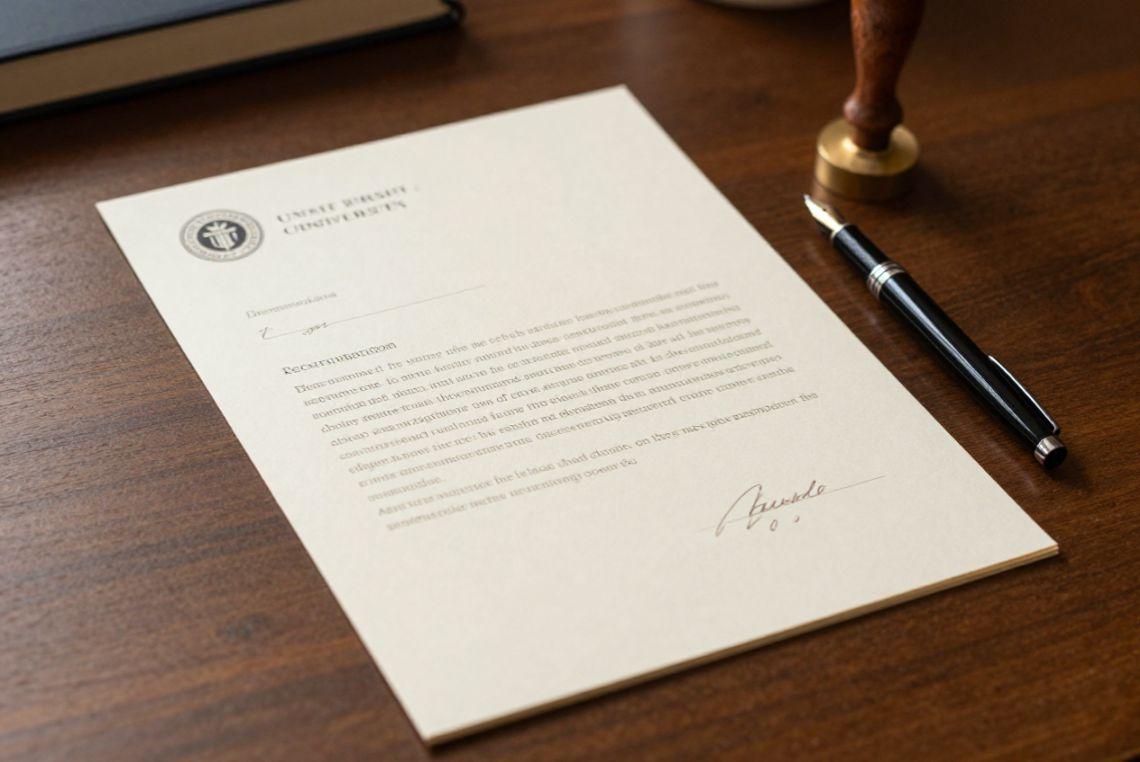
A recommendation letter cheat sheet is a one-page document you give your teacher before they begin writing your recommendation.
Its purpose is simple:
Help your teacher remember you clearly and write specifically.
Not dramatically.
Not artificially.
Specifically.
A great cheat sheet does not tell the teacher what to write word-for-word.
It gives them raw material.
The best recommendation letters sound personal because they are built on real memories and examples.
The Perfect One-Page Recommendation Letter Cheat Sheet
Section 1: Give Them a Specific Classroom Memory
This is the most important part.
Most teachers teach hundreds of students every year. Even exceptional students blur together after some time.
You need to trigger memory.
Do not write:
- “I enjoyed your class.”
- “I participated actively.”
Instead, remind them of a real moment.
For example:
“Remember when I asked about whether artificial intelligence could develop emotional reasoning during the psychology lecture? We discussed it for 10 minutes after class.”
Or:
“During the economics presentation, I challenged the inflation model we discussed using India’s post-pandemic data.”
That instantly changes the recommendation.
Now the teacher remembers:
- Your curiosity
- Your initiative
- Your thinking style
- Your classroom presence
Specificity creates credibility.
And credibility creates stronger recommendations.
Section 2: Share Your Top Activities Outside Their Class
Most teachers only know you inside one academic environment.
But universities evaluate students holistically.
Your mathematics teacher may have no idea that you:
- Built a mental health startup
- Conducted neuroscience research
- Led a robotics team
- Published a blog
- Organised a fundraiser
- Played national-level badminton
If your teacher does not know these things, they cannot connect your personality beyond academics.
Keep this section concise.
Include:
- Your top 3 activities
- Leadership roles
- Achievements
- Why those activities mattered to you
Example:
Research Internship
Conducted a summer research project on cognitive bias and decision-making under a university professor.
Debate Captain
Led the school debate team to national finals and mentored junior students.
Mental Health Initiative
Started a peer-support community reaching 500+ students across schools.
This gives the teacher a fuller picture of who you are.
Section 3: Explain What You Want to Study — And Why
This section is massively underrated.
Teachers write stronger letters when they understand your academic direction.
If you are applying for:
- Cognitive Science
- Mechanical Engineering
- Economics
- Public Policy
- Psychology
- Computer Science
…your teacher can connect classroom observations to your future goals.
For example:
“She is applying for cognitive science, which aligns with the curiosity she consistently showed during our neuroscience unit.”
Or:
“His interest in engineering became clear through the independent physics simulations he built after class.”
Now the recommendation feels intentional rather than generic.
Admissions officers love coherence.
They want to see that:
- Your interests connect logically
- Your academic choices make sense
- Your curiosity has depth
Your cheat sheet helps the teacher reinforce that narrative.
Section 4: Include One Weakness You Overcame
Students think recommendation letters should present perfection.
Wrong.
The strongest recommendations often show growth.
Growth is believable.
Perfection is suspicious.
A meaningful example could be:
“She initially struggled with organic chemistry but attended every extra session until she became one of the strongest performers in class.”
Or:
“He was initially hesitant during presentations but gradually became one of the most articulate contributors during seminars.”
Why this works:
- It shows resilience
- It shows coachability
- It shows effort
- It shows maturity
Top universities do not just want talented students.
They want students who improve.
Timing Matters More Than Students Realise
One of the fastest ways to damage a recommendation letter is poor timing.
Students often ask teachers:
- Two weeks before the deadline
- During exam season
- At the last minute
- Without context
That guarantees stress and generic writing.
The ideal timeline?
Ask at least 8 weeks in advance.
Not 2 weeks.
Not “whenever you’re free.”
Eight weeks give teachers time to:
- Reflect
- Write carefully
- Revise thoughtfully
- Submit without pressure
It also signals professionalism and respect.
And yes — teachers notice that.
What Makes a Recommendation Letter Actually Strong?
Strong Letters Include:
Specific Examples
Not vague praise.
Intellectual Insight
How you think matters more than how obedient you are.
Personality
Universities admit humans, not transcripts.
Growth
Improvement matters.
Comparative Statements
Example:
“Among the top 5 students I have taught in 15 years.”
These carry enormous weight when genuine.
What Weak Recommendation Letters Usually Sound Like
Weak letters are full of empty adjectives:
- Hardworking
- Disciplined
- Sincere
- Polite
- Dedicated
These words are not bad.
They are just incomplete.
Without evidence, adjectives mean very little.
A recommendation letter should feel like a teacher genuinely knows the student.
Not like they copied a template.
Common Recommendation Letter Mistakes Students Make
Asking the Wrong Teacher
Choose teachers who know you well — not just teachers from subjects where you scored highest.
A slightly lower grade with a deeply supportive teacher is often better than a perfect score with zero relationship.
Sending No Supporting Material
Do not assume your teacher remembers everything.
Help them help you.
Writing the Entire Letter Yourself
Some schools encourage students to draft letters.
Be careful.
Admissions officers can often detect when recommendations sound unnatural or overly polished.
Support the teacher with information — not manufactured writing.
Ignoring Follow-Up Etiquette
After the teacher agrees:
- Send deadlines clearly
- Share submission instructions
- Politely remind them of the deadlines
- Thank them afterwards
Professionalism matters.
A Simple Recommendation Letter Cheat Sheet Template
Here is the structure your one-page sheet should follow:
1. Specific Classroom Moment
A memorable interaction, project, question, or discussion.
2. Top 3 Activities Outside Class
Leadership, impact, achievements, passions.
3. Intended Major + Why
Your future academic direction.
4. One Challenge You Overcame
Academic or personal growth.
5. Important Dates
Submission deadlines and platforms.
Simple.
Clear.
Effective.
Why This Strategy Works So Well
Because recommendation letters are strongest when they feel human.
A teacher cannot invent meaningful detail under pressure.
But when you provide thoughtful prompts, memories, and context, you make it easier for them to write honestly and specifically.
The result?
- Stronger storytelling
- Better credibility
- More memorable applications
- Better alignment across your profile
And in highly competitive admissions, small differences matter enormously.
Final Thoughts
Recommendation letters are not about finding teachers who like you.
They are about helping teachers describe you meaningfully.
That is the difference.
A well-crafted one-page cheat sheet can completely change the quality of your recommendation because it gives teachers what they actually need:
Context. Memory. Direction. Evidence.
And in competitive admissions, specificity always beats generic praise.
If you are preparing for university applications, spend as much time building strong relationships and thoughtful recommendation support materials as you spend on essays and test scores. The students who understand this early often build the strongest applications overall.
Explore Related Resources & Tools
Free tools and expert services from Karan Gupta Consulting
Frequently Asked Questions
What should Indian students know about the recommendation letter cheat sheet every student needs?
How should I prepare for the SAT as an Indian student?
How do I write a strong statement of purpose (SOP) for studying abroad?
Who should I ask for a letter of recommendation (LOR)?
How important are extracurricular activities for studying abroad?
Why Choose Karan Gupta Consulting?
- 27+ years of expertise in overseas education consulting
- 160,000+ students successfully counselled
- Personal guidance from Dr. Karan Gupta, Harvard Business School alumnus
- Licensed MBTI® and Strong® career assessment practitioner
- End-to-end support from career clarity to visa approval
SHARE THIS ARTICLE

Dr. Karan Gupta
Founder & Chief Education Consultant
Harvard Business School alumnus and India's leading career counsellor with 27+ years guiding 160,000+ students to top universities worldwide. Licensed MBTI® practitioner. Managing Director of IE University (India & South Asia).