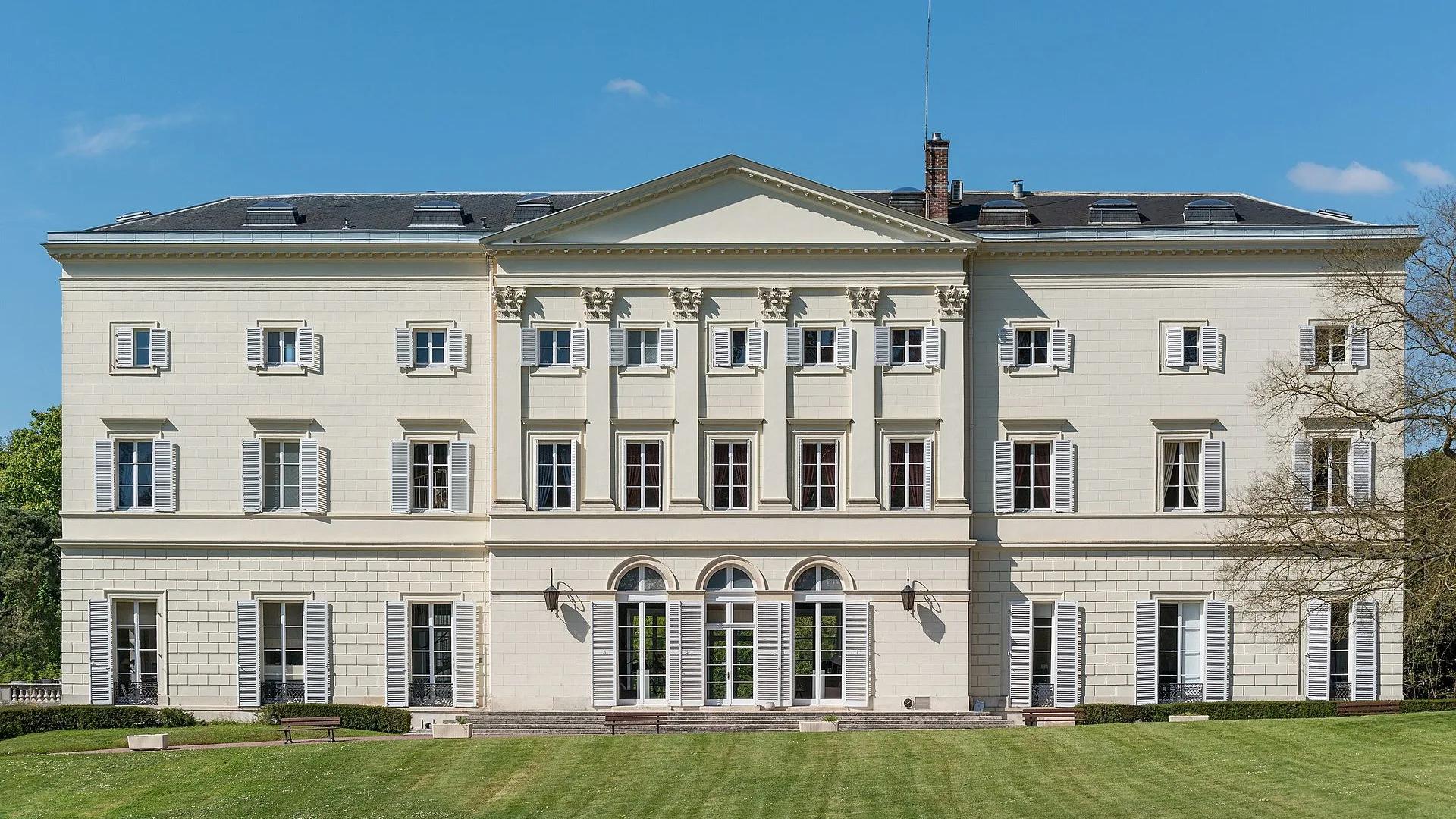
HEC Paris
Jouy-en-Josas, France
One of the world's most elite business schools. Postgraduate only — no undergraduate programs. The #1 Master in Management (MiM) globally, a top-5 MBA in Europe, and an unmatched pipeline into MBB consulting firms. Compare with London Business School.
#1
MiM (FT Ranking)
Top 5
MBA in Europe
MBB
Consulting Pipeline
50+
Students Guided
Tuition & Costs
- MiM (16 months): ~EUR 48,000-52,000 total (~$52,000-$57,000 USD)
- MBA (16 months): ~EUR 79,000 total (~$86,000 USD)
- Living costs (Paris area): ~EUR 1,200-1,800/month
- MiM value: Exceptional ROI — lower than US MBA, similar career outcomes
- Study in France | Cost Calculator
Scholarships
- HEC Foundation Scholarships (need + merit-based)
- Eiffel Excellence Scholarships (French government)
- MBA: Merit and need-based HEC scholarships
- MiM: Several scholarship options for international students
- Explore all scholarships

Dr. Karan Gupta's Strategic View
Why HEC Paris Is a Strong Choice
The #1 Master in Management: The Best Pre-Experience Business Degree
HEC's MiM has been ranked #1 by the Financial Times consistently. For Indian students who have just completed undergraduate studies and want a world-class business education without needing years of work experience, the MiM is arguably the best program in the world. Graduates enter consulting, finance, and tech at the same level as MBA graduates — but younger and at lower cost.
The MBB Consulting Pipeline
HEC Paris places more graduates into McKinsey, BCG, and Bain (MBB) than almost any other school globally. The consulting placement rate is exceptional — both for MiM and MBA graduates. For Indian students targeting elite consulting careers in Europe, HEC is the #1 feeder school.
European Gateway
Paris is the business capital of continental Europe. HEC graduates gain access to French multinationals (LVMH, L'Oréal, Total, BNP Paribas), European consulting offices, and a growing tech/startup ecosystem. France's post-study work visa makes it easier to build a career in Europe.
Exceptional ROI
The MiM costs ~EUR 50,000 total — significantly less than a US MBA — yet places graduates in comparable roles. The MBA is also well-priced relative to US alternatives. Combined with Paris's lower living costs compared to London/NYC, HEC offers one of the best returns on investment in business education.
Jouy-en-Josas Campus, Near Paris
HEC's residential campus sits in the leafy suburb of Jouy-en-Josas, 25 km southwest of Paris, offering a focused academic environment with easy access to the French capital.
Near Paris
25 km from Paris with dedicated shuttle service, combining campus focus with access to Europe's business capital.
Global Diversity
MBA cohorts feature 90%+ international students from over 60 nationalities, creating an exceptionally diverse learning environment.
European Prestige
Consistently ranked #1 in Europe by the Financial Times, HEC's brand carries extraordinary weight in European business.
Programs at HEC Paris
Master in Management (MiM)
16-month pre-experience program. No work experience required. GMAT/GRE + strong academics + leadership evidence. Exceptional consulting/finance placements.
MBA
16-month program for experienced professionals (3+ years). GMAT/GRE required. Strong entrepreneurship, consulting, and finance focus. Diverse global cohort.
Master in International Finance
10-month specialized program for finance career acceleration. CFA-aligned curriculum with strong banking and asset management placements.
Executive MBA (EMBA)
For senior professionals. Part-time format combining Paris modules with international residencies.
TRIUM EMBA
Joint program with NYU Stern and LSE. For C-suite track executives.
Master in Strategic Management
PhD-lite program combining business strategy with research methodology. Strong academic placement.
HEC Paris is Europe's top business school with globally-ranked MBA, Master in Management, and specialized master's programs in finance, marketing, and strategy—all taught with a distinctly European and international perspective.
Admission Requirements
HEC Paris admission is highly selective, with the MBA program accepting around 20% of applicants. Strong GMAT/GRE scores, international experience, and leadership potential are essential.
HEC values international exposure and leadership potential over pure test scores. Applicants with unique cultural experiences and clear post-MBA goals that leverage HEC's European network stand out.
Interview Preparation
What to expect and how to prepare for your HEC Paris interview
Format
Two interviews with HEC alumni, each including 10-minute oral presentation + Q&A + CV discussion
Duration
45-60 minutes per interview (10 min presentation + 35-50 min discussion)
Interviewers
HEC alumni (blind review of CV, no essays)
Interview Style
Presentation-focused, case-study method, equal weight to both interviews
What HEC Paris Looks For
Sample Interview Questions
[Your 10-Minute Presentation on Topic of Your Choice]
This is your moment to shape the narrative. Choose a topic that reveals something meaningful about your values, curiosity, or growth. Use the '2-8-10' framework: Why (2 min), What (6 min), Impact (2 min). Practice until you can deliver it naturally, without notes, with genuine pauses for breath and thought. Your delivery matters as much as your content.
Tell me about a time you failed or faced significant challenge. What did you learn?
HEC values growth mindset over perfection. Pick a real failure (not a humble-brag). Explain what went wrong, what you were responsible for, and how you adjusted. Reflect on what that taught you about yourself, your approach, your leadership. The best answers show humility and genuine learning, not excuses.
Walk me through your career path. Why did you make each move?
Your interviewer has only your CV; they want to understand the logic of your trajectory. Each move should make narrative sense. If you job-hopped, be ready to explain the strategy or learning behind each move. Coherence signals clarity of thinking. Randomness suggests unclear goals.
Why an MBA, and why now?
Be specific. 'I want to grow as a leader' is vague. 'I've spent 8 years in operations and want to transition to general management. The MBA's strategic coursework and leadership development will close the gap.' Or 'I want to launch a sustainable fashion company, and HEC's entrepreneurship program plus mentor network will accelerate that journey.' Connect the MBA to a specific inflection point in your thinking.
Tell me about your most significant accomplishment in your current or previous role.
Don't just state the outcome. Walk through the challenge (why was this hard?), your approach (how did you think about it?), key decisions (what trade-offs did you make?), and result (what changed?). Then reflect: what did this teach you about yourself as a leader? What would you do differently?
How do you approach continuous learning and development?
HEC values lifelong learning. Share specific examples: books you read, courses you've taken, mentors you've sought, skills you've intentionally developed. Show that you're proactive about your growth, not waiting for your employer to develop you.
Tell me about a time you disagreed with a manager or colleague. How did you handle it?
This assesses emotional intelligence and conflict resolution. Pick a real disagreement. Explain your perspective, their perspective, where the gap was, and how you bridged it. Avoid blame. Show you can listen, understand opposing views, and find common ground. Leaders don't just impose their will; they persuade and align.
What would you change about your current or previous role if you could do it again?
This shows self-awareness. Maybe you'd invest earlier in building a strong team, or spend more time on strategic planning instead of fires, or communicate differently with a key stakeholder. The point is reflective learning, not regret.
How do you define leadership?
Your answer reveals your leadership philosophy. Share a definition grounded in your experience. 'Leadership is enabling others to succeed, creating clarity in ambiguity, and modeling the values you expect.' Then support with an example from your career.
How has your thinking about [topic from your presentation] evolved? Where do you want to take it next?
Your interviewer is looking for evidence that you're still growing in your passion area. Show how the MBA connects to deepening or applying this thinking. This links your presentation to your future vision.
What are you looking for in an MBA program, and why HEC specifically?
Again, specificity wins. Name classes, clubs, exchange locations, or professors at HEC that align with your goals. 'Strong program in Paris' is forgettable. 'Your sustainable business concentration and connections to luxury brands will help me transition into ESG-focused roles at LVMH or similar' is memorable.
Tell me about a time you had to lead or influence without direct authority.
HEC case-method learning relies on peer influence and group consensus, not hierarchy. They want evidence that you can persuade with ideas, not just authority. Pick a story where you influenced a peer group, a cross-functional team, or even a senior stakeholder without being in charge.
Preparation Tips
- Choose a presentation topic that reveals your values, not just your accomplishments
- Practice your presentation 15+ times; internalize flow so you can deliver naturally
- Use pauses and silences; they show thoughtfulness, not lack of confidence
- Connect your presentation to your MBA goals and future vision in the Q&A
- Prepare for the interviewer to push back or ask challenging follow-ups; engage with curiosity
- Have 3-4 rich stories from your CV ready; practice telling them in 2-3 minutes each
- Reflect genuinely on failures and challenges; HEC values learning orientation
- Ask your interviewer about their HEC experience and lessons learned
- Between the two interviews, don't change your narrative; consistency signals authenticity
Common Mistakes
- Choosing a presentation topic that's too safe or generic (business case, resume highlights)
- Presenting without practicing; the delivery reveals preparation (or lack thereof)
- Reading slides instead of engaging with the interviewer during presentation
- Failing to connect presentation to MBA goals; it feels separate from motivation
- Not preparing for CV deep-dive questions; stumbling through career narrative
- Defensive responses to follow-up questions; interview is a dialogue, not interrogation
- Overly rehearsed delivery that sounds scripted; spontaneity is valued
- Weak reflection on challenges; 'I don't have weaknesses' is a red flag
- Treating the second interview as a formality after strong first one; both matter equally

Dr. Karan Gupta's Interview Advice
Expert Advice from Dr. Karan Gupta
HEC Paris's presentation-centric format is one of the most distinctive interview experiences in European MBAs. Many candidates fear it because it's less standardized. But that's exactly the point. The school wants to see your thinking clearly, without the buffer of essays and application forms. You're standing up, delivering an argument, and defending it in real-time.
The biggest insight I've gained from coaching dozens of HEC admits: the topic choice matters less than the execution and reflection. I've seen students admitted with presentations on wildly different topics—from supply chain sustainability to learning management styles to navigating family dynamics while building a career. What they shared: passion, clarity, and genuine learning. The interviewer felt that person's investment in the idea.
One pattern I've noticed: candidates who choose "safe" topics (business strategies, professional achievements) often struggle. The presentation becomes generic, and the interviewer zones out. Candidates who choose topics that reveal them—vulnerabilities, values, growth edges—create energy. The interviewer leans in. That's the difference between a strong interview and an exceptional one.
My final advice: Don't overthink the presentation design. The polish matters less than authenticity. If you're genuinely curious about something, that comes through. If you're performing for the interviewer, that comes through too. Be yourself. That's what HEC is evaluating.
What Type of Student Gets In?
Internationally experienced professionals with 3-8 years of work experience (for MBA)
Leadership-oriented candidates with clear career vision leveraging European networks
Students interested in luxury, consulting, or finance careers with a European focus
Applicants from outside Europe sometimes underestimate HEC's brand power within Europe and the luxury sector. If your post-MBA goals are Europe-focused, HEC may be a better choice than some higher-ranked US schools. Show you understand this in your application.
Costs & ROI
HEC MBA tuition is approximately EUR 77,000 for the full program—competitive with top European peers. Scholarships are available based on merit, diversity, and financial need.
| Level | Tuition |
|---|---|
| MiM (16 months) | ~EUR 48,000-52,000 total (~$52,000-$57,000 USD) |
| MBA (16 months) | ~EUR 79,000 total (~$86,000 USD) |
| Living costs (Paris area) | ~EUR 1,200-1,800/month |
| MiM value | Exceptional ROI — lower than US MBA, similar career outcomes |
Salary Ranges
Career & Industry
Consulting
McKinsey, BCG, Bain, and Roland Berger are top recruiters at HEC Paris, with many partners being HEC alumni.
Luxury & Consumer
LVMH, L'Oreal, Kering, and Hermes—headquartered in Paris—maintain deep relationships with HEC for talent and research.
Finance
BNP Paribas, Societe Generale, Rothschild, and global investment banks actively recruit from HEC's finance programs.
HEC graduates dominate European business leadership, with exceptional placement in luxury, consulting, and finance—sectors where HEC's network and brand carry unmatched weight in Europe.
Application Timeline
12-18 Months Before
- Research HEC programs and determine which program fits your profile
- Take GMAT/GRE and aim for 700+ for MBA
- Build leadership experience through professional and community roles
8-12 Months Before
- Draft essays highlighting international experience and leadership
- Request recommendation letters from professional supervisors
- Attend HEC info sessions or campus visits
4-8 Months Before
- Submit applications in early rounds for best scholarship consideration
- Prepare for interview and video essay components
- Research scholarship options and financial planning
0-4 Months Before
- Accept offer and pay enrollment deposit
- Apply for French student visa (VLS-TS)
- Arrange housing near campus or plan commute from Paris
HEC Paris vs Peers
INSEAD
HEC Paris: Stronger in luxury and European industries, Paris location for networking, More structured MBA, Better for European career switchers
Other: Larger global alumni network, One-year MBA option, Stronger consulting placement, Multiple campuses globally
Compare →HEC Paris Is Right For...
- European business careers
- Luxury and consulting
- Paris ecosystem networking
- Career switchers to Europe
HEC Paris Is Not Right For...
- US-focused careers
- Large campus seekers
- Non-European job targets
- Highly quantitative focus
Our Students at HEC Paris
Vikrant Mehta
HEC Paris
“HEC MiM was my top choice after graduating from a top Indian university. Dr. Gupta helped me understand that HEC evaluates leadership potential and international mindset, not just GMAT scores. The application strategy was precise and I got in with a scholarship.”
Aditi Sharma
HEC Paris
“I applied to HEC MBA after 5 years in consulting. KGC helped me articulate why HEC specifically — the European corporate access, the alumni network in consulting, and the career pivot opportunity. The essay coaching was outstanding.”
Siddharth Menon
HEC Paris
“HEC's MiM program was the perfect launchpad for my consulting career in Europe. The placement record into McKinsey, BCG, and Bain was the deciding factor. KGC helped me navigate the complex European application process.”
Watch: Study Abroad Insights

Dr. Karan Gupta's Advice
Book a consultation to discuss your HEC Paris strategy.
- The MiM is the best-kept secret for Indian graduates. Most Indian families only think “MBA” for business education. HEC's MiM offers comparable career outcomes (MBB consulting, finance) without needing work experience and at half the cost of a US MBA.
- GMAT scores matter, but so does your profile. HEC evaluates leadership potential, international mindset, and cultural fit alongside academics. A strong GMAT score alone won't get you in — you need to demonstrate genuine leadership and global perspective.
- France's post-study work visa is underrated. Graduates can work in France and easily access other EU countries. For Indian students targeting European careers, HEC Paris is the strongest launching pad.
FAQs: HEC Paris for Indian Students
Is HEC Paris only for business?
Is HEC Paris MiM really #1?
Do I need work experience for HEC MiM?
Is HEC Paris expensive?
Can I work in France after HEC?
Is GMAT required for HEC Paris?
Related Articles
The ₹0 List: Free Opportunities That Actually Strengthen a Student’s Profile
The best summer opportunities are not always expensive. Discover selective ₹0 programs that can demonstrate genuine student achievement.
Demonstrated Interest in US College Admissions: What Students Need to Know
Demonstrated interest can strengthen US college applications, but only when students know which universities value it and engage genuinely.
IMO Olympiad Explained: The Official Pathway in India
Two exams in India are called IMO. Only one is the official pathway to India's International Mathematical Olympiad team.
Want to Study at HEC Paris?
Get expert guidance from Dr. Karan Gupta: Harvard alumnus, 27+ years of global admissions experience guiding 160,000+ students worldwide.