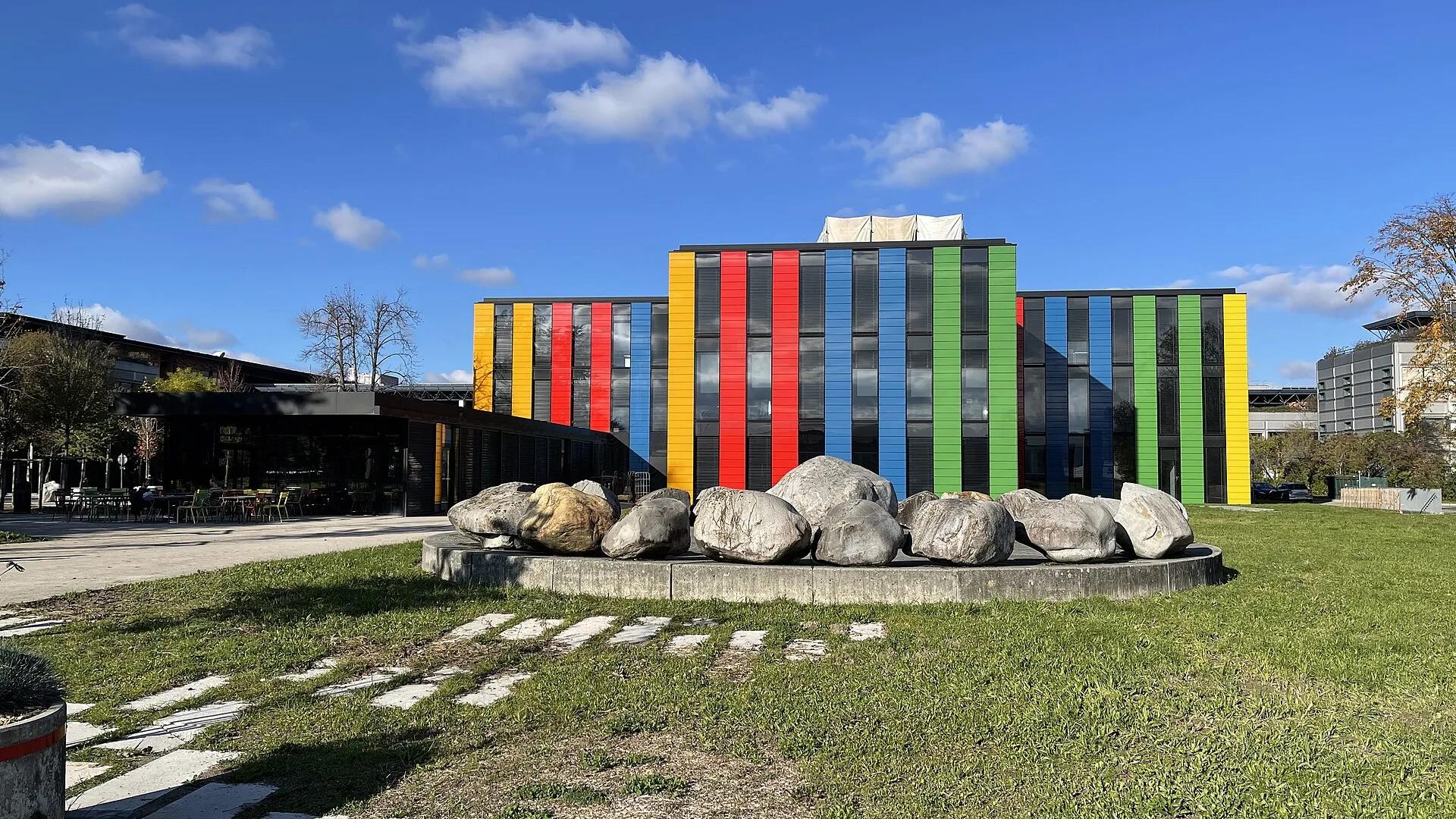
Your Guide to EPFL
Lausanne, Switzerland
EPFL (École Polytechnique Fédérale de Lausanne) ranks among the world's premier technical universities, competing directly with Stanford, MIT, and ETH Zurich. Founded in 1853, EPFL combines Swiss precision with entrepreneurial culture, producing engineers, scientists, and innovators who drive global technology advancement. The university's Innovation Park hosts 150+ startups valued at billions.
#36
QS Global Ranking
18+ candidates placed at EPFL across 2023-2025 cohorts
Students
CHF 780
Semester Tuition
#1
Global Startup Density
EPFL at a Glance
5
Schools
60+
Master's Programs
55%
International Enrollment
€1.3B
Annual Research Budget
2,800+
Faculty & Researchers
150+
Innovation Park Startups
95%
Graduate Employment
€450M
Endowment & Reserves

Dr. Karan Gupta's Strategic View
Dr. Karan Gupta's Expert Assessment
Why EPFL Is a Strong Choice
Unmatched Startup & Entrepreneurship Ecosystem
EPFL's Innovation Park—physically integrated with campus—is Europe's highest-density startup ecosystem. Faculty actively mentor and invest in student ventures; most Master's programs dedicate time to entrepreneurship modules. Graduates launch companies at 3x the rate of peer institutions. Access to venture capital and business mentorship is embedded, not supplementary.
Research Intensity with Practical Application
Unlike pure research institutions, EPFL emphasizes applied innovation—solving real problems with cutting-edge technology. Faculty have strong industrial partnerships and commercialize research regularly. Master's students conduct thesis research on problems facing real companies (robotics, AI, biomedicine) rather than purely academic exercises.
Gateway to Global Tech Hubs
EPFL alumni network spans Silicon Valley, London fintech, Munich automotive, and Beijing tech sectors. The university's global research collaborations and exchange programs enable students to spend time at partner institutions worldwide. Swiss neutrality and multilingual culture create natural bridges to diverse career markets.
Campus & Innovation Ecosystem
EPFL's 58-hectare campus sits on Lake Geneva's banks, combining modern architecture with striking natural setting. The Innovation Park integrates research labs with startup incubators, mentorship spaces, and investor offices. Campus features cutting-edge facilities including quantum research centers, AI labs, and robotic engineering workshops.
Research Labs
State-of-the-art facilities for AI, robotics, quantum computing, and biomedical research with unmatched equipment access
Innovation Park
150+ startups, incubators, and investor offices integrated with campus—unique startup immersion opportunity
International Partnerships
55% international student body with exchange programs to MIT, Stanford, UC Berkeley, Peking University
Lausanne Culture
Lake-side location with vibrant student culture, cultural events, and proximity to Swiss Alps for recreation
Programs at EPFL
MSc Computer Science
School of Computer & Communication Sciences
Distributed systems, machine learning, security, systems design with strong research output
MSc Data Science
School of Computer & Communication Sciences
Statistical methods, machine learning applications, data engineering with industry project components
MSc Financial Engineering
College of Management
Mathematical finance, risk management, quantitative trading with strong finance industry partnerships
MSc Management of Technology & Entrepreneurship
College of Management
Tech entrepreneurship, innovation management, business model development with startup immersion
MSc Electrical Engineering
School of Engineering
Power systems, communications, microelectronics with cutting-edge lab facilities
MSc Mechanical Engineering
School of Engineering
Robotics, autonomous systems, advanced materials with strong industry project integration
MSc Life Sciences
School of Life Sciences
Systems biology, computational biology, biomedical engineering
MSc Robotics
School of Engineering
Advanced robotics, autonomous systems, machine learning applications in robotics
All Master's programs are 2 years (120 ECTS) conducted in English. Primary intake is September; some programs allow February starts. EPFL's semesters run September-December and February-May with flexible thesis scheduling.
Admission Requirements
EPFL admissions are competitive, prioritizing academic strength and intellectual potential. The university seeks candidates demonstrating both technical depth and curiosity.
EPFL evaluates holistically but weights academic transcripts heavily. GRE scores carry less weight than at US universities; a strong transcript with weak GRE still succeeds. Research interests matter significantly—articulate clear technical direction.
Interview Preparation
What to expect and how to prepare for your EPFL interview
Format
EPFL generally does not conduct formal admissions interviews for undergraduate programs. Swiss Maturité holders are admitted directly. International bachelor applicants take entrance exams. Select master's and PhD programs may include a brief academic interview or Skype call, but this varies by program and is not guaranteed.
Duration
15-25 minutes (where applicable)
Interviewers
Program director or faculty committee member
Interview Style
Academic, Motivation-focused
What EPFL Looks For
Sample Interview Questions
What specific aspect of your field excites you most, and why EPFL?
Mention specific EPFL labs, centers, or initiatives. Show you've done real research into the school.
Describe your most significant academic project and its outcomes.
Quantify results where possible. EPFL is engineering-focused — they want to see impact.
How do you handle working in a multicultural, multilingual environment?
EPFL has students from 120+ countries. Show genuine comfort with diversity, not just tolerance.
Where do you see your research or career heading in the next five years?
Be specific but flexible. Show ambition grounded in realistic understanding of the field.
What is the biggest technical challenge facing your field today?
Demonstrate you follow current developments. Reference recent papers or breakthroughs.
Preparation Tips
- Know that most EPFL admissions are document-based — an interview invitation is a positive signal
- Brush up on French basics even if your program is in English — it shows commitment to life in Lausanne
- Be ready to discuss your transcript in detail, especially any weak semesters
- For PhD applicants: have a clear research proposal outline ready to discuss
Common Mistakes
- Confusing EPFL with ETH Zurich — know what makes EPFL distinct (innovation focus, startup culture)
- Not preparing for technical depth — EPFL interviews, when they happen, go deep fast
- Ignoring the practical engineering angle — EPFL values applied research, not just theory
What Type of Student Gets In?
Strong quantitative foundation with demonstrated excellence in mathematics, physics, or engineering coursework
Research interests or technology entrepreneurship ambitions (culture emphasizes both pathways equally)
Comfort with collaborative, interdisciplinary work—EPFL strongly emphasizes teamwork
Adaptability to Swiss efficiency culture (direct, organized, deadline-focused)
Realistic expectations about cost of living (Lausanne is expensive despite affordable tuition)
Interest in learning French (not required for studies but improves social integration and job prospects)
Candidates assume EPFL's cheap tuition (CHF 780/semester) means total affordability. Reality: Lausanne's rental market is expensive (CHF 600-900/month) and food/transport costs are high. Total living expense reaches CHF 18-20K/year (€18-20K), making annual total cost ~€22-26K. This is still competitive but not as cheap as it initially appears. Budget accordingly.
Costs & ROI
EPFL charges identical tuition for all students regardless of residency (groundbreaking for European universities). Living costs in Lausanne are high—housing dominates budget. Most students live in student housing (CHF 400-600/month) or shared apartments. Work-study opportunities are available but limited (visa restrictions for non-EU).
| Level | Tuition | Living | Total |
|---|---|---|---|
| All Students (Equal Pricing) | CHF 780/semester (€800/semester or €1,600/year) | CHF 18,000-20,000/year (€18-20K/year) | €19,600-21,600/year (2 years = €39-43K) |
Salary Ranges
Career & Industry
Google & Meta
Major R&D centers in Zurich; EPFL partnership on AI, distributed systems, infrastructure
Novartis & Roche
Biotech partnerships for computational biology and drug discovery research
ABB & Siemens
Industrial automation and robotics partnerships
UBS & Credit Suisse
Finance and quantitative research partnerships
Venture Capital Community
140+ VCs active in Innovation Park; regular pitch events and mentorship programs
CERN
Research partnership on physics and large-scale data management
EPFL graduates enjoy exceptional salary progression, especially in software engineering and quantitative finance. Average starting salary is CHF 100-130K (€100-130K), significantly above average Swiss wage (CHF 85-100K). Startup founders earn variable compensation but equity often provides long-term upside.
Application Timeline
Application & Decision
- Submit application with transcripts, test scores, statement of purpose
- Program-specific assessments or interviews for selective programs
- Admissions decision (6-8 weeks)
- Enrollment confirmation and visa planning
Pre-Arrival
- Secure housing (EPFL housing office allocates dorms; private market tight)
- Obtain Swiss residence permit (if non-EU; EU citizens register after arrival)
- Open Swiss bank account (recommended for ease)
- Orientation week mid-August with lab introductions
Year 1: Specialization & Lab Integration
- Complete specialized coursework (first 3-4 months)
- Join research lab or Innovation Park startup mentorship
- Engage in team projects and collaborative research
- Develop thesis direction with faculty advisor
Year 2: Advanced Research & Thesis
- Conduct independent/team thesis research (6-9 months)
- Publish preliminary findings or patent applications
- Final thesis presentation and examination
- Graduation (July-September); transition to career or PhD
EPFL vs Peers
ETH Zurich
EPFL: EPFL tuition CHF 780/semester vs ETH CHF 2,300/semester (ETH costs 3x more). EPFL's entrepreneurship culture and startup ecosystem significantly stronger. EPFL more affordable for non-Swiss citizens.
Other: ETH ranks #10 globally (EPFL #36)—higher prestige in some circles. ETH's reputation in pure science and mathematics stronger. Zurich location more expensive than Lausanne but offers stronger tech job market.
Compare →TU Delft
EPFL: EPFL superior overall ranking (#36 vs #47). Stronger innovation/startup culture. Equal affordability on tuition; EPFL has higher living costs but more global career options.
Other: TU Delft larger institution (22K vs 14K students) with more diverse program portfolio. Delft's aerospace engineering strength exceeds EPFL. Netherlands location cheaper for living costs.
Compare →Imperial College London
EPFL: EPFL costs €39-43K total (2 years) vs Imperial €80-100K+. EPFL innovation ecosystem substantially stronger. More affordable path to world-class technical education.
Other: Imperial ranks higher (#34 vs EPFL #36, minimal difference). London location offers larger tech job market and finance sector depth. English-speaking environment easier for integration.
Compare →EPFL Is Right For...
- Technology entrepreneurs seeking rigorous technical training with startup mentorship
- Computer scientists and software engineers targeting research or tech industry roles
- Students prioritizing affordability without compromising academic quality
- Candidates interested in quantitative finance or fintech careers
- Those seeking global visibility and international collaboration opportunities
- Researchers planning PhD pathways with strong publication records needed
EPFL Is Not Right For...
- Candidates avoiding high cost-of-living environments (Lausanne is expensive despite cheap tuition)
- Those seeking warm-weather locations (Lausanne has cold, gray winters; heating costs significant)
- Career changers from non-technical backgrounds (admission requires engineering/physics foundation)
- Students preferring larger cities (Lausanne is charming but small; Zurich or Geneva offer more urban amenities)
- Those uncomfortable with competitive, entrepreneurial culture (EPFL emphasizes hustle and innovation intensity)

Dr. Karan Gupta's Advice
FAQs: EPFL for Indian Students
Why is EPFL tuition so cheap compared to similar universities?
Switzerland's government heavily subsidizes higher education as national priority. EPFL tuition (CHF 780/semester) is intentionally affordable to attract top talent regardless of background. Living costs offset low tuition; Swiss salaries compensate workers for high expenses.
Do I need to speak French to attend EPFL?
No, all Master's programs are taught entirely in English. However, Swiss French is spoken daily in Lausanne; learning it improves social integration and job prospects significantly. Many students take evening French courses (6-12 months to basic conversational proficiency).
What's EPFL's relationship with the Innovation Park startups?
The Innovation Park is physically integrated with campus and open to student participation. Many Master's students work part-time at startups or conduct thesis research within park companies. Faculty actively mentor ventures and make introductions. Participation is voluntary but culturally encouraged.
Can international students work during studies?
Non-EU students can work 15-20 hours/week on-campus and up to 120 days/year off-campus with permit. EU citizens can work freely. Many students combine studies with part-time roles at startups, labs, or tutoring (CHF 25-35/hour typical).
How is the startup culture at EPFL compared to Stanford or MIT?
EPFL's startup density (companies per student) exceeds both Stanford and MIT. However, US universities have deeper venture capital relationships and larger exit valuations. EPFL strength lies in early-stage mentorship and technical team formation; US schools excel at scaling and fundraising.
What percentage of EPFL graduates launch companies vs join tech firms?
Approximately 25-30% of graduates launch ventures within 5 years; 45% join tech/software companies; 15% pursue PhDs; 10% enter other sectors. This distribution reflects EPFL's entrepreneurial culture and tech-heavy program portfolio.
Related Articles
IMO Olympiad Explained: The Official Pathway in India
Two exams in India are called IMO. Only one is the official pathway to India's International Mathematical Olympiad team.
5 Ways to Get Into an IIM Without CAT
CAT is not the only way into an IIM. Discover five non-CAT routes, from IPMAT and JIPMAT to IIMB's BBA and GMAT/GRE-based MBAs.
The U.S. Government Website Every College Applicant Should Know
College Scorecard is the free U.S. government tool that lets students research college costs, earnings, completion, debt and more.
Related Guides & Resources
Want to Study at EPFL?
Get expert guidance from Dr. Karan Gupta: Harvard alumnus, 27+ years of global admissions experience guiding 160,000+ students worldwide.