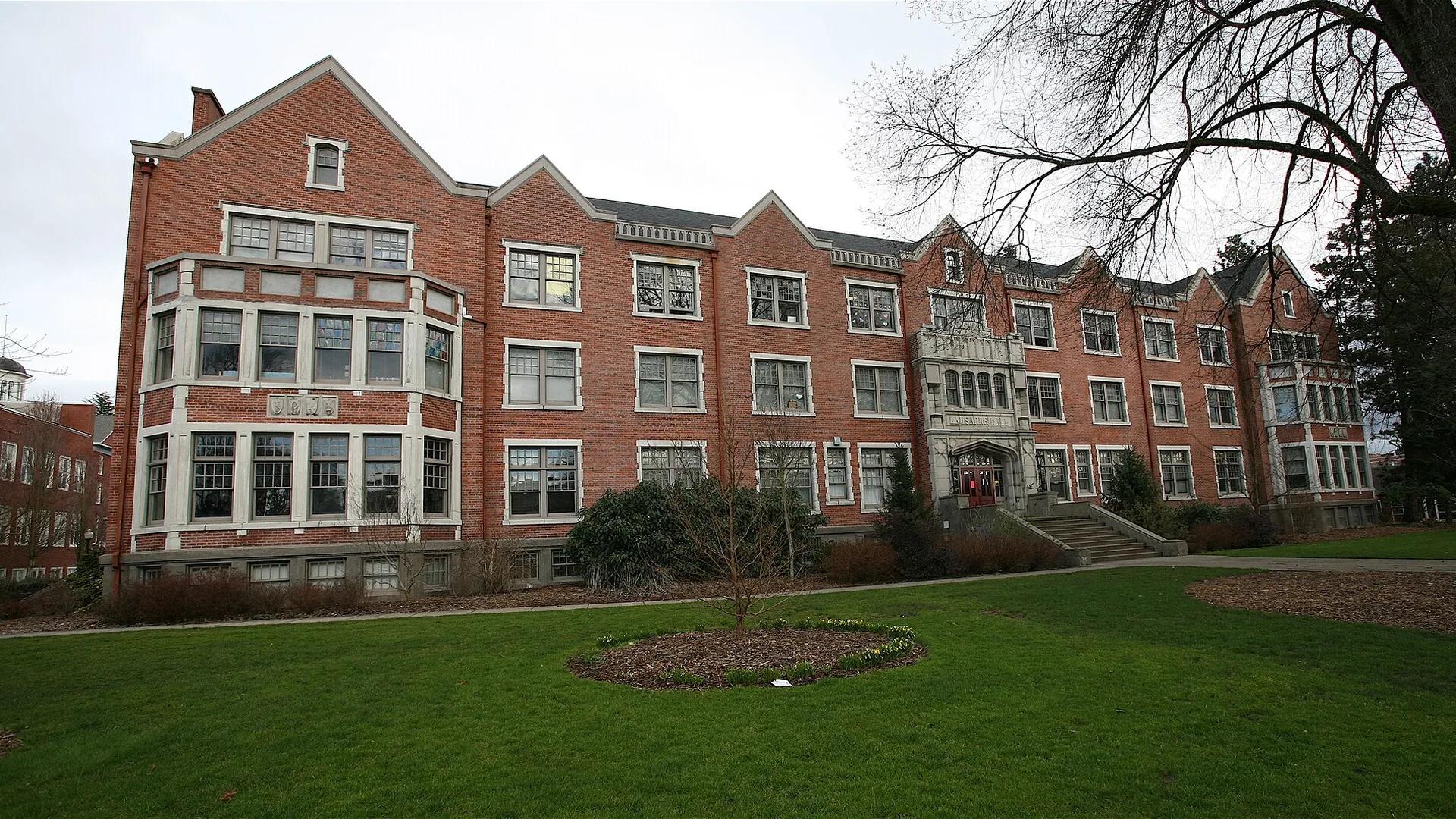
University of Lausanne
Lausanne, Switzerland
The University of Lausanne (UNIL) is a leading Swiss research university renowned for HEC Lausanne (its top-ranked business school), life sciences, and environmental studies. Set on a stunning lakeside campus overlooking Lake Geneva and the Alps, UNIL combines Swiss academic rigour with French-speaking cultural charm and proximity to EPFL.
#176
QS World Ranking
Top 20
European Business (HEC)
1537
Founded
16,800
Students
UNIL at a Glance
#176
QS World Ranking
CHF 1,460
Semester Tuition
25%
International Students
1537
Founded

Dr. Karan Gupta's Strategic View
Why UNIL Is a Strong Choice
CHF 1,460 Per Semester — Not a Typo
Swiss public universities charge remarkably low tuition regardless of nationality. UNIL charges CHF 1,460 per semester — approximately INR 1.3 lakh. For a master's programme at a university ranked in the top 200 globally, with a business school that competes with institutions charging CHF 70,000-100,000 in total fees.
This is possible because Swiss cantonal governments heavily subsidise higher education. Unlike the UK or US, where international students pay a premium, Swiss universities charge the same rate to everyone. The result is an education system where quality is decoupled from price — and the quality at UNIL, particularly in finance and economics, is genuinely world-class.
For Indian students, this creates an extraordinary ROI equation. The total cost of a two-year master's at UNIL (tuition + living) is comparable to one year at INSEAD or LBS, but the Swiss starting salaries are among the highest in the world. The maths speaks for itself.
The EPFL Advantage
UNIL and EPFL (École Polytechnique Fédérale de Lausanne) share a lakeside campus at Dorigny. EPFL is ranked #1 in continental Europe for engineering and technology. As a UNIL student, you can cross-register for EPFL courses — machine learning, data science, computational finance, signal processing — with no additional tuition or application.
This is a genuinely unique arrangement. HEC Lausanne students regularly take EPFL courses to complement their finance or economics education with technical skills. The result is a hybrid profile — strong in both business and technology — that is extraordinarily valuable in modern finance, fintech, and data-driven industries.
For Indian students from engineering backgrounds (IITs, NITs) who want to pivot to finance, UNIL provides the ideal bridge. You can strengthen your quantitative finance skills at HEC while maintaining your technical edge through EPFL courses. No other business school in Europe offers this combination.
Geneva's Financial Ecosystem
Geneva, 60km from Lausanne (40 minutes by train), is one of the world's most important financial centres. It is the global hub for private banking, wealth management, and commodity trading. Lombard Odier, Pictet, and Julius Baer — some of the world's most prestigious private banks — are headquartered there. Glencore, Trafigura, and Vitol trade commodities worth hundreds of billions annually.
HEC Lausanne graduates have direct pipelines into this ecosystem. The Swiss Finance Institute connects students to Geneva's financial community through research, networking events, and career services. Commodity trading firms — a sector that most Indian students do not even know exists — offer some of the highest starting salaries in global finance.
For Indian students interested in finance, the Geneva opportunity is underexplored. While everyone chases London or New York, Geneva offers higher salaries, lower competition, and a quality of life that is hard to match. The combination of UNIL's low tuition and Geneva's high salaries creates a financial equation that is almost impossible to beat.
Campus & Student Life
UNIL's campus at Dorigny sits directly on the shore of Lake Geneva, with views of the Alps and the Jura mountains. Shared with EPFL, the campus is modern, well-equipped, and arguably the most beautiful university campus in continental Europe.
Admission Requirements
UNIL admission is competitive for HEC Lausanne programmes. The university evaluates academic records, quantitative skills, and programme-specific requirements. Most master's programmes at HEC are taught in English and attract a strong international applicant pool.
UNIL shares its campus with EPFL. If you are admitted to UNIL, you can cross-register for EPFL courses — giving you access to one of the world's best engineering schools without a separate application.
Master's Programs
- MSc in Finance (HEC Lausanne)
- MSc in Economics (HEC Lausanne)
- MSc in Management (HEC Lausanne)
- MSc in Information Systems
- MSc in Actuarial Science
- MSc in Medical Biology
MBA Program
- Executive MBA (HEC Lausanne, part-time)
Interview Preparation
What to expect and how to prepare for your UNIL interview
Format
University of Lausanne (UNIL) does not conduct admissions interviews for most programs. Admission is based on academic documents and Swiss equivalency assessment. French is the primary language of instruction. Some master's programs (especially at HEC Lausanne business school) may include interviews. Doctoral programs typically involve faculty interviews.
Duration
20-30 minutes (where applicable, mainly HEC and doctoral)
Interviewers
Faculty members or HEC admissions committee
Interview Style
Academic, Professional (HEC), Motivation-focused
What UNIL Looks For
Sample Interview Questions
Why Lausanne, and what specifically attracted you to this program?
Mention UNIL's strengths in your field — criminology, geosciences, sport sciences, or HEC for business.
How do you plan to leverage this degree in your career?
Be specific and realistic. Show you understand the Swiss and European job market.
Describe a situation where you had to adapt to a new cultural or academic environment.
Lausanne has a distinct French-Swiss culture. Show adaptability and cultural sensitivity.
What makes your academic profile a good fit for this program?
Connect your prior coursework and experience directly to the program's curriculum.
How do you approach working in teams with people from different academic backgrounds?
UNIL values interdisciplinary collaboration. Show concrete examples.
Preparation Tips
- French proficiency is essential — most programs are taught in French
- HEC Lausanne is competitive — prepare for the interview like a top business school
- For doctoral candidates: contact potential supervisors before applying
- Lausanne is close to EPFL — know the difference and why you chose UNIL
Common Mistakes
- Applying without adequate French language skills
- Confusing UNIL with EPFL — they are separate institutions on the same campus
- Not checking specific admission requirements — they vary significantly by faculty
What Type of Student Gets In?
Quantitatively strong with genuine interest in finance or economics
Comfortable in a French-speaking environment or motivated to learn
Self-directed — Swiss universities expect academic independence
Attracted to interdisciplinary opportunities (business + engineering via EPFL)
Career vision connected to Swiss finance, international organisations, or commodity trading
The most common mistake is confusing HEC Lausanne with HEC Paris. They are completely different institutions — different countries, different programmes, different rankings. HEC Paris is a French grande école; HEC Lausanne is a faculty within a Swiss public university. Both are excellent but in different ways. Do not apply to the wrong one.
Costs & ROI
UNIL's tuition is astonishingly low — under CHF 1,500 per semester regardless of nationality. The real cost is Swiss living expenses. Lausanne is expensive (comparable to Zurich) but the total programme cost is still a fraction of private business schools offering similar quality.
| Level | Tuition |
|---|---|
| Master's | CHF 1,460/semester (all nationalities) |
| Living Costs (Lausanne) | CHF 2,000-€2,800/month |
Salary Ranges
Career & Industry
Swiss Finance Institute (SFI)
SFI is Switzerland's national centre for fundamental research in finance, headquartered at UNIL. It connects HEC Lausanne students to cutting-edge finance research and provides networking with Swiss banking leaders. SFI-funded research assistantships are available to top students.
EPFL (Cross-Campus)
UNIL and EPFL share a lakeside campus. UNIL students can take EPFL courses in engineering, data science, and technology. This unique arrangement means HEC Lausanne students can combine business education with technical skills from one of the world's top engineering schools — without enrolling in two universities.
Nestlé
Nestlé's global headquarters in nearby Vevey makes it a natural employer and partner for UNIL graduates. HEC Lausanne students access internships in corporate strategy, marketing, finance, and sustainability at the world's largest food company. Several HEC alumni hold senior positions at Nestlé.
HEC Lausanne graduates are well-placed in Geneva's financial sector (private banking, wealth management, commodity trading), the Lake Geneva tech corridor, and international organisations. The MSc Finance has direct pipelines to Swiss banking and global asset management firms.
Application Timeline
12-18 Months Before
- Research HEC Lausanne programmes and the UNIL-EPFL ecosystem
- Assess French language needs for your target programme
- Evaluate quantitative preparation and consider GMAT
9-12 Months Before
- Take IELTS/TOEFL and optionally GMAT
- Prepare application materials
- Identify specific research groups or faculty of interest
6-9 Months Before
- Submit application (deadlines typically February-April for September start)
- Apply for UNIL scholarships and Swiss Government Excellence Scholarships
3-6 Months Before
- Receive admission decision
- Accept offer
- Begin Swiss student visa application
1-3 Months Before
- Arrange housing in Lausanne (competitive market — FMEL student housing is the best option)
- Open Swiss bank account
- Arrange mandatory Swiss health insurance
Arrival
- Attend UNIL Welcome Days
- Register with communal authorities
- Walk the lakeside campus — this is one of the most beautiful university settings in the world
UNIL vs Peers
UNIL (HEC Lausanne) vs HSG
UNIL: Dramatically lower tuition (CHF 1,460 vs CHF 3,326/semester for master's, CHF 75,000 for MBA), EPFL cross-registration, Lake Geneva finance ecosystem, French-speaking advantage for Geneva banking
Other: Higher business school rankings, stronger consulting pipeline, SIM programme ranked #1 globally, stronger DACH region network
UNIL (HEC Lausanne) vs ETH Zurich
UNIL: Lower tuition, stronger in business/finance, French-speaking city with Geneva finance access, more accessible admissions
Other: Significantly higher global ranking, stronger in STEM, larger employer brand recognition, German-speaking Zurich financial sector
UNIL Is Right For...
- Finance-focused students who want Swiss quality at a fraction of private school costs
- Those who want access to both a business school and a top engineering school (EPFL cross-registration)
- Students targeting Geneva's private banking, wealth management, or commodity trading sectors
- French speakers or those committed to learning French for career advantage
UNIL Is Not Right For...
- Students who cannot handle Swiss living costs (budget CHF 2,500+/month)
- Those who want an entirely English-language ecosystem (Lausanne is francophone)
- Applicants looking for a large, structured MBA programme (HEC Lausanne's focus is academic master's)
- Students targeting careers outside Switzerland who need a globally recognised MBA brand

Dr. Karan Gupta's Advice
FAQs: UNIL for Indian Students
What is the difference between HEC Lausanne and HEC Paris?
They are completely different institutions. HEC Paris is a French grande école (private, tuition €20,000+/year) ranked among the top MBA programmes globally. HEC Lausanne is the Faculty of Business and Economics within the University of Lausanne (Swiss public university, tuition CHF 1,460/semester). Both are excellent but in different countries, with different structures, rankings, and costs. Do not confuse them in your application.
Do I need to speak French to study at UNIL?
For most HEC Lausanne master's programmes (MSc Finance, MSc Management, MSc Information Systems), instruction is in English and French is not required for admission. However, Lausanne is a French-speaking city, and French proficiency significantly improves your daily life, social integration, and career prospects in the Lake Geneva region. Bachelor's programmes are primarily in French.
Can I really take courses at EPFL as a UNIL student?
Yes. UNIL and EPFL have a formal cross-registration agreement. As a UNIL student, you can enroll in EPFL courses (subject to prerequisites and capacity) with no additional tuition. This is particularly valuable for HEC Lausanne students who want to add technical skills in machine learning, data science, or computational methods to their business education.
What are the living costs in Lausanne?
Lausanne is expensive — budget CHF 2,000-2,800/month including rent (CHF 800-1,200 for a shared apartment or student housing through FMEL), health insurance (CHF 300-400/month mandatory), food, and transport. This is comparable to Zurich. Student housing through FMEL is the most affordable option but has waiting lists — apply early. Part-time work is permitted on a student visa (up to 15 hours/week during semesters).
Related Articles
Wall Street Internships: What Matters More Than Your College Name
A Wall Street job isn't guaranteed by an Ivy League degree. Here's how students from any college can compete for elite finance internships.
Common Data Set: What Harvard and Top U.S. Colleges Really Consider
The Common Data Set reveals what U.S. colleges say matters in admissions—and what they say does not.
Your College Scholarship Isn’t Always Final: How to Ask for More
A three-paragraph scholarship appeal email can sometimes unlock more college aid. Learn when to negotiate, what to say, and when an appeal can backfire.
Related Guides & Resources
Want to Study at UNIL?
Get expert guidance from Dr. Karan Gupta: Harvard alumnus, 27+ years of global admissions experience guiding 160,000+ students worldwide.