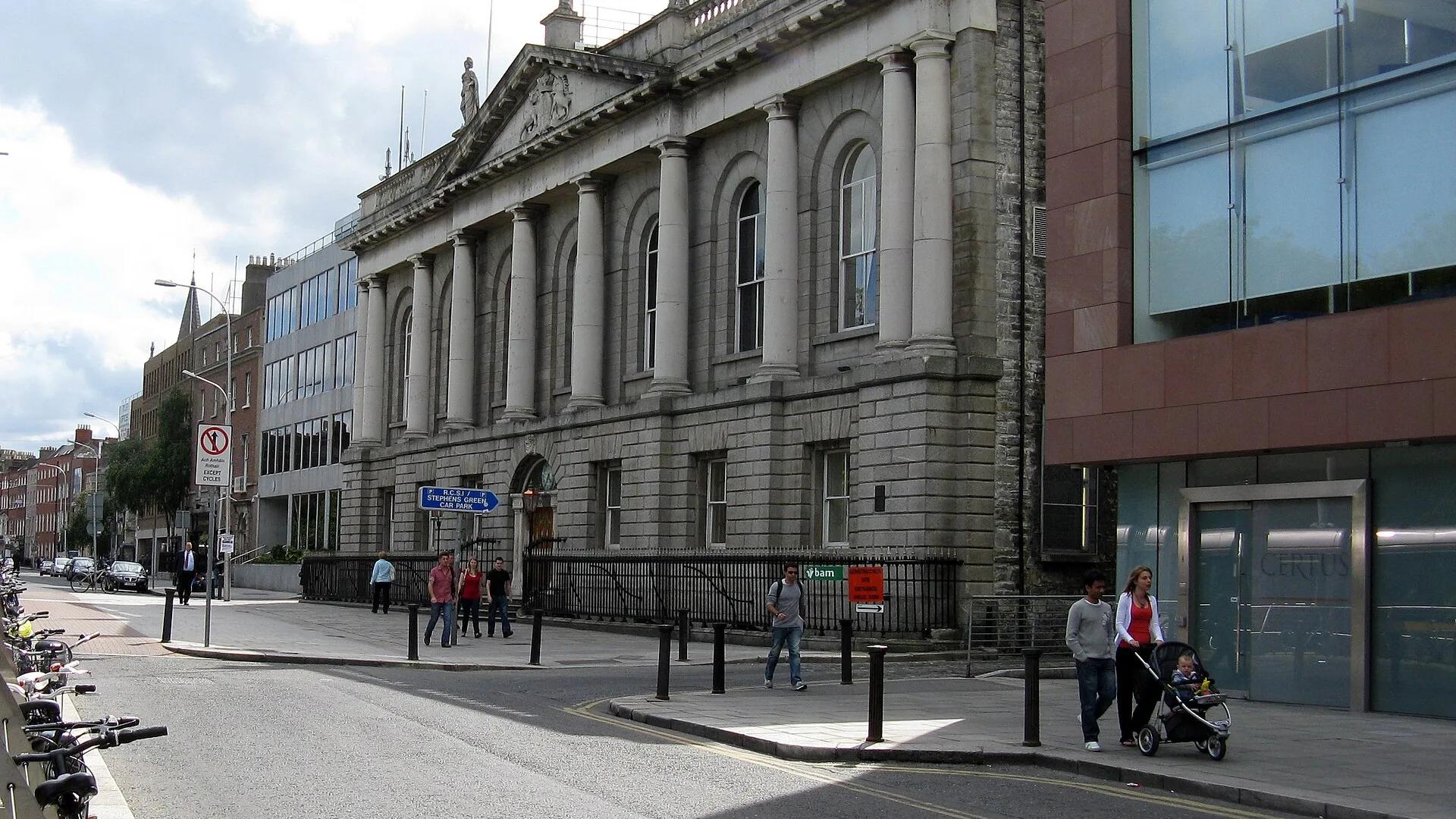
RCSI University of Medicine and Health Sciences
Dublin, Ireland
RCSI is unique in Irish education: a university that does nothing but medicine and health sciences, and has done so since 1784. Its campus on St Stephen's Green trains one of the world's most international medical student bodies — over 60 nationalities — with QS subject rankings in the global top 161 for Medicine and top 150 for both Pharmacy and Nursing. For committed Indian medical and health-science aspirants, RCSI offers an internationally recognised, clinically intensive education — with Ireland's 2-year stay-back visa and honest, careful planning required around costs and home-country practice rules.
1784
Founded
Top 161
QS Medicine (Subject)
Top 150
QS Pharmacy & Nursing
60+
Student Nationalities
RCSI at a Glance
Top 161
QS Medicine Subject
EUR 60K+
Medicine Tuition/Year
EUR 20-35K
Health MSc Programmes
2 yrs
Ireland Stay-Back Visa

Dr. Karan Gupta's Strategic View
Why RCSI Is a Strong Choice
A University That Does One Thing — Since 1784
RCSI was chartered in 1784 to train surgeons for Ireland and never diversified: today it is a full university of medicine and health sciences — medicine, pharmacy, physiotherapy, nursing, public health and health research — with no other faculties competing for attention or budget.
Specialisation shows in the rankings that matter for a health career: QS places RCSI in the global top 161 for Medicine and top 150 for both Pharmacy and Nursing, and its research-impact metrics in health sciences consistently outperform its size.
The campus on St Stephen's Green — in Dublin's Georgian heart — trains one of the most international medical cohorts anywhere: over 60 nationalities, producing an alumni referral network that follows graduates across continents and specialties for their entire careers.
The Honest Economics of Medicine Abroad
RCSI medicine costs over €60,000 per year for five to six years — with Dublin living, a total commitment that can exceed €400,000. There is no way to make that number small, and families should not let anyone soften it.
What the number buys: a globally recognised medical degree, clinical training through Dublin's teaching hospitals, and career entry points across Ireland (intern salaries €45-55K, with a structured training ladder), the UK, the Gulf's premium health systems, and beyond. Ireland's 2-year stay-back visa applies to health graduates as to all others.
Two financial sanity rules from my practice: fund medicine from wealth or robust family income, not fragile leverage; and model the earning timeline honestly — doctors' incomes compound later than engineers'. For families where the numbers work calmly, RCSI's value holds; where they require heroic assumptions, choose a different path without shame.
The India Question — Answer It First
Every Indian family considering medicine abroad faces one regulatory question that outranks all rankings: under the National Medical Commission's current rules, will this degree let my child practise in India? The NMC's framework for foreign medical graduates — NEET qualification timing, the licensing examination (FMGE/NExT as applicable), internship duration and institutional criteria — has changed repeatedly and will change again.
Our standing advice: verify the current NMC regulations against the specific programme BEFORE applying — in writing, from primary sources — and revisit them at every milestone. Do not rely on agents' assurances or last year's rules.
Equally important: many RCSI families are not planning India practice at all. For careers in Ireland, the UK (GMC routes), the Gulf or globally, RCSI's two-century reputation and international recognition make the path substantially cleaner — and that global optionality is much of what the fee buys.
Campus & Student Life
A historic campus on St Stephen's Green in central Dublin — Georgian façades, modern simulation and clinical-skills facilities behind them, and the city's teaching hospitals as the extended classroom.
St Stephen's Green
Dublin's grandest square as the campus address
Clinical simulation
Among Europe's most advanced medical simulation facilities
60+ nationalities
One of the world's most international medical cohorts
Programs at RCSI
Medicine (Undergraduate & Graduate Entry)
RCSI's flagship: a clinically intensive medical degree with early patient contact, delivered by a university whose entire identity is healthcare. The international cohort and global clinical partnerships (including electives worldwide) produce graduates practising in dozens of countries — RCSI's alumni network in medicine is genuinely global.
Pharmacy (MPharm)
QS top-150 globally, with Ireland's pharma industry — one of the world's largest exporters of medicines — providing both placement infrastructure and career paths beyond community pharmacy, into regulatory affairs and industry.
Physiotherapy
A rigorous, clinically embedded programme with hospital placements across Dublin's teaching hospitals and strong professional outcomes.
MSc Programmes (Public Health, Healthcare Management, Pharma Business)
RCSI's taught master's — public health, leadership in health, pharmaceutical business — offer a far more accessible price point (€20,000-35,000) into an internationally respected health-sciences brand, well suited to doctors, pharmacists and health professionals upskilling for global careers.
Advanced Therapeutic Technologies & Research Degrees
Research programmes ride on RCSI's hospital network and its consistently high research-impact scores in health sciences.
Medicine runs 5-6 years (undergraduate entry) or 4 years (graduate entry, GAMSAT/MCAT required). Health-science MSc programmes are typically 1 year from September. Medicine applications run early — over a year ahead — with interviews.
Admission Requirements
RCSI admissions are professional-school admissions: academically demanding, interview-inclusive for medicine, and honest about the commitment involved. Indian applicants to medicine should engage a full year early; MSc applicants follow a conventional taught-master's cycle.
For Indian students planning to practise IN INDIA after a foreign medical degree, the NMC's rules on foreign medical qualifications (eligibility, NEET requirement at application time, licensing exams like NExT/FMGE, internship norms) change periodically and must be verified against the CURRENT NMC regulations before committing to any overseas medical degree — RCSI included. Students targeting careers in Ireland, the UK, the Gulf or globally face a cleaner path; RCSI's degree is widely recognised internationally. This single check should happen before the first application form is filled.
Taught Master's
- MSc Public Health
- MSc Healthcare Management (Institute of Leadership)
- MSc Pharmaceutical Business & Technology
- MSc Positive Health
- Research MSc/PhD in health sciences
What Type of Student Gets In?
Unambiguous commitment to a health-sciences career
Academic excellence in sciences with interview poise
Financial planning maturity across a 5-6 year horizon
Comfort in an intense, professional, international cohort
Families commit to overseas medicine first and check India's NMC recognition rules later — discovering licensing-exam or internship complications after lakhs are spent. The correct order is regulatory homework first (current NMC rules, NEET timing), financial modelling second, applications third. RCSI rewards planners; medicine abroad punishes improvisers.
Costs & ROI
Be clear-eyed: RCSI medicine is a premium-priced degree — a 5-6 year commitment can exceed €400,000 all-in. It buys a globally portable medical education from a 240-year-old specialist institution. The MSc programmes are a different economic proposition entirely — €20-35K for an internationally branded health credential. Verify all current fees on RCSI's official pages.
| Level | Tuition |
|---|---|
| Medicine (non-EU) | EUR 60,000+/year (verify current) |
| Health Sciences MSc | EUR 20,000 - 35,000 |
| Living Costs (Dublin) | EUR 1,300 - 1,800/month |
Salary Ranges
Career & Industry
Dublin's teaching hospitals
RCSI's clinical training runs through Beaumont Hospital and a network of Dublin teaching hospitals — early, sustained patient contact is the programme's backbone.
Ireland's pharmaceutical industry
The world's pharma manufacturers concentrated in Ireland recruit RCSI pharmacy and pharma-business graduates into industry, regulatory and medical-affairs roles.
Application Timeline
18-24 Months Before (Medicine)
- Verify current NMC foreign-degree rules if India practice is the goal
- Map RCSI's application cycle and assessment requirements
- Model the full financial commitment honestly (5-6 years)
12-18 Months Before
- Take IELTS (and GAMSAT/MCAT for graduate entry)
- Prepare statement and references; MSc applicants start here
9-12 Months Before
- Submit application (medicine deadlines run early)
- Prepare for medicine interviews
4-8 Months Before
- Accept offer and pay deposit
- Irish student visa with substantial proof of funds (medicine fees are high)
1-3 Months Before
- Arrange Dublin accommodation early — the city's market is tight
- Budget Dublin living at EUR 1,300-1,800/month
Arrival
- Orientation with one of the world's most international medical cohorts
- Register with immigration (IRP)
- St Stephen's Green is your front garden — settle in
RCSI vs Peers
RCSI vs Trinity College Dublin (Medicine)
RCSI: Health-sciences-only focus, more international cohort, dedicated clinical-simulation depth, global medical alumni network
Other: Trinity's broader university brand and campus life, comparable Irish clinical training, similar cost tier
Compare →RCSI Medicine vs Medicine in India (private)
RCSI: Global recognition and mobility, Irish/UK/Gulf career doors, English-system clinical training, no capitation opacity
Other: Indian private medicine costs less overall, home-market licensing is native, NMC complications don't apply
RCSI Is Right For...
- Fully committed medical aspirants with global (not only India) practice horizons
- Families who can fund medicine without fragile debt assumptions
- Pharmacy and physiotherapy students targeting Ireland's health and pharma sectors
- Health professionals seeking respected 1-year MSc upgrades
- Students who want a deeply international clinical cohort
RCSI Is Not Right For...
- Anyone unsure between medicine and other careers — this is a specialist school
- Families whose financing assumes Indian practice incomes against euro debts
- India-only practice plans made WITHOUT verifying current NMC rules first
- Students seeking a broad campus university experience beyond health sciences

Dr. Karan Gupta's Advice
FAQs: RCSI for Indian Students
Is RCSI good for Indian medical students?
RCSI is an exceptional institution — 240 years of health-sciences specialisation, QS top-161 in Medicine, deeply international cohorts and Dublin teaching-hospital training. The fit question is not quality but planning: the fees are premium (€60K+/year), and students intending to practise in India must verify the NMC's current foreign-graduate rules before applying. For globally oriented medical careers, it is among the strongest choices in Europe.
Can I practise in India after an RCSI medical degree?
Possibly — but this depends entirely on the NMC's regulations in force when you study and return (NEET timing, licensing exams such as FMGE/NExT, internship recognition, programme criteria). These rules change; verify the current requirements from NMC primary sources before committing, and confirm how RCSI's specific programme maps onto them. Families planning Ireland/UK/Gulf/global careers face a cleaner, well-trodden path.
What does RCSI cost?
Medicine for non-EU students runs upwards of €60,000 per year for 5-6 years — a total commitment that can exceed €400,000 with Dublin living costs (€1,300-1,800/month). The health-sciences MSc programmes are a different proposition: €20,000-35,000 total for one year. Verify all current fees on RCSI's official pages.
Does RCSI offer anything besides medicine?
Yes — pharmacy (QS top-150), physiotherapy, nursing (QS top-150), and a strong portfolio of taught master's in public health, healthcare management and pharmaceutical business (€20-35K). These MSc programmes are RCSI's quiet value play: an internationally respected health-sciences brand at a conventional master's price, with Ireland's 2-year stay-back visa attached.
Related Articles
IMO Olympiad Explained: The Official Pathway in India
Two exams in India are called IMO. Only one is the official pathway to India's International Mathematical Olympiad team.
5 Ways to Get Into an IIM Without CAT
CAT is not the only way into an IIM. Discover five non-CAT routes, from IPMAT and JIPMAT to IIMB's BBA and GMAT/GRE-based MBAs.
The U.S. Government Website Every College Applicant Should Know
College Scorecard is the free U.S. government tool that lets students research college costs, earnings, completion, debt and more.
Want to Study at RCSI?
Get expert guidance from Dr. Karan Gupta: Harvard alumnus, 27+ years of global admissions experience guiding 160,000+ students worldwide.