Your Guide to Peking University: China's Premier Institution
Beijing, China
Peking University is China's most prestigious institution and Asia's intellectual leader with QS #14 global ranking. Guanghua School of Management is recognized globally as a top business school. With 280,000+ students across all levels and 5 Nobel laureates, PKU offers world-class graduate programs in management, finance, economics, and international relations with unmatched access to China's economic system.
#14
QS Ranking
#1
China Ranking
80+
Total Students
1898
Founded
PKU at a Glance
#14
QS World Ranking
#1
China Ranking
¥80-200K
Annual Tuition (~$11-28K)
280,000+
Student Population
Guanghua
Asia's Top Business School
Beijing
China's Capital
10
Master's Programs
5
Nobel Laureates

Dr. Karan Gupta's Strategic View
Dr. Karan Gupta's Expert Assessment
Why PKU Is a Strong Choice
Guanghua School: Asia's Leading Business School with Direct Government Access
Guanghua School of Management is consistently ranked among Asia's top 3 business schools (often #1-3), with direct pipeline to Chinese government ministries, central agencies, and state-owned enterprises (SOEs). Unlike US schools teaching China theoretically, Guanghua MBA students engage directly with government officials, SOE leaders, and policy architects. This access is impossible to replicate—government ministers often teach seminars; policy discussions include real decision-makers. For professionals serious about influencing China's economic direction or operating within its unique government-business interface, this institutional relationship is invaluable.
Unmatched Cost for World-Class Business Education (¥80-200K/year)
Peking University charges ¥80-200K annually ($11-28K depending on program), making Guanghua MBA cost approximately ¥160-400K for 2-year program (~$22-56K total), compared to $80,000-150,000+ for top US programs. This pricing reflects Chinese government education subsidies while maintaining world-class faculty and facilities. The cost advantage enables international professionals to invest in China expertise at fraction of US MBA cost.
Direct Access to Alibaba, Tencent, Huawei, and China's Tech Giants
Guanghua MBA's strongest placement outcomes are within China's largest corporations. Alibaba, Tencent, Huawei, ByteDance, Baidu, and Chinese banks actively recruit Guanghua graduates. These companies are creating trillions in economic value and shaping global technology landscapes. Direct alumni network access to these organizations provides competitive advantage for career acceleration and equity participation in high-growth ventures impossible outside of China.
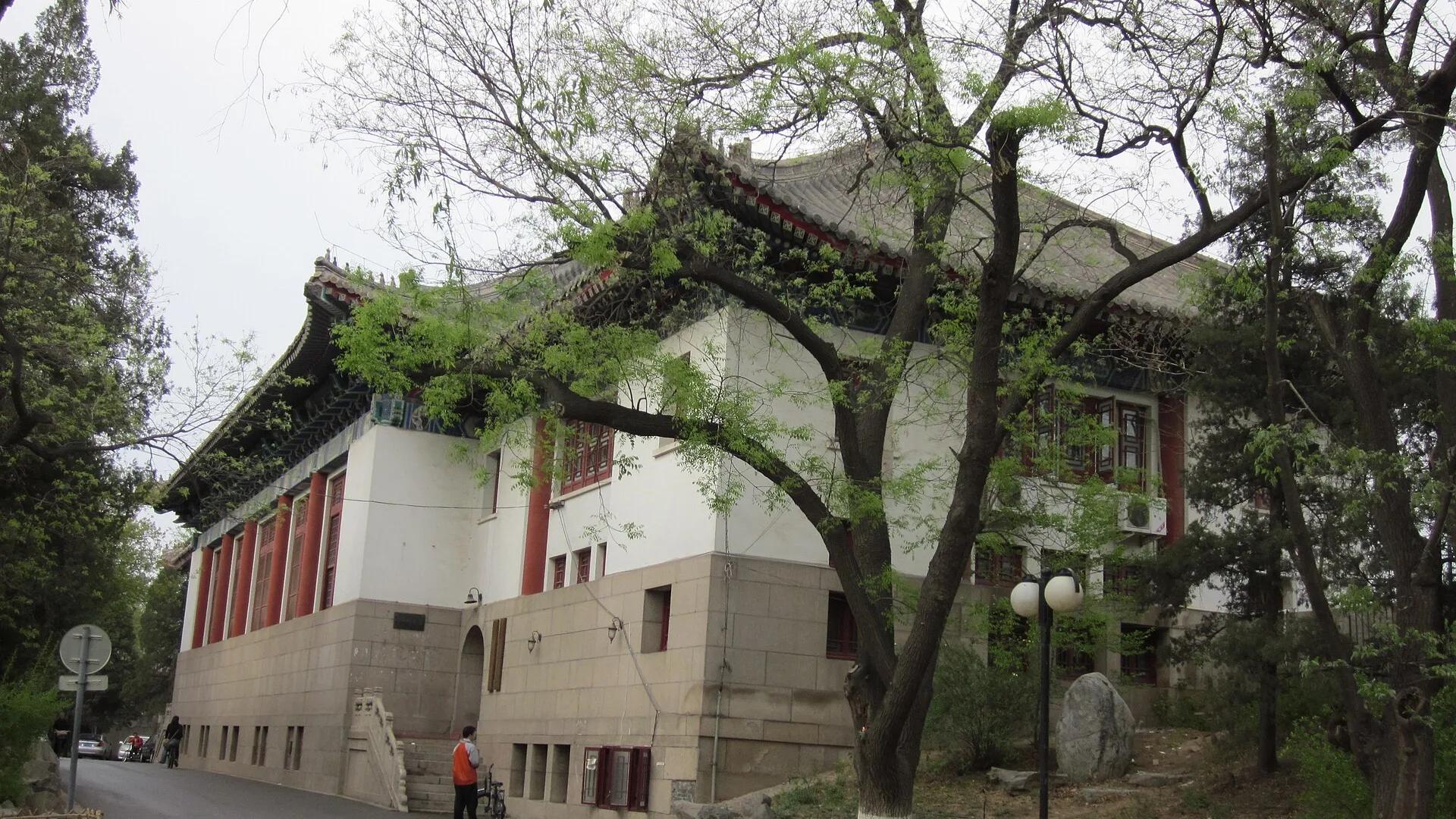
Peking University Campus: China's Academic Flagship
Peking University's main campus is located in Beijing's Haidian district, surrounded by government ministries, research institutions, and tech company headquarters. The campus combines classical Chinese architecture with modern research facilities, positioned at the heart of China's intellectual and political power center.
Iconic Beijing Campus in Haidian District
Historic campus combining classical architecture with modern academic buildings, surrounded by government agencies and research institutions
State-of-the-Art Business School Facilities
Guanghua's dedicated building with executive education centers, case study labs, and trading/investment simulation facilities
International MBA Cohort
20-30% international students with dedicated international student programming and English-language support
Government & Corporate Proximity
Adjacent to central government ministries, SOE headquarters, and tech company offices (Alibaba, Tencent nearby)
China's Center of Innovation
Beijing position at epicenter of Chinese government policy, tech innovation, and emerging venture capital ecosystem
Programs at PKU
MBA (Guanghua School)
Guanghua School of Management
Asia's leading MBA with direct government and tech company network; Chinese and international tracks
IMBA (International MBA)
Guanghua School of Management
English-taught MBA designed for international professionals with China-focus curriculum
MSc Management
Guanghua School of Management
Strategic management with Chinese corporate governance and SOE management focus
MSc Finance
Guanghua School of Management
Corporate finance, investment, fintech with China's unique capital market perspective
MSc Economics
School of Economics
Macroeconomics, development economics, Chinese economic policy analysis
MSc International Relations
School of International Studies
International diplomacy and China-centric geopolitical analysis
MSc Computer Science
School of Engineering
AI, machine learning, software with proximity to tech giants (Alibaba, Tencent, Huawei)
MSc Data Science
School of Engineering
Advanced analytics and big data applications in Chinese business context
MPA (Master of Public Administration)
School of Government
Government administration and public policy with direct policy maker instruction
Executive MBA
Guanghua School of Management
Part-time program for working executives in Chinese corporations and SOEs
Most programs taught in Chinese (Mandarin required); International MBA (IMBA) track taught entirely in English. Tuition ¥80-200K/year (~$11-28K depending on program). Full-time programs 2 years (120 ECTS equivalent).
Admission Requirements
Peking University MBA admissions are highly selective (10-20% acceptance for IMBA; higher for Chinese-taught programs). GMAT 700+ typical for MBA; work experience 3+ years required. English-taught IMBA requires excellent English proficiency or TOEFL 90+/IELTS 7.0+.
Peking University MBA is exceptionally competitive with strong GMAT requirement (700+). However, the cost-outcome value is extraordinary—¥160-400K total ($22-56K) vs $100K-150K+ for US programs. International applicants should be prepared for intensive Chinese instruction unless enrolling in IMBA track.
Interview Preparation
What to expect and how to prepare for your PKU interview
Format
Interviews are conducted for select programs including Yenching Academy, HSBC Business School MBA, scholarship candidates (CSC/university-specific), and some competitive master's programs. Typically video-based for international applicants.
Duration
20-30 minutes
Interviewers
Faculty members, Program directors, Yenching Academy admissions committee
Interview Style
Academic and intellectual — emphasis on scholarly depth and China engagement
What PKU Looks For
Sample Interview Questions
What motivated you to apply to Peking University specifically?
PKU is China's most prestigious university — show you understand its history, academic culture, and specific program strengths.
How does your research interest relate to contemporary challenges facing China or Asia?
Connect your academic work to real issues — urbanization, technology governance, environmental policy, or social development.
Tell us about a time you challenged a conventional idea or approach.
PKU values independent thinking — the May Fourth Movement spirit. Show intellectual courage with humility.
How do you plan to contribute to cross-cultural understanding during and after your studies?
This is especially important for Yenching Academy and CSC scholars — articulate a concrete vision for bridge-building.
What book, paper, or idea has most influenced your intellectual development?
Choose something substantive and be prepared to discuss it in depth — this tests genuine intellectual engagement.
Preparation Tips
- For Yenching Academy, emphasize interdisciplinary thinking and commitment to China studies
- PKU values depth over breadth — show mastery in your specific area rather than trying to cover everything
- Demonstrate awareness of PKU's academic traditions and its role in modern Chinese history
- For scholarship interviews, be specific about post-graduation plans that involve China engagement
Common Mistakes
- Treating PKU as interchangeable with other Chinese universities — it has a distinct academic identity
- Being unable to articulate why China matters to your field or career
- Lacking depth when discussing your research interests or academic passions
What Type of Student Gets In?
Serious, long-term commitment to China's economic development
Strategic thinking focused on government-business interface
Chinese language capability (intermediate-advanced Mandarin ideal)
Interest in negotiating complex relationships and navigating Chinese corporate culture
Openness to ambiguity and unique business practices in Chinese market
Long-term Asia strategy with China as central pillar
Western professionals sometimes overlook Guanghua believing 'top US schools are inherently better globally.' This is incorrect for China-focused careers. Guanghua provides direct access to Chinese government, SOE leadership, and tech company networks that no Western school can match. For China strategy careers, Guanghua is unquestionably superior to Harvard, Stanford, or Wharton. The strategic question isn't which school is 'best globally' but which delivers maximum advantage for your specific career strategy.
Costs & ROI
Peking University offers extraordinary cost structure—¥160-400K total MBA cost ($22-56K) is one-third of comparable US programs while delivering superior China-market outcomes. Living costs in Beijing vary (¥8-15K monthly for comfortable student lifestyle). International students eligible for scholarships reducing tuition by 25-50% in some programs.
| Level | Tuition | Living | Total |
|---|---|---|---|
| Annual Tuition (MBA/Master's) | ¥80-200K (~$11-28K) | ¥120-180K (~$17-25K) | ¥200-380K (~$28-53K) |
| 2-Year MBA Total Cost | ¥160-400K (~$22-56K) | ¥240-360K (~$34-50K) | ¥400-760K (~$56-106K) |
Salary Ranges
Career & Industry
Alibaba Group
E-commerce and cloud giant recruiting Guanghua MBA graduates for strategic, finance, and international expansion roles
Tencent Holdings
Tech conglomerate (gaming, social media, finance) with active Guanghua MBA recruitment for product, strategy, and international roles
Huawei Technologies
Telecommunications leader recruiting graduates for supply chain, business development, and international operations
Chinese Government Ministries
Central government agencies recruiting MPA and MBA graduates for policy, economic coordination, and international relations roles
Major Chinese Banks (ICBC, CCB, ABC)
State-owned and commercial banks recruiting MBA/finance graduates for investment banking, risk, and treasury roles
ByteDance, Baidu, and Emerging Tech
Next-generation tech companies recruiting computer science and data science graduates for product development and innovation
Guanghua graduates command premium salaries in China (¥800K-1.5M range with tech company equity is 40-60% higher than Western entry-level tech roles when considering purchasing power). Government positions offer career security and prestige. Tech company roles include significant equity participation in high-growth companies worth billions.
Application Timeline
Application & Admission
- Prepare GMAT (target 700+ for MBA; 2-3 months preparation typical)
- Develop strong motivation letter emphasizing China economic strategy
- Determine Chinese or English track (IMBA vs Chinese-taught MBA)
- Submit application through Peking University or official channel
- Attend interview (conducted in Mandarin or English depending on track)
- Receive admission decision; confirm enrollment
Visa & Pre-Arrival Preparation
- Apply for X1 student visa (typically 1 year, renewable)
- Secure accommodation (university dormitory or Beijing apartments in Haidian area)
- Register with local Public Security Bureau for residence permit
- Open bank account and arrange financial transfers
- Attend pre-arrival orientation (information on Beijing, visa processes, health insurance)
First Semester: Foundation & Beijing Integration
- Complete core MBA/management courses (12-18 credits per semester)
- Participate in company visits (Alibaba, Tencent, Huawei facilities common)
- Attend government speaker series and policy seminars
- Explore Beijing's tech ecosystem and startup scene
- Develop Mandarin fluency if pursuing Chinese-taught track
Second Semester: Specialization & Internship
- Complete specialized electives in chosen focus (finance, tech, government relations)
- Participate in business competitions and consulting projects
- Secure summer internship with major corporation or government agency
- Network with government officials and corporate leaders
- Develop capstone project involving China market analysis
Final Year: Project & Career Launch
- Complete final coursework and specializations
- Execute internship or research project (3-6 months)
- Present capstone project or case analysis
- Participate in campus recruiting for post-graduation roles
- Leverage Guanghua network for government, corporate, or venture roles
PKU vs Peers
Tsinghua University School of Economics and Management
PKU: Peking University ranks #14 vs Tsinghua #17 (slightly higher), Guanghua has edge in international reputation and liberal arts tradition, equal cost structure
Other: Tsinghua's engineering is stronger, slight edge in tech company recruitment, equally strong government connections
Compare →Fudan University (Shanghai)
PKU: Peking University ranks #56 vs Fudan #38 (Peking higher), Beijing government proximity stronger than Shanghai, larger international student base
Other: Fudan's Shanghai location offers stronger finance sector access, equal business school rankings
Compare →INSEAD or IE Madrid (Western Europe-based Asia Program)
PKU: Peking University costs ¥160-400K ($22-56K) vs INSEAD €100K+, delivers superior China immersion and government access, direct tech company recruitment
Other: INSEAD ranks higher globally (#2-5), stronger Western management approach, more international mobility
Compare →PKU Is Right For...
- Professionals with explicit 10-year China strategy (government, corporate, or venture)
- Finance and tech specialists seeking access to China's economic system
- Those serious about developing Mandarin business fluency
- Managers targeting roles in Alibaba, Tencent, Huawei, or other tech giants
- Government relations and policy specialists interested in China interface
- Entrepreneurs seeking to launch or expand operations in China
PKU Is Not Right For...
- Professionals uncomfortable with authoritarian governance models or party-state system
- Those unwilling to commit to serious Mandarin language development
- Candidates seeking Western-friendly business environment (Chinese corporate culture is demanding)
- Those primarily focused on Western market careers (Guanghua advantage is China-specific)
- Individuals uncomfortable with geopolitical tensions (US-China relations impact environment)
- Students requiring maximum English-language university experience

Dr. Karan Gupta's Advice
FAQs: PKU for Indian Students
Is Guanghua MBA respected internationally or just in China?
Guanghua MBA is recognized globally by consulting firms (McKinsey, BCG, Deloitte), multinational corporations with China operations, and government agencies. However, brand recognition among Western employers is lower than INSEAD, Wharton, or Harvard. The key distinction: Guanghua's value lies in China-focused roles and careers, where it's unmatched by any Western school. For Western-focused careers, Western MBA may have brand advantage; for China/Asia strategy, Guanghua's recognition among relevant employers is exceptional.
What language should my MBA be taught in?
If you're fluent in Mandarin (HSK 5-6 or equivalent), Chinese-taught MBA provides deeper cultural immersion and stronger local network effects. If Mandarin fluency is emerging, IMBA (International MBA in English) is appropriate. Many students choose IMBA then develop Mandarin fluency during program. Most consulting projects, government visits, and internships involve Chinese language regardless of teaching language.
Can I get a job in China after graduating from Guanghua?
Yes, highly likely. Guanghua graduates are immediately attractive to employers—Chinese corporations, government agencies, and multinational firms all actively recruit from campus. Student visa converts to work visa with employer sponsorship (Z visa). International graduates typically secure employment within 1-3 months of graduation. However, long-term career in China requires either: (1) Chinese citizenship or permanent residency, (2) Sponsorship from multinational with global career flexibility, or (3) Entrepreneurship/independent work. Government positions typically require Chinese citizenship.
What is the actual cost of living in Beijing for a student?
Monthly living costs for international students range ¥8-15K ($1,100-2,100) depending on lifestyle. Budget breakdown: dormitory ¥2.5-5K, food ¥2-4K, transportation ¥200-400, entertainment ¥1-2K. Student dormitories on campus are extremely affordable (¥2.5-4K monthly) and include furnished rooms with internet. Off-campus apartments in desirable neighborhoods (near campus in Haidian) cost ¥4-8K. Most international students live comfortably on ¥10-12K monthly including all expenses.
How competitive is admission to Guanghua MBA?
Guanghua MBA is highly selective with approximately 10-15% acceptance rate (lower than many US programs). Competitive profiles include GMAT 700+ (average 750+), 3+ years work experience, and demonstrated China strategy. IMBA (International MBA) is similarly selective. However, specialized master's programs are less competitive with ~30-40% acceptance rates. For exceptional candidates, scholarships covering 25-50% tuition are sometimes available.
Related Articles
How to Prepare for the SAT: 3 Free Tools and a 12-Week Plan
Prepare for the SAT with three free tools and a practical 12-week study plan to strengthen your skills without expensive coaching.
Is a Foreign Degree Still Worth It? What I Told Raj Shamani
Every year Indian families spend crores on a foreign degree. In two hours with Raj Shamani on Figuring Out I answered one question honestly: in 2026, is it still worth it? Here is the fifteen-minute version, with the six student profiles, the Five Removals test, the ROI formula and the funding routes most families never use.
The ₹0 List: Free Opportunities That Actually Strengthen a Student’s Profile
The best summer opportunities are not always expensive. Discover selective ₹0 programs that can demonstrate genuine student achievement.
Explore More
Want to Study at PKU?
Get expert guidance from Dr. Karan Gupta: Harvard alumnus, 27+ years of global admissions experience guiding 160,000+ students worldwide.