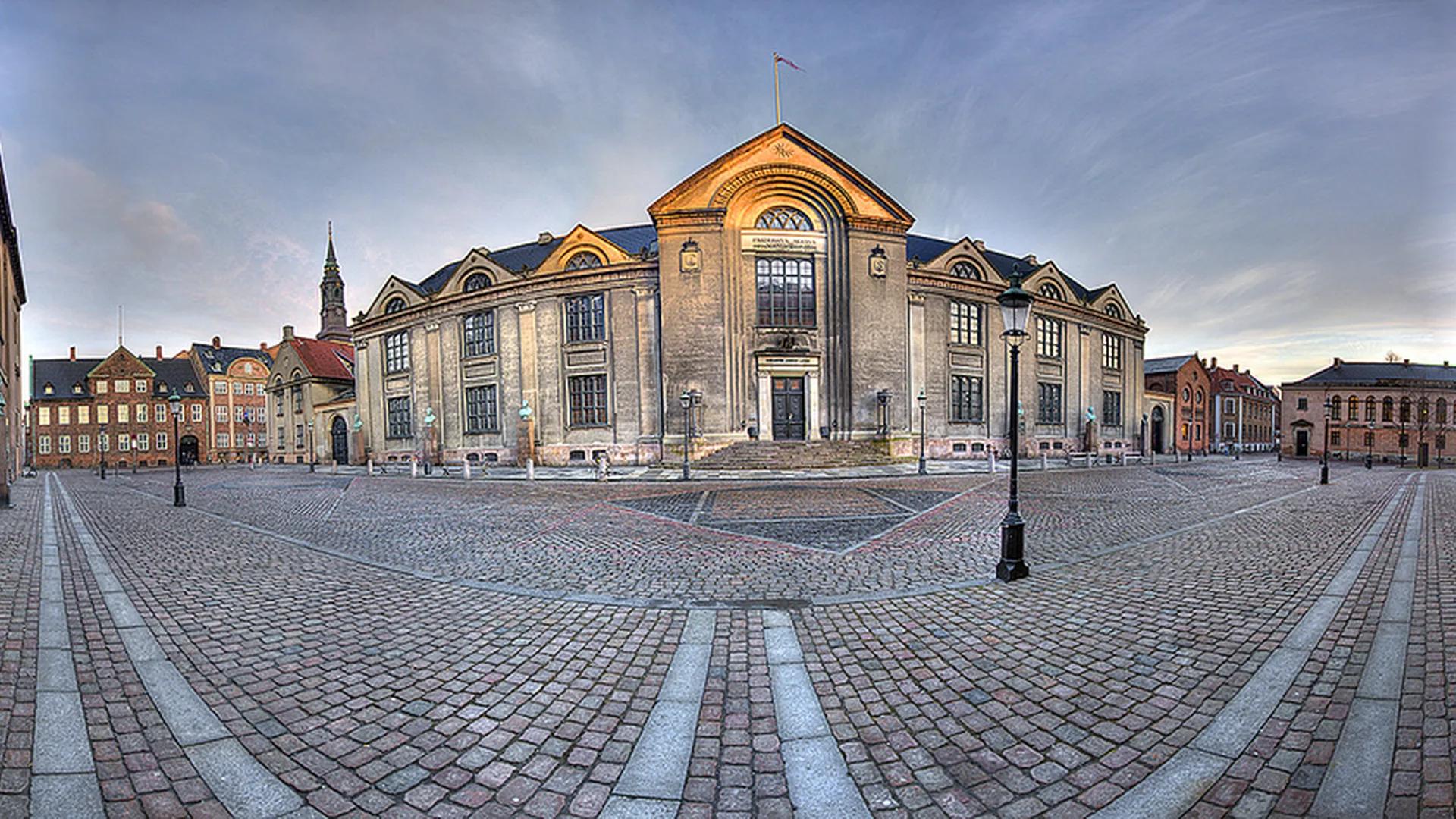
Your Guide to the University of Copenhagen
Copenhagen, Denmark
Founded in 1479, the University of Copenhagen stands as Scandinavia's oldest and largest university. With a noble tradition spanning 545 years, UCPH has educated Danish intellectuals, Nobel laureates, and global leaders. Today, UCPH combines historic academic prestige with cutting-edge research facilities, maintaining rigorous standards while embracing progressive Nordic educational values.
#82
QS Global Ranking
12+ candidates placed at UCPH across 2023-2025 cohorts
Students Enrolled
FREE
Tuition (EU/EEA)
545
Years of Academic Heritage
UCPH at a Glance
6
Faculties & Schools
180+
Master's Programs
40%
International Student Body
€2.7B
Annual Research Budget
3,500+
Faculty Members
8
Nobel Prize Affiliations
88%
Graduate Employment Rate
10
Research Centers

Dr. Karan Gupta's Strategic View
Dr. Karan Gupta's Expert Assessment
Why UCPH Is a Strong Choice
Research-First Educational Philosophy
UCPH's Master's programs are designed around faculty research agendas, not pre-canned curricula. Students immediately engage with active research projects; thesis work often extends into publishable research. This approach benefits candidates pursuing PhD credentials or roles requiring research capability, but may feel less structured for those seeking vocational certification.
Nordic Education & Work-Life Excellence
Danish institutional culture emphasizes work-life balance, gender equality, and stakeholder participation in decision-making. Master's programs typically feature lighter coursework than Continental Europe, with thesis comprising 50% of degree. This model suits working professionals but requires high self-direction. Copenhagen's ranking as world's most livable city reflects safety, infrastructure, and cultural offerings.
Gateway to Scandinavian & Northern European Careers
UCPH graduates enjoy competitive positioning for careers across Scandinavia and Northern Europe. Copenhagen serves as headquarters for major pharma (Novo Nordisk), energy (Ørsted), and technology companies. EU degree recognition and minimal visa friction enable pan-European mobility that non-EU graduates from other countries cannot easily achieve.
Campus & Student Life
UCPH operates five campuses across Copenhagen with main Nørregård campus in the city center. Modern research facilities coexist with historic academic buildings spanning from medieval architecture to contemporary research complexes. Copenhagen itself functions as extended campus with culture, museums, and social life fully integrated.
Historic & Modern Facilities
Medieval courtyards combined with state-of-the-art research labs, modern libraries, and collaborative spaces
Research Integration
Master's students embedded in faculty research groups from day one; access to cutting-edge facilities
International Community
40% international student body with 450+ partner universities and robust student exchange programs
Nordic Culture & Balance
Strong emphasis on social community, outdoor activities, and work-life equilibrium reflecting Danish values
Programs at UCPH
MSc Economics
Faculty of Social Sciences
Macroeconomic policy, behavioral economics, applied econometrics with strong Scandinavian focus
MSc Business Administration
Faculty of Social Sciences
Strategic management, organizational behavior, Nordic business model study
MSc Health Economics
Faculty of Health & Medical Sciences
Healthcare systems analysis, pharmaceutical policy, health technology assessment
MSc Computer Science
Faculty of Science
Machine learning, distributed systems, cybersecurity with strong research component
MSc Data Science
Faculty of Science
Statistical methods, big data analytics, and applied machine learning
MSc Biology
Faculty of Science
Molecular biology, genomics, systems biology with research focus
MSc Public Health
Faculty of Health & Medical Sciences
Epidemiology, health policy, and global health challenges
MSc Political Science
Faculty of Social Sciences
International relations, European governance, comparative politics
Most programs are 2 years (120 ECTS). Intake predominantly September; some programs offer rolling admissions. English proficiency required. Programs balance coursework (first year) with thesis research (final year).
Admission Requirements
UCPH admissions emphasize academic background and research potential. The university values intellectual curiosity and self-directed learning over standardized test scores.
UCPH prioritizes demonstrated research interest over standardized metrics. A weak GPA with clear research trajectory may succeed; strong GMAT without academic depth typically fails. Write your research statement carefully.
Interview Preparation
What to expect and how to prepare for your UCPH interview
Format
University of Copenhagen does not conduct admissions interviews for most programs. Admission is primarily document-based. Some health sciences programs (Medicine, Dentistry) have selection processes that may include assessments. PhD positions typically involve interviews with the supervising faculty. MBA and executive programs may also include interviews.
Duration
20-30 minutes (where applicable)
Interviewers
Faculty from the relevant department or PhD supervisor
Interview Style
Academic, Research-focused
What UCPH Looks For
Sample Interview Questions
What specific research area within our department interests you, and why?
Reference recent publications or projects from the department. Show genuine scholarly engagement.
Why Copenhagen, and how does this university fit your academic trajectory?
Mention specific strengths of UCPH in your field. It's Denmark's largest and most research-intensive university.
How do you approach independent study and self-directed learning?
Scandinavian education is highly autonomous. Show you thrive with minimal hand-holding.
Describe a research methodology you've used and what you learned from applying it.
Be technical and specific. UCPH values methodological rigor.
How would you contribute to our research community?
Show collaborative spirit alongside independent capability. Mention seminars, reading groups, or teaching.
Preparation Tips
- Most admissions are document-based — focus on your application, transcripts, and motivation letter
- For PhD: contact potential supervisors before applying to discuss research fit
- Danish academic culture is flat and collaborative — show you're comfortable with that
- Copenhagen is expensive — showing you've planned for living costs demonstrates seriousness
Common Mistakes
- Assuming there will be an interview for your master's program — check first
- Being overly hierarchical in tone — Danish professors prefer collegial interaction
- Not having a clear research direction when applying to research-focused programs
What Type of Student Gets In?
Strong intellectual curiosity and self-directed learning capability—programs assume high autonomy
Research orientation or academic interests beyond vocational goals
Comfort with ambiguity and unstructured learning (Danish education model emphasizes this)
Interest in Nordic values: sustainability, equality, work-life balance
Adaptability to Copenhagen's cosmopolitan but distinctly Danish culture
Realistic expectations about cost of living (DKK 10-13K/month is among Europe's highest)
International candidates often choose UCPH assuming 'free tuition = great value' without calculating total cost. Non-EU students pay ~DKK 75-100K/year tuition PLUS DKK 120-150K/year living costs = ~€24-30K total—higher than most alternatives. For non-EU students, EPFL or TU Delft offer superior value unless you specifically target Scandinavian career path.
Costs & ROI
EU/EEA tuition-free policy is singular advantage; however, Copenhagen's living costs (housing DKK 6-8K/month) offset tuition savings compared to lower-cost Nordic cities. Non-EU pricing makes UCPH less competitive against EPFL or Delft on cost basis. Financial aid limited; most funding from home governments.
| Level | Tuition | Living | Total |
|---|---|---|---|
| EU/EEA Citizens | FREE (statutory exemption) | DKK 10,000-13,000/month (€1,350-1,750) | €16,200-21,000/year (2 years = €32-42K) |
| Non-EU Citizens | DKK 75,000-100,000/year (€10,000-13,500) | DKK 10,000-13,000/month (€1,350-1,750) | €26,400-30,600/year (2 years = €53-61K) |
Salary Ranges
Career & Industry
Novo Nordisk
Global pharma leader—major employer of health economics, data science, and business graduates
Ørsted
Renewable energy pioneer—ongoing partnerships for sustainability and energy systems research
Danish Ministry of Health
Direct partnerships on health policy research and public health master's projects
Copenhagen Business School
Research collaboration on economics and behavioral studies
Aalborg University Copenhagen
Joint research initiatives in computer science and engineering
UCPH graduates enjoy excellent placement in Scandinavian and Northern European roles. Average starting salary in Denmark is DKK 400-500K (€54-67K), higher for technical roles (Data Science, Software Engineering). Strong research credentials enable PhD funding across Europe.
Application Timeline
Application & Decision
- Submit application with transcripts, test scores, research statement
- Potential interview for selective programs (Economics, Computer Science)
- Admissions decision (6-10 weeks)
- Secure admission confirmation
Pre-Arrival Planning
- Find housing (Student Housing Foundation, private landlords; apply early)
- Register with Danish Integration Board (if staying 3+ months)
- Arrange health insurance and CPR registration
- Attend mandatory orientation (week before start)
Year 1: Coursework & Research Foundation
- Complete core coursework (semester 1-2)
- Join research group or identify thesis advisor
- Participate in faculty research projects
- Plan thesis direction in consultation with advisor
Year 2: Thesis & Completion
- Conduct independent thesis research (6-9 months)
- Present preliminary findings to research group
- Complete thesis and submit for assessment
- Graduate (typically May-June); transition to employment or PhD
UCPH vs Peers
Lund University
UCPH: UCPH ranks higher (#82 vs Lund #85). Larger research budget (€2.7B vs €1.8B). More diverse program portfolio. Copenhagen is a more vibrant international city than Lund.
Other: Lund slightly lower cost of living (SEK 10-12K vs DKK 10-13K). Smaller university can mean closer faculty relationships. Sweden's tech sector (Stockholm) may offer better career progression for software engineers.
Compare →University of Oslo
UCPH: UCPH slightly higher ranked (#82 vs Oslo #110). Larger program portfolio and research budget. Copenhagen offers more international student amenities and cultural offerings.
Other: Oslo offers lower cost of living for non-EU students (approx. 10-15% cheaper). Stronger Nordic business networks through Oslo location. Fewer international students may mean closer Norwegian integration.
Compare →EPFL
UCPH: UCPH offers free EU tuition (EPFL CHF 780/semester regardless). UCPH stronger in health sciences, economics, humanities. Copenhagen culture more relaxed and bike-friendly than Lausanne.
Other: EPFL ranks #36 (significantly higher). Superior research intensity in engineering/computer science. Smaller institution means better mentoring. Zurich region stronger for tech careers.
Compare →UCPH Is Right For...
- EU/EEA citizens seeking high-quality education at no tuition cost
- Candidates with strong research interests pursuing PhD pathways
- Those targeting Scandinavian or Northern European careers (pharma, clean tech, finance)
- Students valuing work-life balance and progressive institutional culture
- Health sciences or public health aspirants (UCPH's traditional strength)
UCPH Is Not Right For...
- Non-EU students on tight budgets (total cost €26-30K/year exceeds EPFL, Delft, or Barcelona)
- Candidates seeking structured, prescriptive career pathways (UCPH emphasizes research autonomy)
- Those preferring warm-weather environments or Mediterranean culture
- Career switchers from non-technical fields (programs assume subject matter foundation)
- Students uncomfortable with Danish cultural directness or minimalist communication style

Dr. Karan Gupta's Advice
FAQs: UCPH for Indian Students
Is tuition really free for EU/EEA students?
Yes, the Danish government funds tuition for EU/EEA citizens studying at Danish universities. However, living costs (DKK 10-13K/month) mean total program cost still reaches €16-21K annually, making it expensive on the margin. Non-EU students pay full tuition (DKK 75-100K/year) making UCPH costly globally.
Can I work alongside studies?
Yes, international students can work up to 10-12 hours/week during semesters. Many take campus jobs (student assistant, tutoring) earning DKK 110-130/hour. Denmark's flexible labor regulations make part-time work accessible; however, high living costs mean students often work 12-15 hours/week despite study intensity.
How is the thesis structured?
Master's thesis typically comprises 30 ECTS (final semester) conducted under faculty advisor guidance. Students work independently but attend research group meetings. Thesis must contribute original research; high-quality theses get published or presented at conferences. This differs from coursework-heavy UK/US models.
What's the employment rate after graduation?
88% of UCPH graduates secure employment within 6 months. EU/EEA graduates enjoy mobility across Scandinavia and Central Europe. Non-EU graduates qualify for 3-year post-study work permit (recently extended), enabling career building before return migration.
Do I need to speak Danish?
Not for program completion—all Master's are fully English-taught. However, Danish language skills significantly accelerate social integration and unlock employment opportunities. Many students take evening Danish courses; the language is relatively accessible for English speakers (6-12 months to basic conversation level).
How does UCPH compare to Oxford/Cambridge for prestige?
UCPH ranks #82 globally vs Cambridge #3 and Oxford #2. However, UCPH's research culture and program design differ substantially—UCPH emphasizes research-first methodology, while Oxbridge emphasizes teaching tradition. For PhD preparation, UCPH's research focus may better serve than Oxbridge. Different institution types for different goals.
Related Articles
How to Prepare for the SAT: 3 Free Tools and a 12-Week Plan
Prepare for the SAT with three free tools and a practical 12-week study plan to strengthen your skills without expensive coaching.
Is a Foreign Degree Still Worth It? What I Told Raj Shamani
Every year Indian families spend crores on a foreign degree. In two hours with Raj Shamani on Figuring Out I answered one question honestly: in 2026, is it still worth it? Here is the fifteen-minute version, with the six student profiles, the Five Removals test, the ROI formula and the funding routes most families never use.
The ₹0 List: Free Opportunities That Actually Strengthen a Student’s Profile
The best summer opportunities are not always expensive. Discover selective ₹0 programs that can demonstrate genuine student achievement.
Related Guides & Resources
Want to Study at UCPH?
Get expert guidance from Dr. Karan Gupta: Harvard alumnus, 27+ years of global admissions experience guiding 160,000+ students worldwide.