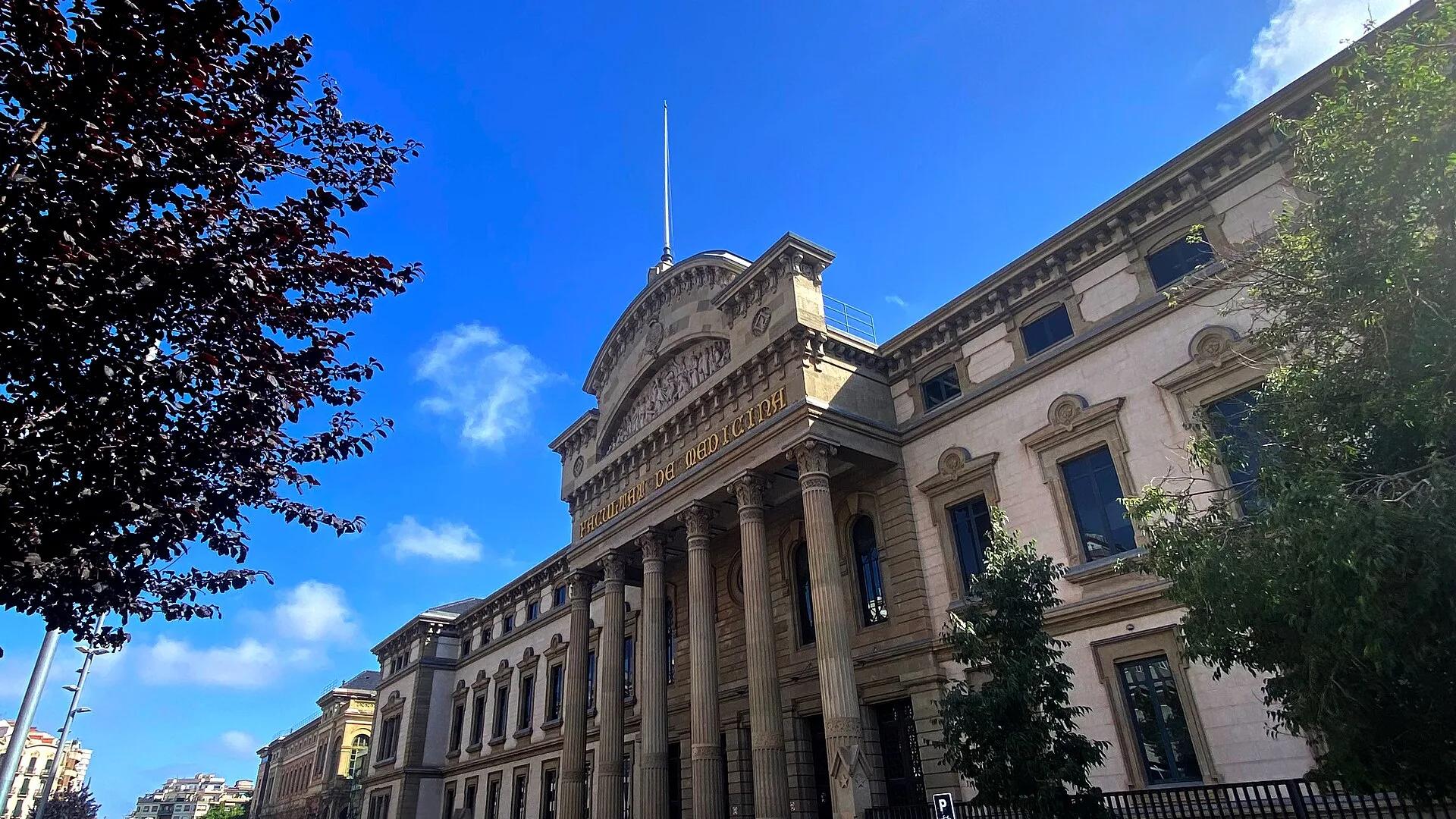
Your Guide to the University of Barcelona
Barcelona, Spain
Founded in 1450, the University of Barcelona stands as Spain's premier research-focused institution spanning science, medicine, humanities, economics, and engineering. With 577 years of academic tradition and a global reputation for research excellence, UB combines European prestige with Mediterranean accessibility and affordability.
#164
QS Global Ranking
8+ candidates placed at UB across 2023-2025 cohorts
Students Enrolled
€3-6K
Annual Tuition
577
Years of Academic Heritage
UB at a Glance
16
Faculties
150+
Master's Programs
35%
International Student Body
€900M
Annual Research Budget
2,800+
Faculty & Researchers
15
Research Centers
85%
Graduate Employment Rate
6
Nobel Prize Connections

Dr. Karan Gupta's Strategic View
Dr. Karan Gupta's Expert Assessment
Why UB Is a Strong Choice
Research Excellence at Affordable Cost
UB invests €900M annually in research while maintaining exceptionally low tuition. Master's programs integrate faculty research projects; thesis work often contributes to publishable research. Students access world-class labs and research infrastructure despite paying tuition lower than most UK/US bachelor's degrees.
Gateway to Spanish & Southern European Markets
Barcelona serves as headquarters for major corporations (CaixaBank, Sabadell, Telefónica offices) and emerging tech companies. UB graduates enjoy strong networks across Spain, Portugal, and increasingly, Southern Europe's growing tech hubs. EU degree recognition enables pan-European mobility with significant advantages in Spanish/Mediterranean companies.
Exceptional Lifestyle & Cultural Integration
Barcelona is Europe's most livable city for students combining affordability with cultural offerings, Mediterranean climate, and vibrant social scene. Master's students balance rigorous academics with quality-of-life factors—year-round warm weather, €600-800/month housing, and rich artistic/cultural landscape create environment where academics don't consume existence.
Campus & Barcelona City
UB operates three main campuses across Barcelona with primary campus in the Sarrià neighborhood. Modern research facilities complement historic academic buildings reflecting Barcelona's architectural heritage. The city itself functions as extended learning environment with museums, cultural institutions, and economic activity providing research and internship context.
Historic Facilities
Medieval architecture and contemporary research facilities spanning Barcelona's expansion
Research Labs
Modern laboratories for economics, computer science, biology, and materials research
International Partnerships
35% international students with exchange programs across Europe and globally
Barcelona Lifestyle
Mediterranean climate, vibrant culture, affordable housing, world-class food scene
Programs at UB
MSc Economics
Faculty of Economics & Business
Macroeconomic policy, labor economics, European economic integration
MSc Business Research
Faculty of Economics & Business
Research methodology, organizational behavior, strategic management
MSc Data Science
Faculty of Mathematics & Computer Science
Machine learning, statistical analysis, data engineering applications
MBA
Faculty of Economics & Business
General management with specializations in finance, marketing, strategy
MSc International Business
Faculty of Economics & Business
Global markets, emerging economies, international strategy
MSc Marketing
Faculty of Economics & Business
Digital marketing, consumer behavior, brand strategy
MSc Finance
Faculty of Economics & Business
Corporate finance, risk management, financial markets
MSc Environmental Studies
Faculty of Earth Sciences
Sustainability, climate policy, environmental management
MSc Public Health
Faculty of Medicine
Epidemiology, health policy, global health challenges
Most programs are 2 years (120 ECTS) with some intensive 1-year options. Multiple programs offered in English; Spanish-language options available. Primary intake September; some rolling admissions.
Admission Requirements
UB admissions emphasize academic background and program-specific fit. The university values intellectual engagement and clear career direction.
UB's admissions are moderately selective but more accessible than top-tier universities. Strong GPA plus clear motivation succeeds even without perfect test scores. Program-specific fit and demonstrated interest matter.
Interview Preparation
What to expect and how to prepare for your UB interview
Format
University of Barcelona (UB) does not conduct admissions interviews for most programs. Bachelor's admission is based on Selectividad/EBAU scores for Spanish-track students, and document-based for international applicants. Master's admission is merit-based on documents. Some doctoral and professional master's programs may include interviews.
Duration
15-25 minutes (where applicable)
Interviewers
Faculty committee or doctoral supervisor
Interview Style
Academic, Formal, Research-oriented
What UB Looks For
Sample Interview Questions
Why the University of Barcelona for your graduate studies?
Reference UB's specific research centers and rankings. It excels in medicine, law, humanities, and sciences.
Describe your most significant academic or research accomplishment.
Focus on depth and rigor. Spanish academia values thorough scholarly work.
How do you plan to integrate into the academic community at UB?
Mention specific seminars, research groups, or conferences associated with UB.
What is your Spanish and/or Catalan language proficiency?
Be honest. Many programs require Spanish; some use Catalan.
Where do you see your research or career in five years?
Be specific and show how UB's resources and network support your trajectory.
Preparation Tips
- Most programs don't have interviews — focus on a strong application
- UB has faculties spread across Barcelona — know where your program is located
- Spanish language proficiency is essential for most programs
- UB is particularly strong in clinical medicine, pharmacology, and humanities research
Common Mistakes
- Applying without adequate Spanish language preparation
- Not understanding the Spanish grading and credit transfer system
- Assuming UB is easy to get into because it's a public university — competitive programs have high cutoffs
What Type of Student Gets In?
Academic engagement with clear intellectual interests within chosen field
Comfort with Spanish language or willingness to learn quickly (improves integration)
Appreciation for Mediterranean lifestyle and work-life balance values
Interest in European perspectives on economics, business, sustainability, or health
Adaptability to Spanish institutional culture (direct communication, hierarchical but approachable)
Budget consciousness—UB appeals to value-oriented candidates prioritizing affordability
Candidates underestimate the importance of Spanish language for career outcomes. While programs are English-taught, Spanish proficiency dramatically increases internship/employment opportunities in Barcelona and Spain. Expect to study Spanish intensively during program; many graduates report language as factor limiting career mobility post-graduation.
Costs & ROI
Spain offers among Europe's lowest tuition rates. Barcelona's living costs are exceptionally affordable—€700-1,000/month supports comfortable student lifestyle including housing. Total 2-year cost (€25-35K) rivals or undercuts EPFL, TU Delft for non-EU students.
| Level | Tuition | Living | Total |
|---|---|---|---|
| EU/EEA Citizens | €3,000-4,500/year | €700-1,000/month | €12,600-16,500/year (2 years = €25-33K) |
| Non-EU Citizens | €5,500-6,500/year | €700-1,000/month | €14,000-17,500/year (2 years = €28-35K) |
Salary Ranges
Career & Industry
CaixaBank
Spain's leading retail bank—major employer of finance and business graduates
Telefónica
Telecommunications giant with R&D centers in Barcelona
BBVA
Banking and fintech partnerships for finance and data science programs
Barcelona Supercomputing Center
Research collaboration on data science and computational science
Spanish Government Ministries
Policy research partnerships for economics and public health programs
UB graduates enjoy strong placement in Spanish and Southern European roles. Average starting salary in Barcelona is €28-35K (lower than Northern Europe but aligned with cost of living). Career mobility to Central/Northern Europe requires either Spanish proficiency or target of multinational corporations.
Application Timeline
Application & Admission
- Submit application with transcripts, test scores, statement of purpose
- Admissions review (4-8 weeks)
- Receive admission offer
- Confirm enrollment
Pre-Arrival Preparation
- Secure housing (university housing limited; private market abundant)
- Register with Spanish authorities (non-EU visa if required)
- Arrange health insurance
- Begin Spanish language study if choosing Spanish-taught program
Year 1: Foundation & Internship
- Complete core coursework in specialization
- Secure internship placement (spring semester)
- Conduct summer internship (June-August)
- Develop thesis proposal with advisor
Year 2: Thesis & Completion
- Conduct thesis research (6-9 months with industry partner if possible)
- Present preliminary findings
- Complete thesis and defend
- Graduate (June-July); transition to employment or further study
UB vs Peers
IE University
UB: UB tuition €3-6K vs IE €20-25K (IE costs 4x more). UB offers broader academic portfolio (not business-focused only). Barcelona location more affordable than Madrid.
Other: IE significantly higher ranked (#26 for business vs UB #164 overall). IE stronger for MBA and pure business careers. Madrid location offers stronger finance sector depth.
Compare →ESADE
UB: UB tuition €3-6K vs ESADE €18-22K. UB research-focused vs ESADE business-focused. Both Barcelona-based; UB offers better value.
Other: ESADE higher ranked for business programs. ESADE stronger for executive education and corporate partnerships. More prestigious for MBA track.
Compare →University of Barcelona vs Universitat Autònoma de Barcelona (UAB)
UB: UB larger (32K vs 28K students), more comprehensive program portfolio. UB slightly higher ranked (#164 vs #171). Historic prestige advantage.
Other: UAB comparable in cost and quality. UAB strong in STEM and environmental research. Both excellent value; differentiation minimal for most programs.
Compare →UB Is Right For...
- Budget-conscious candidates seeking quality European education at lowest cost
- Those targeting Spanish or Southern European careers
- Students valuing Mediterranean lifestyle and quality of life alongside academics
- Candidates interested in research-focused Master's rather than vocational certification
- Career-changers seeking affordable pathway to new field (business, data science, public health)
- Those interested in Spanish/European perspectives on economics, policy, or sustainability
UB Is Not Right For...
- Non-EU students avoiding visa complications (Spain now requires higher visa thresholds)
- Those prioritizing elite prestige for global tech/finance roles (UB's #164 ranking limits some doors)
- Spanish language avoiders (integration challenging without Spanish; many jobs require Spanish proficiency)
- Candidates seeking Northern European lifestyle (Barcelona weather excellent, but culture differs significantly)
- MBA-focused candidates (IE University or ESADE better specialized for pure MBA

Dr. Karan Gupta's Advice
FAQs: UB for Indian Students
Do I need to speak Spanish to attend UB?
No—many Master's programs are taught in English. However, Spanish proficiency significantly improves social integration, internship opportunities, and post-graduation employment. Most students learn basic Spanish within 6 months of intensive evening courses. Barcelona is internationally oriented; English speakers can function, but Spanish opens doors.
Is UB's ranking (#164) a concern for career placement?
Within Spain and Southern Europe, UB ranking is less critical; the university is prestigious and well-recognized. For multinational tech/finance companies hiring globally, the ranking may limit competitiveness vs EPFL, Imperial, or ETH Zurich. Assessment depends on target career—Spanish/Mediterranean companies value UB; Silicon Valley tech firms may prefer higher-ranked schools.
What's the student life like in Barcelona?
Barcelona is one of Europe's most vibrant student cities—excellent weather year-round, affordable housing, rich cultural scene, and Mediterranean beach culture. Student social life is very active. Cost of living is low by European standards (€700-1,000/month for comfortable lifestyle). However, it's chaotic, crowded, and noise levels are high compared to Northern European cities.
Can I work while studying at UB?
Yes, international students can work 20 hours/week during semesters with permit approval. Spanish minimum wage is €11-12/hour. Many students balance studies with part-time work (15 hours/week) in retail, hospitality, or tutoring. On-campus employment opportunities more limited than Northern European universities.
What percentage of UB graduates stay in Spain vs relocating?
Approximately 65-70% of international graduates secure employment in Spain or Southern Europe; 15-20% relocate to Central/Northern Europe; 10-15% return home. Career mobility to Northern Europe/UK requires either strong Spanish credentials or roles in multinational corporations. Many graduates report Spanish language became limiting factor for Northern European career moves.
Are scholarships available?
Limited university-specific funding available; most support from home governments or external organizations. Spain offers some Erasmus+ grants for EU students. International students should explore home government scholarships with partnership arrangements with Spain.
Related Articles
IMO Olympiad Explained: The Official Pathway in India
Two exams in India are called IMO. Only one is the official pathway to India's International Mathematical Olympiad team.
5 Ways to Get Into an IIM Without CAT
CAT is not the only way into an IIM. Discover five non-CAT routes, from IPMAT and JIPMAT to IIMB's BBA and GMAT/GRE-based MBAs.
The U.S. Government Website Every College Applicant Should Know
College Scorecard is the free U.S. government tool that lets students research college costs, earnings, completion, debt and more.
Want to Study at UB?
Get expert guidance from Dr. Karan Gupta: Harvard alumnus, 27+ years of global admissions experience guiding 160,000+ students worldwide.