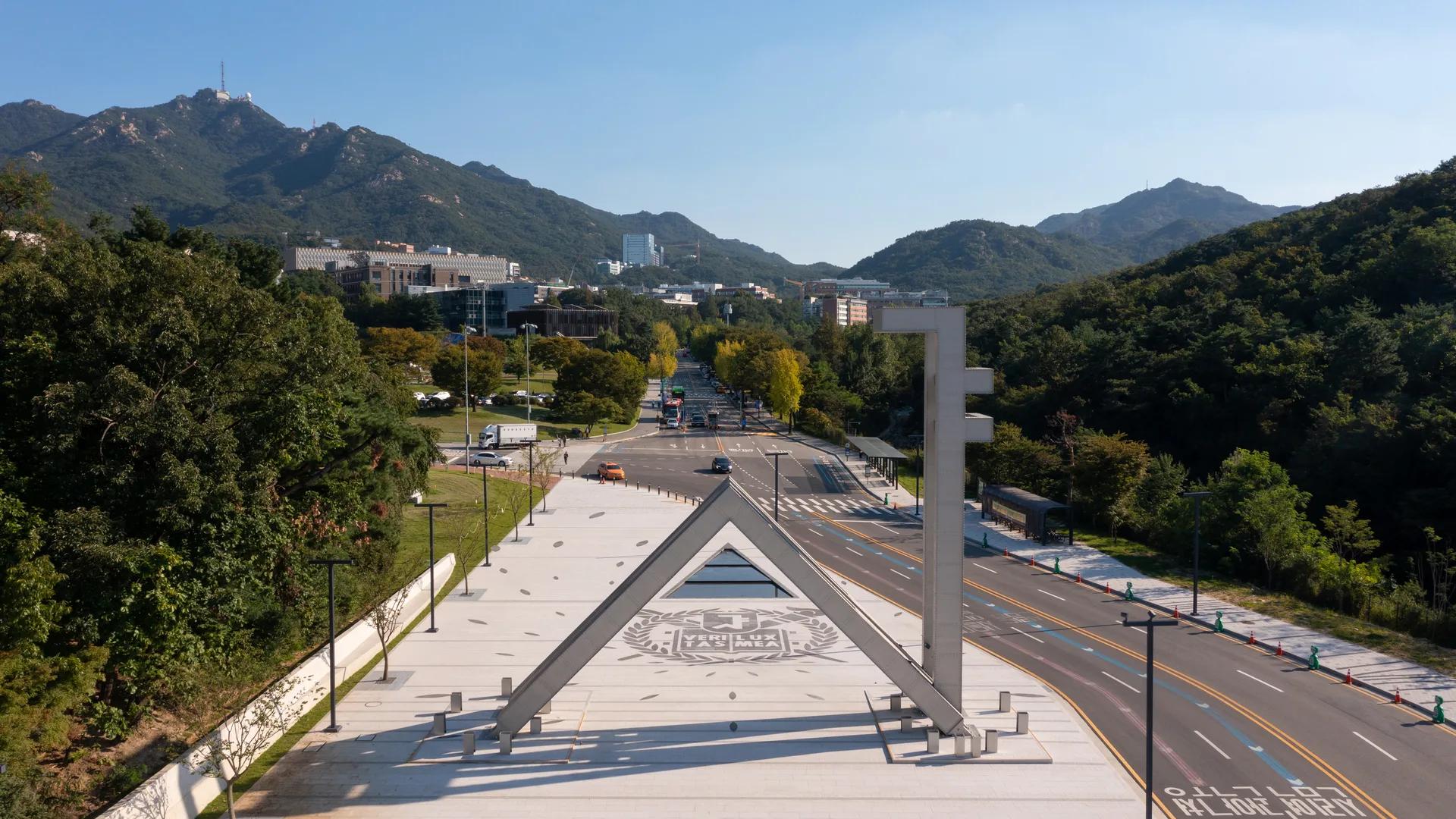
Seoul National University
Seoul, South Korea
Seoul National University (SNU) is Korea's most prestigious institution and consistently ranks among the global top 30. As the country's undisputed #1, SNU produces the CEOs, politicians, and innovators who run Korea's trillion-dollar economy. Its engineering, business, and medicine programmes are world-class, and its alumni network dominates Samsung, Hyundai, LG, and SK Group.
#29
QS World Ranking
1946
Founded
28,000+
Students
16
Colleges
SNU at a Glance
#29
QS World Ranking
#1
In South Korea
28,000+
Students
1946
Founded

Dr. Karan Gupta's Strategic View
Why SNU Is a Strong Choice
The Chaebol Pipeline
Korea's economy is dominated by chaebols — massive family-controlled conglomerates like Samsung, Hyundai, LG, and SK Group. These companies account for over 60% of Korea's GDP. And the single most common credential on the business cards of their executives? Seoul National University.
SNU's MBA and engineering programmes are the primary feeder pipelines into chaebol leadership tracks. Samsung alone recruits hundreds of SNU graduates annually across its electronics, semiconductor, biologics, and financial services divisions. The recruitment is not casual — Samsung runs dedicated SNU recruitment events, sponsors research labs on campus, and offers fast-track programmes for SNU alumni.
For Indian students, this is a career pathway that simply does not exist at Western universities. An SNU degree gives you credibility within the Korean corporate system that no amount of talent or experience from outside can replicate. If working inside a global technology giant like Samsung or Hyundai appeals to you, SNU is the most direct route.
World-Class Engineering at a Fraction of the Cost
SNU's engineering programmes rank in the global top 30, and in specific areas like semiconductor engineering, materials science, and electrical engineering, they compete with MIT and Stanford. The difference is cost — SNU tuition for engineering is around KRW 7 million per semester, roughly USD 5,000. Compare that to USD 30,000+ at a US peer institution.
The Korean Government Scholarship Programme (KGSP) can cover full tuition, a monthly stipend, airfare, and health insurance for international students. SNU also offers its own merit-based scholarships that waive 50-100% of tuition. Many Indian students study at SNU essentially for free.
The value proposition is staggering: world-top-30 engineering education, living in one of Asia's most dynamic cities, immersed in the ecosystem that produces Samsung's chips and Hyundai's cars — all at a cost lower than most private Indian engineering colleges. If cost is a factor in your decision, and it should be, SNU deserves serious consideration.
Seoul — Asia's Most Underrated Student City
Seoul consistently ranks among the best student cities in the world, and for good reason. It is safe, hyper-connected, culturally vibrant, and affordable relative to Tokyo, Hong Kong, or Singapore. The public transport system is flawless — you can get anywhere in the city for under USD 1.50. Street food is everywhere and excellent. The nightlife in Hongdae and Gangnam is legendary.
SNU's campus in Gwanak-gu is a self-contained ecosystem — dormitories, libraries, gyms, restaurants, and a mountain trail that runs through campus. The area around SNU is student-friendly with affordable housing and dining options. You do not need to live in expensive Gangnam to enjoy Seoul.
For Indian students, Seoul offers something unexpected: a growing Indian community and excellent vegetarian food options (Korean temple food is entirely plant-based). The adjustment period is real — Korean culture has distinct social norms — but students who embrace it find Seoul to be one of the most rewarding cities to live in as a young person.
Campus & Student Life
SNU's main campus in Gwanak-gu spans over 4,100 acres, making it one of the largest university campuses in the world. Set against Gwanak Mountain, the campus combines modern research facilities with natural trails and green spaces.
Admission Requirements
SNU is the most selective university in Korea. International admission is competitive but accessible through dedicated tracks like GSIS and the Global MBA. Engineering and science programmes value research potential heavily, while business programmes weigh GMAT scores and professional experience.
SNU's engineering programmes are extremely competitive — GPA and research experience matter more than test scores. For the Global MBA, professional experience of 3+ years is expected. GSIS is the most accessible entry point for international students with no Korean language skills.
Master's Programs
- MSc Computer Science and Engineering
- MSc Electrical and Computer Engineering
- MA Economics
- MA International Studies (GSIS)
- MSc Materials Science and Engineering
MBA Program
- Global MBA (16 months, English-taught)
- Executive MBA
Interview Preparation
What to expect and how to prepare for your SNU interview
Format
Panel interview (in-person or virtual)
Duration
20-30 minutes
Interviewers
Faculty committee members
Interview Style
Academic and research-focused for graduate programmes; career-focused for MBA
What SNU Looks For
Sample Interview Questions
Preparation Tips
- Research specific labs and professors — SNU values fit with faculty research agendas
- Demonstrate awareness of Korea's economic structure and the chaebol system
- If you have any Korean language ability, highlight it
- Show a clear connection between SNU and your post-graduation plans in Korea or Asia
Common Mistakes
- Applying to SNU without any connection to or interest in Korea specifically
- Not knowing the difference between SNU, KAIST, and Yonsei for your field
- Underestimating the importance of Korean language even for English-taught programmes
What Type of Student Gets In?
Academically exceptional with strong quantitative skills
Genuinely curious about Korean culture, language, and industry
Research-minded with clear intellectual focus
Resilient and adaptable — Korean academic culture is demanding
Career-focused with specific plans for the Korean or East Asian market
Willing to invest 2+ years in deep immersion
The biggest mistake is applying to SNU as a backup Asian university without genuine interest in Korea. SNU admissions and professors can tell when an applicant views Korea as a cheaper alternative to the West. Show real engagement with Korean industry, culture, or research — or apply somewhere else.
Costs & ROI
SNU offers exceptional value — world-class education at a fraction of Western university costs. Many international students receive tuition waivers through KGSP or SNU scholarships. Seoul living costs are moderate by global standards, and SNU dormitories are affordable at around KRW 400,000/month.
| Level | Tuition |
|---|---|
| Master's (Engineering) | KRW 6,500,000 - 7,500,000/semester (~USD 5,000) |
| MBA | KRW 12,000,000/semester (~USD 9,000) |
| Living Costs | KRW 800,000 - 1,200,000/month (~USD 600-900) |
Salary Ranges
Career & Industry
Samsung Electronics
Samsung is the largest employer of SNU graduates across engineering, business, and sciences. The company funds multiple research labs on campus, sponsors chairs, and runs dedicated recruitment programmes. SNU's semiconductor research feeds directly into Samsung's chip division.
Hyundai Motor Group
Hyundai recruits SNU graduates for engineering, design, and strategy roles. The company's push into electric vehicles and autonomous driving has deepened collaboration with SNU's engineering faculty, with joint research labs on future mobility.
Naver Corporation
Korea's largest tech company partners with SNU on AI and search technology research. Naver Labs recruits heavily from SNU's computer science programme, and the company sponsors an AI research centre on campus.
McKinsey & Company (Seoul)
McKinsey's Seoul office recruits more from SNU than any other Korean university. SNU MBA and engineering graduates are particularly valued for their combination of technical depth and strategic thinking in the Korean market context.
SNU graduates dominate Korea's corporate and government leadership. The alumni network is the most powerful in the country — SNU graduates lead Samsung, Hyundai, LG, SK, and virtually every major Korean institution. For international graduates, the Korean government offers job-seeking visas that make post-study employment straightforward.
Application Timeline
12-18 Months Before
- Research SNU programmes and identify target department
- Begin GRE/GMAT preparation
- Start learning basic Korean — it makes a strong impression
9-12 Months Before
- Take GRE/GMAT and TOEFL/IELTS
- Contact potential thesis advisors for research programmes
- Explore Korean Government Scholarship Programme (KGSP) if eligible
6-9 Months Before
- Submit application (March intake: September–November; September intake: March–May)
- Prepare research proposal for research-track programmes
3-6 Months Before
- Complete interview process
- Receive offer and scholarship decisions
- Begin Korean student visa (D-2) application
1-3 Months Before
- Accept offer and pay tuition deposit
- Arrange housing — SNU dormitory or off-campus in Gwanak-gu
- Open Korean bank account and arrange health insurance
Arrival
- Attend SNU orientation for international students
- Register at local immigration office for Alien Registration Card
- Join international student associations and Korean language exchange programmes
SNU vs Peers
SNU vs KAIST
SNU: Broader programme range, stronger alumni network across all sectors, Seoul location, highest prestige in Korea, stronger business and social sciences
Other: More STEM-focused with stronger startup culture, Daejeon campus is quieter for research, slightly higher international student ratio, more English-friendly environment
SNU vs University of Tokyo
SNU: More international-friendly admission, stronger chaebol career pipeline, more affordable living costs, Korean tech sector is more globally integrated
Other: Higher global ranking, stronger in fundamental sciences, Japan's broader industrial base, more established international reputation
SNU vs NUS
SNU: Lower tuition and living costs, Korea's tech industry growth, chaebol network access, KGSP scholarship opportunities
Other: Higher global ranking, English-speaking environment, Singapore's immigration advantages, more diverse Asian network
SNU Is Right For...
- Students targeting careers in Korea's tech or manufacturing sectors
- Those willing to invest in Korean language learning alongside their degree
- Applicants seeking world-class engineering or CS research at affordable tuition
- Students interested in semiconductor, automotive, or electronics industries
- Those who want to understand East Asian business and political economy
SNU Is Not Right For...
- Students with no interest in learning Korean or working in Korea
- Those seeking a fully international MBA experience in English
- Applicants who want a quick 1-year master's and return to India
- Students uncomfortable with hierarchical corporate cultures

Dr. Karan Gupta's Advice
FAQs: SNU for Indian Students
Is Seoul National University good for Indian students?
SNU is excellent for Indian students who are committed to building careers in Korea or East Asia. The tuition is remarkably affordable, scholarships are generous (KGSP can cover everything), and Korea's tech industry actively recruits international talent. The main requirement is willingness to learn Korean — even basic proficiency dramatically improves your experience and career prospects.
Do I need to speak Korean to study at SNU?
For English-taught programmes like GSIS and the Global MBA, no Korean is required at admission. However, Korean proficiency significantly enhances your career prospects and daily life. SNU offers free Korean language courses for international students. For Korean-taught programmes, TOPIK Level 5 or higher is required.
How much does it cost to study at SNU?
Tuition ranges from KRW 6.5-7.5 million per semester for engineering (~USD 5,000) to KRW 12 million for the MBA (~USD 9,000). Living costs in Seoul are KRW 800,000-1,200,000 per month (~USD 600-900). Many international students receive KGSP scholarships covering full tuition, stipend, and airfare.
How does SNU compare to KAIST?
SNU is Korea's most prestigious university overall, with the broadest programme range and strongest alumni network across all sectors. KAIST is more focused on STEM and technology, located in Daejeon (not Seoul), and has a more startup-oriented culture. For pure tech research, KAIST is comparable. For anything beyond STEM — business, social sciences, law, medicine — SNU is clearly ahead.
Can I work in Korea after graduating from SNU?
Yes. Korea offers a D-10 job-seeking visa for international graduates, giving you up to 2 years to find employment. SNU graduates are highly sought after by Korean companies. Chaebols like Samsung, Hyundai, and LG have dedicated international recruitment tracks. Korean language proficiency is the biggest factor in securing employment — invest in it during your studies.
Related Articles
Wall Street Internships: What Matters More Than Your College Name
A Wall Street job isn't guaranteed by an Ivy League degree. Here's how students from any college can compete for elite finance internships.
Common Data Set: What Harvard and Top U.S. Colleges Really Consider
The Common Data Set reveals what U.S. colleges say matters in admissions—and what they say does not.
Your College Scholarship Isn’t Always Final: How to Ask for More
A three-paragraph scholarship appeal email can sometimes unlock more college aid. Learn when to negotiate, what to say, and when an appeal can backfire.
Want to Study at SNU?
Get expert guidance from Dr. Karan Gupta: Harvard alumnus, 27+ years of global admissions experience guiding 160,000+ students worldwide.