KAUST
Thuwal, Saudi Arabia
King Abdullah University of Science and Technology (KAUST) is the most generously funded research university in the world. Every admitted student — without exception — receives a full fellowship covering tuition, living stipend, housing, health insurance, and relocation. Located on the Red Sea coast, KAUST is a graduate-only, English-language institution with world-class facilities in energy, AI, materials science, and environmental research.
100%
Funded Students
2009
Founded
1,300+
Graduate Students
Top 10
Citations Per Faculty
KAUST at a Glance
100%
Fully Funded
Top 10
Citations Per Faculty
100+
Nationalities
2009
Founded

Dr. Karan Gupta's Strategic View
Why KAUST Is a Strong Choice
The Fellowship — Nothing Else Comes Close
Every KAUST student receives a fellowship that covers everything: tuition (which would be approximately USD 60,000/year if charged), a monthly stipend of USD 2,000-3,000, free campus housing, health insurance for you and your family, an annual travel allowance, and relocation costs. There are no teaching assistant obligations. No loans. No strings. Just research.
Compare this to any other top research university. MIT charges USD 60,000+ in tuition and offers partial funding to some students. Stanford similar. Even fully funded PhD programmes at US universities come with TA obligations that reduce your research time. KAUST's fellowship is unconditional and universal — every admitted student gets the same deal.
For Indian students from middle-class families, this eliminates the financial barrier entirely. You do not need your parents to take a loan. You do not need to work side jobs. You arrive at KAUST with your expenses covered and your only obligation being to do excellent research. The psychological freedom this creates cannot be overstated — you can take intellectual risks that debt-burdened students at other universities cannot afford to take.
Facilities That Rival the Best in the World
KAUST's infrastructure was built from scratch with Saudi Arabia's resources behind it. The result is facilities that many established universities — including Ivy League institutions — cannot match. Shaheen III, KAUST's supercomputer, is one of the most powerful in the Middle East and top 10 globally. The Nanofabrication Core Lab provides cleanroom facilities on par with the best in the world. The Visualization Core Lab offers immersive data visualisation tools that most universities can only dream about.
The campus itself is purpose-built for research. Labs are modern, well-maintained, and fully stocked. Research budgets for faculty are generous — which means your project will be funded properly. You will not be told to do groundbreaking research with a shoestring budget. KAUST invests in its researchers at a level that is globally rare.
For Indian students coming from universities where lab equipment is shared among 50 students and often outdated, the shift is transformative. At KAUST, you have access to instruments and computing resources that enable the kind of research that gets published in Nature and Science. Several KAUST papers have done exactly that.
The Red Sea Campus — Unlike Anywhere Else
KAUST's campus sits on the Red Sea coast north of Jeddah. It is a self-contained community with beaches, swimming pools, restaurants, a golf course, diving facilities, and walking trails. The Red Sea marine ecosystem directly outside campus is one of the world's most biodiverse — KAUST marine researchers literally step out of the lab onto research boats.
The campus community is international — students and faculty from 100+ countries. The social atmosphere is more cosmopolitan than most expect. There are regular cultural events, film screenings, sports leagues, and community gatherings. Families are welcome, and many faculty and students bring spouses and children who have access to international schools and family housing.
The isolation is real — KAUST is not in a city. Jeddah is an hour's drive. This suits researchers who want to focus without distraction, but it does not suit everyone. You need to be comfortable creating your social life within a campus community rather than relying on a city. For the right person — someone who wants to research without financial stress in a beautiful, well-resourced environment — KAUST is paradise. For someone who needs urban energy, it is the wrong fit.
Campus & Student Life
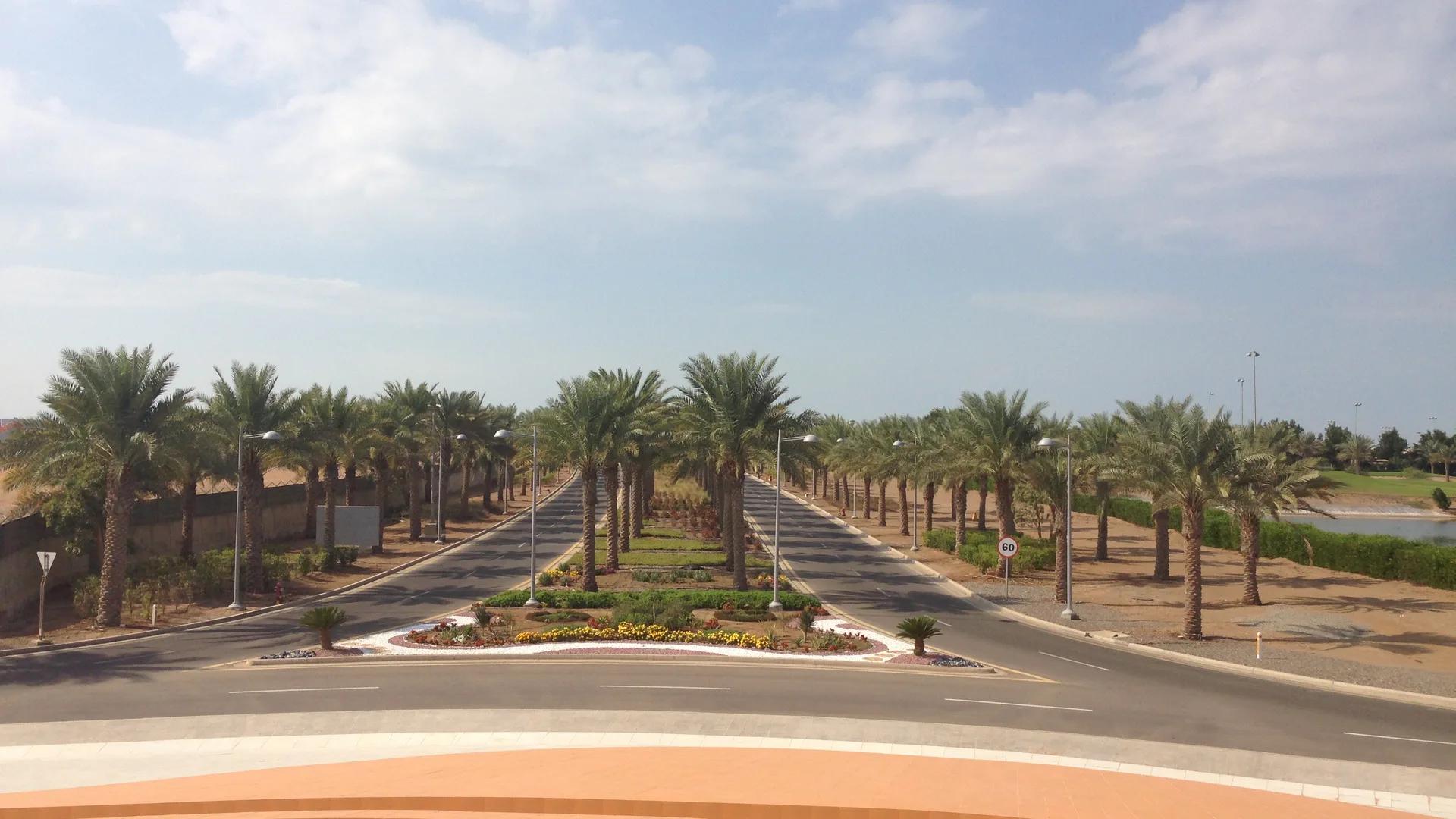
KAUST's 36-square-kilometre campus is situated on the Red Sea coast between Jeddah and Rabigh. The purpose-built campus features world-class research facilities, residential communities, beaches, sports facilities, and a marina.
Admission Requirements
KAUST is highly selective, admitting students based purely on academic merit and research potential. The full fellowship makes it one of the most competitive STEM programmes globally — there is no financial barrier, so selection is entirely merit-based. The applicant pool is global and extremely strong.
KAUST is completely free — tuition, stipend, housing, health insurance, and annual travel allowance are all covered. There is no other university in the world that offers this level of support to all students. The only cost is your commitment to serious research.
Master's Programs
- MS Computer Science
- MS Electrical and Computer Engineering
- MS Earth Science and Engineering
- MS Chemical Engineering
- MS Applied Mathematics and Computational Science
Note
- KAUST does not offer MBA or business programmes — it is a pure STEM research university
Interview Preparation
What to expect and how to prepare for your KAUST interview
Format
Faculty interview via video call
Duration
30-45 minutes
Interviewers
Potential faculty advisor and admissions committee
Interview Style
Research-focused — they want to assess your research potential and fit with KAUST's labs
What KAUST Looks For
Sample Interview Questions
Preparation Tips
- Identify 2-3 KAUST faculty whose research aligns with yours
- Read their recent papers and be prepared to discuss them
- Show genuine excitement about contributing to KAUST's research mission
- Be honest about your research experience level — KAUST values potential as much as track record
Common Mistakes
- Applying just for the free funding without genuine research interest
- Not connecting with potential faculty advisors before applying
- Being unaware of KAUST's focus areas and recent research output
What Type of Student Gets In?
Research-driven with genuine scientific curiosity
Self-motivated — the campus is isolated, so internal drive matters
Comfortable in a multicultural, self-contained community
Focused on long-term academic or research career goals
Values financial independence and the freedom to focus entirely on research
Open-minded about living in Saudi Arabia
The biggest mistake is not applying to KAUST because of assumptions about Saudi Arabia. The campus is an international research community that does not resemble the stereotypes. Students from 100+ countries live, work, and socialise together. The facilities and funding are better than most Ivy League programmes. At minimum, apply and visit before deciding.
Costs & ROI
KAUST is completely free for all admitted students. The fellowship covers tuition, a monthly living stipend (USD 2,000-3,000), campus housing, health insurance, annual travel allowance, and relocation costs. There are no teaching assistant obligations required. Students keep 100% of their stipend. This is the most generous funding package in global higher education.
| Level | Tuition |
|---|---|
| Tuition (all programmes) | USD 0 (fully funded for all students) |
| Monthly Stipend | USD 2,000 - 3,000/month (included in fellowship) |
| Housing | USD 0 (campus housing provided free) |
| Health Insurance | USD 0 (included in fellowship) |
Salary Ranges
Career & Industry
Saudi Aramco
The world's most profitable company and KAUST's founding partner. Aramco funds research across energy, materials, and AI at KAUST. Graduates access Aramco's R&D division, one of the world's best-resourced industrial research organisations. Aramco salaries are tax-free and among the highest in the world.
SABIC
The Saudi petrochemical giant partners with KAUST on polymer research, catalysis, and sustainable chemistry. SABIC funds research chairs and recruits KAUST graduates for its R&D teams in Saudi Arabia and globally.
NEOM
Saudi Arabia's futuristic megaproject (a planned USD 500 billion city) recruits KAUST graduates for engineering, environmental science, AI, and urban planning roles. KAUST is a research partner for NEOM's sustainability and technology initiatives.
KAUST graduates are positioned for careers in research, academia, and Saudi Arabia's rapidly diversifying economy under Vision 2030. The university's industry partnerships with Saudi Aramco, SABIC, and international firms provide both research collaboration and career pipelines. Many graduates continue to PhD programmes at KAUST or top global institutions.
Application Timeline
12-18 Months Before
- Research KAUST faculty and their publications
- Identify potential thesis advisors
- Build research experience through projects or publications
9-12 Months Before
- Take GRE and TOEFL/IELTS
- Contact potential faculty advisors at KAUST
- Begin application preparation
6-9 Months Before
- Submit application (Fall deadline typically January 15)
- Ensure recommendation letters are submitted on time
3-6 Months Before
- Complete faculty interview
- Receive admission offer with full fellowship details
- Apply for Saudi visa
1-3 Months Before
- Accept offer — fellowship covers everything including relocation
- KAUST arranges housing on campus (all students live on campus)
- Prepare for relocation to Thuwal
Arrival
- Attend KAUST orientation and campus tour
- Move into campus housing (ocean-front units available)
- Meet your research group and begin lab onboarding
KAUST vs Peers
KAUST vs MIT
KAUST: Full fellowship for all students (no debt), newer world-class facilities, smaller cohort with more faculty attention, tax-free stipend
Other: Much higher global ranking, broader programme range, Cambridge/Boston location, stronger industry network, deeper alumni base
KAUST vs ETH Zurich
KAUST: Full fellowship including housing and stipend (ETH has tuition but no guaranteed stipend for MS), newer facilities, tax-free environment
Other: Much higher ranking, Swiss/European location, broader programme range, stronger industry connections in Europe, established reputation
KAUST Is Right For...
- STEM students with serious research ambitions who need full funding
- Those planning to pursue PhDs at top global universities after the MS
- Students interested in energy, materials science, AI, or environmental research
- Those who value financial freedom — no debt, no TA obligations, full stipend
- Researchers who want access to world-class facilities and computing resources
KAUST Is Not Right For...
- Students seeking a traditional university-town experience
- Those who want to be in a large city with nightlife and cultural diversity
- Applicants interested in business, humanities, or social sciences (KAUST is pure STEM)
- Students uncomfortable with living in a self-contained campus community in Saudi Arabia

Dr. Karan Gupta's Advice
FAQs: KAUST for Indian Students
Is KAUST really free?
Yes — completely. Every admitted student receives a fellowship covering full tuition, a monthly stipend (USD 2,000-3,000), campus housing, health insurance, annual travel allowance, and relocation costs. There are no TA obligations, no service bonds, and no hidden fees. This applies to all students regardless of nationality, including Indian students.
Is KAUST safe for Indian students, including women?
KAUST's campus is a self-contained international community with its own governance. Women study, research, and live without restriction on campus. The campus does not enforce gender segregation. The student body is 100+ nationalities, and the social atmosphere is cosmopolitan and inclusive. The campus is physically safe — it is a gated community with security. Indian students (both men and women) report positive experiences.
What are the career prospects after KAUST?
Many KAUST graduates continue to PhD programmes at KAUST or top global universities (MIT, Stanford, Cambridge). Others join Saudi Aramco, SABIC, NEOM, or international research institutions. Saudi Arabia's Vision 2030 is creating new tech and research jobs. Salaries in Saudi Arabia are tax-free, making them effectively 30-40% higher than equivalent roles in the US or Europe. KAUST's global research reputation opens doors worldwide.
Is KAUST isolated?
Yes — KAUST is a purpose-built campus between Jeddah and Rabigh, not in a city. Jeddah is about 1 hour by car. The campus is self-contained with restaurants, shops, recreation, and a strong community life. This suits researchers who want to focus without urban distractions. If you need city life, KAUST may not be right for you. Visit the campus before deciding if possible.
How competitive is KAUST admission?
Very competitive. The full fellowship attracts top applicants globally — you are competing with the best STEM students from 100+ countries. Strong GPA, research experience, and clear alignment with KAUST faculty research are essential. Having a faculty member who wants to work with you significantly improves your chances. Indian students with strong academic records and research publications are competitive.
Related Articles
Wall Street Internships: What Matters More Than Your College Name
A Wall Street job isn't guaranteed by an Ivy League degree. Here's how students from any college can compete for elite finance internships.
Common Data Set: What Harvard and Top U.S. Colleges Really Consider
The Common Data Set reveals what U.S. colleges say matters in admissions—and what they say does not.
Your College Scholarship Isn’t Always Final: How to Ask for More
A three-paragraph scholarship appeal email can sometimes unlock more college aid. Learn when to negotiate, what to say, and when an appeal can backfire.
Related Guides & Resources
Want to Study at KAUST?
Get expert guidance from Dr. Karan Gupta: Harvard alumnus, 27+ years of global admissions experience guiding 160,000+ students worldwide.