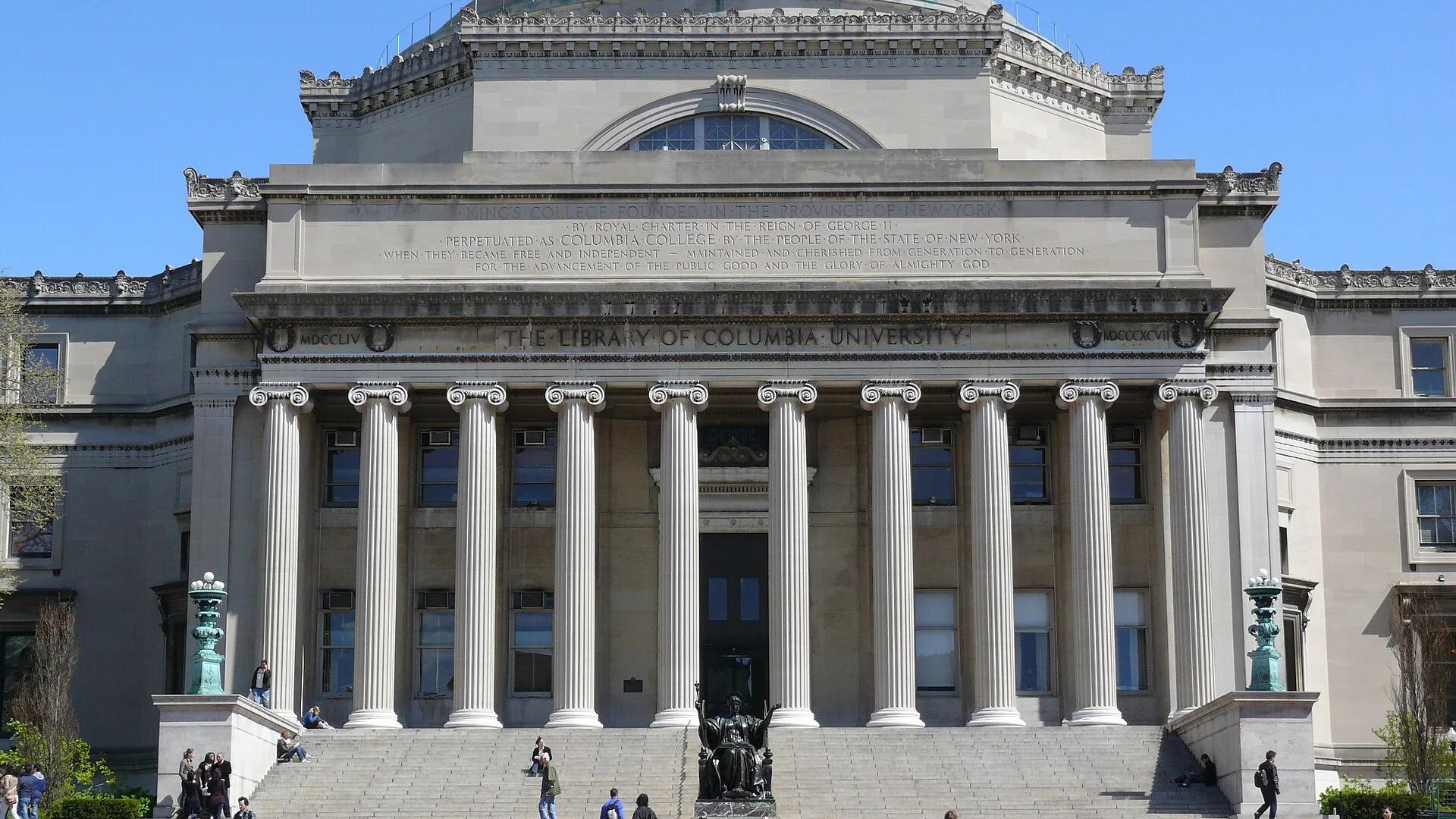
Columbia University Interview Preparation
Master the interview process with expert tips, sample questions, and proven strategies from Dr. Karan Gupta
Interview Overview
Columbia Business School's Conversational Blind Interview: Depth Over Polish
Columbia's interview is one of the most candidate-friendly approaches in M7 MBA admissions. The school conducts interviews blind—meaning your interviewer has access to only your resume and nothing else. They have not read your essays, recommendations, transcripts, or optional materials. This is by design. Columbia believes that your ability to tell your story compellingly in conversation, without relying on your written narrative to prime them, is a critical dimension of MBA readiness.
Approximately 50% of applicants receive interview invitations, making the invite rate one of the most selective in M7 (more selective than Northwestern, but less selective than Harvard or Stanford). However, the school is transparent about this: if you receive a Kellogg interview invite, the admissions committee has already determined that you are an academically qualified, professionally accomplished candidate. The interview is not a survival test; it is an assessment of whether you have the interpersonal skills, intellectual curiosity, and collaborative mindset to thrive in Columbia's intensive, urban MBA environment and to contribute value to the classroom.
Interviews are typically 45 minutes to 1 hour and are conducted by trained alumni volunteers, current MBA students, or admissions staff members. Columbia emphasizes that the interview should be a two-way exchange. You are evaluating Columbia as much as Columbia is evaluating you. Your interviewer wants you to feel comfortable, wants to have a genuine conversation, and wants to understand who you are beyond your resume bullets.
Columbia's 2027 class of 982 students has an average GMAT score of 734 (10th edition), a 3.6 average GPA, and roughly 5 years of average work experience. The acceptance rate for the full-time MBA program is approximately 20-21%, making it among the most selective M7 programs. What makes Columbia distinct is not just the quality of incoming students but the geographic and industry diversity they bring to the classroom. Columbia's location in Manhattan gives the program unparalleled access to finance (Wall Street, private equity, asset management), media and entertainment (all major media conglomerates have headquarters in NYC), technology (venture capital, startups), and countless other industries.
Interview Format
Format
Blind Resume-Based Conversational Interview
Duration
45 minutes to 1 hour
Interviewers
Trained alumni, current second-year MBA students, or admissions staff members
Interview Format Details
Columbia Business School Interview Format in Comprehensive Detail
Interview Duration & Structure (45 minutes to 1 hour): Columbia interviews are deliberately conversational, not scripted. However, they typically follow a loose structure: (1) Opening conversation and rapport-building (5-10 minutes), (2) Resume walkthrough and career discussion (15-20 minutes), (3) Behavioral and experience-based questions (15-20 minutes), (4) Columbia-specific discussion, including New York and location (10 minutes), (5) Your questions (5-10 minutes). The interviewer has flexibility to go deeper on any topic depending on the conversation flow.
Resume Provision & Blind Interview: You will be asked to provide your resume to the interviewer beforehand, typically 48 hours before the interview. This is the only document they receive. They do not have access to your essays, recommendations, transcripts, or supplemental materials. This means that if you mentioned something important in your essays (e.g., overcoming a major family challenge, a side passion project, a unique perspective), you must bring it up in conversation. Your resume is your foundation; your conversation is where you bring it to life.
Interviewer Profile: Your interviewer is most commonly a Columbia MBA alumnus who volunteers their time, though you may occasionally interview with a current second-year student or an admissions staff member. All interviewers are trained on Columbia's culture and admissions philosophy. They have a guide focused on assessing: communication clarity, career clarity and intention, leadership presence, intellectual curiosity, resilience and learning from failure, New York understanding and cultural awareness, and collaborative mindset.
Interview Medium: All interviews are conducted virtually via Zoom or phone. In-person interviews at Columbia's New York campus are not offered to most applicants (with occasional exceptions for those already in NYC).
Interview Blindness Rationale: Columbia's blind interview format is based on a philosophy: every MBA applicant should be able to tell their story compellingly in conversation. You cannot rely on an admissions officer having read your essays and pre-formed opinions about you. You must communicate your background, achievements, goals, and personality directly. This is actually a gift to candidates. It levels the playing field—your interviewer comes in with no preconceptions, ready to listen to your story with fresh ears.
Scheduling & Accessibility: Interview invitations are sent on a rolling basis. You will be asked to choose from available interview slots. Columbia makes effort to accommodate candidates in different time zones, though all interviews are virtual so geography is not a constraint.
Interview Style & Expectations
Blind (resume-only), conversational, natural dialogue, candidate-friendly
What Columbia University Looks For
Interview Questions: In-Depth Analysis
Columbia MBA Interview Question Patterns, Categories & Strategic Insights
Columbia's Interview Philosophy: Columbia interviews are conversational and flexible. Interviewers do not follow a rigid script; they have a guide but adapt questions based on your resume and your responses. However, questions consistently cluster around these themes: career clarity, leadership and impact, learning from failure and setbacks, teamwork and collaboration, New York and location advantage, and MBA readiness.
Category 1: Career Path & Clarity (30-40% of interview)
Your interviewer will start by asking you to walk through your resume. This is your foundation. "Tell me about your background and career journey. Why did you make each transition?" You should be able to articulate the logic of your career: why you entered that field, what you accomplished, why you moved to the next role. If your career looks chaotic, be prepared to explain the narrative thread. If you have stayed in one role for many years, be prepared to explain what you learned and why you are ready for an MBA now. Columbia values candidates who have thought deeply about their careers and who can articulate clear intention. Follow-up questions might include: "What attracted you to that industry?" or "What was the biggest challenge in that role?" or "What did you learn that surprised you?"
Category 2: Leadership & Impact (25-35% of interview)
"Tell me about a time you led a project, team, or initiative. What was the situation, and what did you accomplish?" or "Describe your most significant professional accomplishment. What was your role?" Columbia is assessing whether you have made a tangible impact, whether you have led others, and how you define success. The interviewer will probe: "What was the outcome?" "What would you do differently?" "How did your team respond?" For each leadership question, be specific about your actions and your impact. Numbers matter. "I led a project that increased efficiency" is vague. "I led a project that reduced manual processing by 40%, saving the department $500K annually" is specific.
Category 3: Challenge, Failure & Resilience (15-25% of interview)
"Tell me about a professional setback or failure. What happened, and what did you learn?" or "Describe a time you faced a significant challenge. How did you handle it?" Columbia wants to understand how you respond to adversity. The interviewer will probe for specifics: "What did you do?" "What was the outcome?" "How did it change you?" The strength of your answer is not in avoiding failure but in showing that you learned from it and changed your behavior. Candidates who give vague answers ("I was too ambitious early in my career") will get follow-up probes ("Can you give me a specific example?"). Candidates who give authentic, specific examples of failure show self-awareness and resilience.
Category 4: Teamwork & Collaboration (15-20% of interview)
"Tell me about a time you worked in a diverse or complex team environment. How did you navigate that?" or "Describe a time you had to work with someone very different from you." Columbia's classroom and network will be intensely diverse—geographically, professionally, ethnically, experientially. The school wants to know that you can work effectively across differences, that you respect diverse perspectives, and that you will contribute to an inclusive community. Show specific examples of how you have worked across differences and what you learned.
Category 5: New York & Location Advantage (10-15% of interview)
"What excites you about living and studying in New York City?" or "How does Columbia's location in New York matter to your career goals?" or "What industries or networks in New York do you want to tap into?" This is Columbia's unique advantage, and the school wants to know that you understand and will leverage it. Generic answers ("New York is a great city") will not suffice. Specific answers show that you have researched: "I am interested in venture capital focused on healthcare innovation. New York has a growing healthcare VC ecosystem with firms like Rock Health, Lerer Hippeau, and others. Columbia's location allows me to do internships, build networks, and understand the NYC healthcare startup scene while I am learning venture capital strategy in the classroom."
Category 6: Growth & Self-Awareness (5-10% of interview)
"What is an area where you want to develop at Columbia?" or "What is feedback you have received and how did you respond to it?" Columbia values intellectual humility and a growth mindset. Acknowledge gaps. Show willingness to learn. Show that you can receive feedback without becoming defensive.
Sample Interview Questions
Career Path
Walk me through your resume. What is the story you are telling with your career path?
Tip: Explain the logic of your transitions. What did you learn at each step? Why did you move? Show career intentionality, not random job-hopping. This should take 5-7 minutes and be conversational.
Program Fit
Why Columbia Business School specifically?
Tip: Go deep. Reference specific programs like the Value Investing Program or Eugene Lang Center, the location in New York, specific clubs, or what you learned from students or alums. Show genuine research.
Goals & Vision
What are your career goals? How does an MBA fit into your plan?
Tip: Be specific about your short-term and long-term goals. Connect them to Columbia resources. How will Columbia help you get there?
Location & Industry
What excites you about living and studying in New York City?
Tip: Show that you understand NYC's strategic advantage. Research specific industries, companies, or networks in New York relevant to your goals. Name a few.
Leadership & Impact
Tell me about a time you led a project, team, or initiative. What was the situation, and what did you accomplish?
Tip: Be specific about your role and your measurable impact. Numbers help. What was the outcome? What would you do differently?
Achievement & Impact
Describe your most significant professional accomplishment. What was your role?
Tip: Focus on your specific contributions and the tangible results. Show impact. Use the STAR framework: Situation, Task, Action, Result.
Growth & Feedback
Tell me about a time you received critical feedback. How did you respond?
Tip: Choose feedback that was hard to hear but led to real change. Show that you do not get defensive, that you learn, and that you adjust your behavior.
Resilience & Learning
Tell me about a time you failed or made a significant mistake. What did you learn?
Tip: Choose a real failure, not a humble-brag. Own it completely. Explain what you learned and how you changed. Show humility and growth mindset.
Teamwork & Diversity
Describe a time you worked on a diverse or complex team. How did you navigate differences?
Tip: Show that you respect diverse perspectives, that you can learn from people different from you, and that you contribute to an inclusive environment.
Self-Awareness & Growth
What is an area where you want to develop at Columbia?
Tip: Be honest about a skill or knowledge gap. Maybe you want to develop finance skills, learn strategy, or build your entrepreneurship experience. Show self-awareness.
Influence & Initiative
Tell me about a time you influenced others or drove change without formal authority.
Tip: Show that you can take initiative and bring people along even without a title that gives you authority. Real leadership often happens without formal position.
Unique Value
What is something about your background or perspective that will add value to the Columbia classroom?
Tip: Think about what is unique about you—your industry expertise, international background, lived experience, perspective. What will you teach your classmates?
Engagement & Curiosity
Do you have any questions for me?
Tip: Always have 3-4 thoughtful questions. Ask about the student experience, the culture, what your interviewer's favorite class was, or how students approach case discussions. Show genuine curiosity.
Preparation Strategy
Do's - Preparation Tips
- Master your resume walkthrough. Know every transition, every achievement, every role. Be conversational, not rehearsed.
- Develop 6-8 deep STAR stories that cover leadership, failure, teamwork, and growth. Practice telling them naturally.
- Create a detailed 'why Columbia' narrative that goes beyond reputation. Reference programs, location, opportunities, and your specific goals.
- Research New York industries and networks relevant to your goals. Show that you understand Columbia's location advantage.
- Practice your interviewer's follow-up questions. Go deeper into your stories. 'What specifically did you do?' 'What would you do differently?' 'What did you learn?'
- Be authentic and show self-awareness. Acknowledge gaps. Show that you learn from feedback. Intellectual humility is a strength.
- Ask thoughtful questions that show you have researched Columbia. Ask about the culture, the classroom, specific programs.
- Listen carefully to each question and answer directly. Do not volunteer information not asked. Let your interviewer drive the conversation.
- Remember the blind interview format is an advantage. Your communication matters. You get to tell your story directly.
- Practice speaking clearly and concisely. Avoid filler words ('um', 'uh', 'like'). Pausing to think is better than rambling.
Don'ts - Common Mistakes
- Generic 'why Columbia' answers that could apply to any business school. Admissions hears 'Columbia is prestigious' 500 times.
- Vague resume walkthrough without showing the logic or narrative of your career. Your resume is your foundation.
- Not showing what you learned from failures or setbacks. 'I failed' without insight is incomplete.
- Defensive reactions to probing follow-up questions. Columbi interviewers will push back. Embrace it.
- Not asking questions. A strong interview is a two-way conversation. Show genuine curiosity about Columbia.
- Appearing indifferent about New York. Columbia's location is a strategic advantage. Show understanding.
- Giving examples that contradict your resume. Consistency matters. Own what is on your resume.
- Talking too much or rambling. Concise, clear answers that invite follow-up are more powerful than long monologues.
- Not preparing for the blind interview format. Your ability to tell your story verbally without your essays is critical.
Comprehensive Preparation Guide
Columbia Business School Interview Preparation Strategy: A Comprehensive Roadmap
Overall Timeline: 6-8 weeks of focused preparation
Week 1-2: Resume Walkthrough & Career Narrative Mastery
Your interviewer receives only your resume, so your ability to walk through it compellingly is absolutely critical. Print your resume and study it as if you are the interviewer seeing it for the first time. For every role, bullet point, achievement, and transition, ask yourself: (1) Can I articulate why I took this role? (2) What did I accomplish? (3) Why did I transition to the next role? (4) What did I learn? Your resume walkthrough should paint a clear narrative, not a disconnected series of jobs. Practice verbally walking through your resume. You should be able to do it in 5-7 minutes in a conversational, engaging way—with personality, not like you are reading a document. Your interviewer will likely ask: "Walk me through your resume. What is the story you are telling?" or "Take me through your career path. Why did you make each move?" Be ready to explain the logic, the ambition, and the growth.
Week 2-3: Develop 6-8 Core Stories with Depth
You will not know exactly what your interviewer will ask, so prepare stories that cover: (1) A career transition or pivot and why you made it, (2) A leadership moment or taking charge of a situation, (3) Overcoming a significant professional challenge or failure, (4) Learning from failure and how you changed, (5) Working effectively in a diverse or complex team environment, (6) Influencing others or driving change, (7) Receiving critical feedback and responding to it, (8) Your biggest professional accomplishment and your specific role. For each story, use the STAR framework: Situation (context, about 30 seconds), Task (your challenge or goal, about 15 seconds), Action (what you specifically did, about 45-60 seconds), Result (outcome, including measurable impact if possible, about 30 seconds). Columbia values behavioral depth. Do not say "I led a project and it succeeded." Say: "I was brought in to lead the rebrand of our entire product suite. The team had been working on this for six months and was stuck on messaging. The problem was that different stakeholders had competing priorities. I spent the first two weeks doing one-on-one interviews with key stakeholders—marketing, product, engineering, executive leadership. I discovered that there was no shared vision of what the product actually was. I facilitated a two-day workshop bringing all stakeholders together and we created a unified positioning. The rebrand launched three weeks later on time and on budget. More importantly, the team went from fragmented to aligned." That level of specificity is what Columbia seeks.
Week 3-4: Craft Your 'Why Columbia' and 'Why Now' Narratives
Columbia will ask "Why Columbia Business School?" and "Why MBA now?" These are not trick questions, but vague answers will fall flat. For "Why MBA now?", be specific about what you need to learn, what gap you have, and what you hope to accomplish. For "Why Columbia?", go beyond "Columbia is prestigious and in New York." Instead: (1) Reference specific programs or initiatives (the Value Investing Program, Eugene Lang Entrepreneurship Center, the cluster system, specific clubs aligned with your interests), (2) Show understanding of Columbia's location advantage—how does access to Wall Street, Manhattan tech ecosystem, or NYC media companies matter for YOUR specific goals? (3) Reference something you learned about Columbia culture through conversations with students or alums, (4) Connect Columbia's specific strengths to your ambitions. Example: "I am interested in transitioning from healthcare operations to healthcare venture capital. The Eugene Lang Center's focus on entrepreneurship is critical, but what really excites me about Columbia is the intersection of that entrepreneurship program with the finance expertise of the school and the VC ecosystem in New York. Every major healthcare VC firm has an office in NYC or investments in NYC companies. I cannot learn what I need to learn anywhere else." That is a strong "why Columbia" answer.
Week 4-5: Develop New York Fluency & Industry Knowledge
Columbia places significant emphasis on New York. The school has over 500 guest speakers per year and hundreds of in-semester internship opportunities. Your interviewer will ask about New York in some form. Be prepared to answer: "What excites you about living and studying in New York City?" or "How does Columbia's location matter to your career goals?" Research: What industries or companies in NYC align with your goals? Are you interested in Wall Street? Tech startups? Media and entertainment? Healthcare? Real estate? Academia? For each, research specific opportunities: What major PE firms are in NYC? What venture capital firms focus on your industry? What media companies have HQs there? What healthcare systems are major players? The deeper your knowledge, the more credible your answer. You should be able to name 2-3 specific firms, companies, or networks in NYC that matter to your goals. This shows that you have genuinely thought about why Columbia, why now, why New York.
Week 5-6: Mock Interviews with Behavioral Probing
Do a mock interview with a coach or mentor who can play the role of a Columbia interviewer. Ask them to: (1) Have you walk through your resume, (2) Ask behavioral questions with follow-ups like "What did you specifically say?" or "What would you do differently now?", (3) Ask probing questions about failures and setbacks, (4) Ask about your understanding of New York and Columbia. After each answer, the mock interviewer should probe deeper. This teaches you to go beyond surface-level answers and to think about your experiences with more nuance and introspection. Record yourself. Watch it back. Do you come across as clear and genuine? Do you ramble? Do you show intellectual humility?
Week 6-8: Refine & Practice Final Execution
Practice your stories until they feel natural, not scripted. Practice your "why Columbia" narrative until you can deliver it conversationally. Practice articulating your career vision without sounding like you have it all figured out—Columbia values intellectual curiosity and willingness to evolve, not rigid certainty. Do final mock interviews. Refine based on feedback. By the time you enter your actual interview, your stories should feel like second nature, and you should be ready to have a genuine conversation.
Final Note: The Blind Interview is an Advantage
Some candidates worry about the blind interview: "What if my interviewer does not understand my context without reading my essays?" This is actually an advantage. Your interviewer comes in with fresh eyes. You get to tell your story directly. Your communication skills matter. Your ability to be clear, compelling, and genuine matters. You are not competing against the image your essays created. You are presenting yourself directly.
Key Statistics
20-21%
acceptance rate
~50%
interview invite rate
982 (Class of 2027)
class size
734 (10th edition), 690 (GMAT Focus)
average gmat
3.6
average gpa
5 years average
years experience
710-760 (middle 80%)
gmat range midpoint
Varies based on international vs. U.S. applicants
gpa range
46% of Class of 2027
women percentage
41% of Class of 2027
international percentage
48%
u s minority percentage
7477 (2025 cycle)
average applications per year
Student Success Stories
KGC Student Success: Columbia Business School Stories
Story 1: The Honest Failure
Arjun, who had started a software company that eventually failed, was nervous about discussing the failure in his Columbia interview. We reframed: "Arjun, do not bury this. Own it. What did you learn?" In the interview, when asked about a failure, Arjun said: "I started a company straight out of college with a cofactor. We built software for small businesses. We spent two years in denial that the product-market fit was not there. Instead of listening to customer feedback that said 'we do not really need this,' I kept building features I thought they should want. Eventually, we ran out of money and shut down. It was humbling. I learned that being right about your idea matters far less than being right about what customers actually need. The biggest lesson was that my arrogance—thinking I knew better than customers—killed the company." His honesty and learning were exactly what Columbia wanted. Admitted.
Story 2: The Industry Pivot
Sofia, a lawyer in BigLaw, wanted to transition to finance. Her interviewer asked: "Why are you leaving law?" Sofia could have said "I wanted a career change." Instead, she said: "I realized two things. First, I do not want to practice law. I want to build solutions. Second, my education in law did not give me the business fundamentals I need. I do not understand corporate strategy, I do not understand how to build financial models, I do not understand how to think about P&L. Columbia's MBA, especially in New York with access to Wall Street, PE firms, and hedge funds, will teach me those fundamentals. More importantly, New York is where I want to build my network in finance." Specific, self-aware, and showing understanding of Columbia's location advantage. Admitted.
Story 3: The Career Arc
Marcus, who had held four jobs in six years, was worried his resume looked chaotic. In his interview, he walked through it deliberately: "I started in management consulting at Deloitte because I wanted to learn how to think about complex business problems. That was valuable for two years. Then I moved to a tech company because I realized I wanted to build something, not just advise. At the tech company, I worked in operations, and I realized I was really interested in finance and how companies make capital allocation decisions. I took a role in corporate development at a private equity-backed company so I could learn deal-making and financial analysis. Now I have been there for 1.5 years, and I am ready to deepen my financial acumen and make the transition to PE or venture capital. My path looks like job-hopping, but it has been deliberate. Each move has taught me something and gotten me closer to where I want to be." His interviewer heard a candidate who had been thoughtful about his development, not someone who was flighty. Admitted.
Expert Interview Coaching

Dr. Karan Gupta's Interview Advice
Dr. Karan's Insider Perspective on Columbia Business School Interviews
I have coached over 80 Columbia candidates in my career, and one pattern stands out: Columbia's blind interview format rewards clarity and authenticity. You cannot hide behind polish or a perfectly crafted essay. Your interviewer hears your voice, sees your personality, and assesses your ability to communicate in real time. Candidates who overthink this—who try to sound impressive or who get nervous about not having their essays "prime" the interviewer—often underperform. The ones who succeed are those who are genuinely comfortable with who they are and can articulate their story directly.
Columbia is genuinely a candidate-friendly interview. Your interviewer is not trying to trip you up. They want you to succeed. They want to understand you. If you do not understand a question, ask for clarification. If you need a moment to think, take it. Comfort and authenticity are the keys.
One insight many candidates miss: Columbia's location in New York is not just a nice-to-have; it is central to the program's identity and value proposition. The school expects you to leverage it. If you do not show that you have thought about what New York means for your goals, if you do not reference specific firms or industries you want to access, you are leaving value on the table. Show that you understand this advantage and that you have researched it.
Finally, remember that the blind interview format is an advantage. You get a fresh start. Your interviewer has no preconceptions. You get to tell your story directly. Lean into that. Be clear. Be specific. Be authentic. That is what Columbia rewards.
Ready to Master Your Interview?
Practice with our AI Interview Coach and get real-time feedback on your responses.
Start AI Interview Practice