Columbia University
Manhattan, New York City
Columbia is one of the most internationally connected Ivy League universities — combining academic depth with direct access to New York City's finance, media, policy, tech, and startup ecosystems. For Indian students who want Ivy League academics plus a real-world city environment, Columbia is hard to beat.
~4%
Acceptance Rate
Top 15
QS World Ranking
NYC
Location
110+
Students Guided
Tuition & Costs
- Undergraduate: ~$66,139/year
- Master's: ~$60,000-$65,000/year
- MBA: ~$160,000+ total (CBS, 2-year)
- Living costs: ~$2,300-$3,000/month (NYC)
- Total annual budget: ~$95,000-$100,000/year
- Study in USA | Cost Calculator
Scholarships & Funding
- UG: Need-based financial aid (generous for admitted students)
- Graduate: Funded positions in STEM programs
- MBA: CBS merit fellowships
- Explore all scholarships

Dr. Karan Gupta's Strategic View
Why Columbia University Is a Strong Choice
New York City as Your Classroom
Internships, networking, research collaborations, and industry exposure start from semester one. Students regularly access Wall Street finance firms, the United Nations and policy institutions, media companies and publishing houses, and tech startups and venture firms. Columbia is one of the few Ivy League universities where location directly shapes academic and career opportunities.
The Core Curriculum (Undergraduate)
Columbia College students complete the Core Curriculum — a structured set of courses in humanities, literature, philosophy, science, and writing. This isn't elective browsing — it's a rigorous intellectual foundation designed to build analytical thinking across disciplines. Students who dislike mandatory academic breadth sometimes find this challenging; those who enjoy rigorous discussion and intellectual depth often love it. It produces graduates who can think across boundaries.
Global Perspective
Columbia's School of International and Public Affairs (SIPA), its proximity to the UN, and its deeply international student body make it one of the most globally oriented Ivy League schools. For Indian students interested in international careers — diplomacy, global policy, international business — Columbia's environment is uniquely powerful.
Morningside Heights, Manhattan
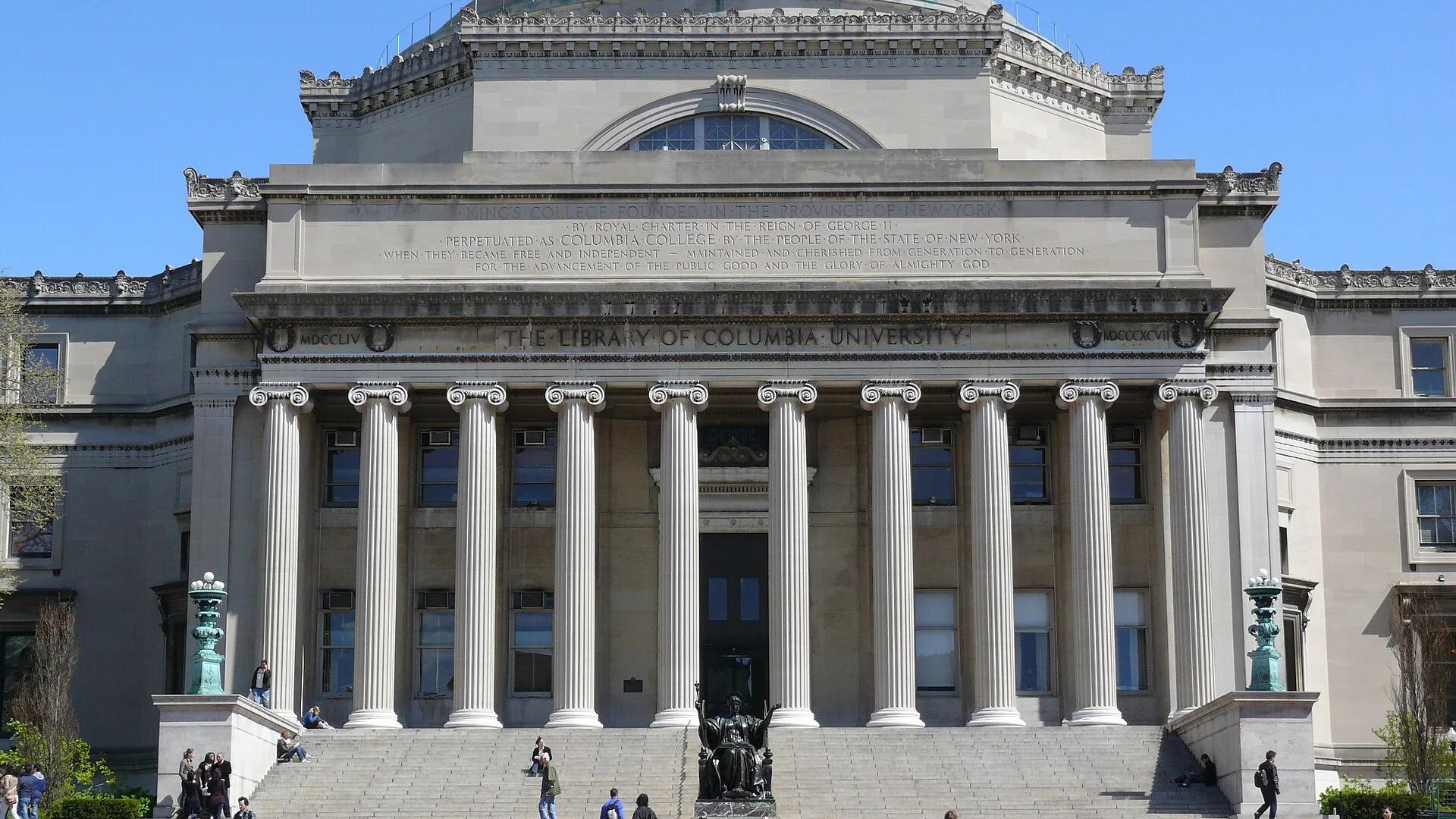
Columbia's compact 36-acre campus in Morningside Heights, Manhattan, features the iconic Low Memorial Library steps — the social center of campus life. Despite being in New York City, the campus feels surprisingly self-contained, with quadrangles and green spaces creating a traditional college atmosphere within an urban setting.
Low Memorial Library
Columbia's iconic Beaux-Arts landmark and central gathering point
Butler Library
Columbia's main library with names of great thinkers carved into the facade
New York City
Unmatched access to Wall Street, the UN, Broadway, museums, and global culture
Manhattanville Campus
New 17-acre expansion in West Harlem with state-of-the-art research facilities
Residential Life
All freshmen live on campus; upperclassmen have guaranteed housing in Morningside Heights
Programs at Columbia University
Economics & Finance
Strong placement into investment banking, hedge funds, and consulting. NYC location gives direct access to Wall Street recruiting.
Political Science / International Affairs
Columbia's SIPA and NYC/UN proximity provide unmatched policy exposure. Produces diplomats, UN officials, and policy leaders.
Journalism
Columbia Journalism School is globally respected — the Pulitzer Prizes are administered by Columbia. Produces top journalists and media leaders.
Engineering & Applied Science
Strong in data science, AI, computer science, and engineering disciplines. SEAS benefits from NYC tech ecosystem.
Business (CBS MBA)
Highly competitive MBA with dominant finance and consulting placements. NYC recruiting access is CBS's key differentiator.
Law (Columbia Law School)
One of the top 5 law schools in the US. Dominant corporate law placements and strong public interest options.
Columbia offers 80+ concentrations through Columbia College and the School of Engineering. The Core Curriculum — a set of required courses in literature, philosophy, art, and music — is central to the Columbia identity. Columbia also houses world-class graduate schools in Business, Law, Medicine, Journalism, and International Affairs.
Admission Requirements
Columbia's acceptance rate is approximately 3.9%. Admissions are need-blind for US citizens and permanent residents but need-aware for international students. Columbia uses a holistic review process that values intellectual curiosity, fit with the Core Curriculum, and demonstrated engagement with community and ideas.
Columbia's 'Why Columbia' essay should show you understand the Core Curriculum and why NYC matters to your education. Don't just say you love New York — explain how the city's resources (museums, UN, Wall Street, theaters) connect to your specific academic and personal goals.
Master's Requirements
- Strong undergraduate academic performance
- SOP explaining program fit
- 2-3 recommendation letters
- CV/resume with relevant experience
- Relevant projects, research, or work exposure
MBA Requirements
- Solid professional progression and leadership
- Clear post-MBA goals tied to NYC ecosystem
- Strong recommendations from managers
- Interview performance
- CBS values applicants who explain why NYC specifically matters for their goals
Interview Preparation
What to expect and how to prepare for your Columbia University interview
Format
Blind Resume-Based Conversational Interview
Duration
45 minutes to 1 hour
Interviewers
Trained alumni, current second-year MBA students, or admissions staff members
Interview Style
Blind (resume-only), conversational, natural dialogue, candidate-friendly
What Columbia University Looks For
Sample Interview Questions
Walk me through your resume. What is the story you are telling with your career path?
Explain the logic of your transitions. What did you learn at each step? Why did you move? Show career intentionality, not random job-hopping. This should take 5-7 minutes and be conversational.
Why Columbia Business School specifically?
Go deep. Reference specific programs like the Value Investing Program or Eugene Lang Center, the location in New York, specific clubs, or what you learned from students or alums. Show genuine research.
What are your career goals? How does an MBA fit into your plan?
Be specific about your short-term and long-term goals. Connect them to Columbia resources. How will Columbia help you get there?
What excites you about living and studying in New York City?
Show that you understand NYC's strategic advantage. Research specific industries, companies, or networks in New York relevant to your goals. Name a few.
Tell me about a time you led a project, team, or initiative. What was the situation, and what did you accomplish?
Be specific about your role and your measurable impact. Numbers help. What was the outcome? What would you do differently?
Describe your most significant professional accomplishment. What was your role?
Focus on your specific contributions and the tangible results. Show impact. Use the STAR framework: Situation, Task, Action, Result.
Tell me about a time you received critical feedback. How did you respond?
Choose feedback that was hard to hear but led to real change. Show that you do not get defensive, that you learn, and that you adjust your behavior.
Tell me about a time you failed or made a significant mistake. What did you learn?
Choose a real failure, not a humble-brag. Own it completely. Explain what you learned and how you changed. Show humility and growth mindset.
Describe a time you worked on a diverse or complex team. How did you navigate differences?
Show that you respect diverse perspectives, that you can learn from people different from you, and that you contribute to an inclusive environment.
What is an area where you want to develop at Columbia?
Be honest about a skill or knowledge gap. Maybe you want to develop finance skills, learn strategy, or build your entrepreneurship experience. Show self-awareness.
Tell me about a time you influenced others or drove change without formal authority.
Show that you can take initiative and bring people along even without a title that gives you authority. Real leadership often happens without formal position.
What is something about your background or perspective that will add value to the Columbia classroom?
Think about what is unique about you—your industry expertise, international background, lived experience, perspective. What will you teach your classmates?
Do you have any questions for me?
Always have 3-4 thoughtful questions. Ask about the student experience, the culture, what your interviewer's favorite class was, or how students approach case discussions. Show genuine curiosity.
Preparation Tips
- Master your resume walkthrough. Know every transition, every achievement, every role. Be conversational, not rehearsed.
- Develop 6-8 deep STAR stories that cover leadership, failure, teamwork, and growth. Practice telling them naturally.
- Create a detailed 'why Columbia' narrative that goes beyond reputation. Reference programs, location, opportunities, and your specific goals.
- Research New York industries and networks relevant to your goals. Show that you understand Columbia's location advantage.
- Practice your interviewer's follow-up questions. Go deeper into your stories. 'What specifically did you do?' 'What would you do differently?' 'What did you learn?'
- Be authentic and show self-awareness. Acknowledge gaps. Show that you learn from feedback. Intellectual humility is a strength.
- Ask thoughtful questions that show you have researched Columbia. Ask about the culture, the classroom, specific programs.
- Listen carefully to each question and answer directly. Do not volunteer information not asked. Let your interviewer drive the conversation.
- Remember the blind interview format is an advantage. Your communication matters. You get to tell your story directly.
- Practice speaking clearly and concisely. Avoid filler words ('um', 'uh', 'like'). Pausing to think is better than rambling.
Common Mistakes
- Generic 'why Columbia' answers that could apply to any business school. Admissions hears 'Columbia is prestigious' 500 times.
- Vague resume walkthrough without showing the logic or narrative of your career. Your resume is your foundation.
- Not showing what you learned from failures or setbacks. 'I failed' without insight is incomplete.
- Defensive reactions to probing follow-up questions. Columbi interviewers will push back. Embrace it.
- Not asking questions. A strong interview is a two-way conversation. Show genuine curiosity about Columbia.
- Appearing indifferent about New York. Columbia's location is a strategic advantage. Show understanding.
- Giving examples that contradict your resume. Consistency matters. Own what is on your resume.
- Talking too much or rambling. Concise, clear answers that invite follow-up are more powerful than long monologues.
- Not preparing for the blind interview format. Your ability to tell your story verbally without your essays is critical.

Dr. Karan Gupta's Interview Advice
Dr. Karan's Insider Perspective on Columbia Business School Interviews
I have coached over 80 Columbia candidates in my career, and one pattern stands out: Columbia's blind interview format rewards clarity and authenticity. You cannot hide behind polish or a perfectly crafted essay. Your interviewer hears your voice, sees your personality, and assesses your ability to communicate in real time. Candidates who overthink this—who try to sound impressive or who get nervous about not having their essays "prime" the interviewer—often underperform. The ones who succeed are those who are genuinely comfortable with who they are and can articulate their story directly.
Columbia is genuinely a candidate-friendly interview. Your interviewer is not trying to trip you up. They want you to succeed. They want to understand you. If you do not understand a question, ask for clarification. If you need a moment to think, take it. Comfort and authenticity are the keys.
One insight many candidates miss: Columbia's location in New York is not just a nice-to-have; it is central to the program's identity and value proposition. The school expects you to leverage it. If you do not show that you have thought about what New York means for your goals, if you do not reference specific firms or industries you want to access, you are leaving value on the table. Show that you understand this advantage and that you have researched it.
Finally, remember that the blind interview format is an advantage. You get a fresh start. Your interviewer has no preconceptions. You get to tell your story directly. Lean into that. Be clear. Be specific. Be authentic. That is what Columbia rewards.
What Type of Student Gets In?
Intellectually curious with a love of reading and great ideas
Drawn to the energy and diversity of New York City
Comfortable engaging with the Western canon and diverse philosophical traditions
Self-motivated and able to balance academics with city opportunities
Interested in connecting classroom learning with real-world experience
Independent and mature enough to thrive in an urban environment
Many applicants focus only on NYC in their essays and forget the Core Curriculum. Columbia's identity is built on the Core — if you can't articulate why you want to read Homer, Plato, and Woolf alongside your major, you're missing what makes Columbia different from every other NYC university.
Costs & ROI
Columbia meets 100% of demonstrated financial need for admitted students. Families earning under $66,000 with typical assets pay zero tuition, fees, room, and board. Approximately 50% of Columbia College students receive Columbia grant aid. Note: international student aid is limited and admissions are need-aware.
| Level | Tuition |
|---|---|
| Undergraduate | ~$66,139/year |
| Master's | ~$60,000-$65,000/year |
| MBA | ~$160,000+ total (CBS, 2-year) |
| Living costs | ~$2,300-$3,000/month (NYC) |
| Total annual budget | ~$95,000-$100,000/year |
Salary Ranges
Career & Industry
JPMorgan Chase
Headquartered in NYC, one of Columbia's largest finance recruiters.
Goldman Sachs
Major Wall Street recruiter with strong Columbia ties.
The New York Times
Columbia's Journalism School is the top in the country with strong NYT connections.
Google NYC
Google's NYC office recruits heavily from Columbia's CS program.
United Nations
Columbia's School of International and Public Affairs has direct UN connections.
The USA's OPT/STEM OPT program gives graduates up to 3 years of post-study work authorization.
Application Timeline
12-18 Months Before
- Research Columbia's Core Curriculum and how it shapes student life
- Begin SAT/ACT prep — aim for 1540+ or 34+
- Develop meaningful extracurriculars with leadership and depth
8-12 Months Before
- Take standardized tests
- Request recommendations from teachers who know your intellectual curiosity
- Visit campus or explore NYC virtually to understand the setting
4-8 Months Before
- Write Common App essay and Columbia supplements
- The list questions (books, movies, etc.) are important — be authentic and interesting
- Craft a strong 'Why Columbia' essay connecting the Core and NYC to your goals
Application Deadlines
- Early Decision: November 1 (binding)
- Regular Decision: January 1
- Financial aid: February 15 (CSS Profile + FAFSA/ISFAA)
After Submission
- ED decisions: mid-December
- Regular decisions: late March
- Columbia Days (admitted student events): April
Pre-Departure
- Apply for F-1 visa with I-20
- Complete housing preferences for first-year dorms
- Attend New Student Orientation Program (NSOP) in late August
Columbia University vs Peers
NYU
Columbia University: Ivy League prestige and more selective admissions, Core Curriculum provides structured intellectual foundation, More generous need-based financial aid
Other: More embedded in NYC with campuses across Manhattan, Stronger in performing arts and film, More flexible curriculum without core requirements
Compare →Harvard University
Columbia University: NYC location offers unmatched professional access, Core Curriculum provides unique shared intellectual experience, More urban and diverse campus environment
Other: More generous financial aid with need-blind for internationals, Larger alumni network globally, More recognized brand outside the US
Compare →University of Pennsylvania
Columbia University: NYC location vs Philadelphia for career access, Stronger in journalism arts and international affairs, Core Curriculum provides broader intellectual foundation
Other: Wharton is the top undergraduate business school, Stronger pre-professional culture, Philadelphia is more affordable for students
Compare →University of Chicago
Columbia University: NYC location for careers in finance media and international affairs, More vibrant social and cultural life, Stronger access to internships and networking
Other: More rigorous academic culture and intellectual intensity, Stronger economics department, More collaborative academic atmosphere
Compare →Columbia University Is Right For...
- Students who want an Ivy League education in the heart of New York City
- Those who value a structured Core Curriculum with shared intellectual foundations
- Future professionals in finance, journalism, international affairs, or law
- Students who thrive in diverse, urban, and fast-paced environments
- Those seeking internship and career access that only NYC can provide
Columbia University Is Not Right For...
- Students who prefer a spacious suburban or rural campus
- Those uncomfortable with the high cost of living in Manhattan
- Students who want a flexible curriculum without required core courses
- Those seeking a large campus with traditional college athletics culture
- Students who find NYC's pace overwhelming or distracting from academics
Our Students at Columbia University
Shreya Kapoor
Columbia University
“Columbia was the perfect fit — the Core Curriculum challenged me intellectually and NYC opened doors I didn't know existed. KGC understood exactly what Columbia was looking for.”
Arnav Singh
Columbia University
“KGC's essay strategy for Columbia was spot-on. They helped me articulate why NYC and Columbia's global perspective mattered for my goals.”
Meghna Iyer
Columbia University
“Getting into Columbia's Masters program required a very different approach from undergrad applications. KGC's guidance on the SOP and program fit was invaluable.”
Vivaan Verma
Columbia University
“The interview prep and essay coaching from Dr. Karan Gupta was exceptional. Columbia Business School is exactly where I needed to be.”
Abhishek Gandhi
Columbia University
“The Karan Gupta Consulting team helped me in both the college admissions as well as visa preparation. Both would have been very difficult without their dedication.”
Vinita Bulsara
Columbia University
“Being completely alien to the whole application and visa process, the KGC team has guided me at every stage. I am glad that I enrolled for the tuition as well as the counselling services and completely satisfied with my experience at KGC.”
Watch: Study Abroad Insights

Dr. Karan Gupta's Advice
Columbia is often misunderstood. Students apply thinking it's just another Ivy. It isn't.
Dr. Karan Gupta is a Harvard Business School alumnus with 27+ years of experience. Book a consultation to discuss your Columbia strategy.
- Columbia favors applicants who think seriously about global issues. The Core Curriculum, SIPA, and NYC location all reflect a university that values engagement with the world. If your story is purely academic without context, Columbia can be difficult.
- The essays must be intellectual and specific. Generic Ivy essays rarely work at Columbia. Their supplement asks questions that test how you think — not what you've achieved. Show genuine intellectual curiosity.
- NYC must be part of your story. If you can't articulate why being in New York City specifically matters for your education and goals, you're missing Columbia's core value proposition.
- For MBA applicants: CBS values candidates who can leverage NYC recruiting. Your post-MBA goals should connect to industries where NYC is a genuine hub — finance, media, consulting, tech.
FAQs: Columbia University for Indian Students
Is Columbia harder to get into than other Ivies?
Does Columbia accept CBSE or ISC students?
Do Columbia Masters programs require GRE?
Is GMAT required for Columbia MBA?
Is NYC too expensive for students?
What is Columbia's Core Curriculum?
Related Articles
Demonstrated Interest in US College Admissions: What Students Need to Know
Demonstrated interest can strengthen US college applications, but only when students know which universities value it and engage genuinely.
IMO Olympiad Explained: The Official Pathway in India
Two exams in India are called IMO. Only one is the official pathway to India's International Mathematical Olympiad team.
5 Ways to Get Into an IIM Without CAT
CAT is not the only way into an IIM. Discover five non-CAT routes, from IPMAT and JIPMAT to IIMB's BBA and GMAT/GRE-based MBAs.
Explore More
Want to Study at Columbia University?
Get expert guidance from Dr. Karan Gupta: Harvard alumnus, 27+ years of global admissions experience guiding 160,000+ students worldwide.