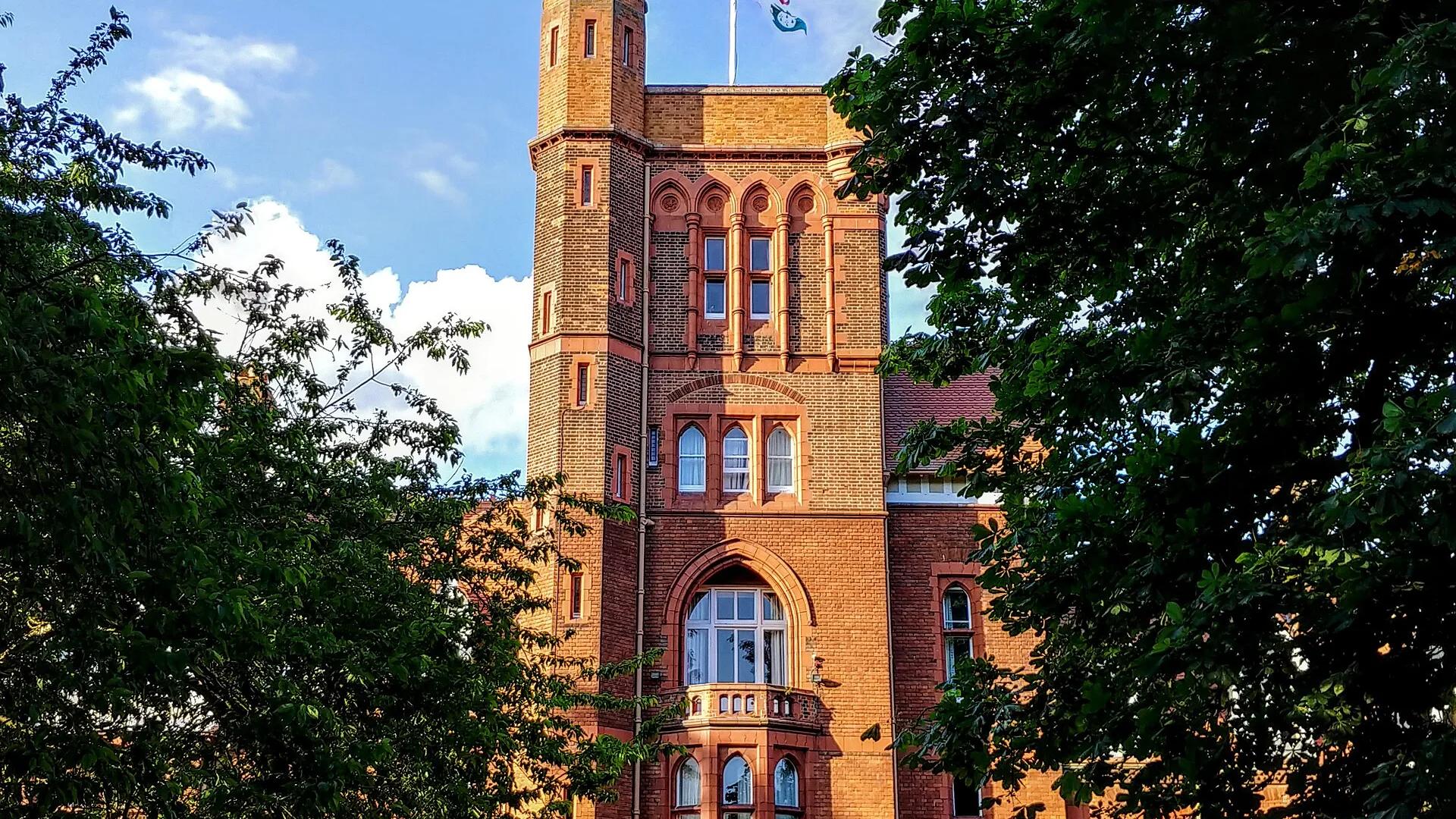
University of Cambridge Interview Preparation
Master the interview process with expert tips, sample questions, and proven strategies from Dr. Karan Gupta
Interview Overview
The Cambridge Judge MBA Interview Experience
Cambridge Judge's interview approach is distinctly different from most peer institutions. Rather than deploying multiple assessment components (videos, presentations, group exercises) or structured question sets, Cambridge relies on a single, extended conversation with a faculty member who has no preset agenda. This is by design: Cambridge wants to understand how you think, not what you know.
What makes Cambridge's approach unique is its philosophical alignment with the university's teaching methodology. Cambridge's tutorial system—originated at the university over 900 years ago—is built on one-on-one intellectual dialogue where a fellow poses questions, students respond, and both parties learn through genuine engagement. The MBA interview mirrors this: it's a conversation, not a checklist. Your interviewer isn't following a script; they're genuinely curious about your thinking and how you respond to unexpected directions.
The interview is non-blind. Your interviewer will have read your complete application (essays, CV, professional background, test scores). But unlike schools where interviewers prepare questions in advance, Cambridge faculty come to interviews with genuine openness. They'll ask questions, listen to your answers, probe deeper based on what you say, and let the conversation evolve naturally. This requires you to be present, authentic, and genuinely engaged—not performing a rehearsed narrative.
Cambridge's selectivity is high: only 20-30% of applicants are invited to interview, and of those interviewed, roughly 50-70% are admitted. This means if you're invited, Cambridge has already determined you're credentialed and capable. The interview is about confirming that you're the right fit for their community and that you'll thrive in an environment that prizes intellectual rigor and authentic dialogue.
Interview Format
Format
One-on-one faculty interview, conversational and open-ended
Duration
45-60 minutes
Interviewers
Cambridge Judge faculty member (always faculty, never alumni)
Interview Format Details
Interview Structure and Philosophy
Duration and Flexibility: Your interview will last 45 to 60 minutes, but the duration is flexible based on the natural flow of conversation. There are no preset stopping points. If a discussion is generating rich insights, it may extend. Conversely, if key topics are thoroughly explored, it may conclude. Cambridge respects the organic nature of intellectual dialogue.
Location and Format: Interviews are offered in-person on Cambridge's campus, or virtually via video conference. There is no advantage to in-person interviews; the medium is incidental. Cambridge's Virtual Interview Days are hosted during each admissions round, allowing candidates from around the world to participate equally.
Interviewer Profile: Your interviewer will always be a Cambridge Judge faculty member. This is non-negotiable. Alumni do not interview for Cambridge Judge. Faculty members bring expertise in their teaching domains and a genuine commitment to building a strong cohort. They're not evaluators checking boxes; they're scholars assessing whether you're intellectually curious and ready to contribute to classroom discussions.
Application Review: Your interviewer will have read your entire application before the interview: essays, CV, professional background, test scores, recommendations. They know the facts of your life. They don't need you to recite them. Instead, they'll use your application as a starting point for questions designed to understand your thinking, your reasoning, and your capacity for self-reflection.
No Preset Questions: Cambridge interviews have no standard question template. Each interview is unique, shaped by the interviewer's curiosity and your individual application. This is liberating and challenging: you can't predict or memorize answers. Instead, you must be ready to think on your feet and engage authentically with whatever direction the conversation takes.
Conversation Style: The interview is genuinely conversational. The interviewer may challenge your ideas, ask you to think differently, or explore contradictions in your thinking. This isn't confrontational; it's intellectual. Cambridge wants to see how you respond to intellectual challenge: Do you listen and adapt? Do you defend your thinking with evidence? Can you change your mind? These are the capacities that matter in Cambridge's learning environment.
Interview Style & Expectations
Open-ended, exploratory, no preset questions, evaluates thinking and potential
What University of Cambridge Looks For
Interview Questions: In-Depth Analysis
Question Patterns and Conversational Directions — Cambridge Interviews
Background and Motivation Questions (25%): "Tell me about your career path and the key decisions you've made." "What prompted each of your major career moves?" "When did you first consider an MBA, and what triggered that thinking?" These are starting points for deeper exploration. The interviewer is assessing whether you can articulate your reasoning, not just your facts.
Intellectual Engagement Questions (25%): "What's an idea or debate you've been thinking about recently?" "Tell me about a book or article that changed how you think." "What problem would you like to solve, and why?" "If you could research anything during your MBA, what would it be?" Cambridge wants candidates who are intellectually alive. These questions reveal your depth of thought.
Open-Ended Exploratory Questions (20%): Cambridge faculty often ask unexpected, open-ended questions designed to see how you think. "Tell me about a time you were wrong about something." "What's the biggest assumption in your career plan?" "If you had to explain your background to someone from a completely different industry, how would you do it?" "What's a question you've been unable to answer?" These test your flexibility and honesty.
Challenge and Growth Questions (15%): "What's an area where you're not yet proficient but want to develop?" "Tell me about a failure and what you learned." "How have you responded to feedback that contradicted your self-perception?" Cambridge values people who learn and grow. These questions assess your capacity for self-reflection and adaptation.
Probing Follow-Up Questions (10%): Based on your answers, the interviewer will ask follow-ups to understand your thinking more deeply. "Why do you think that?" "What's the evidence for that claim?" "Have you considered the counterargument?" These aren't gotchas; they're invitations to think more deeply. Your ability to engage authentically with follow-ups matters as much as your initial answers.
Your Questions (As time allows): Cambridge interviews end with your questions. Use this space to demonstrate genuine curiosity and intellectual engagement.
Sample Interview Questions
Background & Motivation
Tell me about your career path and the key decisions that have shaped it. What prompted each major move?
Tip: Don't recite your CV. Instead, highlight 2-3 pivotal career decisions and explain your reasoning at each inflection point. What did you learn? How did each role prepare you for the next? Cambridge is assessing whether your career trajectory makes narrative sense and whether you're thoughtful about your choices.
Intellectual Engagement
What's an idea, trend, or debate you've been thinking about recently? Why does it matter to you?
Tip: This reveals whether you're intellectually curious beyond your job. Have a genuine answer: something you're actually reading, thinking, or grappling with. Talk about why it interests you and what implications you see. This shows Cambridge you're engaged with the world, not just your career.
MBA Motivation
When did you first consider an MBA, and what triggered that thinking? Why now?
Tip: Be honest about timing. What's changed in your thinking recently? Is there a specific goal or transition you want to make? What capabilities do you feel you're lacking? Avoid generic answers. Cambridge wants to understand whether you're pursuing an MBA for genuine intellectual growth or just career advancement.
Learning & Growth
Tell me about a time you were significantly wrong about something. How did you respond?
Tip: This tests intellectual humility. Pick a real instance where you held a belief that proved incorrect. Explain what you believed, what challenged that belief, how you processed it, and what you changed. This demonstrates capacity for growth and intellectual openness—core Cambridge values.
Critical Thinking
What's the biggest assumption underlying your career plan or goals? Have you tested that assumption?
Tip: This is designed to see whether you think deeply about your own thinking. Most people operate on untested assumptions. If you can identify a core assumption in your strategy (e.g., 'I'm assuming that specializing in AI will make me more valuable than becoming a generalist'), and explain how you're testing it, that shows intellectual rigor. If you claim to have no assumptions, that's a red flag.
Program Fit
Why Cambridge specifically? What appeals to you about our program?
Tip: Reference something substantive: the tutorial system, specific faculty research you've read, the intellectual community, or the college system. Show you've done genuine research. Then flip it: what will you bring? Cambridge wants to build a community where everyone contributes intellectually. Demonstrate that you will.
Problem-Solving & Reflection
Describe a professional challenge you've faced and how you navigated it. What would you do differently?
Tip: Pick a real challenge (not a humble-brag). Walk through your approach, what you learned, and what you'd change. This reveals your problem-solving style and your capacity for self-reflection. Cambridge values people who learn from experience.
Self-Awareness & Growth
What's an area where you feel you're not yet proficient but want to develop?
Tip: Be honest. Everyone has gaps. Rather than claiming perfection, identify a real area where you want to grow (e.g., 'I've been deep in technical execution; I want to develop strategic thinking and cross-functional leadership'). Then connect it to what Cambridge offers. This shows self-awareness and growth orientation.
Intellectual Curiosity
If you could study anything during your MBA, what would it be and why?
Tip: This shows what genuinely interests you. Have a thoughtful answer that goes beyond 'I want to learn X for my job.' Instead: 'I want to understand how organizations navigate ethical dilemmas, because I've encountered that tension in my work and I'm not satisfied with my current thinking.' This shows intellectual engagement.
Adaptability & Humility
Tell me about a time you had to change your approach based on feedback. How did you respond?
Tip: Pick a moment when feedback required you to fundamentally shift your thinking or behavior. Explain what the feedback was, why it was hard to hear, how you processed it, and what you changed. This demonstrates maturity, humility, and capacity for growth—essential for Cambridge's learning community.
Decision-Making & Philosophy
How do you think about risk and uncertainty in your career decisions?
Tip: This is designed to understand your thinking style. Are you risk-averse or risk-seeking? How do you weigh uncertainty? What's your framework for making decisions with incomplete information? Cambridge values people who think carefully about complex tradeoffs.
Engagement & Curiosity
What questions do you have for me about Cambridge, my experience, or the MBA?
Tip: Always ask genuine questions. They reveal what you care about. Avoid logistical FAQs. Instead: 'What's the most important thing the MBA has taught you?' or 'How has Cambridge shaped your intellectual thinking?' or 'What's one thing you wish you'd done differently during your time here?' These show you're thinking about your own development and genuinely interested in the faculty member's experience.
Preparation Strategy
Do's - Preparation Tips
- Practice thinking out loud; pausing to reflect is better than rushing to answer
- Embrace uncertainty; 'I'm not sure, but here's my thinking...' shows intellectual honesty
- Engage authentically with follow-up questions; don't just repeat your pre-prepared answer
- Ask genuine questions about the faculty member's research and thinking
- Reference ideas and articles you've actually been reading, not things you just researched
- Be ready to discuss areas where you're still learning or developing
- Show curiosity about the interviewer's perspective, not just interest in selling yourself
- If you disagree with something the interviewer suggests, engage thoughtfully rather than defending
- Remember that Cambridge values intellectual community; show interest in that, not just the credential
- Be genuine about your motivations; Cambridge can spot prestige-seeking from a mile away
Don'ts - Common Mistakes
- Over-rehearsing answers; Cambridge faculty hear the script and disengage
- Treating the interview like a performance rather than a genuine conversation
- Failing to ask thoughtful questions; interviewers interpret this as lack of interest
- Defensive responses when challenged; shows inability to engage with opposing views
- Generic answers about why Cambridge; shows lack of genuine research
- Talking too much; doesn't leave space for dialogue or follow-up exploration
- Claiming certainty on complex issues; shows intellectual immaturity
- Not engaging authentically with faculty expertise; feels forced or flattering
- Treating the interview as a job interview rather than intellectual dialogue
- Showing more interest in prestige than intellectual community
Comprehensive Preparation Guide
Strategic Preparation for the Cambridge Interview
Step 1: Internalize Your Application Deeply (Weeks 1-2) Read your essays, CV, and application responses out loud. Are they coherent? Do they tell a consistent story? Where are the potential contradictions or questions a sharp interviewer might ask? For example, if you changed careers abruptly, be ready to explain that inflection point authentically. If you've focused heavily on one type of achievement, be ready to discuss areas where you're still developing. Cambridge faculty will notice contradictions; prepare honest answers.
Step 2: Develop a Genuine "Why Cambridge" Narrative (Weeks 1-2) Write 300 words on why Cambridge specifically appeals to you. Not the brand prestige, but the substance: the tutorial system, the faculty expertise, the intellectual community, specific research areas you're interested in exploring. Have you looked at faculty websites? Do you know what research interests you? Cambridge values intellectual curiosity; your answer should reflect genuine engagement with the school's mission and offerings.
Step 3: Prepare to Discuss Your Thinking, Not Just Your Career (Weeks 2-3) Write out 3-4 instances where you've changed your mind about something significant. How did you arrive at your original thinking? What evidence challenged you? How did you adapt? This demonstrates intellectual humility and openness to growth—qualities Cambridge values. Also prepare examples of intellectual problems you've grappled with (not necessarily related to work).
Step 4: Practice Thinking Out Loud with Difficult Questions (Weeks 2-4) Record yourself answering tough, open-ended questions. But don't prepare scripts. Instead, practice the skill of thinking out loud: "That's an interesting question. Let me think through it..." Then pause, gather your thoughts, and respond. Cambridge values thoughtful pauses over fluent, scripted responses. The goal is to sound like a person thinking, not a person performing.
Step 5: Engage with Current Ideas and Debates (Weeks 3-4) Read recent business and policy articles, follow debates on AI governance, sustainability, or economic inequality. Be prepared to discuss what you've been thinking about and why it matters. Cambridge faculty are engaged scholars; they respond to candidates who are also intellectually engaged with the world, not just their career progression.
Step 6: Research Your Interviewer Authentically (Final week) Once assigned an interviewer, research them. What are they teaching? What have they published? Find genuine connection points, but mention them naturally during the conversation, not as proof of your diligence. A casual "I saw your recent article on X; I'd be curious to hear more about your thinking on that" is far more compelling than "I read all your work."
Step 7: Prepare Thoughtful Questions (Final week) Develop 4-5 questions for your interviewer that show you've thought about what matters to you. "What's the most important skill the MBA has taught you?" "How has Cambridge shaped your thinking as a scholar?" "What kind of peer would you want in your MBA classroom?" These reveal what you're genuinely curious about and show respect for the interviewer's experience.
Key Statistics
32-36%
acceptance rate
690-750 (middle 80%)
gmat range
7-9 years
avg years experience
~20-30% of applicants
interview invite rate
~60-70% of interviewed candidates are admitted
interview to admit ratio
~220-240
cohort size
50+
countries represented
32-36%
female representation
Student Success Stories
KGC Student Success Stories — Cambridge Judge Admits
Case 1: Intellectual Curiosity Shines Through A KGC student, a data scientist in Berlin, applied to Cambridge with a strong profile (GMAT 740, solid career progression). But in the interview, what distinguished him was his genuine engagement with faculty expertise. When asked about his thinking on AI ethics, he didn't deliver a prepared answer. Instead, he said, "I've been wrestling with the tension between algorithmic efficiency and fairness. I've read some of your work on this; it's made me realize I need a broader perspective—economics, policy, stakeholder management." The interviewer (a faculty member specializing in AI governance) leaned forward. They spent 20 minutes in genuine dialogue about the tension. The candidate admitted he didn't have all the answers, but he was clearly thinking. Cambridge valued that intellectual honesty. Admitted.
Case 2: Showing Intellectual Humility A KGC client, a finance executive with 12 years of experience, initially prepared by over-rehearsing answers, trying to sound authoritative on every topic. We coached her to embrace uncertainty. In the actual interview, when asked about her biggest career assumption, she said, "I think I've been assuming that financial returns are the primary measure of success. But I'm questioning that more now. That's partly why I want the MBA—to explore whether I can define success differently and build a business model around impact." The interviewer asked tough follow-up questions. She engaged thoughtfully, sometimes saying "I don't know yet, but here's what I'm thinking..." That vulnerability and intellectual openness impressed the faculty member. Admitted with a scholarship.
Case 3: Genuine Engagement with Faculty Expertise A KGC student, a policy professional in London, had researched her interviewer's work on sustainable business models. She mentioned having read a recent article during the conversation. Rather than flattering the interviewer, she engaged critically: "I found your argument on stakeholder capitalism compelling, but I'm curious about the transition mechanics. How do you move from traditional capitalism to stakeholder models without disrupting existing markets?" The interviewer, delighted by her engagement, spent considerable time discussing this question. The interview became a genuine intellectual dialogue. Cambridge recognized the candidate as a potential peer in intellectual community. Admitted.
Expert Interview Coaching

Dr. Karan Gupta's Interview Advice
Expert Advice from Dr. Karan Gupta
Cambridge's interview is uniquely philosophical. You're being assessed not on credentials—Cambridge assumes you have those—but on your capacity for genuine intellectual dialogue. The school is built on tutorial learning, which depends on students who can think, question, engage authentically, and challenge ideas (including the interviewer's). Your interview is a preview of what Cambridge expects in the classroom.
Many of my KGC students overthink this. They prepare polished answers and worry about "impressing" the faculty member. But Cambridge faculty aren't impressed by polish. They're impressed by genuine thought. The best interview I've witnessed involved a candidate who, when asked a difficult question, said, "I haven't fully thought that through, but let me work through it now..." Then she paused, thought, and built an answer in real-time. The interviewer nodded and said, "That's exactly the kind of thinking we need." She was admitted.
One final insight: Cambridge is smaller than INSEAD, LBS, or Oxford. The cohort is about 220-240 students per year. That means your interviewer is assessing whether you'll be a valuable member of a tight intellectual community. They're asking: Will this person contribute to class discussions? Will they challenge ideas? Will they elevate the thinking of their peers? If you can demonstrate intellectual curiosity, genuine engagement, and humility about what you don't know, you're showing Cambridge what they need to see.
Be authentic. Be thoughtful. And remember: Cambridge is looking for peers in intellectual community, not people trying to prove something. When you show up ready to think, to be challenged, and to engage genuinely—that's when Cambridge recognizes whether you're ready.
Ready to Master Your Interview?
Practice with our AI Interview Coach and get real-time feedback on your responses.
Start AI Interview Practice