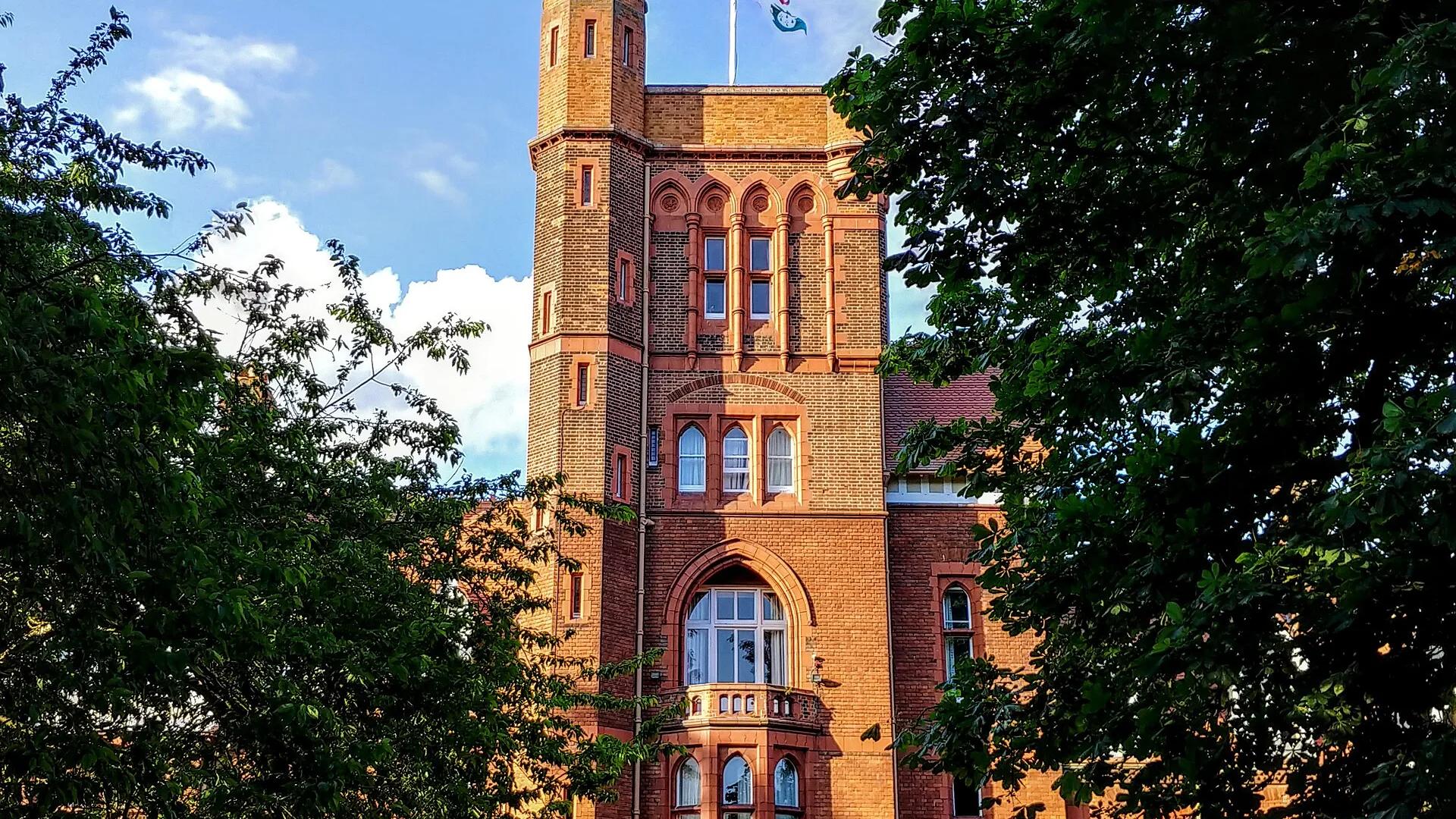
University of Cambridge
Cambridge, England
Cambridge is one of the world's oldest and most academically demanding universities. Known for deep subject specialization, supervision-based teaching, and globally influential research. For Indian students, Cambridge suits those who already know their academic direction and want subject-focused study rather than broad exploration.
~15-20%
Acceptance Rate
#2
QS World Ranking
31 Colleges
Collegiate System
180+
Students Guided
Tuition & Costs
- Undergraduate: ~GBP 24,000-38,000/year (~$30,000-$48,000 USD)
- Master's: ~GBP 25,000-40,000/year
- MBA: ~GBP 66,000 total (Judge Business School)
- Living costs: ~GBP 1,200-1,600/month
- Total annual budget: ~GBP 36,000-54,000/year
- Study in UK | Cost Calculator
Scholarships & Funding
- Cambridge Trust Scholarships (competitive)
- Gates Cambridge Scholarship (full funding — prestigious)
- MBA: Judge merit scholarships
- Explore all scholarships

Dr. Karan Gupta's Strategic View
Why University of Cambridge Is a Strong Choice
Course-First Admissions
You apply for a specific subject, not the university broadly. Engineering, Economics, Computer Science, Law, Natural Sciences. Switching subjects later is extremely difficult. Academic clarity is essential from day one.
Supervision System
Cambridge's defining academic strength. Small-group or one-to-one teaching sessions where students solve problem sets, discuss essays, and defend ideas academically. This is unlike any other teaching model in the world.
Collegiate Structure
Students belong to one of 31 Cambridge colleges which provide accommodation, dining, community, and academic support. The degree comes from Cambridge; the college provides the environment.
Cambridge College System
Like Oxford, Cambridge has no single campus — its 31 colleges are spread across the historic city of Cambridge. Each college is a self-governing community with its own buildings, dining hall (where formal hall dinners are a tradition), library, gardens, and May Ball. Students live within their college and attend university-wide lectures and labs.
31 Colleges
From medieval King's College Chapel to modern Robinson College, each with unique character
University Library
One of the world's great research libraries with 8+ million items
Cavendish Laboratory
Legendary physics lab where the electron, neutron, and DNA structure were discovered
The Backs
Stunning green spaces behind the colleges along the River Cam — iconic Cambridge scenery
Punting & May Balls
Traditional Cambridge experiences — punting on the Cam and legendary end-of-year college balls
Programs at University of Cambridge
Mathematics
Historically one of the strongest globally
Engineering
Highly rigorous with strong research and industry outcomes
Computer Science
Selective and academically demanding
Economics
Strong theoretical foundation and global recognition
Natural Sciences
Flexible structure with strong research pathways
MBA & Entrepreneurship
Strong links to Cambridge tech and startup ecosystem
Cambridge offers around 30 undergraduate courses (called Triposes) and 200+ postgraduate programs. Students apply to a specific course and college simultaneously. Many courses allow students to change direction after first year through Part I/Part II choices. Natural Sciences and Engineering are particularly flexible.
Admission Requirements
Cambridge's overall acceptance rate is approximately 18-21% for undergraduates, but this varies enormously by course — Computer Science accepts under 10%, while some humanities courses are closer to 25%. Admissions involve UCAS application, admissions tests, submitted work, and rigorous interviews at the college level.
Cambridge interviews focus on academic problem-solving, not personality. You'll be given unfamiliar problems and expected to think aloud. Preparation should focus on developing flexible thinking in your subject, not memorizing answers. Interviewers want to see how you handle being stuck.
Master's Requirements
- Strong undergraduate degree
- Statement of Purpose / research statement
- Academic references and CV
- Writing sample or research proposal (for some programs)
- GRE usually not required (check department)
MBA Requirements
- One-year full-time program
- Entrepreneurship and innovation focus
- Strong startup ecosystem connections
- Global cohort diversity
Interview Preparation
What to expect and how to prepare for your University of Cambridge interview
Format
One-on-one faculty interview, conversational and open-ended
Duration
45-60 minutes
Interviewers
Cambridge Judge faculty member (always faculty, never alumni)
Interview Style
Open-ended, exploratory, no preset questions, evaluates thinking and potential
What University of Cambridge Looks For
Sample Interview Questions
Tell me about your career path and the key decisions that have shaped it. What prompted each major move?
Don't recite your CV. Instead, highlight 2-3 pivotal career decisions and explain your reasoning at each inflection point. What did you learn? How did each role prepare you for the next? Cambridge is assessing whether your career trajectory makes narrative sense and whether you're thoughtful about your choices.
What's an idea, trend, or debate you've been thinking about recently? Why does it matter to you?
This reveals whether you're intellectually curious beyond your job. Have a genuine answer: something you're actually reading, thinking, or grappling with. Talk about why it interests you and what implications you see. This shows Cambridge you're engaged with the world, not just your career.
When did you first consider an MBA, and what triggered that thinking? Why now?
Be honest about timing. What's changed in your thinking recently? Is there a specific goal or transition you want to make? What capabilities do you feel you're lacking? Avoid generic answers. Cambridge wants to understand whether you're pursuing an MBA for genuine intellectual growth or just career advancement.
Tell me about a time you were significantly wrong about something. How did you respond?
This tests intellectual humility. Pick a real instance where you held a belief that proved incorrect. Explain what you believed, what challenged that belief, how you processed it, and what you changed. This demonstrates capacity for growth and intellectual openness—core Cambridge values.
What's the biggest assumption underlying your career plan or goals? Have you tested that assumption?
This is designed to see whether you think deeply about your own thinking. Most people operate on untested assumptions. If you can identify a core assumption in your strategy (e.g., 'I'm assuming that specializing in AI will make me more valuable than becoming a generalist'), and explain how you're testing it, that shows intellectual rigor. If you claim to have no assumptions, that's a red flag.
Why Cambridge specifically? What appeals to you about our program?
Reference something substantive: the tutorial system, specific faculty research you've read, the intellectual community, or the college system. Show you've done genuine research. Then flip it: what will you bring? Cambridge wants to build a community where everyone contributes intellectually. Demonstrate that you will.
Describe a professional challenge you've faced and how you navigated it. What would you do differently?
Pick a real challenge (not a humble-brag). Walk through your approach, what you learned, and what you'd change. This reveals your problem-solving style and your capacity for self-reflection. Cambridge values people who learn from experience.
What's an area where you feel you're not yet proficient but want to develop?
Be honest. Everyone has gaps. Rather than claiming perfection, identify a real area where you want to grow (e.g., 'I've been deep in technical execution; I want to develop strategic thinking and cross-functional leadership'). Then connect it to what Cambridge offers. This shows self-awareness and growth orientation.
If you could study anything during your MBA, what would it be and why?
This shows what genuinely interests you. Have a thoughtful answer that goes beyond 'I want to learn X for my job.' Instead: 'I want to understand how organizations navigate ethical dilemmas, because I've encountered that tension in my work and I'm not satisfied with my current thinking.' This shows intellectual engagement.
Tell me about a time you had to change your approach based on feedback. How did you respond?
Pick a moment when feedback required you to fundamentally shift your thinking or behavior. Explain what the feedback was, why it was hard to hear, how you processed it, and what you changed. This demonstrates maturity, humility, and capacity for growth—essential for Cambridge's learning community.
How do you think about risk and uncertainty in your career decisions?
This is designed to understand your thinking style. Are you risk-averse or risk-seeking? How do you weigh uncertainty? What's your framework for making decisions with incomplete information? Cambridge values people who think carefully about complex tradeoffs.
What questions do you have for me about Cambridge, my experience, or the MBA?
Always ask genuine questions. They reveal what you care about. Avoid logistical FAQs. Instead: 'What's the most important thing the MBA has taught you?' or 'How has Cambridge shaped your intellectual thinking?' or 'What's one thing you wish you'd done differently during your time here?' These show you're thinking about your own development and genuinely interested in the faculty member's experience.
Preparation Tips
- Practice thinking out loud; pausing to reflect is better than rushing to answer
- Embrace uncertainty; 'I'm not sure, but here's my thinking...' shows intellectual honesty
- Engage authentically with follow-up questions; don't just repeat your pre-prepared answer
- Ask genuine questions about the faculty member's research and thinking
- Reference ideas and articles you've actually been reading, not things you just researched
- Be ready to discuss areas where you're still learning or developing
- Show curiosity about the interviewer's perspective, not just interest in selling yourself
- If you disagree with something the interviewer suggests, engage thoughtfully rather than defending
- Remember that Cambridge values intellectual community; show interest in that, not just the credential
- Be genuine about your motivations; Cambridge can spot prestige-seeking from a mile away
Common Mistakes
- Over-rehearsing answers; Cambridge faculty hear the script and disengage
- Treating the interview like a performance rather than a genuine conversation
- Failing to ask thoughtful questions; interviewers interpret this as lack of interest
- Defensive responses when challenged; shows inability to engage with opposing views
- Generic answers about why Cambridge; shows lack of genuine research
- Talking too much; doesn't leave space for dialogue or follow-up exploration
- Claiming certainty on complex issues; shows intellectual immaturity
- Not engaging authentically with faculty expertise; feels forced or flattering
- Treating the interview as a job interview rather than intellectual dialogue
- Showing more interest in prestige than intellectual community

Dr. Karan Gupta's Interview Advice
Expert Advice from Dr. Karan Gupta
Cambridge's interview is uniquely philosophical. You're being assessed not on credentials—Cambridge assumes you have those—but on your capacity for genuine intellectual dialogue. The school is built on tutorial learning, which depends on students who can think, question, engage authentically, and challenge ideas (including the interviewer's). Your interview is a preview of what Cambridge expects in the classroom.
Many of my KGC students overthink this. They prepare polished answers and worry about "impressing" the faculty member. But Cambridge faculty aren't impressed by polish. They're impressed by genuine thought. The best interview I've witnessed involved a candidate who, when asked a difficult question, said, "I haven't fully thought that through, but let me work through it now..." Then she paused, thought, and built an answer in real-time. The interviewer nodded and said, "That's exactly the kind of thinking we need." She was admitted.
One final insight: Cambridge is smaller than INSEAD, LBS, or Oxford. The cohort is about 220-240 students per year. That means your interviewer is assessing whether you'll be a valuable member of a tight intellectual community. They're asking: Will this person contribute to class discussions? Will they challenge ideas? Will they elevate the thinking of their peers? If you can demonstrate intellectual curiosity, genuine engagement, and humility about what you don't know, you're showing Cambridge what they need to see.
Be authentic. Be thoughtful. And remember: Cambridge is looking for peers in intellectual community, not people trying to prove something. When you show up ready to think, to be challenged, and to engage genuinely—that's when Cambridge recognizes whether you're ready.
What Type of Student Gets In?
Exceptional academic talent particularly in quantitative or scientific fields
Deep subject passion evidenced by reading and exploration beyond the curriculum
Comfortable with rigorous academic discussion and being challenged by supervisors
Independent and self-disciplined learner
Quick thinker who can approach unfamiliar problems creatively
Motivated by intellectual discovery rather than grades alone
Many international applicants apply to Cambridge like a US university — listing extracurriculars, sports, and leadership. Cambridge cares almost exclusively about academic potential. Your personal statement should be 80-90% about your subject. Also, choosing the right college matters more than most applicants realize.
Costs & ROI
International undergraduate tuition is £24,507-£40,212 per year depending on the course (lab-based courses cost more). Cambridge offers the Gates Cambridge Scholarship for outstanding international postgraduate students (full funding). Various college-specific bursaries are available for international undergraduates.
| Level | Tuition |
|---|---|
| Undergraduate | ~GBP 24,000-38,000/year (~$30,000-$48,000 USD) |
| Master's | ~GBP 25,000-40,000/year |
| MBA | ~GBP 66,000 total (Judge Business School) |
| Living costs | ~GBP 1,200-1,600/month |
| Total annual budget | ~GBP 36,000-54,000/year |
Salary Ranges
Career & Industry
ARM Holdings
Founded by Cambridge alumni; the world's most licensed semiconductor IP company.
AstraZeneca
Headquartered near Cambridge with deep research ties to the university's science departments.
Google DeepMind
AI research lab based in London with strong Cambridge recruitment pipeline.
McKinsey & Company
Top management consulting recruiter from Cambridge across multiple disciplines.
Cambridge Science Park
Europe's oldest science park, home to 100+ tech and biotech companies with university connections.
Cambridge graduates are among the most recruited globally. The UK Graduate Route visa allows 2 years of post-study work.
Application Timeline
18-24 Months Before
- Research Cambridge's courses (Triposes) and college options
- Begin preparing for admissions tests specific to your course
- Develop deep subject knowledge through supercurricular reading
12-18 Months Before
- Achieve top predicted grades (A*A*A or equivalent typically required)
- Prepare for course-specific admissions tests
- Read academic journals and books beyond your school syllabus
6-12 Months Before
- Write UCAS personal statement focused purely on academic passion
- Request strong academic reference from your school
- Register for required admissions tests
Application Deadline
- UCAS deadline for Cambridge: October 15
- Supplementary Application Questionnaire (SAQ) due shortly after
- Admissions assessments typically in late October/November
Interview & Decision
- Interviews in early December (at Cambridge or via video)
- Offers released in January (conditional on final grades)
- Meet conditions with final exam results in August
Pre-Departure
- Apply for UK Student Visa with CAS from Cambridge
- Confirm college accommodation
- Attend Freshers' Week in early October
University of Cambridge vs Peers
University of Oxford
University of Cambridge: Stronger in STEM and natural sciences, More Nobel laureates in sciences, Cambridge science park ecosystem, Slightly higher global ranking
Other: Stronger in humanities and law, Better PPE program, Oxford's city is more vibrant, Stronger brand in some Asian markets
Compare →University of Cambridge Is Right For...
- Students with exceptional academic ability in natural sciences, maths, or engineering
- Those who thrive with intensive one-on-one supervision-based teaching
- Students seeking a shorter 3-year degree to save time and money
- Future researchers and academics who want to work alongside Nobel laureates
- Those who want a historic European university experience in a beautiful compact city
University of Cambridge Is Not Right For...
- Students who want a broad US-style liberal arts education
- Those seeking a large campus with American-style athletics and social life
- Students who prefer warm weather (Cambridge is cold and grey)
- Those who want easy access to US job markets from their university
- Students who need significant financial aid (Cambridge has limited international aid)
Our Students at University of Cambridge
Arjun Venkataraman
University of Cambridge
“Cambridge was my first choice because of its Mathematics Tripos. Dr. Karan Gupta helped me understand that Cambridge admissions are entirely about academic depth. My personal statement and interview preparation with KGC were focused purely on demonstrating subject passion. I got in.”
Priya Iyer
University of Cambridge
“Applying to Cambridge for Natural Sciences felt daunting. KGC helped me navigate the UCAS timeline, prepare for the admissions test, and present my research experience clearly. The mock interviews were invaluable. I genuinely believe I would not have been shortlisted without that preparation.”
Rohan Krishnamurthy
University of Cambridge
“I applied to Cambridge Judge MBA after 5 years in consulting. Dr. Gupta helped me articulate why Cambridge specifically, its entrepreneurship ecosystem and innovation links. The application strategy was precise and the interview coaching was outstanding.”
Watch: Study Abroad Insights
Dr. Karan Gupta
KGC Students

Dr. Karan Gupta's Advice
Having guided 180+ students to Cambridge over 27 years:
Dr. Karan Gupta is a Harvard Business School alumnus. Book a consultation.
- Cambridge selects for intellectual depth, not breadth. Show genuine passion and independent study in your chosen subject — not a list of extracurriculars.
- The interview is critical. Cambridge interviews test how you think under pressure, not what you memorize. Practice responding to unexpected academic questions with logical reasoning.
- Choose your college strategically. Each college has different strengths, application statistics, and cultures. This choice matters more than most applicants realize.
- Gates Cambridge Scholarship is transformative. Full funding for international students. If you're strong enough for Cambridge, you're strong enough to apply for Gates.
FAQs: University of Cambridge for Indian Students
Can I apply to Oxford and Cambridge together?
Does Cambridge accept CBSE/ISC students?
Do Cambridge master's programs require GRE?
Is GMAT required for Cambridge MBA?
Is Cambridge more academic than US universities?
What makes Cambridge different from Oxford?
Related Articles
The ₹0 List: Free Opportunities That Actually Strengthen a Student’s Profile
The best summer opportunities are not always expensive. Discover selective ₹0 programs that can demonstrate genuine student achievement.
Demonstrated Interest in US College Admissions: What Students Need to Know
Demonstrated interest can strengthen US college applications, but only when students know which universities value it and engage genuinely.
IMO Olympiad Explained: The Official Pathway in India
Two exams in India are called IMO. Only one is the official pathway to India's International Mathematical Olympiad team.
Related Guides & Resources
Want to Study at University of Cambridge?
Get expert guidance from Dr. Karan Gupta: Harvard alumnus, 27+ years of global admissions experience guiding 160,000+ students worldwide.