Rice University
Houston, Texas
Rice University in Houston, Texas, is one of America's most selective research universities. With a student body of just 4,000 undergrads and a 6:1 student-faculty ratio, Rice offers an Ivy-caliber education in a collaborative, residential college system modeled after Oxford and Cambridge.
~9%
Acceptance Rate
#17
US News Ranking
1912
Founded
4,000+
Undergraduates
Rice at a Glance
#17
US News National
~9%
Acceptance Rate
27%
International Students
1912
Founded

Dr. Karan Gupta's Strategic View
Why Rice Is a Strong Choice
The Residential College System
Rice's residential college system is modeled after Oxford and Cambridge. Every student is randomly assigned to one of 11 residential colleges upon admission, and that college becomes your home, your social network, and your support system for all four years.
Unlike fraternity-dominated campuses, the college system ensures that every student belongs to a tight-knit community from day one. Each college has its own traditions, governance, and faculty mentors called magisters who live on campus. This structure is a genuine differentiator and Rice takes it seriously in admissions.
For Indian students accustomed to large, impersonal university environments, this level of community can be transformative. You will know your professors, your peers will become lifelong friends, and you will never feel lost on campus.
Houston's Industry Ecosystem
Houston is the fourth-largest city in America and the undisputed capital of the global energy industry. But it is also home to the Texas Medical Center, NASA's Johnson Space Center, and a rapidly growing technology sector. Rice students have internship and research access that students at rural or suburban campuses simply cannot match.
The university's location gives it direct pipelines into energy finance, biomedical engineering, aerospace, and increasingly, tech startups. The Ion innovation district, which Rice co-founded, is creating a new hub for entrepreneurship and venture capital in Midtown Houston.
For Indian students planning to work in the US post-graduation, Houston's diverse economy and lower cost of living compared to coastal cities make it an excellent base for launching a career.
Research at a Human Scale
At larger research universities, undergraduates often wait until junior or senior year to access meaningful research opportunities. At Rice, the 6:1 student-faculty ratio means freshmen regularly work alongside professors in labs. This is not a marketing claim; it is a structural reality of being a university with 4,000 undergrads and world-class research funding.
Rice's Smalley-Curl Institute for nanoscience, the Baker Institute for Public Policy, and its bioengineering labs consistently produce groundbreaking work. Students are not observers; they are contributors. Graduate-level research experience as an undergraduate is a massive advantage for med school, PhD programs, or industry careers.
For Indian students targeting research-intensive careers, Rice provides the mentorship and access that larger universities reserve for graduate students.
Campus & Student Life
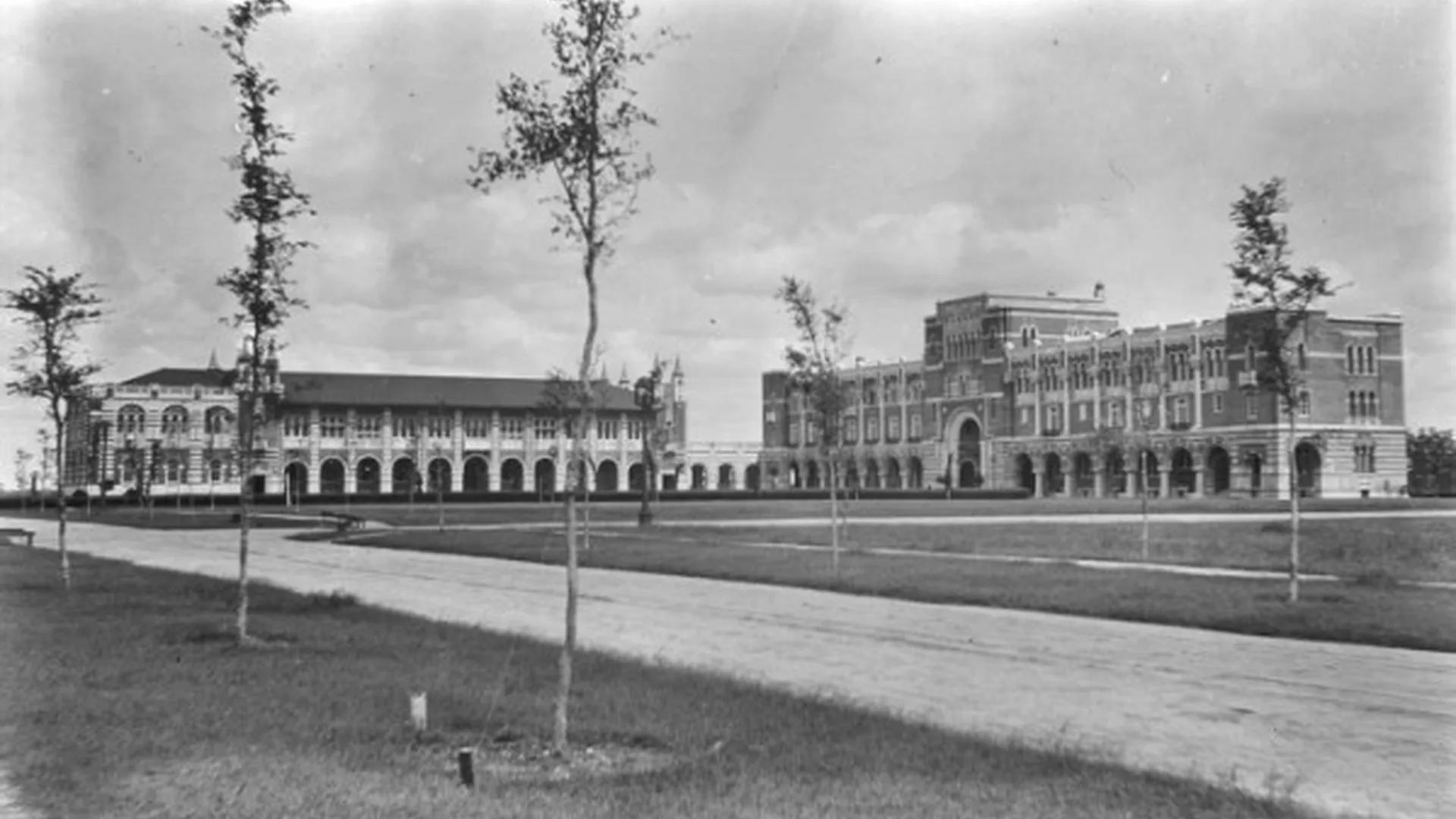
Rice's 300-acre tree-lined campus sits in the heart of Houston's Museum District, minutes from Hermann Park, the zoo, and world-class museums. The campus is bike-friendly, walkable, and known for its beautiful architecture.
Admission Requirements
Rice is among the most selective universities in the US with an acceptance rate around 9%. The university uses a holistic review process and values intellectual vitality, community engagement, and fit with its residential college system.
Rice is need-blind for US citizens and meets 100% of demonstrated need. International students should apply for aid at the time of admission.
Master's Programs
- MSc Computer Science
- MSc Electrical & Computer Engineering
- MSc Mechanical Engineering
- MSc Statistics
- MA Economics
MBA Program
- Full-time MBA
- MBA for Professionals (Evening)
- MBA for Executives
Interview Preparation
What to expect and how to prepare for your Rice interview
Format
Alumni interview (in-person or virtual)
Duration
30-45 minutes
Interviewers
Rice alumni volunteers worldwide
Interview Style
Conversational but evaluative; they want to see genuine interest
What Rice Looks For
Sample Interview Questions
Preparation Tips
- Know which residential college appeals to you and why
- Mention specific professors, labs, or programs you want to engage with
- Show you understand Houston's role in your academic goals
- Be ready to discuss a passion project in depth
Common Mistakes
- Not researching Rice's residential college system
- Giving generic answers that could apply to any university
- Underestimating the importance of the 'Why Rice' question
What Type of Student Gets In?
Intellectually curious across multiple disciplines
Collaborative rather than cutthroat
Community-minded with leadership in extracurriculars
Genuine interest in Houston and its industries
Strong academic record with research inclination
The most common mistake Indian applicants make with Rice is treating it as a backup to the Ivies. Admissions can tell when Rice is not your first choice. If your essays read like you just swapped the school name, you will be rejected. Rice wants students who genuinely want Rice.
Costs & ROI
Rice meets 100% of demonstrated financial need for admitted students. Houston's cost of living is significantly lower than Boston, NYC, or the Bay Area.
| Level | Tuition |
|---|---|
| Undergraduate | ~$58,000/year |
| Master's (Engineering) | ~$55,000/year |
| MBA | ~$70,000/year |
| Living Costs (Houston) | ~$18,000/year |
Salary Ranges
Career & Industry
Texas Medical Center
The world's largest medical center is literally across the street from Rice. Students collaborate on bioengineering, health informatics, and clinical research projects year-round.
NASA Johnson Space Center
Rice and NASA have a historic partnership dating back to JFK's 'We choose to go to the Moon' speech on Rice's campus. Engineering students get internships and research placements at JSC.
Ion Houston
Rice's innovation hub in Midtown Houston connects students with startups, VCs, and corporate innovation labs. The university is a founding partner of this tech district.
Rice graduates benefit from Houston's position as the energy capital of the world and its rapidly growing tech and healthcare sectors. The median starting salary for Rice undergrads exceeds $75,000.
Application Timeline
12-18 Months Before
- Research Rice's residential college system
- Plan standardized test schedule
- Identify faculty and labs of interest
9-12 Months Before
- Draft 'Why Rice' essay with specific details
- Request teacher recommendations
- Build portfolio if applying to Architecture
6-9 Months Before
- Submit Common App and Rice supplements
- Apply Early Decision (Nov 1) or Regular (Jan 1)
- Submit financial aid materials
3-6 Months Before
- Complete alumni interview if offered
- Follow up on financial aid package
- Visit campus if possible (Owl Days)
1-3 Months Before
- Accept offer and pay enrollment deposit
- Apply for F-1 visa
- Arrange Houston housing and travel
Arrival
- Attend O-Week orientation
- Move into residential college
- Meet your college magisters and associates
Rice vs Peers
Rice vs Georgia Tech
Rice: Smaller classes, residential college system, broader liberal arts education, Houston location with energy/medical access
Other: Larger engineering program, lower tuition for in-state, stronger brand recognition in pure engineering, Atlanta tech hub
Rice vs Vanderbilt
Rice: Stronger STEM programs, Houston industry access (energy, NASA, TMC), residential college system, slightly more selective
Other: Stronger pre-med reputation, Nashville's growing tech scene, larger Greek life presence, comparable academic quality
Rice vs Washington University in St. Louis
Rice: Smaller and more intimate, Houston's larger job market, residential college system, stronger engineering
Other: Stronger pre-med and business programs, generous financial aid, beautiful campus, St. Louis cost of living
Rice Is Right For...
- Students who thrive in small, collaborative academic environments
- Engineers and scientists drawn to energy, space, or biomedical fields
- Applicants who value community over competition
- Students targeting Houston's booming job market post-graduation
Rice Is Not Right For...
- Students who want a large university social scene with big sports culture
- Applicants looking for a big-city campus in the Northeast or West Coast
- Those who prefer anonymous large lecture halls
- Students not willing to engage with the residential college system
Our Students at Rice
10+ students guided. Here are a few of their stories.

Dr. Karan Gupta's Advice
FAQs: Rice for Indian Students
Is Rice University good for Indian students?
Yes. Rice is excellent for Indian students, particularly those in engineering, sciences, and business. The university has a growing Indian student community, and Houston has one of the largest Indian diaspora populations in the US. The residential college system helps international students integrate quickly, and Rice's career services have strong employer connections in energy, tech, and healthcare.
What is Rice University's acceptance rate for international students?
Rice's overall acceptance rate is approximately 9%, and it is similarly competitive for international applicants. The university does not have separate international quotas but reviews all applications holistically. International students should demonstrate strong English proficiency (TOEFL 100+ or IELTS 7.0+) and articulate a specific reason for choosing Rice.
Does Rice University offer financial aid to international students?
Rice is need-aware for international applicants, meaning financial need can factor into admission decisions. However, admitted international students who demonstrate need receive generous aid packages. It is critical to apply for aid at the time of admission, as Rice does not guarantee meeting full need for international students the way it does for US citizens.
How does Rice compare to Ivy League universities?
Academically, Rice is on par with mid-tier Ivies like Cornell and Brown, with the added advantage of a much smaller student body and lower student-faculty ratio. Where Rice differs is culture: it is collaborative rather than cutthroat, Houston-based rather than Northeast, and structured around residential colleges rather than Greek life. For students who value mentorship and community, Rice often outperforms the Ivy experience.
What are the strongest programs at Rice University?
Rice's strongest programs include engineering (especially bioengineering and materials science), computer science, architecture, natural sciences, and the Jones Graduate School of Business MBA. The university also has notable strengths in music (Shepherd School) and public policy (Baker Institute).
Related Articles
Wall Street Internships: What Matters More Than Your College Name
A Wall Street job isn't guaranteed by an Ivy League degree. Here's how students from any college can compete for elite finance internships.
Common Data Set: What Harvard and Top U.S. Colleges Really Consider
The Common Data Set reveals what U.S. colleges say matters in admissions—and what they say does not.
Your College Scholarship Isn’t Always Final: How to Ask for More
A three-paragraph scholarship appeal email can sometimes unlock more college aid. Learn when to negotiate, what to say, and when an appeal can backfire.
Related Guides & Resources
Want to Study at Rice?
Get expert guidance from Dr. Karan Gupta: Harvard alumnus, 27+ years of global admissions experience guiding 160,000+ students worldwide.