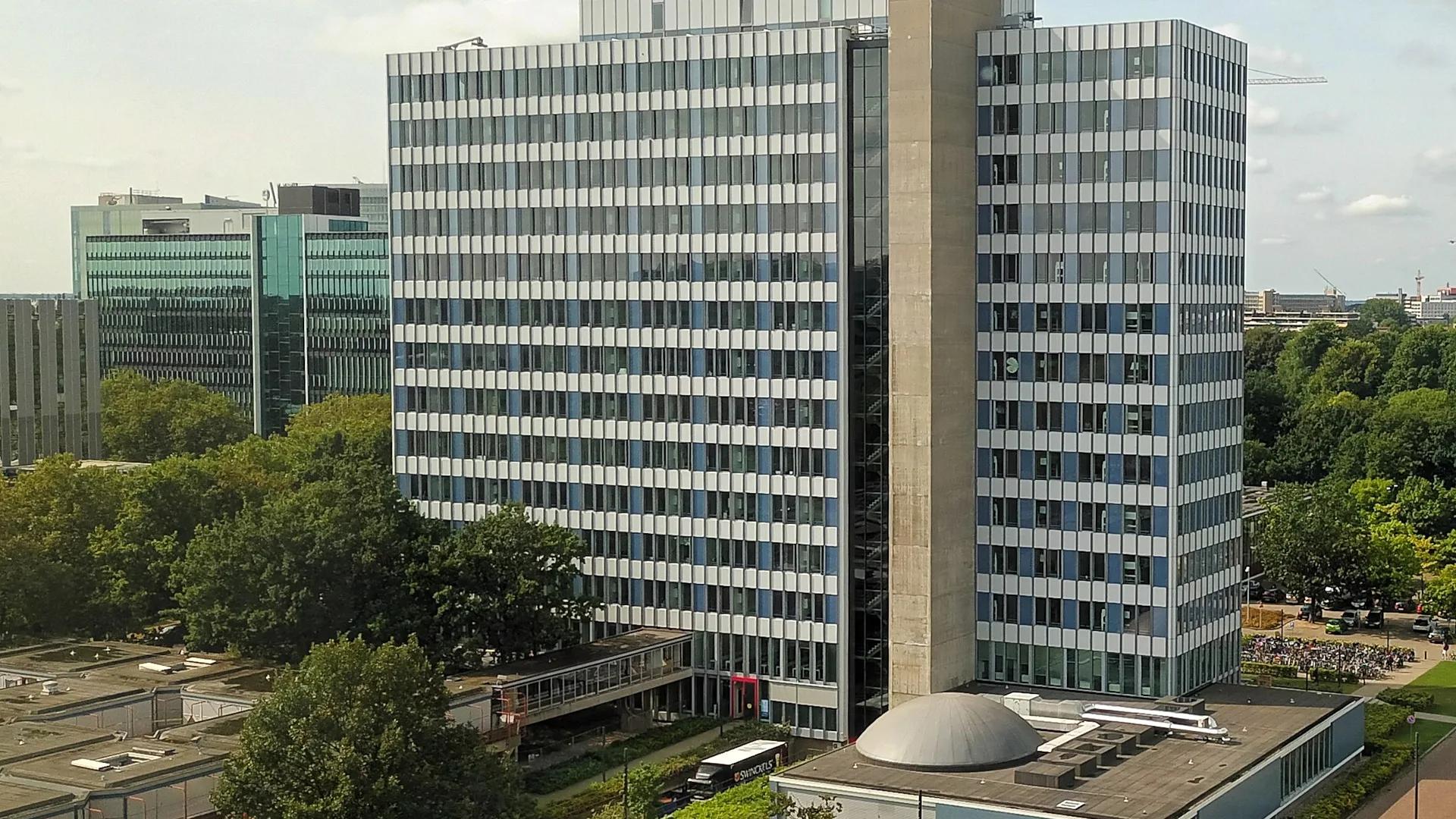
Eindhoven University of Technology
Eindhoven, Netherlands
Eindhoven University of Technology (TU/e) is the Netherlands' most industry-embedded technical university, located in the Brainport Eindhoven region — Europe's smartest region. With deep Philips heritage and partnerships with ASML, NXP, and DAF, TU/e produces engineers who are industry-ready from day one of graduation.
#124
QS Engineering
#1
Dutch Industry Collaboration
1956
Founded
14,000
Students
TU/e at a Glance
#124
QS Engineering & Tech
30%
International Students
#1
Dutch Industry Collaboration
1956
Founded

Dr. Karan Gupta's Strategic View
Why TU/e Is a Strong Choice
The ASML Pipeline
ASML is the most important technology company most people have never heard of. Every advanced semiconductor chip in the world — from Apple's M-series to Nvidia's GPUs — is manufactured using ASML's extreme ultraviolet lithography machines. These machines cost €350 million each and represent the most complex engineering challenge on earth.
ASML is headquartered in Veldhoven, a 10-minute bike ride from TU/e. The company hires hundreds of TU/e graduates annually across physics, electrical engineering, mechanical engineering, and computer science. Many students do their graduation project at ASML, which often converts directly into full-time employment.
For Indian engineering students, this is a career opportunity of extraordinary magnitude. ASML engineers earn €55,000-€80,000 starting, with rapid progression. The company is growing aggressively and desperately needs talent. TU/e is its primary talent pipeline, and that relationship is worth more than any ranking number.
Brainport — Europe's Smartest Region
The Brainport Eindhoven region has been designated 'Europe's smartest region' by the European Commission. It generates the highest number of patents per capita in the Netherlands and hosts over 5,000 technology companies. The High Tech Campus Eindhoven alone — a 15-minute bike ride from TU/e — hosts 235+ companies and 12,000 researchers and developers.
This concentration of high-tech industry means TU/e students have internship, graduation project, and job opportunities that students at universities in non-industrial cities simply cannot access. Your thesis supervisor might be a Philips researcher. Your internship might be at NXP designing the next generation of automotive chips. This integration between university and industry is TU/e's defining advantage.
For Indian students accustomed to the IIT-industry relationship, TU/e's ecosystem will feel familiar but more concentrated. The entire Brainport region functions like a single, massive tech campus where universities, companies, and research institutes collaborate fluidly.
The Dutch Post-Study Advantage
The Netherlands offers one of Europe's most favourable immigration frameworks for international graduates. After completing your degree at TU/e, you can apply for the Zoekjaar (orientation year) visa, giving you 12 months to find employment. Once employed in a qualifying role, you transition to the Highly Skilled Migrant (kennismigrant) scheme.
The Dutch 30% ruling is a further incentive: qualifying international workers receive a 30% tax-free allowance on their salary for up to 5 years. On a €60,000 salary, this effectively saves you €5,000-8,000 per year in taxes. Combined with Brainport's high demand for engineers, TU/e graduates are in an exceptionally strong position.
For Indian students, this combination of strong technical education, direct industry pipelines, post-study work rights, and tax advantages makes TU/e one of the highest-ROI engineering programmes in Europe. The total cost of a TU/e master's is a fraction of a US equivalent, and the career outcomes are comparable or better for hardware and semiconductor roles.
Campus & Student Life
TU/e's campus is a compact, green area on the edge of Eindhoven city centre. The campus is being redesigned under the 'TU/e Science Park' plan, integrating student housing, research facilities, and company offices into a single innovation district.
Admission Requirements
TU/e selects students based on academic excellence in STEM subjects. The university looks for strong mathematics, physics, and analytical foundations. English proficiency and a clear motivation for technology-focused education are essential.
TU/e checks prerequisite courses carefully. If your bachelor's did not include specific courses (e.g., linear algebra, calculus, programming), you may need to complete bridging courses before starting your master's.
Master's Programs
- MSc Electrical Engineering
- MSc Computer Science and Engineering
- MSc Industrial Design
- MSc Mechanical Engineering
- MSc Data Science and AI
- MSc Applied Physics
MBA Program
- No traditional MBA — TU/e focuses on MSc engineering and technology programmes
Interview Preparation
What to expect and how to prepare for your TU/e interview
Format
Most programmes do not require interviews. Selection is primarily document-based. Some design programmes include a portfolio review.
Duration
N/A for most programmes; 30 minutes for portfolio-based programmes
Interviewers
Programme admissions committee
Interview Style
Technical assessment of academic preparation and motivation
What TU/e Looks For
Sample Interview Questions
Preparation Tips
- List all relevant technical courses with credit hours and grades in your application
- Highlight any hands-on projects, hackathons, or research experience
- Mention specific TU/e research groups or labs you want to work with
- Research the Brainport ecosystem — knowing ASML, Philips, and NXP shows genuine interest
Common Mistakes
- Underestimating prerequisite requirements — TU/e verifies course-by-course
- Not highlighting technical projects or hands-on experience in the application
- Applying without understanding the quartile system's intensive pace
What Type of Student Gets In?
Strong mathematical and analytical foundations
Hands-on and project-oriented — builds things, not just studies them
Comfortable with intensive academic pace (quartile system)
Interested in deep tech: semiconductors, photonics, robotics, or automotive
Pragmatic about city life — values career outcomes over lifestyle glamour
The most common mistake is choosing TU Delft over TU/e without understanding the industry ecosystem difference. TU Delft has a higher global ranking but TU/e's Brainport location provides unmatched industry access. If your goal is to work at ASML, NXP, or in the European semiconductor sector, TU/e is the better choice regardless of rankings.
Costs & ROI
Eindhoven is more affordable than Amsterdam or Utrecht for living costs. TU/e offers the Amandus H. Lundqvist Scholarship covering tuition + living costs for top applicants, and the Holland Scholarship provides €5,000. The Brainport region's high-tech salaries make the ROI excellent.
| Level | Tuition |
|---|---|
| Master's (non-EU) | €17,000-€19,000/year |
| Living Costs | €850-€1,200/month |
Salary Ranges
Career & Industry
ASML
ASML is the world's sole manufacturer of extreme ultraviolet (EUV) lithography machines — the most complex machines ever built. Headquartered in Veldhoven (10 minutes from TU/e), ASML hires hundreds of TU/e graduates annually. Graduation projects at ASML are common and often lead directly to employment.
Philips
TU/e was literally founded to serve Philips' need for engineers. While Philips has evolved into a healthcare technology company, the relationship remains deep. Philips Research is a major graduation project partner, and the High Tech Campus Eindhoven (formerly Philips campus) hosts dozens of spinoffs.
NXP Semiconductors
A Philips spinoff and global leader in automotive semiconductors and IoT chips, NXP has its global headquarters in Eindhoven. TU/e's electrical engineering graduates are among NXP's top recruitment targets for chip design, embedded systems, and RF engineering roles.
High Tech Campus Eindhoven
Known as 'the smartest square kilometre in Europe,' the HTC hosts 235+ companies and 12,000 researchers. TU/e students access internships, graduation projects, and networking events across the campus. It is the physical manifestation of Brainport's innovation ecosystem.
TU/e graduates enjoy some of the highest employment rates and starting salaries among Dutch university graduates. The Brainport ecosystem absorbs a large percentage of graduates directly, and TU/e's industry partnerships create seamless transitions from graduation project to full-time employment.
Application Timeline
12-18 Months Before
- Research TU/e programmes and the Brainport ecosystem
- Verify prerequisite courses match your bachelor's curriculum
- Begin IELTS/TOEFL preparation
9-12 Months Before
- Take IELTS/TOEFL
- Prepare application materials including detailed course descriptions
- Apply for TU/e scholarships (early deadlines)
6-9 Months Before
- Submit application via TU/e application portal (deadline typically April 1 for September start)
- Submit scholarship applications separately
3-6 Months Before
- Receive admission decision
- Accept offer and pay tuition deposit
- Begin MVV visa application through TU/e's international office
1-3 Months Before
- Arrange housing through TU/e housing portal (guaranteed for first-year international students)
- Open Dutch bank account
- Purchase health insurance
Arrival
- Attend TU/e introduction programme
- Register at Eindhoven municipality
- Explore the High Tech Campus — it is a 15-minute bike ride from campus
TU/e vs Peers
TU/e vs TU Delft
TU/e: Deeper industry connections (ASML, Philips, NXP), Brainport ecosystem access, stronger semiconductor/EE pipeline, higher employment rate in Brainport
Other: Higher QS ranking, broader programme portfolio, stronger in aerospace/civil/architecture, larger university with more diverse student body
TU/e vs RWTH Aachen
TU/e: Stronger industry ecosystem (Brainport vs Aachen's more diffuse connections), better post-study work visa (Netherlands vs Germany), higher salary premium (30% ruling)
Other: Larger and more prestigious in traditional German engineering, broader programme range, lower tuition (German public university), stronger in mechanical and automotive engineering
TU/e Is Right For...
- Engineers who want direct industry pipelines to ASML, Philips, and the semiconductor sector
- Students with strong maths and physics foundations from technical backgrounds
- Those who want hands-on, project-based engineering education
- Applicants planning to work in the Netherlands or European high-tech sector post-graduation
TU/e Is Not Right For...
- Students looking for a big-city campus experience (Eindhoven is mid-sized and industrial)
- Those without strong STEM foundations — TU/e is technically demanding
- Applicants targeting business, humanities, or social science careers
- Students who prefer theoretical over applied engineering

Dr. Karan Gupta's Advice
FAQs: TU/e for Indian Students
How does TU/e compare to TU Delft?
TU Delft has a higher global ranking and a larger programme portfolio, particularly in civil engineering, aerospace, and architecture. TU/e has deeper industry connections through the Brainport ecosystem, particularly in semiconductors, electrical engineering, and design. For careers at ASML, NXP, or Philips, TU/e is the stronger choice. For broader engineering prestige or specific programmes like aerospace, TU Delft is ahead.
What is the job market like in Eindhoven?
Eindhoven's job market for engineers is exceptional. The Brainport region has more tech job openings than qualified candidates. ASML alone is hiring thousands of engineers. Starting salaries for TU/e master's graduates average €45,000-€55,000, with semiconductor and hardware roles paying €55,000-€80,000. The 30% tax ruling further increases take-home pay for international workers.
Is Eindhoven a good city to live in?
Eindhoven is functional rather than charming. It is the fifth-largest city in the Netherlands with good infrastructure, a growing food scene, and the annual Dutch Design Week. It lacks the historic beauty of Amsterdam or Utrecht but offers affordable housing, excellent bike infrastructure, and a growing international community. Most students find it comfortable if not exciting — the career opportunities compensate.
Does TU/e offer scholarships for Indian students?
Yes. The Amandus H. Lundqvist Scholarship covers full tuition plus a monthly living allowance for exceptional students. The Holland Scholarship provides €5,000 one-time. TU/e also participates in ASML, Philips, and other corporate scholarship programmes. Competition is fierce for the Lundqvist — apply early and have a strong academic record.
Related Articles
Wall Street Internships: What Matters More Than Your College Name
A Wall Street job isn't guaranteed by an Ivy League degree. Here's how students from any college can compete for elite finance internships.
Common Data Set: What Harvard and Top U.S. Colleges Really Consider
The Common Data Set reveals what U.S. colleges say matters in admissions—and what they say does not.
Your College Scholarship Isn’t Always Final: How to Ask for More
A three-paragraph scholarship appeal email can sometimes unlock more college aid. Learn when to negotiate, what to say, and when an appeal can backfire.
Related Guides & Resources
Want to Study at TU/e?
Get expert guidance from Dr. Karan Gupta: Harvard alumnus, 27+ years of global admissions experience guiding 160,000+ students worldwide.