Aalto University
Espoo (Helsinki), Finland
Aalto University, formed from the merger of Finland's top engineering, business, and design schools, is a unique institution where engineers, designers, and business students collaborate by default. Named after architect Alvar Aalto, the university is Finland's most international and innovation-driven, with Europe's largest startup ecosystem at its doorstep.
#116
QS World Ranking
#9
QS Art & Design
2010
Founded (Merger)
20,000
Students
Aalto at a Glance
#116
QS World Ranking
#9
QS Art & Design
42%
International (Master's)
2010
Founded (Merger)

Dr. Karan Gupta's Strategic View
Why Aalto Is a Strong Choice
The Cross-Disciplinary Advantage
Aalto's founding premise — merging Helsinki University of Technology, Helsinki School of Economics, and the University of Art and Design Helsinki — was radical. Most universities talk about interdisciplinary collaboration. Aalto built it into the institutional structure. Engineers take design courses. Business students collaborate with architects. Designers work with data scientists.
This is not elective enrichment — it is embedded in the curriculum through programmes like Creative Sustainability, where students from all three schools work on the same sustainability challenges with partner companies. The result is graduates who can bridge the gap between technical feasibility, business viability, and human desirability — the three pillars of innovation.
For Indian students who feel limited by rigid departmental boundaries in Indian universities, Aalto offers a fundamentally different model. If you have ever felt frustrated that your engineering degree did not let you take design courses, or your business studies ignored technology, Aalto is your school.
The Nordic Startup Ecosystem
Helsinki's startup ecosystem punches far above its weight for a city of 650,000. Supercell (valued at $10 billion+), Rovio, Wolt, and dozens of other billion-dollar companies were born here. The Slush conference — founded by Aalto students — attracts 25,000+ participants annually and has become the premier startup event outside Silicon Valley.
Aalto's Startup Sauna is one of Europe's most respected university accelerators. A Grid, Aalto's startup hub, provides co-working space, mentorship, and investor connections on campus. The culture is not performative — Finnish startups receive significant government and venture support, and the path from student project to funded company is shorter than at most European universities.
For Indian students with entrepreneurial ambitions, Helsinki offers a counter-intuitive advantage: less competition and more support than London, Berlin, or Paris. The Finnish government actively supports immigration of skilled talent and startup founders. If your business idea has global potential, Helsinki is a remarkably effective launchpad.
Design at the Highest Level
Aalto's School of Arts, Design and Architecture is ranked top 10 globally by QS. Finland has a design heritage that punches far above its size — Alvar Aalto, Marimekko, Iittala, Fiskars — and this tradition runs deep at the university that bears Aalto's name. The campus itself, in Otaniemi, was designed by Alvar Aalto.
What distinguishes Aalto's design education from purely artistic programmes is its integration with technology and business. Industrial design students learn to prototype with engineering tools. Architecture students engage with sustainability engineering. Fashion students collaborate with material scientists. This produces designers who can not only create beautiful objects but build functional, manufacturable, and commercially viable ones.
For Indian students interested in design, Aalto offers something that Indian design schools (NID, Srishti) cannot: immersion in the Nordic design ecosystem, access to European and global design industry, and the credibility of a top-10 global design programme. The portfolio review is rigorous — they want to see your thinking process, not just your finished work.
Campus & Student Life
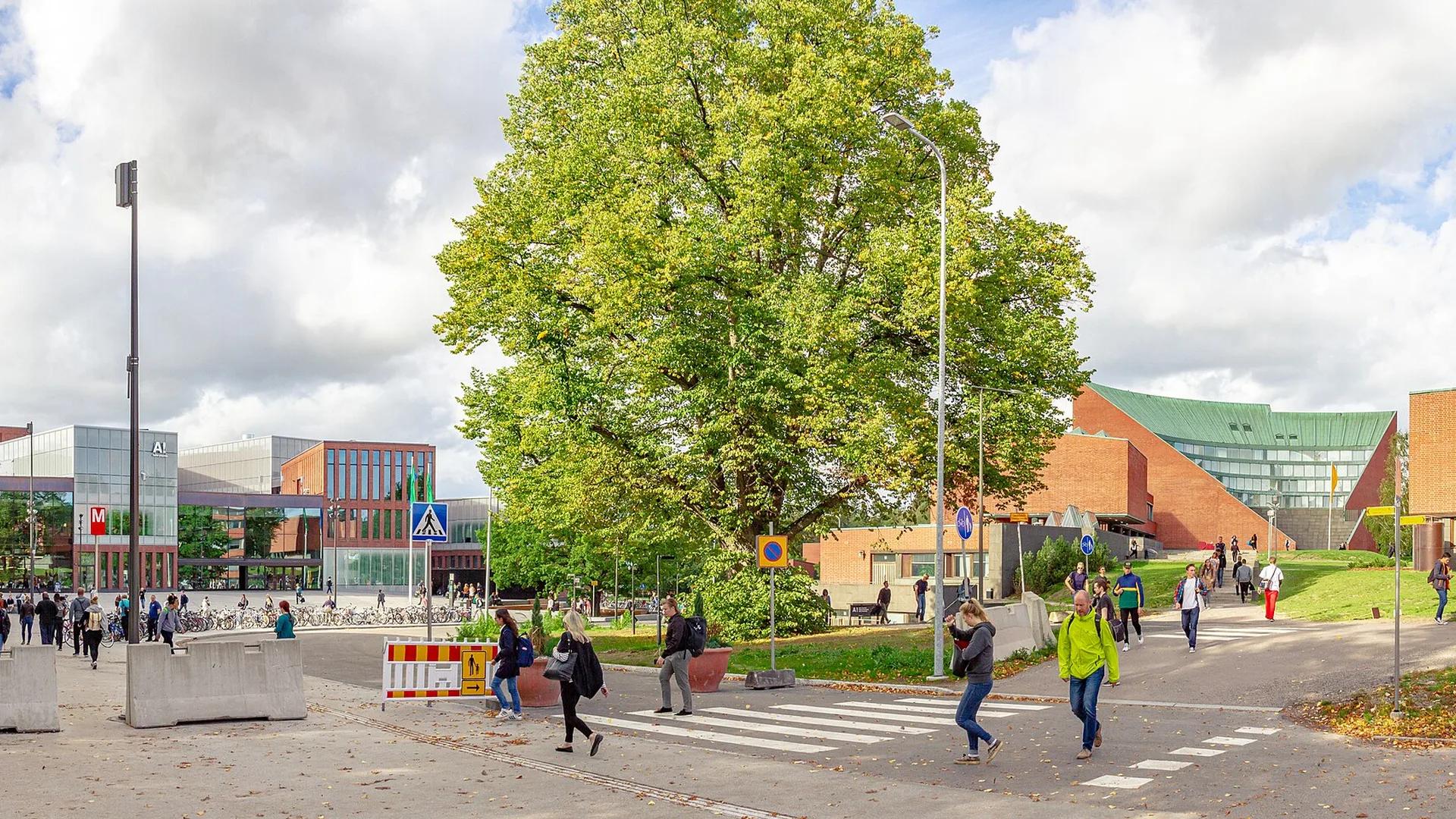
Aalto's main campus in Otaniemi, Espoo, was designed by Alvar Aalto and is a masterpiece of Nordic modernist architecture. Set in a forest by the sea, the campus combines academic buildings, student housing, sports facilities, and startup incubators in a compact, bikeable area.
Admission Requirements
Aalto is competitive, particularly for design, CS, and creative sustainability programmes. Admission is based on academic records, motivation, and for design programmes, a portfolio review. Most master's programmes are taught in English and have a January application deadline.
Aalto's design programmes require a portfolio — start preparing at least 6 months before the deadline. CS and engineering programmes are competitive; highlight projects, not just grades.
Master's Programs
- MSc Computer Science
- MA Industrial and Strategic Design
- MSc Creative Sustainability
- MSc Finance
- MSc Machine Learning, Data Science and AI
- MA Architecture
MBA Program
- Aalto MBA (full-time, 1 year)
- Aalto Executive MBA
Interview Preparation
What to expect and how to prepare for your Aalto interview
Format
Design programmes include portfolio review and may include an interview or design task. Other programmes are primarily document-based.
Duration
20-30 minutes for design interviews; N/A for most others
Interviewers
Faculty and programme coordinators
Interview Style
Design interviews focus on creative process, portfolio discussion, and design thinking. Other programmes assess academic fit through documents.
What Aalto Looks For
Sample Interview Questions
Preparation Tips
- Emphasise any cross-disciplinary experience (e.g., an engineer who does design, a designer who codes)
- Reference specific Aalto programmes, labs, or initiatives that excite you
- For design portfolios: show process, iterations, and thinking — not just polished final products
- Mention the Aalto startup ecosystem (Startup Sauna, Slush, A Grid) if entrepreneurship is part of your vision
Common Mistakes
- Applying to Aalto without understanding or embracing its cross-disciplinary philosophy
- Submitting a design portfolio without clear process documentation (Aalto cares about how you think, not just what you produce)
- Ignoring the startup ecosystem in your motivation letter — it is central to Aalto's identity
What Type of Student Gets In?
Cross-disciplinary thinker — uncomfortable being put in one box
Creative and technically curious in equal measure
Interested in sustainability, design thinking, or startup culture
Independent and self-motivated — Finnish education expects maturity
Comfortable with cold weather and a quieter social environment
The most common mistake is applying to Aalto for a single discipline without engaging with the cross-disciplinary model. If you want a pure engineering degree without design or business interaction, TU Delft or ETH is a better fit. Aalto's magic — and its admissions filter — is in the intersections between disciplines.
Costs & ROI
Aalto offers tuition fee waivers (50% or 100%) for non-EU students based on academic merit — apply through the standard application. Finland's cost of living is moderate by Nordic standards, and student housing through AYY is affordable (€300-500/month). Part-time work is permitted.
| Level | Tuition |
|---|---|
| Master's (non-EU) | €15,000-€20,000/year |
| MBA | €39,000 total |
| Living Costs (Helsinki region) | €800-€1,200/month |
Salary Ranges
Career & Industry
Supercell
The gaming company behind Clash of Clans and Brawl Stars is an Aalto neighbour and frequent collaborator. Aalto CS and design students access internships and project opportunities at one of the world's most profitable gaming companies per employee.
Nokia
Finland's iconic tech company has deep ties to Aalto (the university was partly born from Helsinki University of Technology, which fed Nokia's engineering talent for decades). Nokia's research labs collaborate with Aalto on 5G, AI, and network technology projects.
Neste
The world's largest producer of renewable diesel, headquartered in Espoo near Aalto's campus. Neste partners with Aalto on sustainability research and hires graduates into engineering, strategy, and sustainability roles. This partnership embodies Finland's cleantech leadership.
Slush
The world's leading startup conference was co-founded by Aalto students and remains deeply connected to the university. Slush brings 25,000+ participants, 5,000+ startups, and 2,000+ investors to Helsinki annually. Aalto students volunteer, pitch, and network — it is a career accelerator.
Aalto graduates are prized by employers for their cross-disciplinary skills. The university's deep connections to Nokia's legacy, the Finnish gaming industry, and Nordic tech create strong career pipelines. The Slush startup conference, co-founded by Aalto students, brings 25,000+ participants to Helsinki annually.
Application Timeline
12-18 Months Before
- Research Aalto's cross-disciplinary model and identify your target programme
- Begin portfolio preparation if applying to design/architecture
- Explore the Finnish education system and Aalto's startup ecosystem
9-12 Months Before
- Take IELTS/TOEFL
- Develop portfolio (design applicants) or highlight technical projects (engineering/CS)
- Draft motivation letter emphasising interdisciplinary interests
6-9 Months Before
- Submit application by January deadline (most programmes)
- Apply for Aalto scholarships — available through the same application
3-6 Months Before
- Receive admission and scholarship decisions (March-April)
- Accept offer and pay confirmation fee
- Begin Finnish residence permit application
1-3 Months Before
- Arrange housing through AYY (Aalto Student Union) or HOAS
- Purchase Finnish health insurance or arrange KELA coverage
- Join Aalto student community channels
Arrival
- Attend Aalto orientation and connect with your school's tutors
- Register at DVV (Digital and Population Data Services Agency)
- Explore the Otaniemi campus — designed by Alvar Aalto himself
Aalto vs Peers
Aalto vs TU Delft
Aalto: Stronger in design (top 10 globally), cross-disciplinary model, Nordic startup ecosystem (Slush), stronger business school, generous tuition waivers
Other: Higher overall engineering ranking, broader engineering programme choice, larger and more international, Netherlands has better post-study work infrastructure, Dutch salaries are higher
Aalto vs KTH Royal Institute of Technology
Aalto: Stronger design school, cross-disciplinary model with business integration, stronger startup ecosystem (Slush), Helsinki metro access
Other: Higher engineering ranking, Stockholm location (larger city, more corporate jobs), stronger brand in traditional engineering, Ericsson/Spotify connections
Aalto Is Right For...
- Students who think across disciplines — engineers who design, designers who code
- Those interested in sustainability, clean energy, or circular economy
- Aspiring startup founders who want access to the Slush/Nordic startup ecosystem
- Design and architecture students who want a technology-integrated education
Aalto Is Not Right For...
- Students who prefer deep single-discipline specialisation without cross-pollination
- Those who need warm weather and a large, vibrant international social scene
- Applicants targeting finance, law, or traditional business careers (Aalto business is good but not its primary identity)
- Students who want the highest possible global brand recognition for engineering alone

Dr. Karan Gupta's Advice
FAQs: Aalto for Indian Students
Is Aalto University free for international students?
Not automatically. Non-EU/EEA students pay tuition of €15,000-€20,000/year. However, Aalto offers generous tuition fee waivers (50% or 100%) based on academic merit, awarded alongside admission. All applicants are automatically considered — no separate scholarship application. If you receive a 100% waiver, you only pay living costs. Approximately 50% of admitted non-EU students receive some form of tuition reduction.
What is the weather really like in Finland?
Cold and dark in winter, magical in summer. From November to February, Helsinki gets 6-8 hours of daylight. Temperatures drop to -15°C to -25°C in the coldest weeks. However, buildings are extremely well-heated, public transport works perfectly in winter, and the Finnish sauna culture (yes, every student building has saunas) makes the cold bearable. Summers are gorgeous — 19+ hours of daylight and pleasant temperatures. Most Indian students adjust within the first winter.
How is Aalto for CS and engineering compared to ETH or TU Delft?
ETH Zurich and TU Delft have higher global rankings for pure engineering. Aalto's advantage is cross-disciplinary education — if you want CS combined with design, or engineering combined with business, Aalto's integrated model is stronger. For pure CS, Aalto is excellent (strong ML and data science) but not top-10 globally. For design-technology intersection, Aalto is arguably the best in Europe.
Can I stay in Finland after graduation?
Yes. Finland offers a 2-year post-graduation residence permit for job seeking. The Finnish tech sector actively recruits international graduates, and the government has streamlined immigration for skilled workers. Finnish language is not required for most tech, design, and engineering roles (English is the working language), though learning Finnish helps for long-term integration.
Related Articles
Wall Street Internships: What Matters More Than Your College Name
A Wall Street job isn't guaranteed by an Ivy League degree. Here's how students from any college can compete for elite finance internships.
Common Data Set: What Harvard and Top U.S. Colleges Really Consider
The Common Data Set reveals what U.S. colleges say matters in admissions—and what they say does not.
Your College Scholarship Isn’t Always Final: How to Ask for More
A three-paragraph scholarship appeal email can sometimes unlock more college aid. Learn when to negotiate, what to say, and when an appeal can backfire.
Related Guides & Resources
Want to Study at Aalto?
Get expert guidance from Dr. Karan Gupta: Harvard alumnus, 27+ years of global admissions experience guiding 160,000+ students worldwide.