Dr. Karan Gupta talks about the impact of US policies on H1B visas
 Dr. Karan Gupta
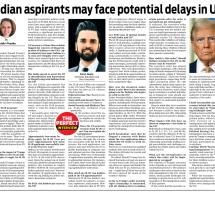
Dr. Karan Gupta talks about the impact of US policies on H1B visas

Dr. Karan Gupta's Perspective
Harvard Alumnus · 27 Years · 160,000+ Students
The recent The Perfect Voice article has raised an important topic for many Indian students and parents: the impact of US policies on H1B visas. This topic is not just about immigration; it captures a broader narrative that has been woven into the fabric of study abroad aspirations for decades. The H1B visa is seen as a golden ticket for countless international students who envision a future in the United States. However, the ever-evolving policies around these visas often cast a shadow of uncertainty over their dreams. Over my 27-year journey as an educational consultant, I have witnessed the aspirations of many transform under the unpredictability of such policies.
The conversation on H1B visas is more than just a dialogue on legalities and governmental procedures. It reflects a pattern of evolving global tensions, economic strategies, and cultural exchange dynamics. For years, I have seen students weigh their options amidst a world of uncertainty, evaluating not just what the US has to offer in terms of education, but also the landscape of opportunities thereafter. One noticeable trend is the increasing number of students factoring in alternative plans. What if they complete their degrees and find the doors to long-term job opportunities in the US narrowing? For some, this is understandably discouraging. Yet, it also encourages resilience, prompting students to diversify their skill sets and remain adaptable.
Last year, I had a student who embodied this blend of hope and pragmatism. Deepak, a brilliant computer science enthusiast, had his heart set on working with a top-tier tech firm in Silicon Valley. The constant debate around H1B policies, however, forced him to rethink his approach. He reached out to me, anxious about whether he should still consider the US as his priority. It was clear that his passion remained, but his strategy needed refining. Together, we explored courses that aligned with his interests and could offer him multiple avenues, whether in the US or elsewhere. Deepak's situation isn't unique but emblematic of an increasing openness to global options. While the allure of the US remains strong, the world is seeing rapid changes, and students are smartly keeping their eyes open for opportunities across continents—from Europe to Asia.
My conversations with parents mirror this tension. Many parents are understandably concerned about investing significant resources in their child's education if the post-graduation work scenario remains uncertain. They are right to be cautious and inquisitive. I recall a mother who calculated every tuition fee option, weighed every scholarship avenue, and questioned every visa policy update. She wanted the best for her daughter but feared unforeseen policy shifts. I’ve found that honest and open discussions about these realities, while anticipating potential setbacks, make the decision-making process less daunting for families.
What I often tell my students and their families is that focusing solely on H1B policies shouldn't overshadow the real potential of a foreign education. The US still offers an incredible array of educational experiences that can enrich personal and professional lives. The emphasis should be on what students can learn and how they can evolve during their academic journeys. It's crucial to pursue studies that genuinely interest them, along with skills such as adaptability, cultural fluency, and global-mindedness. These attributes can open doors worldwide, not just in the US. For those anxious about H1B uncertainties, consider how your qualifications might also be valued in other thriving regions, or even back home in India, where new fields and sectors are burgeoning.
In practical terms, applying to countries beyond the US is a worthwhile strategy. This requires research into global education systems, visa policies, and job markets. Universities in Canada, the UK, Germany, and Australia, among others, are incredibly welcoming to international students, and often have post-study work visas that can be more predictable than the H1B route. I urge students to make comprehensive lists of potential institutions across these regions and assess the viability of their unique policies and opportunities. Diversification, even in the choice of potential employment locales, can mitigate the stress of visa-dependent futures.
Furthermore, I advise constant engagement with the bigger picture—informed students and parents can make better choices. Engage with consulates’ updates, follow webinars by immigration professionals, and understand the policy shifts in real-time. I also emphasize the power of networking, both academically and professionally. Platforms like LinkedIn can provide direct access to alumni and industry experts who have navigated similar paths.
In closing, while the uncertainty around H1B and similar policies is daunting, it is essential to focus on your primary goal: education and self-development. Embrace the journey with an open mind and the willingness to adapt. Tomorrow’s global leaders are those who, despite odds, find new pathways and opportunities. Parents and students should maintain dialogue that revolves around possibilities rather than fears, emphasizing the growth and knowledge that come with international education. As trends and policies evolve, so must our perspectives—and the future remains full of promise for those prepared to seize it.
Need Personalized Guidance?
Dr. Karan Gupta has been featured in leading media outlets for his expertise. Book a consultation to get the same trusted advice for your education journey.