Education is the one way to bring countries closer together. Read more with Dr. Karan Gupta and key dignatories
 Dr. Karan Gupta
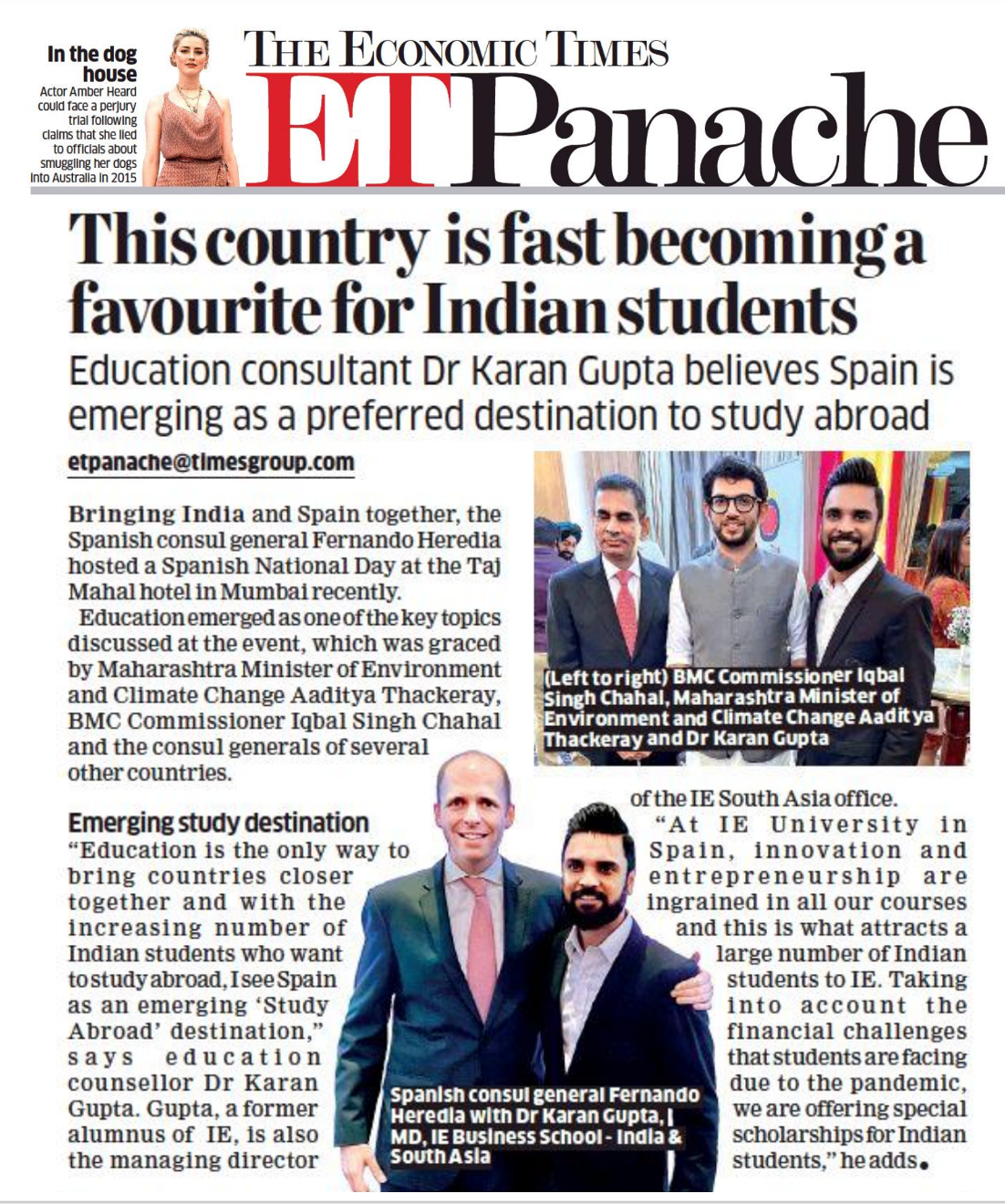
Education is the one way to bring countries closer together. Read more with Dr. Karan Gupta and key dignatories

Dr. Karan Gupta's Perspective
Harvard Alumnus · 27 Years · 160,000+ Students
When the Economic Times featured my thoughts on how education serves as a bridge for drawing countries closer together, it highlighted a broader trend I've noticed over the decades. Students don't just carry backpacks filled with books; they carry rich cultural legacies, diverse perspectives, and an intrinsic potential to transform the global landscape. Education, in its truest sense, is undoubtedly a catalyst for unity and progress. However, integrating this vision with the practical decisions students and their families face requires a nuanced understanding of the international education landscape.
In my 27 years of guiding students, I've seen countless young Indians set out on journeys across the globe, each hoping to gain not only academic knowledge but also experience the power of cultural exchange. The ability to study abroad does more than just enhance a resume; it equips students with empathy, cross-cultural communication skills, and a global network, forming the building blocks for international diplomacy.
Take the case of Riya, a student I advised last year. She was initially torn between pursuing her studies in India or venturing into the unknown by attending a university in Germany. Her family, concerned about cultural differences and the potential for isolation, leaned towards an education closer to home. However, what tipped the scale towards an international education was the understanding that this experience could make Riya a more resilient and open-minded individual. Her journey in Germany not only bolstered her technical skills in engineering but also immersed her in a melting pot of cultures from which she learned substantially about collaboration and different worldviews.
Given the infinite value these opportunities hold, one might wonder about the actionable steps Indian students and parents should take to harness the potential of international education effectively. Based on my experience, the most vital step is a comprehensive and honest assessment of goals—not just academic aspirations but personal growth targets too. It’s crucial to ask: How does studying abroad align with long-term visions for one’s life? What cultural experiences are sought, and which institutions provide those alongside academic excellence?
Additionally, students should actively seek out programs that emphasize cultural integration. Many universities have realized the potent benefits of hosting a diverse student body and actively create environments that foster inter-cultural dialogue. It’s essential for students to tap into these opportunities, whether through joining international clubs, participating in exchange programs, or attending networking events that bring together students from varied backgrounds.
I often encourage students to embrace flexibility. In an era where geopolitical nuances, pandemic-related disruptions, and evolving visa regulations add layers of complexity, being open to change is advantageous. Shifting gears from an initially chosen path based on new information isn’t a sign of indecision; it’s an attribute of adaptability, a trait increasingly valued by employers globally.
Another critical insight I share with parents is the importance of emotional preparation. Studying abroad is as much about internal growth as external achievements. Parents can support their children by fostering independence and resilience early on, preparing them for the inevitable homesickness and cultural shocks that may arise. This emotional scaffolding enables students to embrace challenges with a solutions-oriented mindset.
Lastly, it is paramount that both students and parents stay informed about scholarships and financial aid options that can make international education more accessible. Over the years, I've encountered numerous students who assumed that studying abroad was financially out of reach only to learn, upon deeper research, that various grants and scholarships could significantly alleviate the financial burden.
Reflecting on the broader theme of my appearance in the Economic Times, a forward-looking perspective involves recognizing the rapid globalization of education not as a mere trend, but as a movement essential for fostering peace and cooperative prosperity. The students who journey across borders today are our future leaders, and their ability to empathize with and understand others is invaluable.
In envisioning the future, I urge students and parents to look beyond immediate gains. Consider the lasting impact of the educational choices made today. By embracing international education, we're not merely investing in individual success stories but also in a future framework where global solidarity is paramount.
In conclusion, while the pathway to studying abroad involves numerous decisions, challenges, and adjustments, the rewards far surpass the hurdles. Education that unites us across borders is not just about academic achievement—it's about nurturing ambassadors of global goodwill. I believe this is how we, one student at a time, begin to weave a tapestry of unity that connects the world.
Need Personalized Guidance?
Dr. Karan Gupta has been featured in leading media outlets for his expertise. Book a consultation to get the same trusted advice for your education journey.