Dr. Karan Gupta talks to Economic Times about which countries will benefit as less students look to apply to Canada
 Dr. Karan Gupta
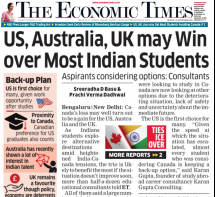
Dr. Karan Gupta talks to Economic Times about which countries will benefit as less students look to apply to Canada

Dr. Karan Gupta's Perspective
Harvard Alumnus · 27 Years · 160,000+ Students
The recent conversation I had with the Economic Times about the shifting tides in international student preferences highlights a fascinating trend that I've observed over the years. The predilection toward Canada is waning, and countries like the US, Australia, and the UK are poised to become more appealing. This isn't just a matter of changing taste; it reflects deeper systemic dynamics and evolving student aspirations.
For over two decades, Canada was a darling for many Indian students. Its welcoming immigration policies, multicultural society, and robust education system made it a premier choice. However, there's been a notable shift. Factors such as visa processing delays and changing post-graduation work opportunities have directed student interest elsewhere. It's a pattern that's reminiscent of the ebbs and flows I've witnessed time and again in my career. For instance, in the early 2000s, the United States was unequivocally the top choice for Indian students. Political events and policy changes can swiftly tilt the scales, and history is, once again, repeating itself.
Talking to students and their families, I notice that aspirations are increasingly global, but there’s also an undercurrent of pragmatism. Take, for example, a student I guided last year. She was bright, ambitious, and had her heart set on Canada. As she delved deeper into the post-graduation opportunities, especially surrounding work permits, she began reconsidering her stance. This wasn't due to fleeting doubts but a calculated choice driven by long-term career visibility and growth. Eventually, she opted for a postgraduate program in the UK, where she received a partial scholarship. What sealed the deal was the promise of exposure to European networks and eventual employment opportunities.
This brings us to this core question – where should Indian students and their families direct their ambitions? From my lens, a nuanced approach is essential. Picking a destination isn't just about the most welcoming immigration policies or the best-known universities. It's about aligning career goals, academic prowess, financial realities, and personal preferences with the unique offerings of each country.
Take the United States, for instance. It's regaining its charm, not just because of its storied Ivy Leagues but due to a diversified portfolio of institutions known for their industry links and cutting-edge research. I remember advising a tech enthusiast a couple of years ago. He was torn between Canada and the US until a deeper dive revealed the unparalleled access to Silicon Valley that an American education could provide. Today, he's innovating at a top-tier tech company, a testament to the strategic choices he made during his education journey.
Similarly, Australia has become a beacon for students aiming for quality education paired with a high standard of living. What's particularly notable about Australia is its active push to attract international students. Government policies favor skilled graduates, leading to pathways that blend learning with employment. One of my students was fascinated by marine biology, and the myriad coastal programs in Australia complemented her passion. Now she's contributing to research aimed at preserving the Great Barrier Reef. Her journey showcases how niche interests can find a perfect home in countries attuned to specific sectors.
The UK, on the other hand, is leveraging its storied history and contemporary relevance. Despite Brexit jitters, its educational allure remains unshaken. In recent years, the reintroduction of the post-study work visa has reignited the interest of many students. A young management aspirant I mentored chose a UK business school over other options due to this very prospect, anticipating a net gain in both education and on-ground experience.
So, what should Indian students and parents take from these shifting dynamics? Firstly, stay informed and adaptable. The global landscape is constantly evolving, and so too should one's aspirations. Keep an eye on changing policies, emerging industries, and the global economic climate.
Next, it's essential to balance dreams with reality. While certain destinations may glitter with potential, it's critical to assess personal and financial readiness. Prioritize programs that not only offer academic excellence but also practical training and industry exposure.
Engage with experts who have a panoramic view of global education. Over the years, I've observed that the most successful students are those who align their personal goals with the opportunities of various countries, curating a journey rather than following a trend.
Lastly, prioritize skills alongside education. Academic institutions provide the foundation, but the next era will be shaped by those who constantly learn and adapt. Whether it's through internships, online courses, or on-the-ground experiences, cultivate a mindset of lifelong learning.
In conclusion, while headlines tend to spotlight the immediate, the real story lies in individual trajectories shaped by a myriad of factors. As we look forward, it's clear that education will continue to be the bridge connecting aspirations with achievements. In this ever-globalized world, students have the opportunity not just to learn but to lead. And it's this journey, marked by informed choices and strategic paths, that will redefine the future in more ways than one. Keep looking forward, keep learning, and let every challenge be an opportunity in disguise.
Need Personalized Guidance?
Dr. Karan Gupta has been featured in leading media outlets for his expertise. Book a consultation to get the same trusted advice for your education journey.