Dr. Karan Gupta and CEO of IE University Diego del Alcazar Benjumea at Infosys Bangalore
 Dr. Karan Gupta
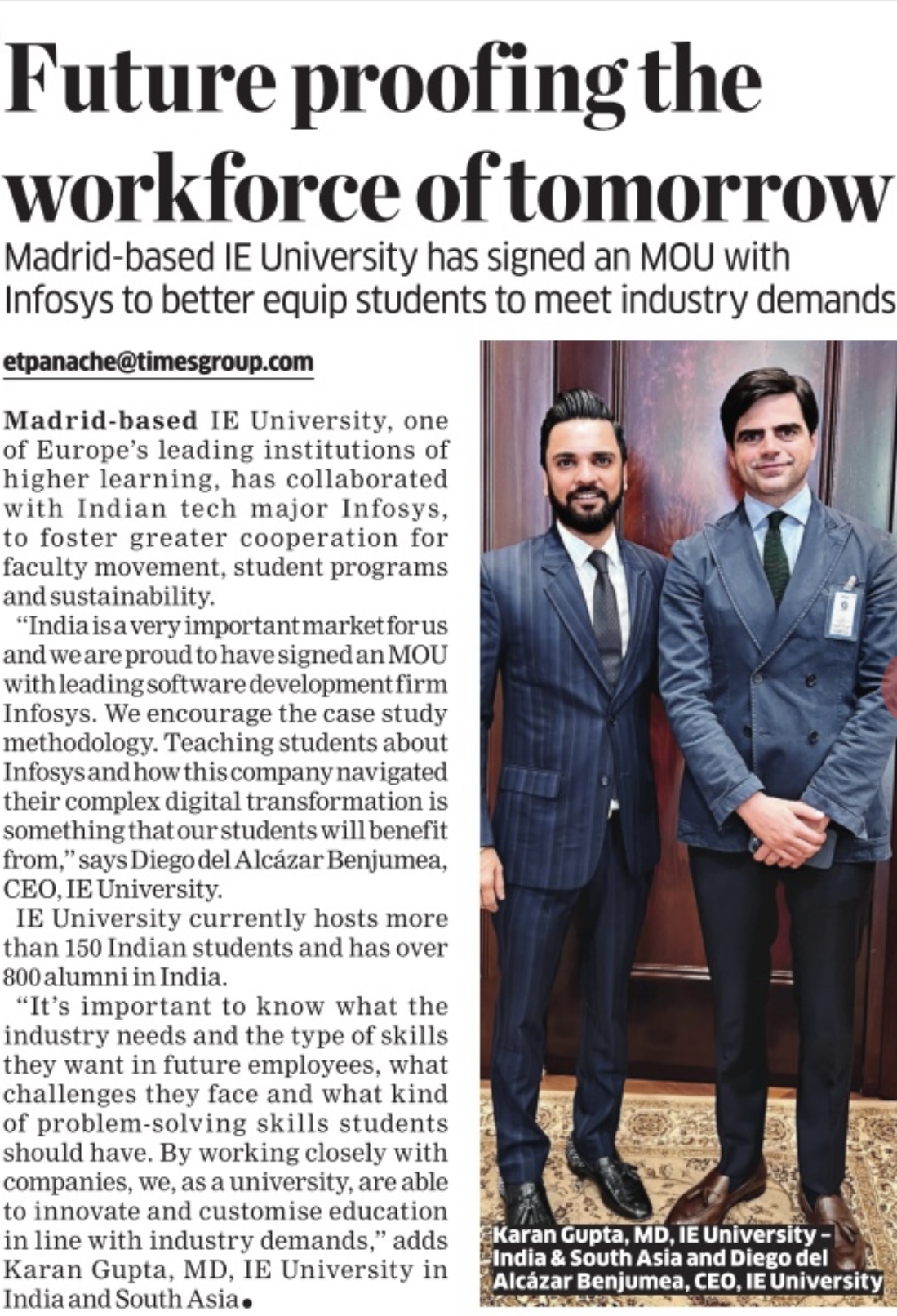
Dr. Karan Gupta and CEO of IE University Diego del Alcazar Benjumea at Infosys Bangalore

Dr. Karan Gupta's Perspective
Harvard Alumnus · 27 Years · 160,000+ Students
The day I appeared with Diego del Alcazar Benjumea, CEO of IE University, at Infosys in Bangalore stands out as one of those serendipitous moments where the convergence of academia, industry, and cultural aspirations all unfolded before me. This event was not just a cursory meeting between two specialists in their fields; it was a snapshot of a broader transformation I've witnessed over my 27 years in the field of education consultancy. With the educational landscape continually evolving, both in India and globally, this meeting was symbolic of the increasingly intertwined nature of education and industry, and it was a reminder of the diligent navigation needed by students today.
When I started Karan Gupta Consulting, the choices available to students aspiring to study abroad often felt like they were navigating an unmapped territory. Back then, opportunities were more limited, and the focus was predominantly on well-trodden paths like engineering or medicine. Particularly for Indian students, these fields felt like the gold standard — both esteemed and seemingly secure. However, through the years, I've seen students' aspirations diversify dramatically and, quite significantly, evolve to align more closely with global industry needs.
Meeting Diego reminded me of a core trend I've observed: the increasing relevance of specialized education tailored to industry demands. IE University, under his leadership, epitomizes this shift. They offer degrees in burgeoning areas like business analytics, design thinking, and artificial intelligence—fields that are vastly different from the conventional choices of the past. In fact, just last year, I worked with a young woman from Pune who was torn between following a traditional path in engineering or pursuing a degree in business analytics, a field she was genuinely passionate about. With guided exploration, she opted for the latter and landed an internship with one of the world's leading tech companies even before she graduated. Her journey encapsulates the power of aligning one's education with their passion and market demand.
Parents often come to me with a fixed notion of what a 'successful' career should look like, typically rooted in convention. However, events like the one at Infosys with Diego emphasize that the linchpin of future success lies in adaptability, innovative thinking, and the ability to leverage one's unique skills in conjuncture with industry trends. Parents should view education not just as a path to a predefined career, but a launchpad for skills that the ever-evolving job market demands.
I recall the case of a young man from Delhi who wanted to delve into environmental policy. His parents, understandably anxious about the viability of such a field, were initially skeptical. We engaged in meaningful discussions about the sustainable business practices and the global push towards green technology. Two years later, their son was not only pursuing his dream at a reputable university in Europe but had also secured funding for a project focused on renewable energy solutions. This is a testament to the idea that embracing innovative fields can lead to unprecedented success.
For students and parents alike, my advice is to first listen. Really listen to what the student is passionate about, and critically analyze the skills that will remain relevant. Instead of a traditional hierarchy of fields, they should evaluate courses and skills based on adaptability, the breadth of application, and innovative potential. In today's context, these can range from data science and digital marketing to humanities disciplines like international relations or psychological sciences — areas forming the backbone of our digital and interconnected world.
Secondly, be proactive in seeking mentors and experiences that align with these interests. My consultancy model thrives on this ethos. Real-world insights and connections can pave the way for opportunities, often more significantly than grades or test scores alone. Through internships, networking, and exposure to industries, students can gain invaluable insights into the functionality of their chosen fields.
Finally, remain open to global opportunities. Even though the Indian education system offers a strong foundation, there is tremendous value in experiencing education systems that offer different perspectives. This is not just about securing a degree from an overseas institution but the immersion in diverse cultures and thinking that broadens one’s worldview — skills imperative in our global economy.
As I stood with Diego at Infosys, it was apparent to me that the silos between education and industry are dissolving rapidly. Students today are not just preparing for jobs; they're being groomed to solve problems that don't yet exist. Parents and students must work together in exploring diverse educational paths, keeping an eye on both passion and practicality. Our world is increasingly dynamic, and an education that fosters adaptability, critical thinking, creativity, and cultural agility is the one that will stand the test of time.
In conclusion, the future is exciting, albeit a tad overwhelming. The pathways are myriad and unprecedented. Yet, with thoughtful navigation, fueled by passion and informed choices, the opportunities are limitless. What remains crucial is a commitment to lifelong learning and an openness to evolve — qualities that both students and parents must embrace enthusiastically. Encourage this exploration; it's where the future lies.
Need Personalized Guidance?
Dr. Karan Gupta has been featured in leading media outlets for his expertise. Book a consultation to get the same trusted advice for your education journey.