MBA in Switzerland for Indian Students: IMD, St. Gallen, and Hospitality Management

Dr. Karan Gupta is a Harvard Business School alumnus and career counsellor with 27+ years of experience and 160,000+ students guided. His insights on MBA come from decades of hands-on experience helping students achieve their goals.
Switzerland: Where Premium MBA Meets Premium Careers
Switzerland doesn't compete on volume or affordability. It competes on quality, precision, and the kind of career outcomes that justify premium investment. With just a handful of MBA programs — compared to dozens in the UK or US — Switzerland has positioned itself as a boutique destination where every program has a distinct identity and a clear value proposition.
For Indian students, Switzerland represents the high end of the MBA investment spectrum. A year at IMD will cost more than most two-year US programs once living expenses are factored in. The question isn't whether Switzerland is expensive — it is — but whether the career outcomes justify that investment. For students targeting multinational corporate leadership, luxury goods management, financial services, or hospitality, the answer is frequently yes.
Switzerland's unique economic position adds practical value beyond the degree itself. The country hosts the European or global headquarters of Nestlé, Novartis, Roche, ABB, Zurich Insurance, UBS, Credit Suisse (now part of UBS), Glencore, Philip Morris International, and dozens of other multinationals. The World Economic Forum, WHO, WTO, and numerous UN agencies are headquartered here. This concentration of institutional power creates networking and career opportunities per square kilometer that few countries can match.
Top Swiss MBA Programs
IMD Business School, Lausanne
IMD is Switzerland's crown jewel of business education and consistently ranks among the world's top 15-20 MBA programs. What makes IMD distinctive is its deliberate smallness — each MBA class has approximately 90 students from 50+ nationalities, creating an intensity of interaction that larger programs cannot replicate. With a 1:4 faculty-to-student ratio, IMD provides genuinely personalized education.
The one-year program (January to December) costs approximately CHF 90,000 in tuition. IMD's curriculum integrates real-world consulting projects throughout the year — students work with actual companies on live strategic challenges, building portfolios of consulting experience alongside academic learning. The school's International Consulting Project sends student teams to companies worldwide for multi-week engagements.
Career outcomes are impressive: 95% of graduates are employed within three months, with median starting salaries of approximately CHF 130,000-150,000 (approximately USD 145,000-165,000). The most common post-MBA roles are in consulting (35-40%), industry (30-35%), and technology (15-20%). Indian alumni report strong placement in Swiss and European multinationals, though the Indian alumni network is smaller than at US schools.
University of St. Gallen (HSG)
St. Gallen has consistently been ranked the best business university in the German-speaking world. Its full-time MBA (approximately CHF 68,000) attracts a smaller and more European-focused cohort than IMD, with strong connections to the German, Austrian, and Swiss corporate ecosystem. St. Gallen's strengths are in finance, banking, and corporate strategy — reflecting its geographic proximity to Zurich's financial center.
For Indian students interested in European corporate careers — particularly in financial services, pharmaceuticals, or industrial corporations — St. Gallen offers a more affordable Swiss option with strong regional placement. The alumni network within Switzerland and the DACH region (Germany, Austria, Switzerland) is exceptionally influential.
EHL Hospitality Business School
EHL (École hôtelière de Lausanne) offers the world's top-ranked hospitality management MBA. For Indian students targeting the hospitality, luxury goods, or service management sectors, EHL's specialized MBA provides industry connections and placement that generalist programs cannot match. The program costs approximately CHF 65,000 and places graduates in leadership roles at companies like Marriott, Four Seasons, LVMH, and Kering.
India's rapidly growing hospitality sector makes EHL particularly relevant for students planning to return. The skills and network gained from an EHL MBA translate directly to senior management roles in Indian hotel chains (Taj, Oberoi, ITC) and the luxury market that's expanding rapidly in tier-1 Indian cities.
EPFL College of Management of Technology
The Swiss Federal Institute of Technology (EPFL) in Lausanne offers an MBA focused on technology management and innovation. At approximately CHF 48,000, it's the most affordable Swiss MBA from a globally ranked institution. EPFL's strength is the integration of deep technology understanding with business skills — ideal for Indian engineers and technologists who want to move from technical roles to technology leadership.
Admission and Financial Planning
Admission Requirements
Swiss MBA programs generally require a bachelor's degree from a recognized university, GMAT scores of 650+ (IMD average is around 680), 3-5+ years of professional experience (IMD average is 7 years), English proficiency (IELTS 7.0+ or TOEFL 100+), and strong references from professional supervisors. IMD's application process includes a comprehensive interview that evaluates leadership potential, self-awareness, and cultural adaptability.
Scholarships
IMD offers the IMD MBA Scholarship (up to CHF 30,000), the Nestlé Scholarship (for candidates from developing countries), and the Women in Business Scholarship. The Swiss Government Excellence Scholarships are available for Indian nationals pursuing graduate studies in Switzerland. St. Gallen and EHL offer merit-based tuition reductions. Overall, scholarship coverage is less generous than US schools, but the one-year program duration limits total costs.
Living Cost Reality
There's no sugar-coating this: Switzerland is extraordinarily expensive. Monthly living costs in Lausanne or Zurich run CHF 2,500-3,500 including rent (CHF 1,200-2,000 for a small apartment or shared housing), food (CHF 400-600), transportation (CHF 150-200 for a regional pass), health insurance (CHF 300-400 — mandatory for all residents), and personal expenses (CHF 300-500). Over the course of a one-year MBA, living costs add CHF 30,000-42,000 to the tuition investment.
Career Outcomes and Work Authorization
Post-MBA Employment
Swiss MBA graduates command some of the highest starting salaries globally. IMD's median starting salary of CHF 140,000+ reflects both Swiss salary levels and the calibre of roles graduates enter. Common employers include McKinsey, BCG, Bain (all have Zurich offices), Nestlé, Novartis, Roche, ABB, Google (Zurich is Google's largest engineering hub outside the US), and various Swiss financial institutions.
Work Permit Landscape
Switzerland's work authorization for non-EU nationals is more restrictive than the EU's. Graduates receive a 6-month job-seeking extension after completing their degree. Employment requires employer sponsorship for a B permit, and Swiss employers must demonstrate that they couldn't find a suitable EU/EFTA candidate first (the priority principle). In practice, MBA graduates from top Swiss schools with in-demand skills find that employers are willing to navigate the permit process — but it adds complexity compared to EU destinations.
The annual quota for non-EU work permits is limited, which creates genuine uncertainty. Students should have realistic backup plans (EU markets, return to India, or other destinations) alongside their Swiss job search. The good news: IMD and St. Gallen career services are experienced at navigating these constraints and have strong employer relationships that smooth the process.
Switzerland vs. Other Premium MBA Destinations
Switzerland vs. UK: Swiss MBAs cost more but lead to higher salaries. UK offers more program options and a more straightforward post-study work visa. Switzerland offers a more exclusive experience and access to a different set of multinational headquarters.
Switzerland vs. US: US programs offer larger networks, more diverse career options, and stronger brand recognition globally. Switzerland offers a one-year format (half the opportunity cost), higher starting salaries, and direct access to European headquarters of global companies.
Switzerland vs. Singapore: Both are expensive, compact, well-connected business hubs. Singapore offers stronger access to Asian markets; Switzerland offers stronger access to European markets and global institution headquarters. For Indian students, Singapore is closer and more culturally familiar; Switzerland offers a more distinctly international experience.
Is Switzerland Right for You?
The Swiss MBA is the right choice for Indian candidates who can handle the premium cost (or secure scholarships to offset it), are targeting specific industries where Switzerland has natural advantages (multinationals, pharma, finance, hospitality, luxury), want a small-cohort, intensive experience rather than a large-program network play, and are comfortable with the work permit uncertainty that comes with non-EU status in Switzerland.
It's not the right choice for students primarily optimizing on cost, those who need the security of a guaranteed post-study work permit, or those targeting industries where Switzerland has no particular advantage (tech startups, entertainment, media). For those profiles, other European destinations offer better value-for-money equations.
Switzerland asks you to invest more upfront and tolerate more uncertainty in the work authorization process. In return, it offers an education and career environment operating at a level of quality and compensation that few destinations globally can match.
Switzerland's Unique Advantages for Indian MBA Students
Switzerland offers Indian MBA students three advantages that no other European country can match simultaneously: home to two of the world's top-ranked business schools (IMD and the University of St. Gallen), the highest MBA salaries in Europe (median post-MBA salaries of CHF 120,000-$150,000, approximately $135,000-$170,000), and access to the headquarters of global corporations across multiple industries (Nestlé, Novartis, Roche, ABB, UBS, Credit Suisse, Zurich Insurance, Glencore, and dozens of commodity trading firms). The cost is high — IMD's one-year MBA costs approximately CHF 90,000 in tuition plus CHF 30,000-$40,000 in living expenses — but the salary premium over other European destinations typically justifies the investment within 2-3 years.
IMD (International Institute for Management Development) in Lausanne is consistently ranked among the top 3 one-year MBA programs globally alongside INSEAD and LBS. Its class size is deliberately small (90 students) and highly international (55+ nationalities), creating an intimate, immersive learning environment. IMD's specialty is leadership development and general management — graduates typically move into senior management roles at multinational corporations rather than into specific functional areas like finance or consulting. The school's corporate connections in Switzerland and globally are extraordinary — 94% of IMD MBA graduates find employment within 3 months of graduation, with a median salary increase of 40% over pre-MBA compensation.
The University of St. Gallen (HSG) is Europe's leading business university, with particularly strong programs in management, finance, and strategy. Its MBA program (one-year, full-time) costs approximately CHF 62,000 in tuition — more affordable than IMD — with strong placement in Swiss banking, consulting, and corporate strategy roles. HSG's alumni network in the Swiss German business community is unrivaled and provides access to the Zurich financial center, which is the second-largest in Europe after London.
Work Permits and Residency in Switzerland
Switzerland is not part of the EU but has bilateral agreements that create specific immigration pathways for skilled professionals. Indian MBA graduates can access the Swiss job market through the L-permit (short-term residence, up to 1 year — issued to MBA graduates seeking employment) or the B-permit (annual residence permit tied to employment). Swiss employers hiring non-EU nationals must demonstrate that no suitable EU/Swiss candidate is available for the position — a requirement that's more formality than barrier for MBA graduates with specialized skills. The C-permit (permanent settlement) is available after 10 years of continuous residence (5 years with special criteria). Swiss salaries are the highest in Europe but are partially offset by Switzerland's high cost of living (Zurich and Geneva are among the world's 5 most expensive cities).
Living in Switzerland as an Indian MBA Student
Switzerland's cost of living is the highest in Europe, but the quality of life is commensurate. Monthly budget in Lausanne (IMD) or St. Gallen: CHF 1,500-$2,000 for shared accommodation (studios start at CHF 1,800-$2,200), CHF 400-$600 for food (cooking at home is essential — restaurant meals average CHF 25-$40), CHF 100-$150 for public transport (the Swiss half-fare card at CHF 185/year halves all public transport costs), and CHF 200-$350 for health insurance (mandatory for all residents — student policies available at lower rates). Total: approximately CHF 2,200-$3,100/month. The Swiss franc's strength means converting savings to INR yields excellent value, but everyday expenses feel steep on an Indian frame of reference. Many Indian MBA students supplement their budgets by taking on consulting projects, teaching assistantships, or part-time work (permitted up to 15 hours/week during term time on student visas).
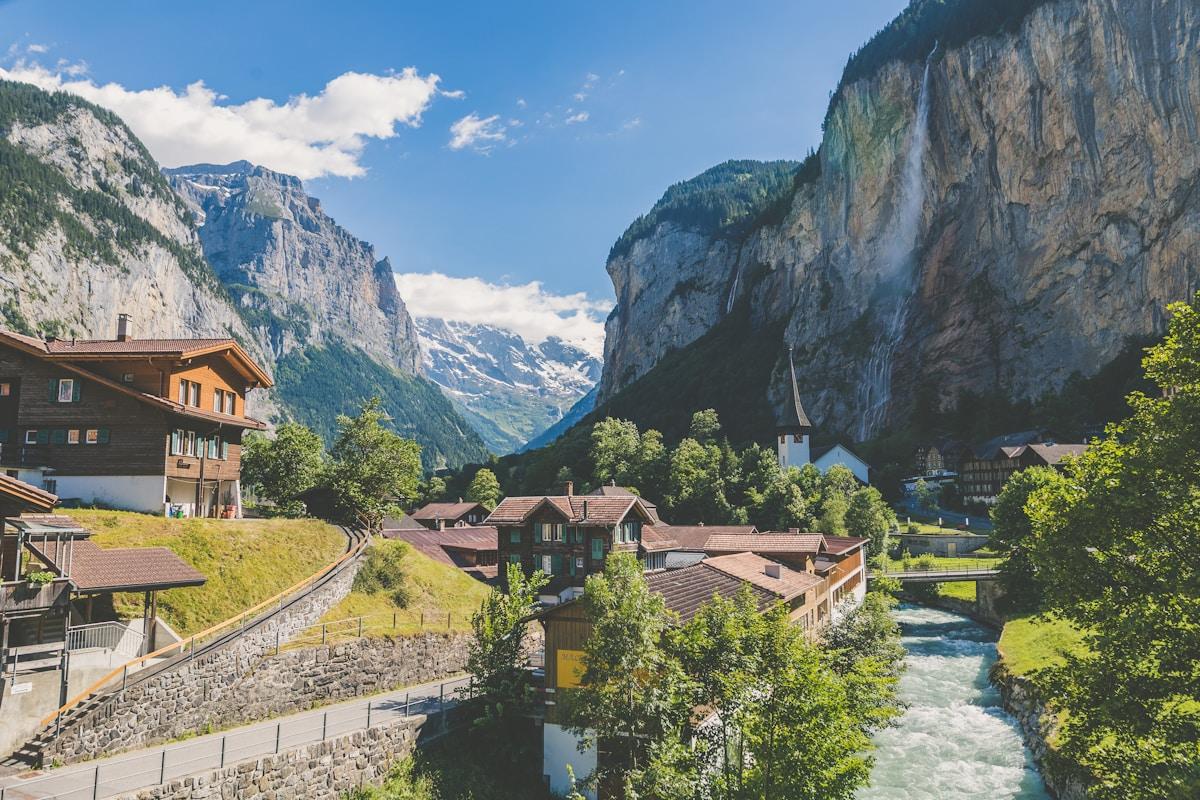
Switzerland's central European location is a major lifestyle advantage — Milan is 3.5 hours by train from Lausanne, Munich is 3 hours from Zurich, Paris is 4 hours from Geneva. Weekend trips across Europe are affordable with advance train bookings through SBB or budget airlines from Geneva and Zurich airports. The Swiss Alps provide world-class skiing, hiking, and outdoor recreation within 1-2 hours of every major city — a quality-of-life benefit that's hard to quantify but deeply valued by students and professionals who prioritize outdoor activities and natural beauty.
Explore Related Resources & Tools
Free tools and expert services from Karan Gupta Consulting
Frequently Asked Questions
What is the cost of an MBA in Switzerland?
Can Indian MBA graduates work in Switzerland after graduation?
Is IMD a good business school?
Why is Switzerland expensive for MBA students?
Are Swiss MBA programs taught in English?
Why Choose Karan Gupta Consulting?
- 27+ years of expertise in overseas education consulting
- 160,000+ students successfully counselled
- Personal guidance from Dr. Karan Gupta, Harvard Business School alumnus
- Licensed MBTI® and Strong® career assessment practitioner
- End-to-end support from career clarity to visa approval
SHARE THIS ARTICLE

Dr. Karan Gupta
Founder & Chief Education Consultant
Harvard Business School alumnus and India's leading career counsellor with 27+ years guiding 160,000+ students to top universities worldwide. Licensed MBTI® practitioner. Managing Director of IE University (India & South Asia).