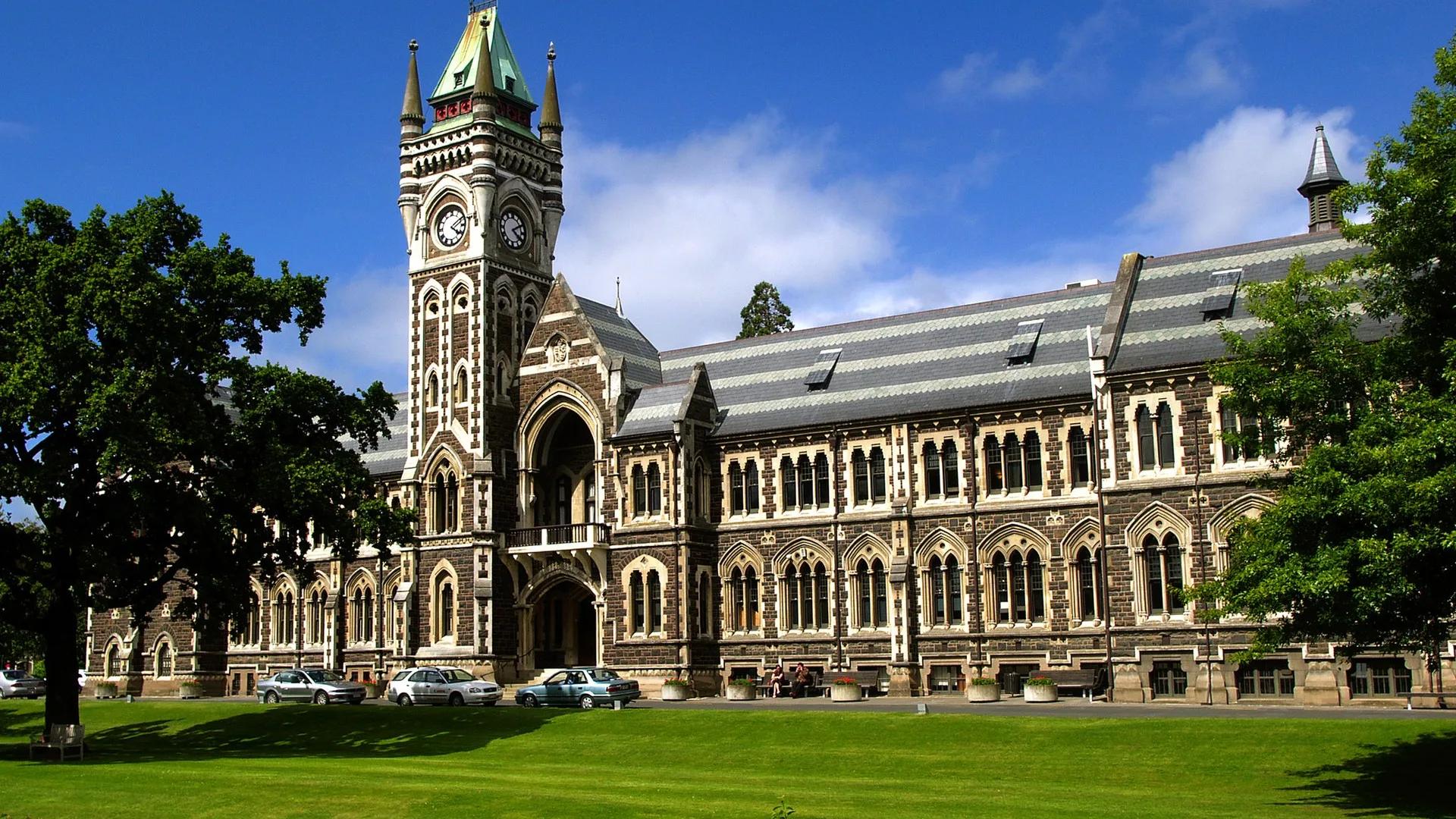
University of Otago
Dunedin, New Zealand
The University of Otago is New Zealand's oldest and most research-intensive university, consistently ranked in the QS top 200. Its health sciences, dentistry, and biomedical programmes are among the best in the Southern Hemisphere. Dunedin is New Zealand's quintessential student city — affordable, vibrant, and built around the university, offering a quality of life that larger cities struggle to match.
#195
QS World Ranking
1869
Founded
21,000+
Students
#1
NZ Health Sciences
Otago at a Glance
#195
QS World Ranking
#1
NZ Health Sciences
1869
Founded
21,000+
Students

Dr. Karan Gupta's Strategic View
Why Otago Is a Strong Choice
New Zealand's Health Sciences Capital
Otago's health sciences are the university's crown jewel. The medical school is New Zealand's oldest, the dental school is the country's only one, and the public health programme is the top-ranked in Australasia. These are not niche programmes — they are the backbone of New Zealand's healthcare system.
Research output in health sciences is prolific. Otago researchers have led national studies on population health, cancer epidemiology, and Pacific Island health systems that have shaped government policy. The Christchurch Health and Development Study, run by Otago, is one of the world's longest-running longitudinal health studies.
For Indian students interested in health careers, Otago offers direct pathways into New Zealand's public health system. The country has a shortage of health professionals, and Otago graduates are in demand. The post-study work visa allows you to gain clinical or research experience in NZ before deciding whether to stay, return to India, or move elsewhere.
Dunedin — The World's Best Student Town
Dunedin is not just a city with a university — it is a university town in the truest sense. With 21,000 students in a city of 130,000, the university IS the city. Student culture permeates everything — the cafes, the pubs, the events calendar, the housing market. You will never feel like an outsider because students run the place.
The famous North Dunedin student quarter, known colloquially as 'Studentville,' offers some of New Zealand's most affordable student housing. Weekly rent for a room in a shared flat is NZD 120-180 — a fraction of Auckland or Sydney prices. The campus is walkable from everywhere in the student quarter, and the city centre is 10 minutes on foot.
The natural environment is stunning. The Otago Peninsula has a royal albatross colony, blue penguins, and sea lions — genuine wildlife within 30 minutes of campus. Weekend trips to Queenstown (3 hours), Milford Sound, and Central Otago's wine country are student traditions. If you enjoy nature, Dunedin is paradise.
Affordability That Makes Sense
The total cost of a master's at Otago — tuition plus living — is typically NZD 60,000-80,000 for the entire degree. Compare that to AUD 100,000+ for a similar programme at an Australian university or GBP 50,000+ in the UK. The value proposition is clear, and New Zealand's post-study work visa (up to 3 years) means you have time to earn back your investment.
Otago's scholarship programme is generous for international students. The University of Otago International Master's Research Scholarship covers full tuition for selected students. Faculty-specific scholarships and doctoral funding are also available. If you have a strong academic record, scholarship funding is realistic, not just theoretical.
New Zealand allows international students to work 20 hours per week during semester and full-time during breaks. In Dunedin, part-time jobs in hospitality, retail, and tutoring are readily available. The cost of living is low enough that part-time earnings cover a meaningful portion of your expenses — something that is much harder to achieve in expensive cities like Sydney or London.
Campus & Student Life
Otago's campus is centred around the historic clocktower building in North Dunedin, surrounded by heritage architecture, gardens, and the Leith River. The campus blends seamlessly into the student quarter, creating a walkable, integrated community.
Admission Requirements
Otago is accessible for international students with strong academic records. The university actively recruits internationally and offers a supportive admissions process. Health science programmes are more competitive, while other master's programmes have straightforward entry requirements.
Otago offers New Zealand International Doctoral and Master's Scholarships that cover full tuition for selected students. Apply early — these are competitive but well worth pursuing, especially for health sciences.
Master's Programs
- Master of Public Health
- MSc Computer Science
- Master of Applied Science (Data Science)
- Master of Bioethics and Health Law
- MSc Biomedical Sciences
MBA Program
- MBA (full-time, 15 months)
- MBA (part-time)
Interview Preparation
What to expect and how to prepare for your Otago interview
Format
Not typically required for most programmes; health sciences may include an interview
Duration
20-30 minutes if conducted
Interviewers
Programme convenor or admissions panel
Interview Style
Friendly and motivational — focused on your fit with the programme and Dunedin lifestyle
What Otago Looks For
Sample Interview Questions
Preparation Tips
- Show awareness of Otago's specific strengths (health sciences, epidemiology, dental)
- Mention the appeal of Dunedin's student-town culture if it resonates with you
- Research specific faculty or research groups in your area
- If interested in health, highlight any clinical or public health experience
Common Mistakes
- Not researching Dunedin — it is a small city, and some students are surprised
- Applying to health sciences without understanding the clinical commitment required
- Treating Otago as a backup without genuine interest in New Zealand
What Type of Student Gets In?
Academically curious with genuine interest in their field
Community-oriented and comfortable in intimate settings
Outdoorsy — Dunedin's natural environment is a major draw
Self-motivated — smaller city means you create your own opportunities
Values quality of life and wellbeing as part of the university experience
The biggest mistake is applying to Otago expecting a Sydney or Melbourne experience. Dunedin is a small city. It is cold. There are no Bollywood screenings or Indian grocery stores on every corner. If you need big-city comforts, go elsewhere. But if you want to be treated as a person rather than a number, learn from world-class researchers who know your name, and graduate with minimal debt — Otago delivers something that no big-city university can match.
Costs & ROI
Dunedin is one of New Zealand's most affordable cities for students. Rent is significantly lower than Auckland or Wellington — a room in a shared flat costs NZD 120-180 per week. Otago's residential colleges offer all-inclusive accommodation with meals. New Zealand offers a post-study work visa of up to 3 years for master's graduates.
| Level | Tuition |
|---|---|
| Master's (most programmes) | NZD 32,000 - 45,000/year |
| MBA | NZD 58,000 total |
| Living Costs | NZD 1,200 - 1,800/month |
Salary Ranges
Career & Industry
New Zealand Ministry of Health
Otago's public health and medical programmes have a direct pipeline to NZ's Ministry of Health. Research collaborations, policy consultations, and graduate recruitment make the Ministry one of Otago's most important partners for health science students.
Southern District Health Board
The local health board operates Dunedin Hospital and partners with Otago's medical and dental schools for clinical training, research, and graduate employment. Many Otago health graduates begin their careers at Southern DHB before moving to larger centres.
Dunedin City Council
As Dunedin's largest institution, Otago works closely with the city council on urban planning, sustainability, and economic development. Students in public policy, environmental science, and business benefit from the university-city partnership.
Otago graduates are well-regarded across New Zealand and internationally. Health science graduates have excellent employment outcomes in NZ's public health system. The post-study work visa (up to 3 years for master's) provides time to establish careers. Otago's alumni network is tight-knit and supportive, particularly in health, education, and public sector roles.
Application Timeline
12-18 Months Before
- Research Otago programmes and faculty
- Check NZ scholarship opportunities
- Understand the Southern Hemisphere academic calendar (February start)
9-12 Months Before
- Take IELTS or equivalent
- Apply for NZ International Master's Scholarship if eligible
- Prepare application documents
6-9 Months Before
- Submit application (Otago has rolling admissions for most programmes)
- Apply for scholarships and financial aid
3-6 Months Before
- Receive offer and accept
- Pay deposit
- Apply for New Zealand student visa
1-3 Months Before
- Arrange accommodation — Otago residential colleges or flats in North Dunedin
- Arrange health insurance
- Book flights to Dunedin (via Auckland or Christchurch)
Arrival
- Attend Orientation Week (O-Week) — one of NZ's most famous student events
- Set up bank account and phone
- Explore Dunedin — it is small enough to walk everywhere
Otago vs Peers
Otago vs University of Auckland
Otago: Stronger health sciences, more affordable Dunedin living, true student-town experience, more intimate academic community
Other: Higher global ranking, Auckland's larger job market, more diverse programme range, bigger international student community
Otago vs Monash University
Otago: Significantly lower tuition and living costs, smaller class sizes, NZ post-study visa (3 years), stronger in dentistry and NZ health systems
Other: Higher ranking, Group of Eight prestige, Melbourne location, broader programme range, stronger Asian network
Otago Is Right For...
- Students targeting health sciences, public health, or dental careers
- Those who thrive in small, close-knit academic communities
- Applicants seeking affordable study abroad with high quality of life
- Students planning to use New Zealand's post-study work visa
- Research-oriented students who value faculty mentorship
Otago Is Not Right For...
- Students who need a large, cosmopolitan city to be happy
- Those targeting careers in finance, consulting, or tech at global firms
- Applicants who prioritise brand recognition in India over programme quality
- Students who dislike cold weather (Dunedin winters are brisk)

Dr. Karan Gupta's Advice
FAQs: Otago for Indian Students
Is the University of Otago good for Indian students?
Otago is excellent for Indian students who value academic depth, affordability, and quality of life. Health sciences, public health, and dental programmes are world-class. Dunedin is affordable and safe, and New Zealand's post-study work visa provides up to 3 years to build your career. The Indian community is small but growing, and the university provides strong support for international students.
Is Dunedin too small for international students?
Dunedin is small (130,000 people), but 21,000 of them are students — so the city has a vibrant student culture. If you need big-city amenities, Dunedin may feel limiting. But if you value walkability, affordable living, close-knit community, and stunning natural scenery, Dunedin is genuinely special. Most students who come sceptical leave as Dunedin converts.
What is the cost of studying at Otago?
Master's tuition is NZD 32,000-45,000 per year. Living costs in Dunedin are NZD 1,200-1,800 per month — among the lowest in Australasia for a university city. Total investment for a 1-2 year master's is approximately NZD 60,000-80,000. Scholarships can significantly reduce tuition costs for strong applicants.
Can I work in New Zealand after graduating from Otago?
Yes. New Zealand offers a post-study work visa of up to 3 years for master's graduates. This is one of the most generous provisions globally. Health science graduates are in particular demand due to NZ's healthcare workforce shortage. Dunedin's job market is smaller than Auckland or Wellington, but many graduates relocate to larger centres for work while maintaining their Otago network.
Related Articles
Wall Street Internships: What Matters More Than Your College Name
A Wall Street job isn't guaranteed by an Ivy League degree. Here's how students from any college can compete for elite finance internships.
Common Data Set: What Harvard and Top U.S. Colleges Really Consider
The Common Data Set reveals what U.S. colleges say matters in admissions—and what they say does not.
Your College Scholarship Isn’t Always Final: How to Ask for More
A three-paragraph scholarship appeal email can sometimes unlock more college aid. Learn when to negotiate, what to say, and when an appeal can backfire.
Want to Study at Otago?
Get expert guidance from Dr. Karan Gupta: Harvard alumnus, 27+ years of global admissions experience guiding 160,000+ students worldwide.