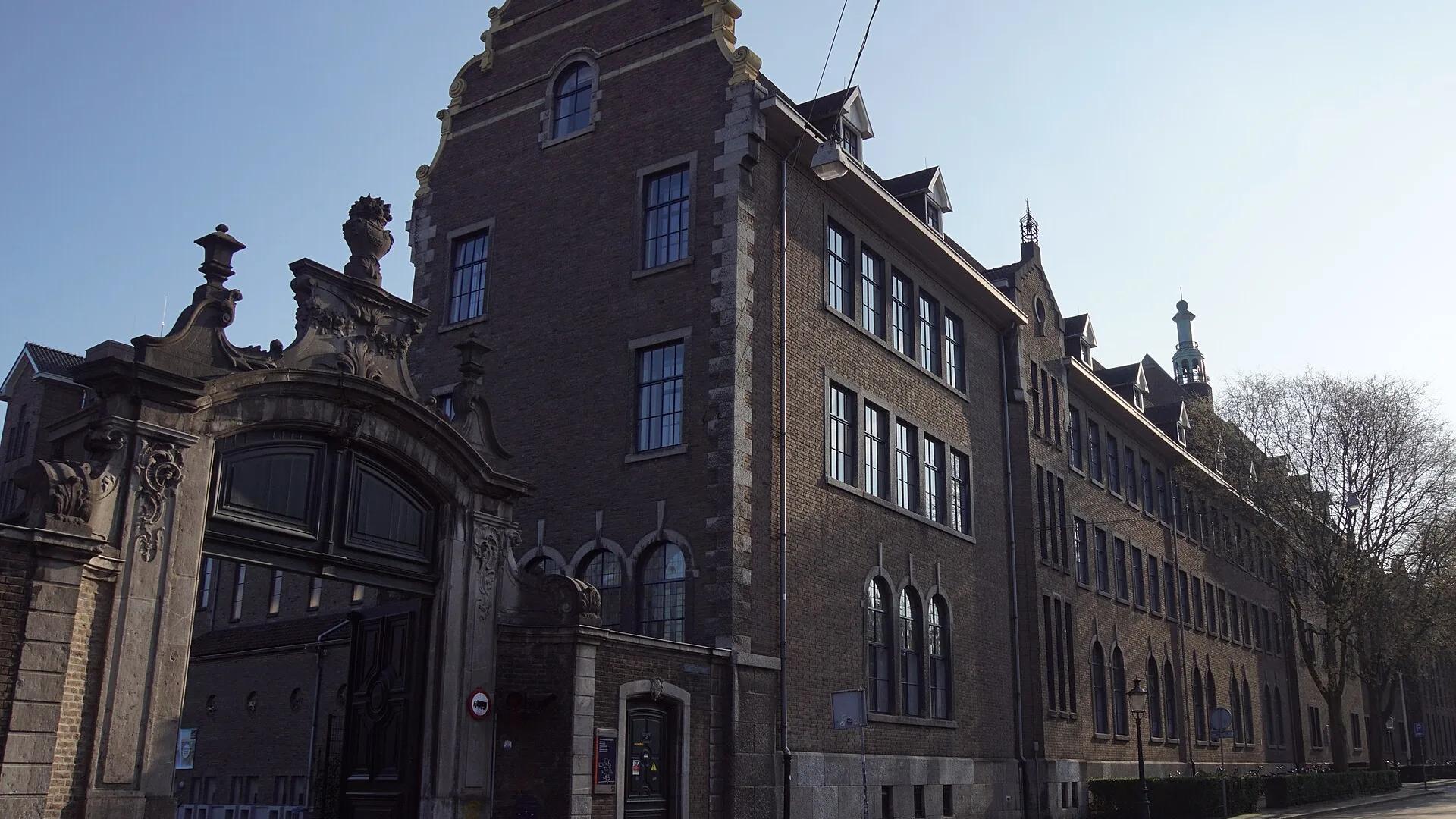
Maastricht University
Maastricht, Netherlands
Maastricht University is the most international university in the Netherlands and a global pioneer of Problem-Based Learning (PBL). Located at the crossroads of the Netherlands, Belgium, and Germany, UM offers world-class programmes in business, law, AI, and European studies with a uniquely interactive, student-centred teaching methodology.
#246
QS World Ranking
52%
International Students
1976
Founded
18,500
Students
Maastricht at a Glance
#246
QS World Ranking
52%
International Students
120+
Nationalities
1976
Founded

Dr. Karan Gupta's Strategic View
Why Maastricht Is a Strong Choice
Problem-Based Learning — A Different Way to Learn
Maastricht University pioneered Problem-Based Learning in the Netherlands and is now one of the world's leading PBL institutions. In PBL, students work in small groups of 12-15, guided by a tutor but driven by their own research and discussion. There are no traditional lectures as the primary teaching method — instead, you are given real-world problems to analyse, research, and present solutions for.
This methodology develops skills that traditional lecture-based education does not: critical thinking under ambiguity, collaborative problem-solving, self-directed research, and the ability to synthesise information from multiple sources. These are exactly the skills that consulting firms, tech companies, and international organisations value most.
For Indian students accustomed to rote learning and lecture-heavy curricula, PBL is a significant adjustment. But those who make the transition consistently say it transformed how they think and learn. If you are tired of memorising and ready to actually understand, Maastricht is the place.
Europe's Most International University
With 52% international students from over 120 nationalities, Maastricht is the most international university in the Netherlands. Almost all master's programmes and many bachelor's programmes are taught entirely in English. Your tutorial group might include students from India, Germany, China, Brazil, and Nigeria — working together on the same problem.
This diversity is not incidental — it is by design. Maastricht's location at the tri-border of the Netherlands, Belgium, and Germany means the city itself is inherently multicultural. Students regularly cross borders for shopping, socialising, and internships. Brussels (EU capital) is 2 hours by train; Aachen (Germany) is 30 minutes.
For Indian students, this hyper-international environment accelerates cultural adaptation and builds a genuinely global network. Unlike universities where international students cluster in national groups, Maastricht's PBL groups force meaningful cross-cultural collaboration from day one.
The AI and Data Science Advantage
Maastricht's Department of Data Science and Knowledge Engineering (DKE) is one of Europe's oldest and most respected AI departments. The MSc in Artificial Intelligence covers reinforcement learning, NLP, computer vision, and game AI — the department is famous for its work on game-playing AI systems that have competed internationally.
Graduates from Maastricht's AI programme work at DeepMind, Google, Philips, and major European research labs. The programme is hands-on, with significant project work and opportunities to contribute to real research. The department's faculty includes leading researchers in multi-agent systems and machine learning.
For Indian students targeting AI careers in Europe, Maastricht offers a strong programme at a fraction of the cost of UK or US alternatives. The Netherlands' favourable post-study work visa (Zoekjaar — 1 year orientation visa) and the growing Dutch tech sector make this a strategically smart choice for AI-focused careers.
Campus & Student Life
Maastricht's campus is spread across the city's historic centre, with faculty buildings in converted medieval churches, monasteries, and alongside the Maas river. The city itself is the campus — compact, walkable, and full of character.
Admission Requirements
Maastricht University has a straightforward admissions process for international students, with most English-taught programmes requiring a relevant bachelor's degree, English proficiency, and specific prerequisite courses. Admission is competitive for popular programmes like AI and International Business.
Maastricht uses Studielink (the Dutch national application system) for all applications. Apply early — popular programmes like AI and International Business fill up quickly under the numerus fixus system.
Master's Programs
- MSc International Business
- MSc Artificial Intelligence
- MSc Data Science for Decision Making
- LLM European Law
- MSc Financial Economics
- MSc Global Health
MBA Program
- Maastricht MBA (part-time/modular)
Interview Preparation
What to expect and how to prepare for your Maastricht interview
Format
Most programmes do not require an interview. Selection is based on documents, motivation letter, and academic record. Some honours programmes include an interview.
Duration
20-30 minutes (if applicable)
Interviewers
Programme coordinator or admissions committee
Interview Style
Motivational — focused on fit with PBL methodology and programme goals
What Maastricht Looks For
Sample Interview Questions
Preparation Tips
- Understand PBL before you apply — Maastricht takes it seriously and your motivation letter should reflect genuine enthusiasm for this approach
- Check prerequisite courses early — some programmes require specific maths, statistics, or economics courses
- Apply by the early deadline for numerus fixus programmes
- Highlight international experience or cross-cultural skills
Common Mistakes
- Not understanding what PBL means in practice — research it thoroughly
- Applying without checking programme-specific prerequisites
- Missing the Studielink application deadline or numerus fixus cutoff
What Type of Student Gets In?
Self-directed learner comfortable without step-by-step guidance
Strong communicator who contributes actively in group settings
Internationally minded and culturally curious
Intellectually independent — prefers understanding over memorising
Comfortable in a smaller city with tight-knit community
The most common mistake is underestimating what PBL demands. Indian students who have excelled in lecture-based systems sometimes assume PBL is easier because there are no large exams in the traditional sense. It is not easier — it is different. You need to prepare for every tutorial, contribute to group discussions, and manage your own learning. Students who coast will struggle.
Costs & ROI
Dutch university tuition for non-EU students is moderate compared to the UK or US. Maastricht is cheaper than Amsterdam or Rotterdam for living costs. The Holland Scholarship and university-specific scholarships can cover partial tuition.
| Level | Tuition |
|---|---|
| Bachelor's (non-EU) | €9,500-€13,000/year |
| Master's (non-EU) | €15,500-€20,000/year |
| Living Costs | €900-€1,300/month |
Salary Ranges
Career & Industry
Brightlands
The Brightlands innovation campuses in Limburg (co-developed with the Province and Maastricht University) focus on smart services, health, materials, and food innovation. Students access internships and research projects with companies operating on these campuses.
ALDI South Group
The major European retailer has a collaboration with Maastricht SBE for supply chain management research and talent recruitment. The proximity to the Belgian and German borders makes Maastricht a natural hub for cross-border retail operations.
European Commission
Maastricht's strong European law and European studies programmes have a direct pipeline to EU institutions in Brussels (2 hours by train) and Luxembourg (30 minutes). Several UM professors hold advisory roles with EU bodies.
Maastricht graduates are well-regarded by European employers, particularly in consulting, financial services, EU institutions, and technology. The school's PBL-trained graduates are known for problem-solving skills, teamwork, and adaptability — traits employers actively seek.
Application Timeline
12-18 Months Before
- Research programmes and understand PBL methodology
- Check prerequisite courses and begin any required preparation
- Explore Maastricht as a city — it is unique in the Netherlands
9-12 Months Before
- Take IELTS/TOEFL
- Draft motivation letter emphasising PBL fit and international mindset
- Register on Studielink and begin application
6-9 Months Before
- Submit application via Studielink (check programme-specific deadlines)
- Submit supporting documents to Maastricht directly
- Apply for housing via Maastricht Housing
3-6 Months Before
- Receive admission decision
- Accept offer via Studielink
- Begin Dutch student visa (MVV) application through Nuffic
1-3 Months Before
- Pay tuition deposit
- Arrange housing (Maastricht housing market is tight — start early)
- Open Dutch bank account
Arrival
- Attend INKOM (Maastricht's introduction week — do not skip this)
- Register at the municipality (gemeente)
- Get your OV-chipkaart for Dutch public transport
Maastricht vs Peers
Maastricht vs University of Amsterdam
Maastricht: Problem-Based Learning methodology, more international (52% vs 20%), smaller tutorial groups, lower living costs, tri-border European location
Other: Amsterdam location (global city), higher QS ranking, larger programme variety, stronger brand recognition globally, more vibrant city life
Maastricht vs Tilburg University
Maastricht: PBL methodology, higher percentage of international students, stronger AI programme, more internationally known
Other: Stronger academic economics research, lower tuition for some programmes, stronger econometrics, closer to Eindhoven tech hub
Maastricht Is Right For...
- Students who learn best through discussion, debate, and problem-solving rather than lectures
- Those targeting careers in EU institutions, Dutch business, or European tech
- Applicants who value a highly international student body (52% non-Dutch)
- Students who want a charming European city experience at moderate cost
Maastricht Is Not Right For...
- Students who prefer structured, lecture-heavy teaching with clear instructions
- Those who need a big-city environment (Maastricht is small)
- Applicants targeting US or Indian job markets where Maastricht's brand is less known
- Students uncomfortable with self-directed, group-based learning

Dr. Karan Gupta's Advice
FAQs: Maastricht for Indian Students
What is Problem-Based Learning (PBL) at Maastricht?
PBL is Maastricht's core teaching methodology. Students work in small groups of 12-15, guided by a tutor, to analyse and solve real-world problems. There are no traditional large lectures — instead, learning is driven by student research, group discussion, and peer teaching. Each tutorial group meets twice per week, and students are expected to prepare independently between sessions.
Is Maastricht University good for Indian students?
Maastricht is excellent for Indian students who want a highly interactive, international education at moderate cost. The PBL methodology is different from Indian lecture-based education and requires adjustment, but students who adapt develop strong analytical and collaborative skills. The Netherlands offers a 1-year post-study work visa (Zoekjaar), and Maastricht's living costs are lower than Amsterdam or Rotterdam.
How expensive is Maastricht compared to other Dutch universities?
Tuition for non-EU students ranges from €9,500-€20,000/year depending on the programme — comparable to other Dutch universities. Living costs in Maastricht are €900-1,300/month, which is 15-25% cheaper than Amsterdam. The Holland Scholarship (€5,000 one-time) and university-specific scholarships can offset costs.
Can I stay in the Netherlands after graduating?
Yes. The Netherlands offers the Zoekjaar (orientation year) visa, allowing non-EU graduates to stay for one year after graduation to find employment. Once employed, you transition to a work visa or the highly skilled migrant (kennismigrant) scheme. The Netherlands' 30% ruling also provides a significant tax benefit for international workers in qualifying roles.
What is Maastricht like as a city?
Maastricht is a compact, historic city of 120,000 people in the southernmost tip of the Netherlands. It feels more Burgundian than Dutch — cobblestone streets, café terraces, and a food culture influenced by Belgium and France. The city is walkable, safe, and has a vibrant student scene. It is not Amsterdam — it is smaller, quieter, and cheaper. Brussels is 2 hours away, Aachen 30 minutes.
Related Articles
Wall Street Internships: What Matters More Than Your College Name
A Wall Street job isn't guaranteed by an Ivy League degree. Here's how students from any college can compete for elite finance internships.
Common Data Set: What Harvard and Top U.S. Colleges Really Consider
The Common Data Set reveals what U.S. colleges say matters in admissions—and what they say does not.
Your College Scholarship Isn’t Always Final: How to Ask for More
A three-paragraph scholarship appeal email can sometimes unlock more college aid. Learn when to negotiate, what to say, and when an appeal can backfire.
Related Guides & Resources
Want to Study at Maastricht?
Get expert guidance from Dr. Karan Gupta: Harvard alumnus, 27+ years of global admissions experience guiding 160,000+ students worldwide.