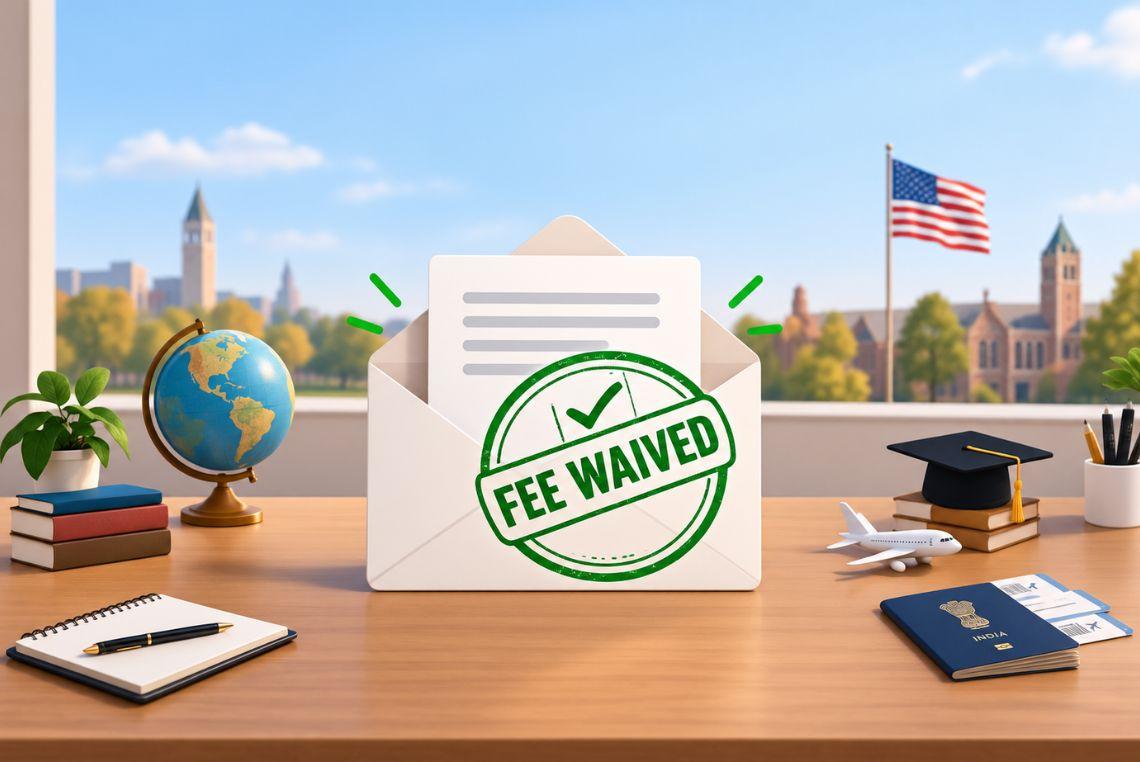
Netherlands Student Visa MVV and Residence Permit for Indian Students

Dr. Karan Gupta is a Harvard Business School alumnus and career counsellor with 27+ years of experience and 160,000+ students guided. His insights on Visa & Immigration come from decades of hands-on experience helping students achieve their goals.
Why the Netherlands Is a Premier Study Destination for Indian Students
The Netherlands has established itself as one of Europe's most attractive study destinations for Indian students. With over 2,100 English-taught programmes, world-renowned universities like TU Delft, University of Amsterdam, Erasmus University Rotterdam, and Wageningen University, and a deeply international academic culture, the Netherlands offers a compelling combination of academic excellence, practical education, and outstanding career prospects.
For Indian students, the Netherlands stands out for several reasons. Dutch universities consistently rank among the top 100 globally. The country's approach to education emphasises critical thinking, problem-solving, and practical application rather than rote learning. English proficiency among the Dutch population exceeds 90 percent, making daily life comfortable for Indian students. The multicultural environment, with over 200 nationalities represented in major cities, helps Indian students feel welcome from day one.
In 2026, the Netherlands continues to see growing interest from Indian students, particularly in fields like data science, artificial intelligence, business analytics, sustainable engineering, water management, and supply chain logistics. This guide covers everything you need to know about the Dutch student visa process, from MVV application to post-study work options.
Understanding the Dutch Immigration Framework for Students
The Netherlands uses a two-document system for international students from countries like India that require an entry visa. Understanding both components is essential before you begin the application process.
Free Tool
Visa & Work Rights Simulator
Compare post-study work rights across countries in seconds.
Try it free →MVV (Machtiging tot Voorlopig Verblijf)
The MVV is a provisional residence permit or entry visa. It is a sticker placed in your passport by the Dutch Embassy that allows you to enter the Netherlands for the purpose of study. The MVV is valid for 90 days, during which you must collect your residence permit card. Think of the MVV as your entry ticket into the Netherlands.
Residence Permit (Verblijfsvergunning)
The residence permit is a biometric card (similar in format to a credit card) that serves as your legal authority to reside in the Netherlands for the duration of your studies. It contains your photograph, fingerprints, and the purpose and conditions of your stay. The residence permit is typically valid for the duration of your study programme plus 3 months.
Key Authorities
- IND (Immigratie- en Naturalisatiedienst): The Immigration and Naturalisation Service processes all residence permit applications
- Nuffic: The Dutch organisation for internationalisation in education, manages the Nuffic Certificate (formerly known as the credential evaluation)
- Your Dutch university: Acts as your recognised sponsor (erkend referent) and submits the visa application on your behalf
- Dutch Embassy/Consulate in India: Issues the MVV sticker in your passport (New Delhi embassy or Mumbai consulate)
Eligibility Requirements for Indian Students
Academic Requirements
- An unconditional offer of admission from a Dutch higher education institution recognised by the Dutch government
- For bachelor's programmes: completed 12th standard with strong grades (typically 75 percent or above). Some programmes may require completion of a foundation year
- For master's programmes: completed bachelor's degree (minimum 3-year programme) with relevant academic background
- For PhD positions: completed master's degree (PhD positions in the Netherlands are typically paid employment)
- English proficiency: IELTS 6.0 to 6.5 overall (varies by programme) or TOEFL iBT 80 to 92
Financial Requirements
You must demonstrate that you have sufficient funds to cover your living expenses in the Netherlands. As of 2026, the financial requirement is approximately EUR 13,200 for one academic year (about INR 12,14,000). This amount is set annually by the Dutch government and covers only living expenses, not tuition.
Acceptable forms of financial proof include:
- A blocked bank account (geblokkeerde rekening) with a Dutch bank containing the full amount
- A scholarship award letter covering living expenses
- A declaration from a sponsor (parent or guardian) with supporting bank statements showing the required balance
- An education loan sanction letter from a recognised bank
Health Insurance
All international students in the Netherlands must have adequate health insurance. If you work more than a few hours per week, you are required to take out Dutch basic health insurance (basisverzekering), which costs approximately EUR 120 to 150 per month. If you are not working, you can use international student insurance, which is typically less expensive at EUR 30 to 50 per month. Many universities partner with insurance providers and offer group rates for international students.
Step-by-Step Application Process
The Dutch student visa process is highly structured and largely managed by your university. This makes it one of the smoother immigration processes in Europe for Indian students.
Step 1: Secure Your University Admission
Apply to your chosen Dutch university through Studielink (the centralised Dutch higher education application platform) for bachelor's programmes, or directly through the university's portal for master's and PhD programmes. Upon receiving your unconditional offer, accept it and pay any required tuition deposit (typically EUR 1,000 to 2,500 as an advance against tuition).
Step 2: University Initiates Visa Application
Once you accept your offer and confirm your enrolment, your university's international office will initiate the combined MVV and residence permit application with the IND on your behalf. As a recognised sponsor (erkend referent), your university has the legal authority to apply for your visa directly. You will need to provide the university with the following:
- Completed visa application form (university-specific form)
- Certified copy of your passport (bio page)
- Passport-sized photographs meeting Dutch specifications (35mm x 45mm)
- Proof of financial means for the academic year
- Proof of tuition fee payment or scholarship
- Health insurance proof (or intent to arrange upon arrival)
- TB screening certificate from a designated panel physician in India (mandatory for Indian nationals)
- Previous academic transcripts and certificates (apostilled or legalised)
- Signed antecedents certificate (declaration of no criminal record)
Step 3: TB Screening
Indian nationals are required to undergo a tuberculosis (TB) screening test before entering the Netherlands. This must be done at a designated panel physician approved by the IND. In India, these are available in New Delhi, Mumbai, Chennai, and Hyderabad. The test involves a chest X-ray and costs approximately EUR 60 to 100 (INR 5,500 to 9,200). The certificate is valid for 6 months.
Step 4: IND Processing
The IND processes student visa applications within 2 to 4 weeks for applications submitted by recognised sponsors (universities). During peak season (April to July), processing may extend to 6 to 8 weeks. Your university will track the application status and notify you of the outcome. No separate visa interview is required for Indian students when the application is submitted through the university.
Step 5: Collect MVV Sticker
Upon approval, the IND sends the authorisation to the Dutch Embassy in New Delhi or the Consulate in Mumbai. You must visit the embassy or consulate in person to collect the MVV sticker in your passport. You will need to bring your original passport, a recent passport photograph, the approval notification from your university, and the processing fee payment receipt. The MVV sticker is typically ready within 1 to 2 weeks of IND approval.
Step 6: Travel to the Netherlands and Collect Residence Permit
After entering the Netherlands on your MVV, you must schedule an appointment at the IND desk to collect your residence permit card. This appointment involves a brief identity verification, fingerprint collection, and photograph (for the biometric card). The residence permit card is typically ready for collection within 1 to 2 weeks after your appointment.
Tuition Fees and Living Costs in the Netherlands for 2026
Tuition Fees
Non-EU students (including Indian students) pay institutional tuition rates, which are significantly higher than the statutory rate for EU students. Here is a breakdown by programme type:
| Programme Level | Annual Tuition Range (EUR) | Approximate INR |
|---|---|---|
| Bachelor's (Research Universities) | 8,000 - 15,000 | 7,36,000 - 13,80,000 |
| Bachelor's (Applied Sciences) | 7,000 - 12,000 | 6,44,000 - 11,04,000 |
| Master's (Research Universities) | 10,000 - 22,000 | 9,20,000 - 20,24,000 |
| MBA Programmes | 25,000 - 55,000 | 23,00,000 - 50,60,000 |
| PhD Programmes | Typically salaried | Paid position (EUR 2,600 - 3,400/month) |
Monthly Living Costs
| Expense Category | Monthly Cost (EUR) | Approximate INR |
|---|---|---|
| Accommodation (student housing) | 400 - 800 | 36,800 - 73,600 |
| Food and groceries | 200 - 350 | 18,400 - 32,200 |
| Health insurance | 30 - 150 | 2,760 - 13,800 |
| Public transport (OV-chipkaart) | 50 - 100 | 4,600 - 9,200 |
| Mobile phone and internet | 20 - 40 | 1,840 - 3,680 |
| Study materials | 25 - 75 | 2,300 - 6,900 |
| Personal and leisure | 100 - 200 | 9,200 - 18,400 |
| Total | 825 - 1,715 | 75,900 - 1,57,780 |
Living costs vary significantly by city. Amsterdam and Rotterdam are the most expensive, while cities like Enschede, Groningen, and Eindhoven offer substantially lower living costs, particularly for accommodation.
Working While Studying in the Netherlands
The Netherlands offers reasonable work opportunities for international students, though with certain restrictions.
Work Rules for Indian Students
- During academic year: Up to 16 hours per week with a work permit (TWV) obtained by your employer through UWV
- During summer (June, July, August): Full-time work permitted with a TWV
- Mandatory internships: Full-time work as part of your curriculum, no separate TWV required (must be in your study agreement)
- Self-employment: Allowed but requires additional permissions and registration with the KvK (Chamber of Commerce)
Finding Work
Popular job platforms include Indeed.nl, LinkedIn Netherlands, Undutchables (specialises in English-speaking jobs), StudentJob.nl, and university career portals. Common student jobs include customer service, IT support, tutoring, hospitality, and research assistance. Many Indian students also find work in the tech sector, which has a strong presence in Amsterdam, Eindhoven, and Rotterdam.
Average Student Earnings
The Dutch minimum wage for workers aged 21 and above is approximately EUR 13.68 per hour as of January 2026. Many student jobs pay between EUR 12 and EUR 18 per hour depending on the role, your qualifications, and the sector. Working the maximum 16 hours per week at the minimum wage yields approximately EUR 875 per month before tax, which can cover a significant portion of your living expenses.
Scholarships for Indian Students
Several scholarships are available specifically for Indian students studying in the Netherlands:
- Holland Scholarship: EUR 5,000 one-time grant for non-EU students starting a bachelor's or master's at a participating Dutch institution. Competitive, merit-based
- Orange Tulip Scholarship: Administered by Nuffic, available at over 50 Dutch institutions with varying amounts (partial to full tuition waiver). Specifically targeted at Indian students
- Erasmus Mundus Joint Master Degrees: Fully funded EU scholarships covering tuition, travel, and living costs for selected joint master's programmes
- University-specific scholarships: TU Delft Excellence Scholarship (full tuition waiver), Amsterdam Excellence Scholarship (EUR 25,000), Leiden University Excellence Scholarship, and many others
- NL Scholarship (formerly NFP): For professionals from developing countries (including India) pursuing short courses or master's programmes in select fields
Post-Study Work Options: The Orientation Year
The Netherlands offers one of Europe's best post-study work schemes through the orientation year residence permit (zoekjaar).
Key Details
- Available to graduates of Dutch bachelor's, master's, and PhD programmes from institutions recognised by the Dutch government
- Valid for 12 months, during which you can work without restrictions (no TWV needed)
- Must be applied for within 3 years of graduation (you do not have to apply immediately after finishing your degree)
- Application fee: approximately EUR 210
- During the orientation year, you can also start your own business
Transitioning to a Work Permit
After finding employment during your orientation year, you can apply for a highly skilled migrant (kennismigrant) residence permit. The minimum salary requirement for highly skilled migrants under 30 is approximately EUR 3,549 per month (gross) as of 2026. For those 30 and above, the threshold is approximately EUR 4,840 per month. The Dutch tech sector, particularly in Amsterdam, Eindhoven, and Rotterdam, actively recruits Indian talent in software engineering, data science, and engineering roles.
Long-Term Residency and the 30% Tax Ruling
Highly skilled migrants recruited from abroad may qualify for the 30% ruling (30%-regeling), which allows 30 percent of your gross salary to be paid tax-free for up to 5 years. This is a significant financial benefit that effectively increases your net salary by approximately 15 to 20 percent compared to a fully taxed salary. After 5 years of continuous legal residence (which can include your study period), you can apply for permanent residence or Dutch citizenship (dual nationality with India is not currently permitted, so this would require renouncing Indian citizenship).
Practical Tips for Indian Students in the Netherlands
Housing
Housing is the single biggest challenge for international students in the Netherlands, particularly in Amsterdam, Rotterdam, and The Hague. Start your housing search as early as possible, ideally 4 to 6 months before your arrival. University housing is the easiest option but limited. Private market options can be found on Kamernet.nl, Pararius.nl, HousingAnywhere.com, and Facebook housing groups for your city. Budget EUR 400 to 800 per month for a room in a shared apartment.
Banking and BSN
Upon arrival, you need to register at your local municipality (gemeente) to receive a BSN (Burger Service Nummer), which is the Dutch equivalent of a social security number. The BSN is required for opening a bank account, working legally, accessing healthcare, and filing taxes. ABN AMRO, ING, and Rabobank are the major Dutch banks, all offering student-friendly accounts. Most also have English-language banking apps.
Cycling
The Netherlands is the world's most bicycle-friendly country. A second-hand bicycle (typically EUR 50 to 150) is an essential purchase. Dutch cities have extensive cycling infrastructure, and most students cycle everywhere. Swapfiets offers a bicycle subscription service (approximately EUR 17 per month) that includes maintenance and theft replacement.
Weather Preparation
Dutch weather is characterised by rain, wind, and grey skies, particularly from October to March. Temperatures range from 0 to 5 degrees Celsius in winter to 18 to 25 degrees in summer. A good waterproof jacket, layered clothing, and a positive attitude toward rain are essential. The windchill factor can make temperatures feel significantly colder than they are.
Indian Community
The Netherlands has a vibrant Indian community, particularly in The Hague (which has the largest Indian diaspora in the Netherlands), Amsterdam, and Eindhoven. Indian student associations are active at most major universities, organising Diwali celebrations, Holi festivals, cricket matches, and networking events. Indian grocery stores (toko) are widely available, and cities like The Hague and Amsterdam have numerous Indian restaurants.
Top Dutch Universities for Indian Students
- TU Delft: World-leading in engineering, architecture, and technology. Ranked in the top 50 globally
- University of Amsterdam (UvA): Strong in social sciences, humanities, business, and AI. Located in the heart of Amsterdam
- Erasmus University Rotterdam: Premier business school (Rotterdam School of Management) and strong economics and health programmes
- Wageningen University: World number 1 in agriculture and forestry, strong in food science and environmental studies
- TU Eindhoven: Excellent for engineering and technology, located in the Brainport Eindhoven tech hub
- University of Groningen: Comprehensive research university with a welcoming international community
- Leiden University: The oldest Dutch university, strong in law, humanities, and international relations
- Maastricht University: Known for problem-based learning and strong international orientation
How Dr. Karan Gupta's Team Can Help
Navigating the Dutch MVV and residence permit process requires coordination between your university, the IND, the TB screening clinic, and the Dutch Embassy. At karangupta.com, we have helped numerous Indian students successfully secure their Dutch residence permits and settle into student life in the Netherlands. Our services include university selection and application support across Dutch institutions, guidance on the MVV and residence permit process, financial documentation preparation and scholarship identification, pre-departure orientation covering BSN registration, housing, and banking, and ongoing support during your studies and job search.
The Netherlands offers Indian students a world-class education in an open, innovative, and internationally oriented environment. With excellent post-study work options, a thriving tech and business ecosystem, and one of the highest quality-of-life standards globally, the Netherlands is an investment in both your education and your future career. Contact our team today for a personalised consultation on your study options in the Netherlands.
Explore Related Resources & Tools
Free tools and expert services from Karan Gupta Consulting
TAGS
Frequently Asked Questions
Do Indian students need both an MVV and a residence permit to study in the Netherlands?
How much does the Netherlands student visa cost for Indian students in 2026?
Can Indian students work while studying in the Netherlands?
What is the orientation year (zoekjaar) for graduates in the Netherlands?
How long does the Netherlands student visa processing take for Indian applicants?
Why Choose Karan Gupta Consulting?
- 27+ years of expertise in overseas education consulting
- 160,000+ students successfully counselled
- Personal guidance from Dr. Karan Gupta, Harvard Business School alumnus
- Licensed MBTI® and Strong® career assessment practitioner
- End-to-end support from career clarity to visa approval
SHARE THIS ARTICLE

Dr. Karan Gupta
Founder & Chief Education Consultant
Harvard Business School alumnus and India's leading career counsellor with 27+ years guiding 160,000+ students to top universities worldwide. Licensed MBTI® practitioner. Managing Director of IE University (India & South Asia).