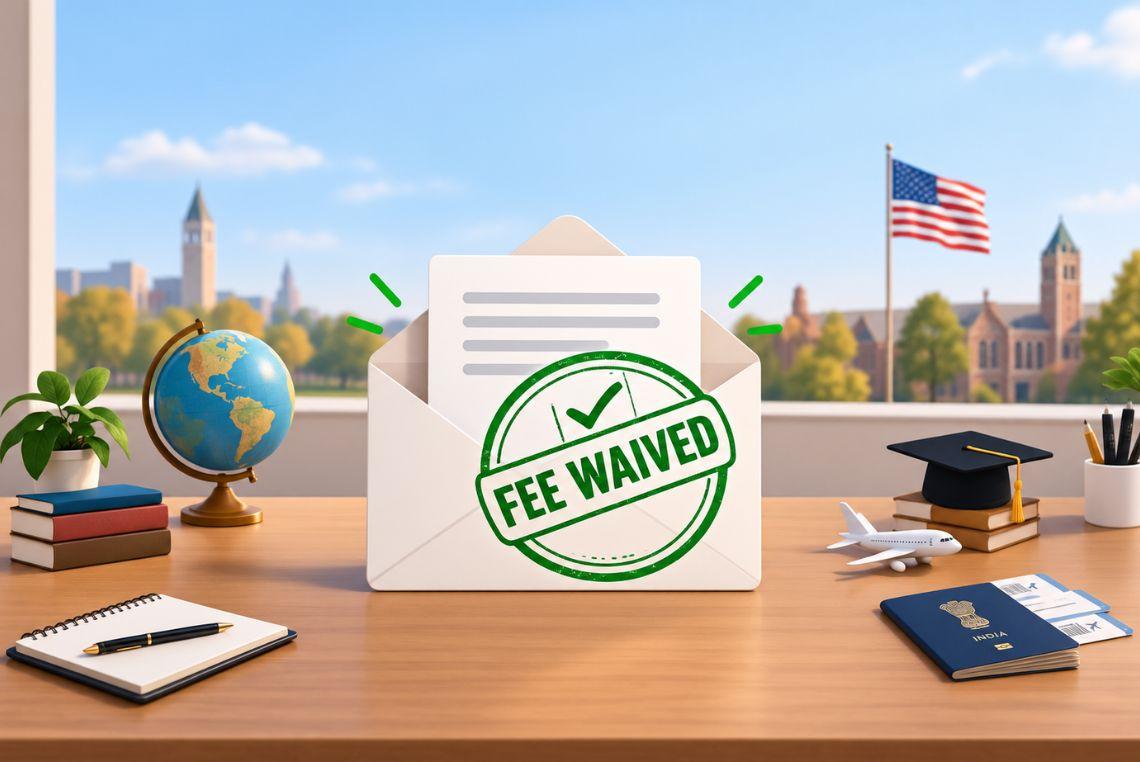
How to Open a Bank Account Abroad as an Indian Student: Country-by-Country Guide

Dr. Karan Gupta is a Harvard Business School alumnus and career counsellor with 27+ years of experience and 160,000+ students guided. His insights on Study Abroad come from decades of hands-on experience helping students achieve their goals.
How to Open a Bank Account Abroad as an Indian Student: Country-by-Country Guide
One of the first practical challenges Indian students face after receiving their admission letter is figuring out how to manage money abroad. Opening a bank account in your destination country is not just a convenience — it is a necessity. Without a local bank account, you cannot receive part-time job wages, pay rent through direct debit, or avoid the constant drain of currency conversion fees on every transaction. Yet the process of opening a bank account varies dramatically from country to country, and the documentation requirements can catch even well-prepared students off guard.
This guide walks you through the exact process, required documents, recommended banks, and insider tips for opening a bank account as an Indian student in the five most popular study destinations: the United States, the United Kingdom, Canada, Australia, and Germany. We also cover whether you should rely on forex cards, when to switch to a local account, and common mistakes that delay the process.
Why You Need a Local Bank Account (Not Just a Forex Card)
Many Indian families assume that a forex travel card loaded with dollars or pounds will suffice for the entire duration of study abroad. While forex cards are excellent for the first few weeks — they lock in exchange rates at the time of loading, work at ATMs and point-of-sale terminals worldwide, and require zero local documentation — they are not a substitute for a proper local bank account.
Here is why a local bank account becomes essential within the first month. Employers paying part-time wages require a local bank account for direct deposit. Landlords and utility companies set up recurring direct debit payments that forex cards cannot support. University stipends, teaching assistant payments, and scholarship disbursements are deposited into local accounts. Most importantly, every transaction on a forex card carries a small conversion spread and ATM withdrawal fee that adds up significantly over a semester. A local debit card linked to a local account eliminates these ongoing costs entirely.
Free Tool
Free Profile Evaluation
Get an honest AI assessment of your study-abroad profile in 2 minutes.
Try it free →The smart approach is to carry a forex card loaded with enough funds for your first two to four weeks — covering initial rent deposits, groceries, and transport — while opening a local bank account as soon as you arrive. Once your local account is active, transfer the bulk of your funds there and keep the forex card as a backup.
United States: Opening a Bank Account as an Indian Student
The United States has a well-established system for international student banking, though the process differs from what Indian students are used to. The two most popular banks for international students are Chase and Bank of America, both of which have extensive branch networks near major university campuses. Other options include Wells Fargo, Citibank, and credit unions affiliated with specific universities.
The most common concern Indian students have is the Social Security Number requirement. The good news is that you do not need an SSN to open a basic checking or savings account. Banks will use your passport number and I-20 form as identification instead. However, you will need an SSN later if you want to build credit history, apply for a credit card, or file tax returns — and you can update your bank account with your SSN once you receive one through on-campus employment.
Documents required for opening a US bank account include your valid passport with F-1 or J-1 visa stamp, your I-20 or DS-2019 form, university acceptance letter or student ID, proof of US address (your university housing assignment letter works), and an initial deposit (typically USD 25 to USD 100). Some banks like Chase offer specific student checking accounts with no monthly maintenance fees as long as you are enrolled in a university.
A practical tip that saves Indian students considerable hassle: visit the bank branch closest to your university campus within the first week of orientation. Many banks set up temporary booths during orientation week specifically to help international students open accounts. The process typically takes 30 to 45 minutes, and you receive a temporary debit card on the spot with the permanent card mailed within 7 to 10 business days.
For students considering digital-first options, services like Zelle (integrated into most US bank apps) make peer-to-peer payments seamless, while Venmo and Cash App are popular among students for splitting bills. However, these services require a US bank account to link to — another reason to open one early.
United Kingdom: Monzo, Barclays, and the ICAS Letter
The UK banking landscape for international students has shifted significantly in recent years. Traditional banks like Barclays, HSBC, Lloyds, and NatWest still serve international students, but the rise of digital banks — particularly Monzo and Starling — has made the process dramatically easier.
The traditional route involves obtaining an ICAS (International Confirmation of Acceptance for Studies) letter from your university, which serves as proof that you are a registered student. You then book an appointment at a bank branch, bring your passport, BRP (Biometric Residence Permit), ICAS letter, and proof of UK address. The account typically takes 5 to 10 working days to set up, and the debit card arrives by post within another week. This means you could be waiting two to three weeks before having a functioning UK bank account — a significant gap if you arrive without a forex card.
The faster alternative is Monzo or Starling Bank. Both are FCA-regulated digital banks that allow you to open an account entirely through their mobile app using just your passport. There is no need for an ICAS letter, no branch appointment, and no waiting for postal delivery — you receive a virtual card immediately and a physical card within 3 to 5 days. Monzo in particular has become the default choice for international students in the UK because of its zero-fee foreign currency spending, instant notifications, and easy budgeting tools built into the app.
One important consideration: if you plan to work part-time in the UK (up to 20 hours per week on a Tier 4 student visa), some employers and the university payroll department may prefer a traditional bank account from a high-street bank. In practice, Monzo and Starling are accepted by virtually all employers now, but it is worth confirming with your university's careers service.
The NHS surcharge you pay as part of your visa application (GBP 776 per year in 2026) is separate from banking but worth noting here — it comes out of your initial funds and should be factored into your forex card loading amount before departure.
Canada: CIBC, TD, and the International Student Package
Canada is arguably the most international-student-friendly country when it comes to banking. The major Canadian banks — CIBC, TD Canada Trust, RBC, Scotiabank, and BMO — all offer dedicated international student banking packages with fee waivers, free transactions, and sometimes even welcome bonuses.
CIBC's International Student Banking Package is particularly popular among Indian students. It offers unlimited debit transactions, no monthly account fees for the first year, a free safety deposit box, and the ability to start the application online before arriving in Canada. TD Canada Trust offers a similar package with added benefits like a free SPC (Student Price Card) discount card. Scotiabank has partnerships with several Canadian universities and offers on-campus banking centres.
Documents required include your valid passport with study permit or port-of-entry stamp, letter of acceptance from a DLI (Designated Learning Institution), proof of Canadian address (your university residence assignment or rental agreement), and your SIN (Social Insurance Number) if you have one. Like the US, you do not need a SIN to open a bank account — you can add it later when you start working.
A unique advantage of Canadian banking for Indian students is that most banks offer multi-currency accounts or easy integration with international wire transfer services. CIBC Global Money Transfer, for example, allows your family in India to send money directly to your Canadian account at competitive exchange rates, bypassing the traditional SWIFT wire transfer fees that can range from CAD 15 to CAD 45 per transaction.
Credit building in Canada starts early for international students. After maintaining your account in good standing for six months, most banks offer secured credit cards (requiring a deposit equal to your credit limit) that help you build a Canadian credit score. This is particularly valuable if you plan to apply for permanent residency after graduation through the Post-Graduation Work Permit Program.
Australia: CommBank Pre-Arrival and the Smart ATM Network
Australia offers perhaps the smoothest banking onboarding experience for international students, thanks largely to the Commonwealth Bank of Australia (CommBank) pre-arrival account opening facility. Indian students can open a CommBank account online up to 12 months before arriving in Australia. You complete the application, provide your passport details and university offer letter, and the account is created in a pending state. When you land in Australia, you visit any CommBank branch with your passport, activate the account, and receive your debit card — often within 30 minutes.
Other major banks — ANZ, Westpac, and NAB — also accept international students, though their processes are slightly less streamlined than CommBank's pre-arrival system. ANZ and Westpac have branches on many university campuses, making them convenient alternatives.
Documents required for Australian bank accounts include your passport with student visa (subclass 500), university Confirmation of Enrolment (CoE), proof of Australian address (your accommodation booking or university housing confirmation), and an initial deposit (no minimum for most student accounts, though AUD 10 is typical). You also receive a Tax File Number application form — while not required for the bank account itself, having a TFN prevents the bank from withholding tax on any interest earned at the highest marginal rate.
Australian banking has a distinct advantage for Indian students: the country has largely moved to contactless payments and mobile wallets. Your CommBank card integrates with Apple Pay and Google Pay from day one, and most transactions in Australia — from public transport (Opal card top-ups in Sydney) to coffee shops — accept tap-and-go payments. Many students report going weeks without using physical cash.
One cost to watch out for is international ATM fees. While CommBank and other major banks have eliminated domestic ATM fees across their networks, withdrawing cash from a non-partner ATM or using your Australian card overseas still incurs fees. If you travel within Australia during semester breaks, check that your bank has fee-free ATM access in your destination city.
Germany: The Blocked Account and Regular Account Dual System
Germany presents a unique banking situation for Indian students because of the mandatory blocked account (Sperrkonto) requirement. Before you can even apply for a German student visa, you must open a blocked account and deposit approximately EUR 11,208 (the 2026 figure, updated annually). This amount represents 12 months of estimated living expenses at EUR 934 per month. The funds are released to you monthly — you cannot withdraw the entire amount at once.
Popular blocked account providers include Expatrio (the most popular among Indian students, with an online application process that takes about 15 minutes), Fintiba (similar to Expatrio, slightly different fee structure), and Deutsche Bank (traditional bank option, requires more paperwork). The blocked account provider charges a one-time setup fee (typically EUR 49 to EUR 89) and may charge monthly maintenance fees.
In addition to the blocked account, you need a regular current account (Girokonto) for daily transactions, receiving wages from part-time work (up to 20 hours per week on a student visa), and paying rent. The blocked account releases funds into your regular account monthly.
For regular accounts, the top options for Indian students are N26 (a digital bank with a completely online application process, no monthly fees for the basic account, and an app interface in English), DKB (Deutsche Kreditbank, free account with a Visa debit card, popular among students but application is in German), Commerzbank (offers a free student account with a branch network for in-person support), and Sparkasse (savings banks with the largest branch and ATM network in Germany, though monthly fees of EUR 3 to EUR 5 apply).
The SCHUFA score is Germany's equivalent of a credit score, and it affects your ability to rent an apartment and sign mobile phone contracts. Opening a bank account and using it responsibly is the first step to building your SCHUFA score. N26 and other banks may run a SCHUFA check during account opening — as a new arrival with no German credit history, you may be assigned a neutral score that improves over time.
Forex Cards vs Local Accounts: A Detailed Comparison
Indian students often debate whether to rely heavily on forex cards or rush to open a local account. The answer is straightforward — use both, but for different purposes and time periods. Forex cards excel in the pre-departure and arrival phase. You can load them with your destination currency at a locked-in exchange rate, avoiding the volatility of daily forex markets. Major forex card providers in India include BookMyForex, Thomas Cook, HDFC ForexPlus, ICICI Travel Card, and Axis Bank Forex Card. These cards work at ATMs worldwide and can be reloaded remotely by your family in India.
However, forex cards have ongoing costs that make them impractical as a primary banking solution. ATM withdrawal fees range from INR 125 to INR 250 per transaction (charged by the card issuer, plus any fees from the foreign ATM operator). Cross-currency conversion fees apply if you loaded USD but the merchant charges in EUR. Reload fees of INR 75 to INR 100 apply each time your family adds funds. And perhaps most critically, forex cards cannot receive incoming transfers from an employer, the university, or scholarship providers — they are one-way instruments.
A local bank account, by contrast, has zero or minimal transaction fees for domestic use, can receive direct deposits from employers and universities, supports direct debit for rent and utility payments, and helps you build a local credit history. The initial effort of opening the account pays for itself within the first month of regular use.
The optimal strategy is to load your forex card with enough for four to six weeks of living expenses (including any initial deposits for accommodation), open a local bank account within the first week of arrival, transfer remaining funds via wire transfer or services like Wise into the local account, and keep the forex card as a backup with a small balance for emergencies or travel within the region.
Documents Checklist: Universal and Country-Specific
Regardless of your destination country, there is a core set of documents you should carry in both physical and digital form to streamline the bank account opening process. The universal documents include your valid passport with student visa stamp or sticker, university acceptance or enrollment letter, proof of accommodation or address in the destination country, passport-sized photographs (physical copies, though many banks now capture photos digitally), and your Indian PAN card details (needed for RBI compliance when transferring funds).
Country-specific additions include the I-20 or DS-2019 form for the US, the ICAS letter and BRP for the UK, the study permit and SIN for Canada, the CoE and TFN for Australia, and the blocked account confirmation and SCHUFA consent for Germany. Having these documents ready and organized before your bank appointment eliminates the most common cause of delays — being asked to return with a missing document.
Tips from Students Who Have Done It
Based on feedback from hundreds of Indian students who have navigated the international banking process, here are the tips that consistently make the biggest difference. First, apply for your bank account during orientation week — banks are expecting international students and have streamlined processes in place. Second, download the bank's mobile app before your appointment so you can complete digital verification steps on the spot. Third, keep your Indian bank account active with a minimum balance — you will need it for receiving any refunds, tax returns, or emergency transfers. Fourth, set up mobile banking notifications from day one to track your spending in a foreign currency where your instinct for what things should cost has not yet developed. Fifth, ask about student-specific fee waivers — nearly every major bank in every destination country has a student account with reduced or zero monthly fees, but they do not always advertise them prominently.
Finally, be aware of anti-money laundering requirements. Banks in all countries will ask about the source of your funds. Having your education loan sanction letter, scholarship award letter, or family income documentation ready makes this conversation straightforward. If your parents are funding your education from savings or fixed deposits, a simple bank statement showing the source of funds is usually sufficient.
Common Mistakes to Avoid
The most frequent banking mistakes Indian students make abroad fall into predictable patterns. Waiting too long to open a local account — every week you delay costs you in forex card fees and lost convenience. Carrying too much cash — most countries have limits on undeclared cash at customs (USD 10,000 for the US, GBP 10,000 for the UK, CAD 10,000 for Canada), and carrying large amounts is both risky and unnecessary. Opening accounts at multiple banks without need — each account requires maintenance and monitoring, and inactive accounts can incur fees. Not understanding overdraft fees — some student accounts come with overdraft facilities that charge high interest if used accidentally. And not informing your Indian bank about your travel — Indian banks may freeze your debit or credit card for suspected fraud if they detect foreign transactions without prior travel notification.
Opening a bank account abroad is one of those tasks that seems daunting from India but becomes straightforward once you arrive with the right documents and a clear plan. Start your research before departure, carry a forex card for the transition period, and prioritize opening your local account within the first week. Your future self — the one who receives their first part-time paycheck via direct deposit — will thank you for the early effort.
Explore Related Resources & Tools
Free tools and expert services from Karan Gupta Consulting
TAGS
Frequently Asked Questions
Can I open a bank account abroad without a Social Security Number or local ID?
Should I use a forex card or open a local bank account abroad?
How long does it take to open a bank account abroad as an Indian student?
What documents do Indian students need to open a bank account abroad?
Do I need a blocked account to study in Germany?
Why Choose Karan Gupta Consulting?
- 27+ years of expertise in overseas education consulting
- 160,000+ students successfully counselled
- Personal guidance from Dr. Karan Gupta, Harvard Business School alumnus
- Licensed MBTI® and Strong® career assessment practitioner
- End-to-end support from career clarity to visa approval
SHARE THIS ARTICLE

Dr. Karan Gupta
Founder & Chief Education Consultant
Harvard Business School alumnus and India's leading career counsellor with 27+ years guiding 160,000+ students to top universities worldwide. Licensed MBTI® practitioner. Managing Director of IE University (India & South Asia).