MS in Renewable Energy and Sustainability Abroad for Indian Students

Dr. Karan Gupta is a Harvard Business School alumnus and career counsellor with 27+ years of experience and 160,000+ students guided. His insights on Postgraduate come from decades of hands-on experience helping students achieve their goals.
The Global Energy Transition: Why Renewable Energy Education Matters Now
The world is in the midst of the largest infrastructure transformation in human history. The transition from fossil fuels to renewable energy sources — solar, wind, hydrogen, geothermal, and advanced energy storage — represents an investment of over $4 trillion annually by 2030, according to the International Energy Agency. For Indian students with engineering or science backgrounds, an MS in Renewable Energy or Sustainability positions you at the centre of this generational shift.
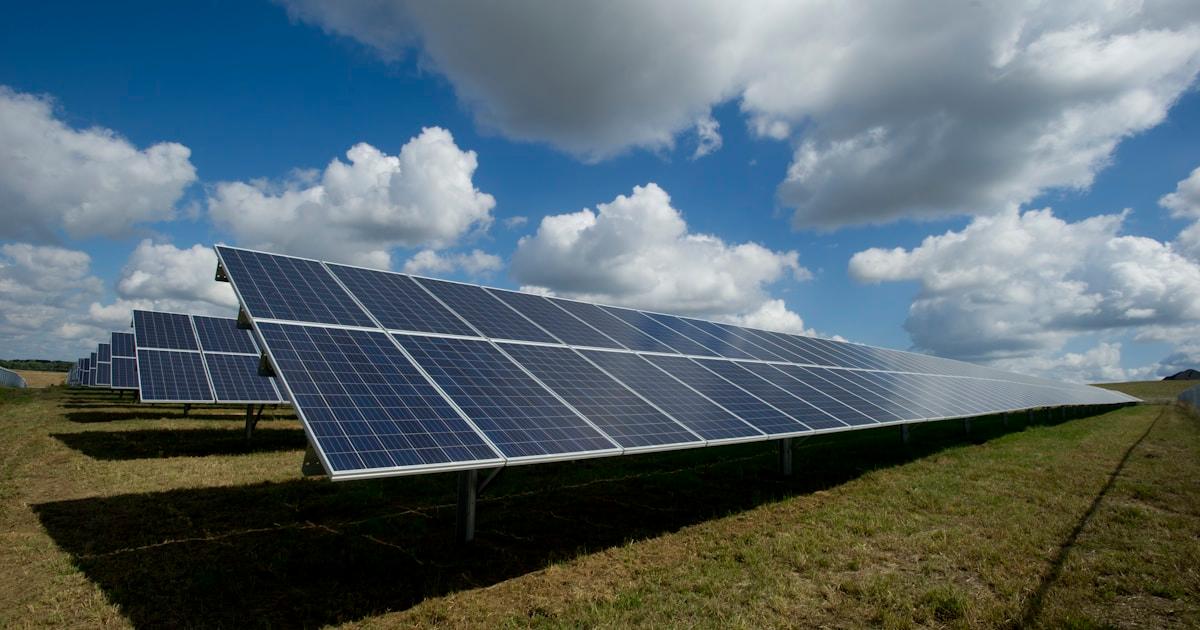
India's own commitment to this transition is enormous. The country has set a target of 500 GW of non-fossil fuel energy capacity by 2030, including 280 GW of solar and 140 GW of wind. The National Green Hydrogen Mission aims to make India a global hub for green hydrogen production. These are not aspirational targets — they represent concrete industrial planning backed by hundreds of billions in investment. The professionals who design, build, and manage this infrastructure will be in demand for decades.
An MS in Renewable Energy from an international university provides two critical advantages over domestic training. First, countries like Germany, Denmark, the Netherlands, and the UK have been deploying renewable energy at scale for 20–30 years, building institutional knowledge that India is still developing. Studying in these countries means learning from educators and researchers who have direct experience with real-world energy transitions. Second, international experience provides exposure to advanced technologies — offshore wind, green hydrogen electrolysis, grid-scale battery storage, smart grid systems — that India is beginning to adopt but has limited training infrastructure for.
Top MS Programs in Renewable Energy and Sustainability
Germany: The Leader in Energy Engineering Education
Germany's Energiewende (energy transition) has made it the global reference point for renewable energy deployment, and its universities reflect this leadership. Most German public universities charge zero tuition for all students, including international students, making Germany the most affordable destination for high-quality energy education.
Technical University of Munich (TUM) offers an MSc in Power Engineering that covers renewable energy systems, energy conversion, power electronics, and grid integration. TUM consistently ranks among Europe's top technical universities, and its location in Bavaria — home to major energy companies like Siemens Energy and BMW (electric vehicles) — provides strong industry connections. The program is taught in English and has no tuition fees.
RWTH Aachen, Germany's premier engineering university, offers several relevant programs including MSc in Electrical Power Engineering and MSc in Energy Engineering. RWTH's proximity to the Rhineland's industrial corridor provides connections to energy companies and research centres. The Forschungszentrum Jülich (one of Europe's largest research centres, focused on energy) is a partner institution.
Karlsruhe Institute of Technology (KIT) offers MSc in Energy Engineering and Management, covering both technical and economic aspects of energy systems. KIT's Helmholtz Energy Programme provides access to large-scale research infrastructure. The University of Stuttgart, TU Berlin, and TU Dresden also offer strong energy engineering programs with English-taught tracks.
United Kingdom
Imperial College London's MSc in Sustainable Energy Futures is a cross-departmental program covering energy technology, policy, and business. Imperial's Centre for Environmental Policy and the Grantham Institute for Climate Change provide research depth. Located in London, the program offers excellent access to the UK's energy finance and consulting sectors. Tuition is approximately £36,700 for international students.
The University of Edinburgh's MSc in Sustainable Energy Systems covers wind, marine, and solar energy with a strong Scottish focus on offshore renewable resources. Scotland generates over 100% of its electricity from renewables, making Edinburgh a living laboratory for energy transition. Cranfield University's MSc in Renewable Energy Engineering is specifically designed for industry application, with strong ties to the UK energy sector.
Netherlands and Denmark
TU Delft's MSc in Sustainable Energy Technology is one of Europe's most comprehensive energy engineering programs. The Netherlands' leadership in offshore wind (the Dutch invented the modern concept) and hydrogen technology provides unmatched practical context. TU Delft's tuition for non-EU students is approximately €19,500 per year, but scholarship availability is strong.
The Technical University of Denmark (DTU) is synonymous with wind energy — Denmark pioneered modern wind power, and DTU's Wind Energy department is the world's leading academic wind energy research centre. DTU's MSc in Sustainable Energy covers wind, solar, energy systems analysis, and smart grids. Tuition is approximately €15,000 per year for non-EU students, with numerous scholarship options.
United States
MIT's Department of Mechanical Engineering offers energy-focused MS and PhD programs through the MIT Energy Initiative (MITEI). Stanford's Precourt Institute for Energy supports interdisciplinary energy research across engineering, earth sciences, and business. UC Berkeley's Energy and Resources Group offers a unique interdisciplinary approach combining technical, economic, and social dimensions of energy. US programs are more expensive ($40,000–$60,000 per year in tuition) but offer access to research funding, teaching assistantships, and the US clean energy startup ecosystem.
Curriculum and Specialisations
MS programs in Renewable Energy and Sustainability typically cover core areas of energy conversion and storage, energy systems analysis and integration, specific renewable technologies, and policy and economics of energy transition.
Solar energy courses cover photovoltaic technology (crystalline silicon, thin-film, perovskites), solar thermal systems, concentrated solar power, solar cell physics, and PV system design. Wind energy courses address aerodynamics, wind turbine design, offshore wind technology, wind resource assessment, and wind farm optimisation. Energy storage covers battery technologies (lithium-ion, solid-state, flow batteries), hydrogen production and storage, pumped hydro, compressed air, and thermal storage.
Grid integration and smart grids is an increasingly important specialisation as renewable energy penetration grows. Courses cover power electronics, grid stability with variable generation, demand response, microgrids, and distributed energy resource management. Energy systems modelling uses tools like HOMER, EnergyPLAN, and PyPSA to simulate and optimise entire energy systems.
Many programs offer electives in energy economics, energy policy, carbon markets, and sustainability management — allowing you to complement technical depth with business and policy understanding. This breadth is valuable because renewable energy careers increasingly require professionals who can bridge technical, financial, and regulatory domains.
Practical components — lab work, industry projects, thesis collaborations with energy companies — are standard in top programs. These experiences provide hands-on skills with equipment and software that you can't learn from textbooks alone, and often lead directly to employment opportunities.
Career Opportunities and Salary Expectations
The renewable energy job market is experiencing sustained growth driven by government mandates, corporate sustainability commitments, and improving economics of clean energy technologies. The International Renewable Energy Agency (IRENA) estimates that the renewable energy sector employed 13.7 million people globally in 2024, with projections of 38 million by 2030.
Technical roles for MS graduates include renewable energy engineer (designing and optimising solar/wind/hydrogen systems), energy storage engineer (developing battery and hydrogen storage solutions), grid integration engineer (connecting renewable generation to electricity grids), and energy systems analyst (modelling and planning energy infrastructure). Salaries for these roles in Europe range from €40,000 to €80,000, in the UK from £35,000 to £75,000, and in the US from $65,000 to $130,000.
Consulting and advisory roles at firms like McKinsey Energy, BCG Green, Deloitte Energy, and specialised consultancies (DNV, Wood Mackenzie, Bloomberg NEF) offer broad exposure to energy transition projects. These roles combine technical knowledge with client-facing skills and pay competitively — $70,000 to $140,000 in the US, with rapid progression.
Project development and management roles involve planning, financing, and executing renewable energy projects. Developers like Ørsted, EDP Renewables, NextEra Energy, and hundreds of regional developers hire engineers and project managers. These roles often involve site assessment, environmental impact analysis, regulatory compliance, and construction oversight. Salaries range from $60,000 to $120,000 depending on experience and project scale.
Research and development positions at corporate R&D labs (Siemens Energy, GE Vernova, Vestas, Tesla Energy) and academic institutions push the boundaries of renewable energy technology. Topics like next-generation solar cells (perovskites, tandem cells), advanced wind turbine design, green hydrogen production, and long-duration energy storage are active research areas. R&D roles typically require strong academic records and research experience, with salaries ranging from $70,000 to $150,000.
India's Renewable Energy Opportunity
India is one of the world's most dynamic renewable energy markets, and the return opportunity for Indian students with international energy education is substantial. The country's installed renewable energy capacity crossed 180 GW in 2025, and the target of 500 GW by 2030 requires adding approximately 60-70 GW annually — a massive infrastructure challenge that needs trained professionals.
Major Indian renewable energy companies include Adani Green Energy (one of the world's largest solar developers), ReNew Power (India's leading independent power producer), Tata Power Solar (integrated solar manufacturer and developer), Suzlon Energy (wind turbine manufacturer), NTPC Green Energy (government utility's renewable arm), and JSW Energy (diversified energy group expanding into renewables). These companies offer competitive salaries for professionals with international training — ₹10–25 lakh for entry-level engineers, rising to ₹30–60 lakh for experienced professionals and managers.
India's National Green Hydrogen Mission is creating an entirely new industry vertical. The mission targets 5 million tonnes of green hydrogen production by 2030, requiring electrolysers, renewable energy plants dedicated to hydrogen production, hydrogen storage and transportation infrastructure, and end-use applications in industry and transport. Professionals trained in hydrogen technology at European universities (which lead this field) are exceptionally well-positioned for India's hydrogen buildout.
The intersection of renewable energy with digital technology — smart grids, energy IoT, AI-optimised generation, and digital twins for wind and solar farms — is another high-growth area where international training provides significant advantages. India's energy grid is undergoing digitalisation, and professionals who understand both energy systems and data technology are rare and highly valued.
Whether you choose to work in Germany's established energy industry, the UK's offshore wind sector, the Netherlands' hydrogen ecosystem, or India's explosive renewable energy market, an MS in Renewable Energy provides the technical foundation and professional network for a rewarding career in one of the 21st century's most important industries.
Explore Related Resources & Tools
Free tools and expert services from Karan Gupta Consulting
TAGS
Frequently Asked Questions
Which countries are best for studying renewable energy at the MS level?
Can I study renewable energy in Germany for free as an Indian student?
What career opportunities exist after MS in Renewable Energy?
Is renewable energy a good career choice for Indian students returning to India?
What undergraduate background is needed for MS in Renewable Energy?
Why Choose Karan Gupta Consulting?
- 27+ years of expertise in overseas education consulting
- 160,000+ students successfully counselled
- Personal guidance from Dr. Karan Gupta, Harvard Business School alumnus
- Licensed MBTI® and Strong® career assessment practitioner
- End-to-end support from career clarity to visa approval
SHARE THIS ARTICLE

Dr. Karan Gupta
Founder & Chief Education Consultant
Harvard Business School alumnus and India's leading career counsellor with 27+ years guiding 160,000+ students to top universities worldwide. Licensed MBTI® practitioner. Managing Director of IE University (India & South Asia).