MBBS in Georgia for Indian Students: European Medical Education at Affordable Costs

Dr. Karan Gupta is a Harvard Business School alumnus and career counsellor with 27+ years of experience and 160,000+ students guided. His insights on Study Abroad come from decades of hands-on experience helping students achieve their goals.
Georgia: Europe's Hidden Gem for Medical Education
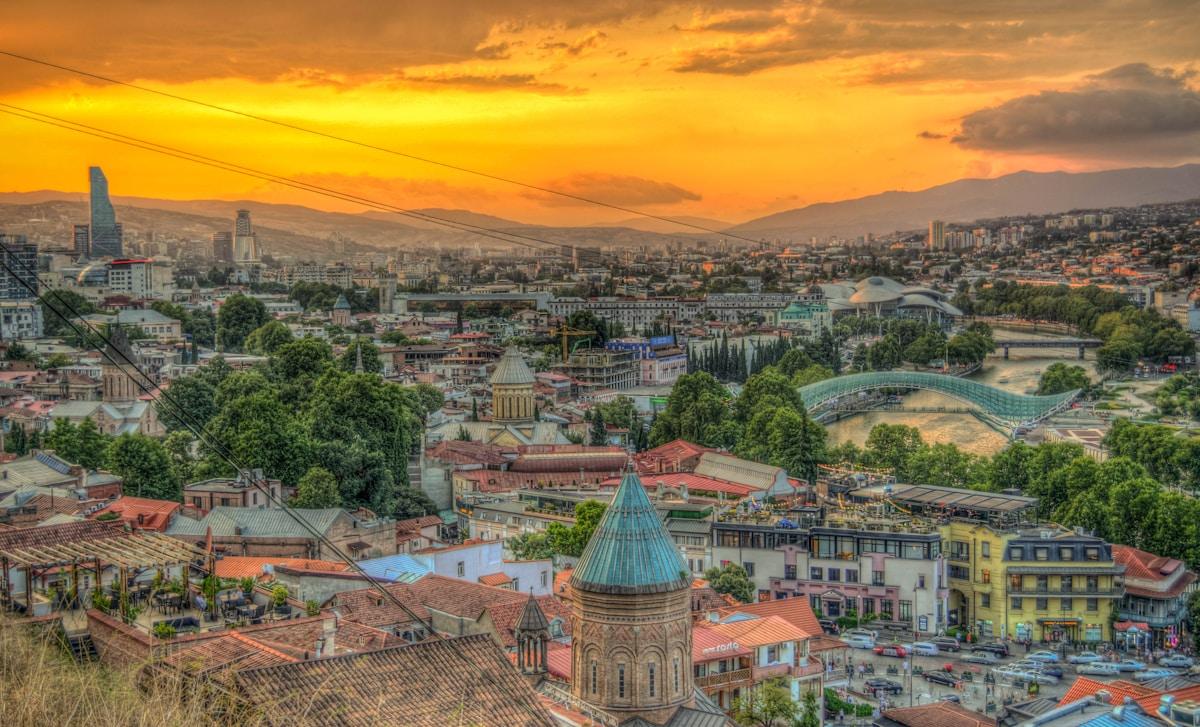
Nestled at the crossroads of Europe and Asia, Georgia has quietly emerged as one of the most attractive destinations for Indian students seeking quality medical education abroad. Over the past five years, the number of Indian medical students in Georgia has surged, and for good reason. The country offers European-standard medical education, English-medium programmes, NMC-recognised universities, remarkably affordable fees, and a warm, welcoming culture that makes the transition from India smoother than most other destinations.
While countries like Russia, China, and the Philippines have dominated the MBBS-abroad conversation for decades, Georgia has established itself as a serious contender -- one that many families are discovering offers a better balance of quality, cost, and experience than the traditional options.
Why Georgia Stands Out
1. European Medical Education Standards
Georgia's medical education system is aligned with European standards. The country is a signatory to the Bologna Process, which means its higher education system follows the European framework for quality assurance. Georgian medical universities are accredited by national and international bodies, and their curricula are designed to meet the standards of the European Association of Medical Education.
2. Fully English-Medium Programmes
Unlike Russia or China, where the language barrier with patients remains a significant challenge, Georgia's medical universities offer programmes where both instruction and clinical interactions can largely be conducted in English. Georgian patients are generally cooperative with English-speaking medical students, and the clinical faculty increasingly conduct rounds and teaching in English.
Free Tool
Study Abroad Cost Calculator
Get a personalised cost estimate for your country and course.
Try it free →3. Exceptional Affordability
Georgia offers some of the lowest total costs for a quality medical education anywhere in the world. Total programme costs of INR 20-35 lakh for six years of medical education are remarkably competitive, falling below most Russian universities and far below European Union options.
4. Safe and Welcoming Environment
Georgia is one of the safest countries in Europe by crime statistics. The Georgian people are known for their extraordinary hospitality -- guests are deeply respected in Georgian culture. Indian students consistently report feeling welcome and safe, more so than in many other study-abroad destinations.
5. NMC and WHO Recognition
Several Georgian medical universities are recognised by India's National Medical Commission and listed in the World Directory of Medical Schools. This is the essential prerequisite for Indian graduates to appear for the FMGE and practise medicine in India.
Top NMC-Recognised Georgian Medical Universities
1. Tbilisi State Medical University (TSMU)
Founded in 1918, TSMU is Georgia's oldest and most prestigious medical institution. It is the flagship medical university of the country and has trained the majority of Georgia's physicians.
- Programme: Six-year MD programme in English (note: Georgia awards an MD, equivalent to MBBS)
- Tuition: USD 6,000-8,000 per year (INR 5-6.5 lakh)
- Clinical training: Affiliated with major hospitals across Tbilisi, including the University Clinic and several government hospitals
- Strengths: Strongest academic reputation, most experienced faculty, best clinical infrastructure in Georgia. Large and active Indian student community.
- Research opportunities: Active research departments with opportunities for student involvement in clinical and basic science research
2. University of Georgia (UG)
A newer private university that has rapidly built a strong reputation for its medical programme. UG has invested heavily in modern infrastructure and teaching facilities.
- Programme: Six-year MD programme in English
- Tuition: USD 5,000-6,500 per year (INR 4-5.3 lakh)
- Strengths: Modern campus, simulation centre, growing international reputation. Strong focus on clinical skills development from early years.
- Clinical affiliations: University hospital plus partnerships with other Tbilisi hospitals
3. David Tvildiani Medical University (DTMU) -- Aieti Medical School
DTMU follows the New York State medical education model and has been validated by several international accreditation bodies. It offers a distinctive curriculum that emphasises clinical competence and evidence-based medicine.
- Programme: Six-year MD programme in English
- Tuition: USD 7,000-9,000 per year (INR 5.7-7.4 lakh)
- Strengths: International accreditation, US-style curriculum, strong clinical training. Faculty trained at top international institutions.
- Uniqueness: Uses an integrated organ-systems-based curriculum rather than the traditional discipline-based approach
4. European University (Tbilisi)
European University has a medical faculty that offers an English-medium MD programme with growing recognition among Indian students.
- Programme: Six-year MD programme in English
- Tuition: USD 4,500-6,000 per year (INR 3.7-5 lakh)
- Strengths: Affordable, modern teaching methods, growing clinical partnerships
5. Batumi Shota Rustaveli State University (Medical Faculty)
Located in Batumi, Georgia's second-largest city on the Black Sea coast, this university offers a medical programme with a different flavour -- a smaller city, lower costs, and a coastal lifestyle that some students prefer.
- Programme: Six-year MD programme
- Tuition: USD 4,000-5,500 per year
- Strengths: Affordable, pleasant climate, smaller class sizes
Detailed Fee Structure
Annual Costs
- Tuition: USD 4,000-9,000 per year (INR 3.3-7.4 lakh) depending on university
- Hostel/apartment: USD 1,200-2,400 per year (INR 1-2 lakh). University hostels are cheaper; shared apartments in Tbilisi are very affordable by European standards.
- Food: USD 1,500-2,500 per year (INR 1.2-2 lakh). Georgian food is diverse, flavourful, and vegetarian-friendly (khachapuri, lobio, ajapsandali). Indian grocery stores exist in Tbilisi, and many students cook Indian meals.
- Health insurance: USD 150-300 per year
- Transportation: USD 200-400 per year (Tbilisi has affordable metro and bus systems)
- Personal expenses: USD 500-1,000 per year
Total Six-Year Programme Cost
- Most affordable (European University, Batumi): INR 20-25 lakh total
- Mid-range (University of Georgia): INR 25-32 lakh total
- Premium (TSMU, DTMU): INR 32-42 lakh total
The MD Curriculum: Year by Year
Years 1-2: Pre-Clinical Foundation
Anatomy (with cadaver dissection), physiology, biochemistry, histology, embryology, medical biophysics, and medical chemistry. Georgian medical schools use a mix of traditional lectures and modern active learning methods. Anatomy teaching includes cadaver dissection at all major universities, which is a significant advantage over some other affordable destinations where cadaver access is limited.
Year 3: Transition to Clinical Sciences
Pathology, pharmacology, microbiology, pathophysiology, and clinical skills introduction. Students begin hospital visits and learn basic clinical examination techniques. This year bridges the gap between theoretical science and clinical medicine.
Years 4-5: Core Clinical Rotations
Students rotate through internal medicine, surgery, paediatrics, obstetrics and gynaecology, neurology, psychiatry, dermatology, ophthalmology, ENT, orthopaedics, and emergency medicine. Clinical rotations happen at university-affiliated hospitals where students examine patients, participate in ward rounds, assist in procedures, and present cases.
Year 6: Advanced Clinical Practice
Extended rotations with greater clinical responsibility, community medicine, forensic medicine, and preparation for the final state examination. This year functions as an internship, with students working under supervision in various hospital departments.
Clinical Training: An Honest Evaluation
What Works Well
- English works in clinics: Unlike Russia or China, the language barrier in Georgian hospitals is manageable. Clinical faculty conduct teaching in English, and patients are generally cooperative with English-speaking students.
- Reasonable patient volumes: Georgian hospitals see diverse patient populations, giving students exposure to a range of conditions.
- Improving infrastructure: Georgia has modernised its hospital system significantly, with new equipment, updated facilities, and better clinical environments.
- Faculty accessibility: Class sizes are manageable, and faculty are generally accessible for questions and mentorship.
Areas of Concern
- Clinical depth at some universities: Not all Georgian medical schools have equally strong hospital affiliations. Students should research the specific hospitals and clinical facilities at their chosen university.
- Specialty exposure: Some subspecialties may have limited exposure compared to larger medical centres in Russia or India. Students should supplement with online resources and during Indian summer break observerships.
- Emerging reputation: Georgia's medical education system is still building its international reputation. While the quality is solid, the brand recognition lags behind established destinations like Russia or European Union countries.
Life in Georgia for Indian Students
Climate
Georgia's climate is more moderate than Russia or Kazakhstan. Tbilisi has warm summers (30-35 degrees Celsius) and mild to cold winters (0 to minus 5 degrees Celsius -- much warmer than Moscow or Almaty). Batumi on the Black Sea coast has a subtropical climate. Indian students generally find Georgian weather more manageable than other MBBS-abroad destinations.
Food Culture
Georgian cuisine is one of the world's great food traditions and is remarkably accessible to Indian palates. Georgian food is flavourful, spiced (though differently from Indian food), and includes many vegetarian options. Khachapuri (cheese bread), lobio (bean stew), badrijani (walnut-stuffed eggplant), and ajapsandali (vegetable stew) are vegetarian-friendly. Wine is central to Georgian culture -- Georgia is considered the birthplace of wine.
People and Culture
Georgians are famously hospitable. The concept of the guest as sacred is deeply embedded in Georgian culture. Indian students consistently report positive interactions with locals. Georgian culture values education and respects medical students. The Indian community in Tbilisi has grown substantially, with Indian restaurants, grocery stores, and cultural events becoming more common.
Safety
Georgia ranks among the safest countries in Europe. Violent crime is extremely rare, and Tbilisi is considered one of the safest capital cities in the region. Indian students report feeling safe walking alone at night -- a statement that cannot be made about many other study-abroad destinations.
Cost of Living
Georgia is exceptionally affordable. A full meal at a local restaurant costs GEL 15-25 (INR 450-750). Monthly groceries for cooking at home cost around GEL 300-500 (INR 9,000-15,000). Transportation is cheap, and entertainment options are abundant and affordable.
Visa Process
The visa process for Indian students going to Georgia is straightforward:
- Apply for a student visa (D3 category) at the Georgian embassy in New Delhi
- Required documents: admission letter, passport, photographs, financial evidence, health certificate
- Processing time: 2-4 weeks
- Student visa validity: 1 year, renewable
- Residence permit: applied for after arrival in Georgia
Georgia also offers a visa-free stay of up to one year for many nationalities, though students should obtain the proper student visa for the correct legal status.
FMGE Preparation
Students planning to return to India must prepare for the FMGE:
- Integrate Indian textbooks: Use standard Indian reference books alongside Georgian curriculum materials
- MCQ practice: Begin from Year 3 with subject-wise MCQ practice
- Online coaching: Indian FMGE coaching platforms are accessible from Georgia
- Summer rotations: Use breaks to do observerships at Indian hospitals
- Study groups: The Indian student community in Georgia facilitates FMGE study groups
Comparing Georgia with Other Destinations
- Georgia vs Russia: Georgia is slightly cheaper, has milder weather, English works better in hospitals, and Georgian culture is more immediately welcoming. Russia has a more established reputation, larger Indian community, and more globally recognised university names.
- Georgia vs Kazakhstan: Comparable costs. Georgia has milder weather and better food options for Indian students. Kazakhstan has larger universities and a more established infrastructure. Georgia has an edge in European alignment and clinical training in English.
- Georgia vs Philippines: Similar costs. Philippines offers a US-modelled curriculum and USMLE pathway advantage. Georgia offers a European medical model and EU-aligned education. Georgia has a simpler programme structure (no pre-med requirement).
The Bottom Line
Georgia deserves serious consideration from Indian families evaluating MBBS abroad options. It offers a rare combination: European-standard medical education, English-medium instruction that works in clinical settings, world-class hospitality and safety, moderate weather, outstanding food, and costs that rival the cheapest destinations globally. The country is building its reputation rapidly, and early cohorts of Indian graduates are beginning to clear FMGE and establish careers. For students who do their due diligence, choose a recognised university, and approach their studies with commitment, Georgia offers an excellent value proposition in international medical education.
Explore Related Resources & Tools
Free tools and expert services from Karan Gupta Consulting
TAGS
Frequently Asked Questions
Is MBBS in Georgia recognised by NMC India?
What is the total cost of MBBS in Georgia for Indian students?
Is Georgia safe for Indian students?
How is the weather in Georgia compared to Russia?
Can I practise in Europe with a medical degree from Georgia?
Why Choose Karan Gupta Consulting?
- 27+ years of expertise in overseas education consulting
- 160,000+ students successfully counselled
- Personal guidance from Dr. Karan Gupta, Harvard Business School alumnus
- Licensed MBTI® and Strong® career assessment practitioner
- End-to-end support from career clarity to visa approval
SHARE THIS ARTICLE

Dr. Karan Gupta
Founder & Chief Education Consultant
Harvard Business School alumnus and India's leading career counsellor with 27+ years guiding 160,000+ students to top universities worldwide. Licensed MBTI® practitioner. Managing Director of IE University (India & South Asia).