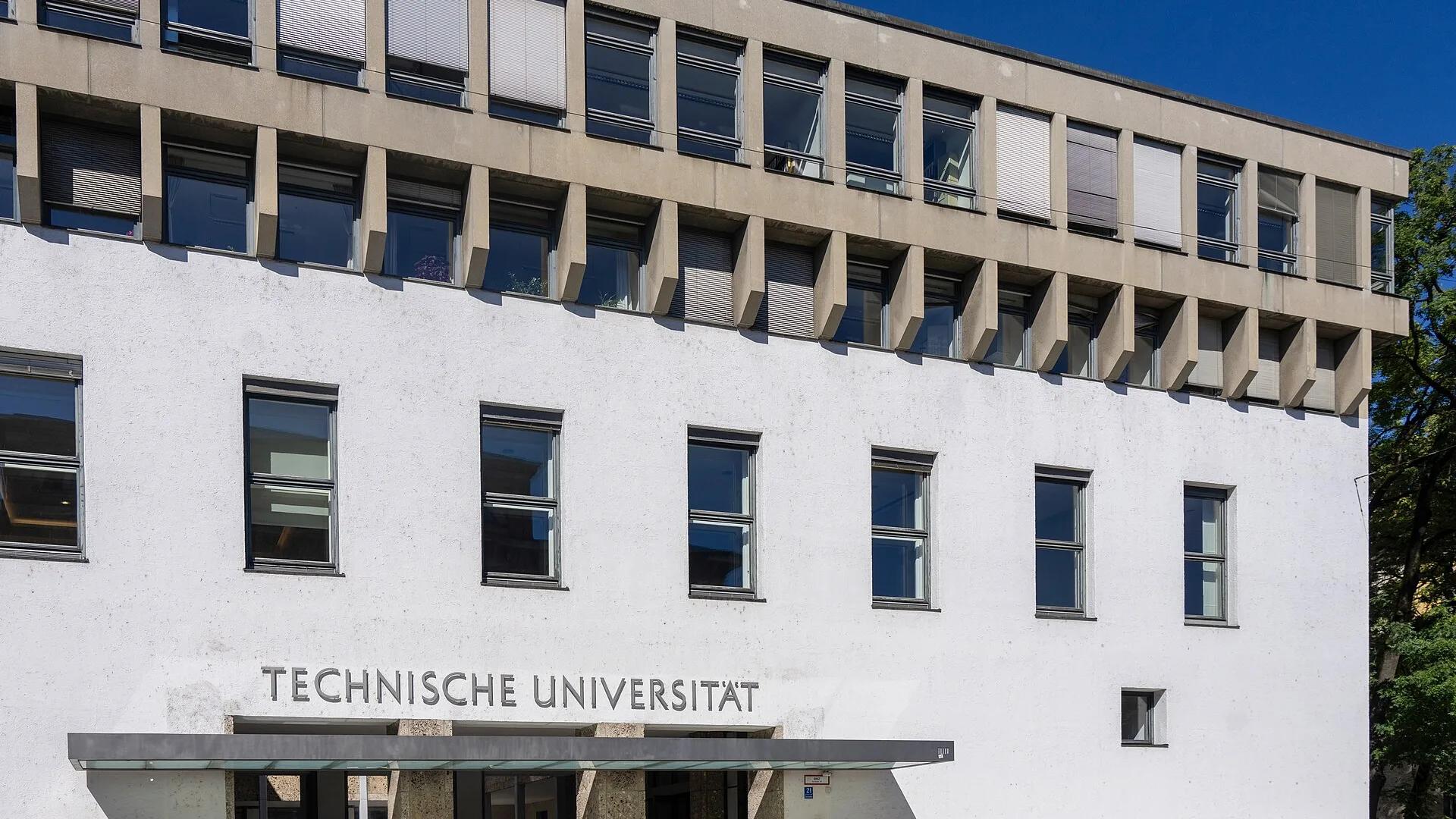
Technical University of Munich
Munich, Germany
Germany's flagship technical brand with a real research ecosystem and a powerful Munich advantage. Elite CS, AI, Robotics, Engineering. Structured admissions. Non-EEA tuition from 2024.
#37
QS World Ranking
€3,000/sem
Tuition (Non-EU)
€600M+
Research Funding
30+
Students Guided
TUM at a Glance
Public Technical
Type
Munich, Germany
Location
Top 50
Global Rank
CS / AI / Engineering
Known For
€2K-6K/sem
Tuition (non-EEA)
German / English
Language

Dr. Karan Gupta's Strategic View
Why TUM Is a Strong Choice
World-Class STEM at Near-Zero Cost
TUM charges minimal tuition fees (€2,000–6,000/semester for non-EEA students since 2024), making it one of the best value propositions in global education. Compare this to $50K–70K/year at US equivalents like MIT or Stanford. For Indian STEM students, the ROI is extraordinary — world-class education at a fraction of the cost.
Germany's Strongest Industry Connections
Munich is home to BMW, Siemens, Allianz, SAP, Google, Apple, and Amazon offices. TUM's partnerships with these companies mean direct recruitment pipelines, industry-sponsored research projects, and internship opportunities that are hard to match anywhere in Europe. Over 60% of TUM engineering graduates receive job offers before completing their degree.
18-Month Post-Study Job Search Visa
Germany's post-study work visa gives graduates 18 months to find employment — one of the most generous policies in Europe. Combined with Munich's thriving tech and engineering job market, Indian graduates have excellent prospects for staying and building careers in Europe's largest economy.
Research Powerhouse with Global Recognition
TUM is surrounded by Max Planck Institutes, Fraunhofer centers, and Helmholtz labs. It consistently ranks in the global top 50 and is Germany's highest-ranked technical university. For students considering PhD or research careers, the ecosystem is unmatched in continental Europe.
English-Taught Masters Programs
While undergraduate programs are primarily in German, TUM offers a growing number of English-taught Master's programs in Computer Science, Data Engineering, Robotics, and Management. This makes it accessible to Indian students who may not have German language proficiency at the time of application.
Munich & Garching Campuses
TUM operates across multiple Munich locations including the city center campus, the modern Garching research campus, and the Weihenstephan campus for life sciences.
Tuition-Free
Virtually free tuition makes TUM one of the world's best value propositions for world-class STEM education.
Industry Hub
Munich is home to BMW, Siemens, Allianz, and major tech offices—creating unmatched industry access for graduates.
Research Excellence
Multiple Max Planck Institutes, Fraunhofer centers, and Helmholtz labs on or near campus.
Programs at TUM
Computer Science / Informatics
TUM School of Computation, Information and Technology
Top in Germany. AI, systems, security. Google Munich, SAP, and IBM recruit directly. MSc uses aptitude assessment.
AI & Robotics
Cross-departmental
Elite research. Munich is one of Europe's leading AI hubs. TUM Robotics labs are world-class.
Data Engineering & Analytics
TUM School of CIT
Growing fast. Strong demand from Germany's automotive and industrial tech sectors.
Mechanical Engineering
TUM School of Engineering and Design
Germany's industrial backbone. BMW, Siemens, Bosch pipeline. Automotive-adjacent strength.
Aerospace Engineering
TUM School of Engineering and Design
DLR (German Aerospace Center) partnerships. Strong industry-research linkages.
Electrical Engineering
TUM School of CIT
Power systems, semiconductors, signal processing. Siemens and Infineon ecosystem.
Physics / Applied Physics
TUM School of Natural Sciences
Excellent research output. Links to Max Planck Institutes and CERN.
Engineering + Management
TUM School of Management
For students who want tech + leadership. TUM School of Management is AACSB/EQUIS accredited.
TUM excels in engineering, computer science, physics, and life sciences—programs that benefit from Germany's tuition-free model and Munich's position as Europe's leading tech and engineering hub.
Admission Requirements
TUM admissions emphasize academic excellence and technical competence. Many master's programs are taught in English and attract top international talent to Germany's #1 technical university.
TUM's tuition-free model makes it one of the world's best value propositions for graduate education. Focus your application on demonstrating technical excellence and research motivation.
Interview Preparation
What to expect and how to prepare for your TUM interview
Format
Interviews are not standard for most programs at German public universities — admission is primarily grades and document-based. For select programs (MBA, competitive master's, medical, honors), a brief academic interview or motivation discussion may be required. TUM (Technical University of Munich) may interview for competitive master's programs, MBA (TUM School of Management), and select doctoral positions.
Duration
15-30 minutes (when applicable)
Interviewers
Faculty panel, program director, or admissions committee
Interview Style
Technical and entrepreneurial — reflecting TUM's innovation-driven culture
What TUM Looks For
Sample Interview Questions
What innovative idea or project have you been involved in?
TUM has a strong startup culture (UnternehmerTUM is Europe's largest entrepreneurship center). Show innovation thinking.
Why TUM over other top technical universities in Germany or Europe?
TUM is unique for its entrepreneurial ecosystem, Garching research campus, and industry partnerships. Be specific.
How do you approach problems that require knowledge outside your core discipline?
TUM values interdisciplinary thinking. Give a concrete example of cross-domain problem-solving.
What impact do you want your work to have on society?
TUM's motto is 'The Entrepreneurial University' — connect your goals to real-world impact.
Describe a failure in your academic or professional life and what you learned.
Show resilience and growth mindset. TUM values people who learn from setbacks and iterate.
Preparation Tips
- TUM is consistently Germany's #1 technical university — know its specific global rankings in your field
- The Garching research campus houses most STEM departments and offers state-of-the-art facilities
- UnternehmerTUM and TUM Venture Labs offer unique startup support — mention if entrepreneurship interests you
- TUM School of Management interviews are more structured and business-case-oriented than technical program interviews
Common Mistakes
- Confusing TUM with LMU Munich (TUM is technical, LMU is comprehensive)
- Not demonstrating awareness of TUM's entrepreneurial culture
- Being unprepared for questions about innovation and real-world impact
What Type of Student Gets In?
Technically excellent students seeking world-class STEM education at minimal cost
Candidates interested in Germany's engineering and automotive industries
Students willing to navigate German bureaucracy for exceptional value
International students often underestimate Munich's housing challenge—start searching 3-4 months before arrival. Also, while programs may be in English, basic German significantly improves daily life and career prospects in Germany.
Costs & ROI
TUM charges minimal semester fees (approximately EUR 150) with no tuition for most programs. Munich's cost of living is higher than other German cities (EUR 1,000-1,500/month) but far below comparable US or UK programs.
| Level | Tuition | Living | Total |
|---|---|---|---|
| Bachelor's (non-EEA) | €2,000-3,000/semester | €10,000-12,000/yr | ~€14,000-18,000/yr |
| Master's (non-EEA) | €4,000-6,000/semester | €10,000-12,000/yr | ~€18,000-24,000/yr |
Salary Ranges
Career & Industry
Automotive & Engineering
BMW, Siemens, Audi, and MAN have headquarters in Munich and maintain deep research and recruiting partnerships with TUM.
Technology
Google, Apple, Microsoft, and SAP have major Munich offices and recruit from TUM's computer science and engineering programs.
Aerospace
Airbus, MTU Aero Engines, and DLR (German Aerospace Center) partner with TUM for aerospace engineering research and talent.
TUM graduates are highly sought after by Munich's world-class engineering and tech companies. Germany's 18-month post-study job search visa gives international graduates time to find employment.
Application Timeline
12-18 Months Before
- Research TUM programs and admission requirements
- Take English proficiency tests (TOEFL/IELTS)
- Consider starting German language courses for daily life in Munich
8-12 Months Before
- Draft motivation letter emphasizing technical skills and research interests
- Prepare academic transcripts for VPD evaluation if required
- Research TUM scholarship opportunities (DAAD, Deutschland Stipendium)
4-8 Months Before
- Submit applications (deadlines: May 31 for winter semester, January 15 for summer)
- Complete aptitude assessment if required
- Apply for DAAD or other external scholarships
0-4 Months Before
- Accept offer and complete enrollment
- Apply for German student visa
- Find housing in Munich early—the market is very competitive
TUM vs Peers
ETH Zurich
TUM: Lower cost (€2K–6K/sem vs CHF 730/sem + much higher Swiss living costs). Stronger industry ties in Munich. 18-month post-study visa vs Switzerland's restrictive work permit system. More English-taught MSc options.
Other: Higher global ranking (#7 vs ~#40). Stronger in pure sciences and mathematics. More international student body. Switzerland offers higher starting salaries.
RWTH Aachen
TUM: Better global recognition and ranking. Munich offers significantly better job market and industry access (BMW, Siemens, Google). More modern campus infrastructure. Stronger in CS/AI.
Other: Lower living costs than Munich. Stronger in traditional mechanical and civil engineering. Tuition-free for all students (NRW state). Closer industry ties with automotive R&D specifically.
MIT
TUM: Tuition is ~95% cheaper. 18-month post-study visa is easier than US H-1B lottery. Munich's tech ecosystem provides excellent career opportunities. Strong European network.
Other: Higher global prestige and ranking (#1). Stronger alumni network globally. Higher starting salaries in US. More venture capital and startup ecosystem access.
Imperial College London
TUM: Dramatically lower tuition. 2-year MSc programs provide deeper specialization. Munich's cost of living is lower than London. 18-month job search visa vs UK's 2-year Graduate Route.
Other: Higher global ranking. English-language instruction throughout. Stronger brand recognition with Indian employers. London offers more diverse job market.
TUM Is Right For...
- Are academically strong in math/CS/engineering fundamentals
- Are serious about research, labs, and real technical depth
- Are aiming for Europe-based careers with long-term ROI logic
- Are willing to build language/culture readiness
- Want a Munich tech hub advantage (BMW, Siemens, Google)
TUM Is Not Right For...
- Want 'easy admissions in Europe'
- Have weak academics and try to compensate with certificates
- Can't justify program fit beyond buzzwords
- Want U.S. work visa certainty (OPT/H-1B)
- Want a liberal arts or broad campus experience
Watch: Study Abroad Insights
Karan Gupta
Dr. Karan Gupta

Dr. Karan Gupta's Advice
Karan Gupta recommends TUM if your student wants "top-tier Germany" without playing small. If the brief is: elite reputation, real research, serious employers, and a city where tech careers are actually happening — TUM is the obvious German option.
TUM isn't "Europe, so it's easier." It's selective. It's structured. It punishes weak fundamentals and sloppy applications. And it rewards students who can prove academic fit.
FAQs: TUM for Indian Students
Is TUM free for Indian students?
Is German required to study at TUM?
How competitive is TUM for Indian students?
What is TUM's aptitude assessment?
TUM vs ETH Zurich — which is better?
What are career prospects after TUM?
Related Articles
The ₹0 List: Free Opportunities That Actually Strengthen a Student’s Profile
The best summer opportunities are not always expensive. Discover selective ₹0 programs that can demonstrate genuine student achievement.
Demonstrated Interest in US College Admissions: What Students Need to Know
Demonstrated interest can strengthen US college applications, but only when students know which universities value it and engage genuinely.
IMO Olympiad Explained: The Official Pathway in India
Two exams in India are called IMO. Only one is the official pathway to India's International Mathematical Olympiad team.
Related Guides & Resources
Want to Study at TUM?
Get expert guidance from Dr. Karan Gupta: Harvard alumnus, 27+ years of global admissions experience guiding 160,000+ students worldwide.